
How Long After Cleaning the Oven Can You Cook Safely?
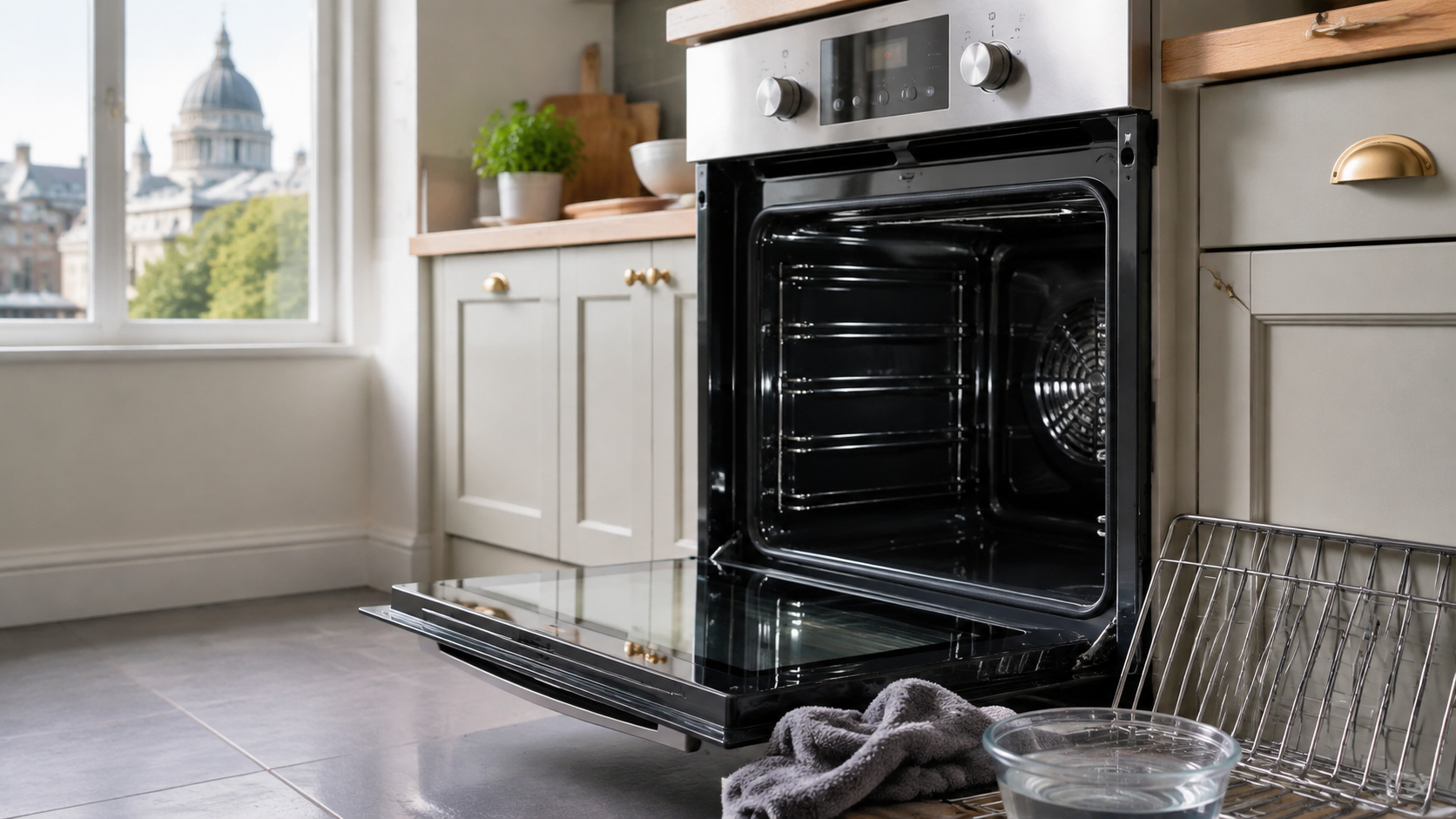
You can cook once all cleaner has been removed, surfaces are dry, removable parts are correctly refitted and any manufacturer-required airing or empty heat cycle is complete. Time alone does not make residue safe.
The waiting period depends on the method used. A damp-cloth clean may require only drying, whereas a chemical product may require repeated rinsing and ventilation. A pyrolytic cycle needs full cooling and ash removal. Always follow the oven and product instructions before preparing food.
Identify the cleaning method
Start by confirming whether you used water, steam, a commercial chemical, a professional dip-tank service or a built-in high-temperature programme.
- Keep the product label
- Check the appliance manual
- Do not combine cleaners
Remove residue rather than masking smell
A fragrance or chemical odour suggests that more ventilation or rinsing may be needed. Do not burn it off unless instructions explicitly require an empty cycle.
- Use clean cloths for each rinse
- Wipe corners and door edges
- Stop if foam or film remains
Dry and reassemble correctly
Wet electrical areas, misplaced shelf supports and a twisted door seal are reasons not to switch on the appliance.
- Allow natural drying
- Refit only approved parts
- Check the door closes evenly
After ordinary manual cleaning
For water-based wiping, use can normally resume when the cavity is dry and visually free from residue. Product instructions override general advice.
- Inspect under bright light
- Smell the cold cavity
- Use plain water for a final permitted wipe
After commercial oven cleaner
Caustic or solvent products need careful removal. Never assume a fixed number of hours replaces the label directions.
- Wear stated protection while cleaning
- Rinse as directed
- Keep food and utensils away during airing
After pyrolytic self-cleaning
Wait for the lock to release naturally and the cavity to cool. Remove fine ash with a permitted damp cloth before cooking.
- Never force the locked door
- Ventilate during and after the cycle
- Check accessories were approved for the cycle
Use an empty test only when appropriate
If the manufacturer recommends a short empty run, stay present and ventilate. Switch off if there is persistent chemical smoke or unusual electrical smell.
- Remove all packaging and cloths
- Select the stated temperature
- Let the oven cool before reassessing
When not to cook
Visible product, damaged enamel, a swollen seal, smoke, eye irritation or an unexplained burning-plastic smell all justify stopping.
- Disconnect if an electrical fault is suspected
- Keep the room ventilated
- Contact appliance repair for faults
Frequently asked questions
Is 30 minutes always enough?
No. Readiness depends on residue removal, drying and the specific instructions, not a universal timer.
Can I put food in to absorb the smell?
No. Food should not be used as a test for chemical residue.
Why does a clean oven still smoke?
Residue, cleaner trapped near edges, grease behind panels or an unrelated electrical fault may be responsible.
Practical next step
Before the next meal, perform a cold visual and smell check, verify the shelves and seal, and follow any stated empty-run procedure. Persistent smoke or irritation is not normal; arrange professional cleaning or repair rather than exposing food.
