
Socket Making a Crackling Noise: What to Switch Off and Who to Call
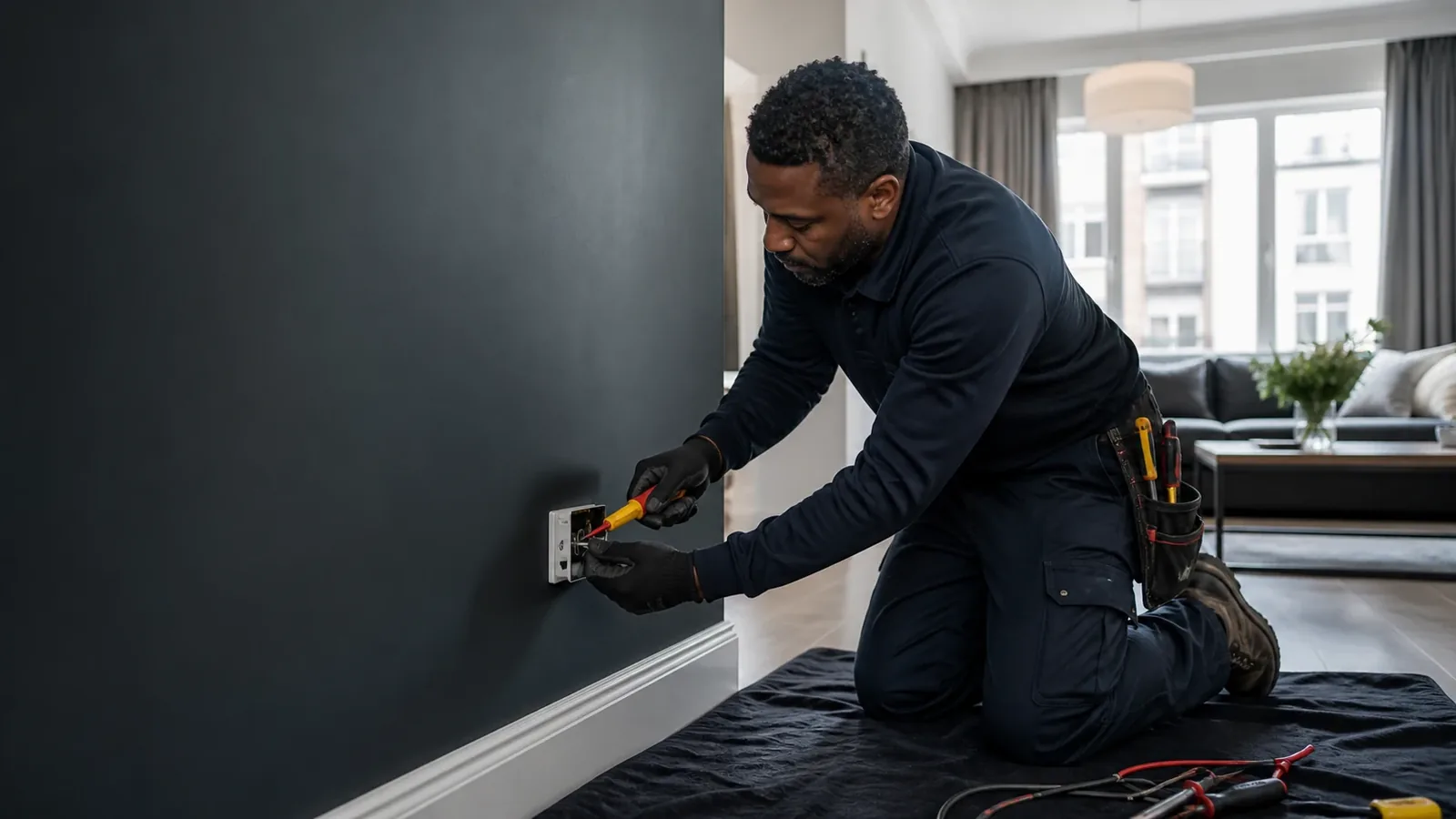
A crackling socket may be arcing and can cause shock, burns or fire. Stop using it immediately. If there is smoke, sparks, heat, a burning or fishy smell, discolouration, melting or water nearby, do not touch the socket or plug; switch off the circuit at the consumer unit only if you can do so safely and call an electrician urgently. If fire or smoke is developing, leave the property and call 999.
Do not “test” a crackle by moving the plug
Wiggling a plug, pressing the faceplate or trying a second high-power appliance can worsen a loose contact. Do not remove the socket cover, spray cleaner or lubricant inside, or tighten visible screws while energised. Keep children and pets away and stop anyone switching the circuit back on.
Book an urgent electrical fault-finding visit and report exactly what was connected and whether the sound continued after the appliance was switched off.
Socket, plug or appliance?
Without touching a hot or damaged item, observe from a safe distance. Is the noise at the wall, an extension block, the plug or the appliance? A loose plug connection, damaged flex, overloaded adaptor or failing socket can all arc. The location helps the electrician, but it does not make any option safe for continued use.
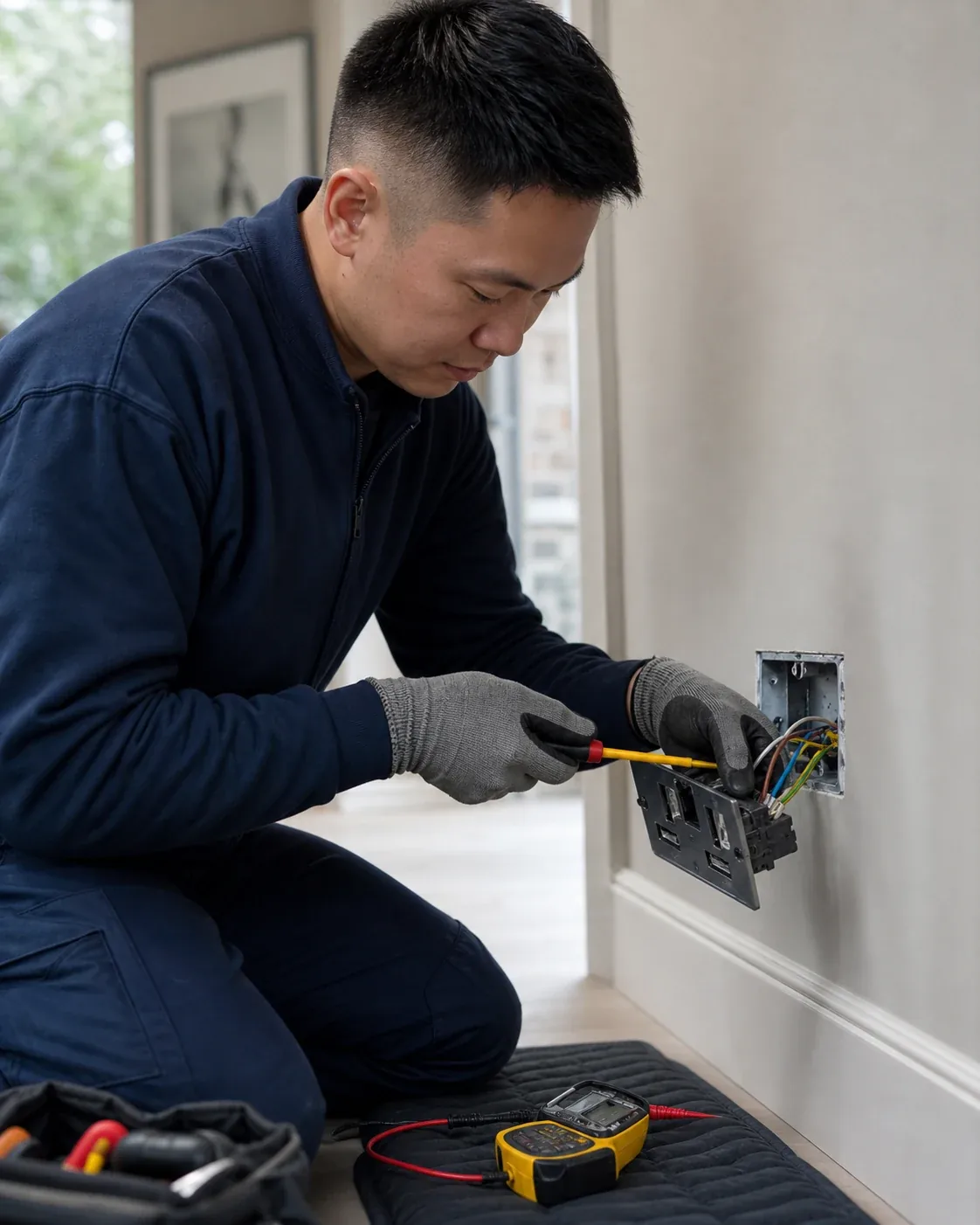
When it is safe to switch off at the consumer unit
Only approach if the route, floor and consumer unit are dry, there is no smoke near it and you know which labelled circuit controls the socket. Use dry hands and operate the switch without opening any cover. If labels are unclear, switch off the main switch only if safe and appropriate, then warn occupants that alarms, heating or medical equipment may lose power.
Do not touch service equipment, remove fuses or hold a breaker in position. If isolation itself feels unsafe, leave the area and call emergency help.
Why crackling happens
Possible causes include a loose terminal, worn socket contacts, a damaged plug, heat from overload, contamination or a fault in connected equipment. Arcing is electricity jumping across a poor connection, producing intense local heat. Only inspection and electrical testing can identify which part failed.
Warning signs around the faceplate
- Brown or black marks
- Yellowing, bubbling or melted plastic
- A hot faceplate or plug
- A smell resembling hot plastic or fish
- Buzzing or crackling
- Loose movement in the wall
- Repeated breaker or RCD operation
Electrical Safety First specifically warns not to ignore arcing sounds, burn marks, overheating and trips.
Extension leads and adaptors
Daisy-chained extensions and overloaded adaptors can overheat. Check rated load only after everything is safely isolated and cool. Do not replace one overloaded block with another or run a permanent extension from a different room. If the home lacks sockets, arrange correctly designed socket installation or replacement.
Water changes the response
If a leak, damp wall or spill is near the socket, do not approach it or stand in water to reach a switch. Isolate electricity from a safe dry location only if possible, stop the water elsewhere and use the correct emergency trades. The socket must not return to service merely because the wall surface looks dry.
Rental property responsibilities
Report the issue immediately in writing and by the landlord’s emergency route. GOV.UK states that landlords must ensure the electrical system and supplied appliances are safe. Include a safe-distance photograph, time, connected appliance and circuit behaviour. Do not accept tape over the socket as a repair.
What the electrician should establish
The electrician may inspect the isolated accessory, terminations, cable condition, protective device, polarity, earth continuity and loading. Heat damage can require more than a new plastic faceplate. Ask what caused the failure, what was replaced, what tests were completed and whether certification applies.
Use the broader electrician service if other lights, sockets or circuits show related symptoms.
What to do with the connected appliance
Label it and prevent reuse until checked. A damaged plug or flex may have caused the socket symptom; fitting it into another outlet can transfer the hazard. An appliance repairer can test the equipment after the fixed installation is made safe.
After repair, do not erase the evidence
Keep photographs, the electrician’s report and any replaced part description. Note the appliance load and whether the socket had previously felt loose. If rented, send the completion record to the landlord. Recurrent heat or noise at the replacement means immediate isolation and reinspection.
A crackling socket is not a harmless household noise. The useful actions are to stop use, isolate only from a safe dry position, keep people away and call the correct electrical professional. Diagnosis starts after the circuit is safe, not while it is arcing.
Consumer-unit labels can be wrong
Old handwritten labels may not match later alterations. If switching the named circuit off does not clearly remove power and the socket remains suspect, do not investigate with a lamp, tester or finger. Keep away and tell the electrician that isolation is uncertain. They have approved equipment and procedures to prove dead.
A warm plug is evidence even without noise
After normal use, a plug or faceplate should not become excessively hot. High-current appliances such as heaters, kettles and tumble dryers can expose poor contacts. Do not move the appliance to another questionable socket. Record its rating and how long it had run, then isolate it for inspection.
Decorating and loose faceplates
Paint, wallpaper paste and dust can enter damaged accessories, while over-tightened screws or movement can crack a plate. A socket pulling away from the wall can strain conductors. Do not push it back or seal around it. Stop use and let an electrician inspect the mounting box, cable and accessory.
Shared buildings and emergency access
In a flat, know whether the consumer unit is inside the home and whether building management controls any upstream isolation. Do not enter locked electrical cupboards. Warn neighbours only if smoke, fire or a communal supply risk exists, and use the building’s emergency contact. Fire doors and escape routes must remain clear.
Choosing a competent electrician
Describe this as a crackling or potentially arcing socket, not a routine cosmetic replacement. Ask whether urgent attendance, diagnosis, parts, testing and certification are included. Provide property type, parking, access and consumer-unit location. The lowest faceplate price is irrelevant if heat damage extends into the back box or cable.
Temporary loss of the circuit
Plan around the isolated supply instead of reconnecting it. Move perishable food only if the affected circuit serves refrigeration, use battery lighting rather than trailing leads, and follow medical-equipment outage plans. Keep escape routes clear. Safety while waiting is part of the response; restoring convenience is the electrician’s job after testing.
