
Tumble Dryer Not Heating: Seven Checks That Narrow Down the Fault
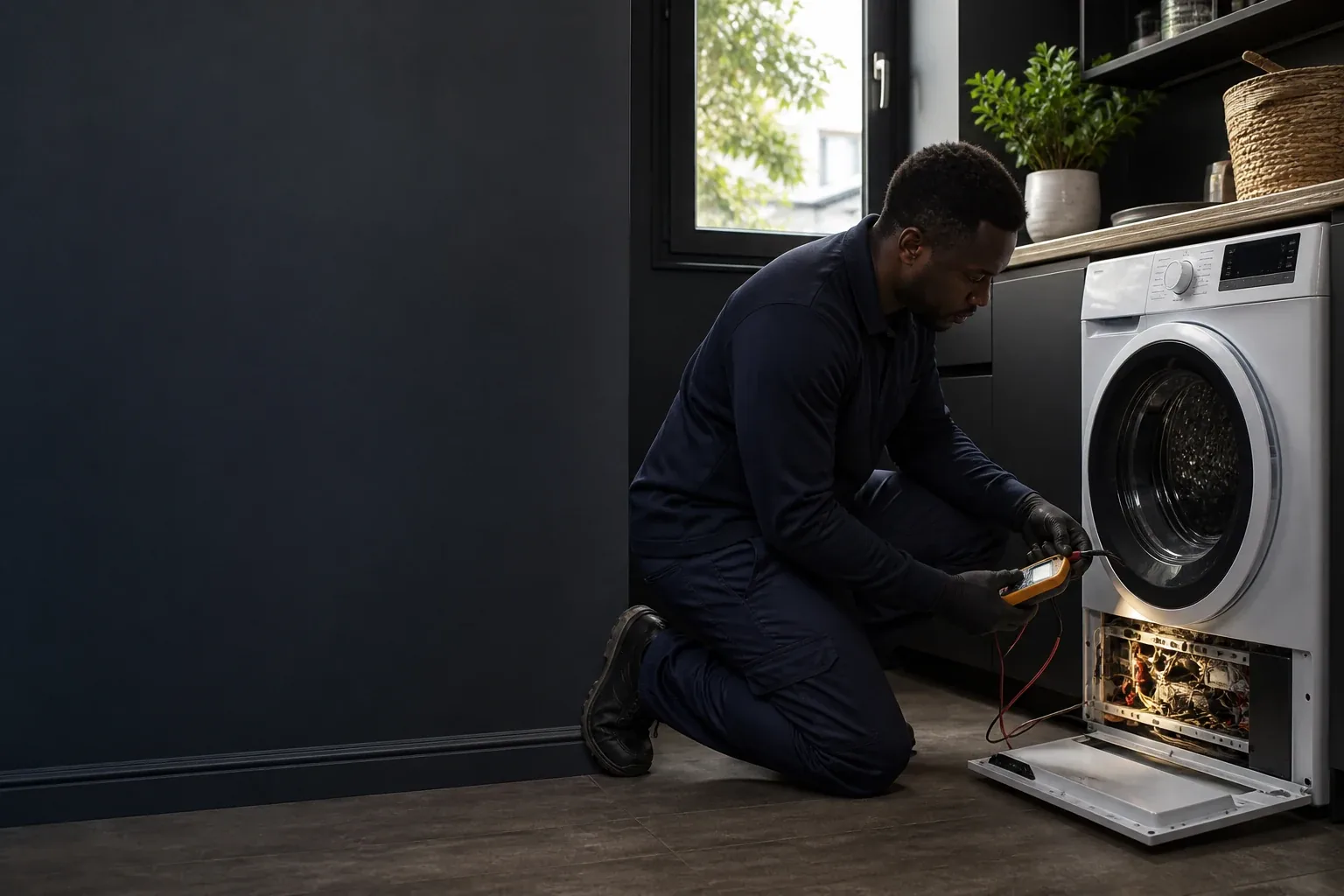
A tumble dryer that runs but does not heat is often suffering from restricted airflow, an unsuitable programme or a component fault. Clean the lint filter, empty the water container on a condenser or heat-pump model, check accessible vents and try a timed warm programme with a small suitable load. Stop immediately if there is a burning smell, smoke, sparking, abnormal grinding, excessive heat or repeated electrical tripping.
Before seven checks, identify the dryer type
A vented dryer sends moist air through a hose. A condenser model collects water and usually has a removable condenser. A heat-pump dryer recirculates air at lower temperatures and can take longer. Cleaning points and normal heat levels differ, so find the model number and manual before opening any service flap.
For a fault beyond user maintenance, Alesta’s tumble-dryer repair service is the exact destination. Do not order a heating element until the appliance has been tested.
Check 1: the selected programme
Cool-air, refresh, delicate and end-of-cycle phases may produce little or no obvious heat. Sensor programmes can finish early with a very small, mixed or already dry load. Choose a timed warm programme permitted by the manual and add a small load of similar damp cotton items.
Check 2: the lint filter
Switch off and unplug where the plug is safely accessible. Remove lint from the filter after every load and wash it only if the manual allows. Fabric-softener film can obstruct fine mesh even when it looks clear. Refit the filter fully; running without it allows lint into the air path.
Check 3: water tank and condenser
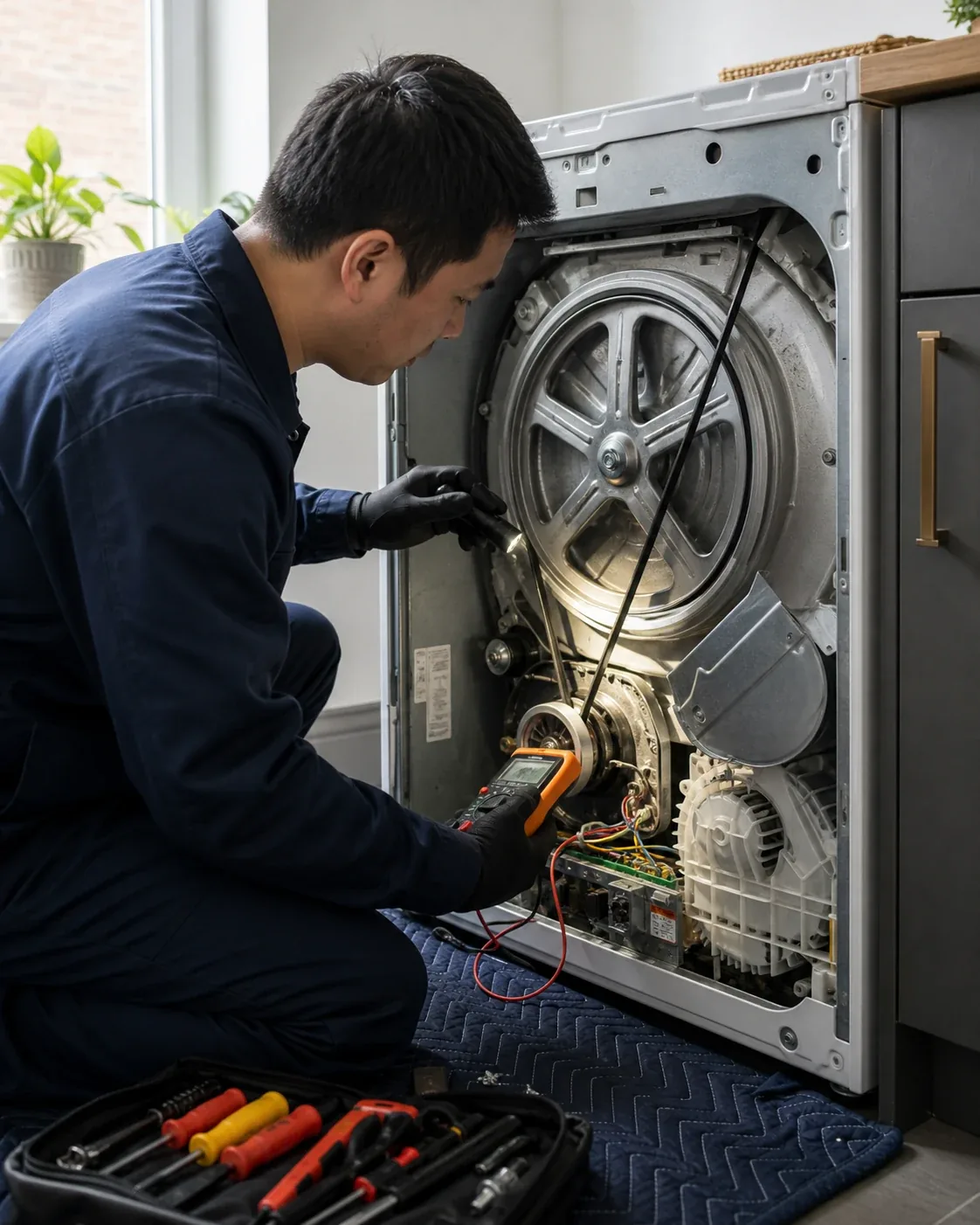
Empty the water container and seat it correctly. On models with a user-removable condenser, allow the dryer to cool and clean the component exactly as the manual states. Heat-pump fins are delicate; do not bend them with brushes, knives or vacuum nozzles. Some modern condensers are self-cleaning and not removable.
Check 4: vent hose and outside outlet
For a vented model, inspect the visible hose for crushing, kinks and lint. Check the external flap opens while running only from a safe position; do not reach into it. Long, improvised or blocked ducts reduce airflow. Never vent moist air into a loft, cupboard or indoor room.
Check 5: room temperature and installation
Heat-pump and condenser dryers need the ambient conditions and clearances specified by the manufacturer. A cold garage or sealed cupboard can affect performance. Clear accessible ventilation around the cabinet without pulling a heavy machine out alone.
Check 6: load size and fabric mix
An overloaded drum cannot tumble properly, while one heavy item can roll into a damp ball. Separate towels from lightweight synthetics and respect the care labels. If the drum does not turn, makes scraping noises or smells of hot rubber, stop; this is not a heating-only problem.
Check 7: what happens during a controlled test
After cleaning user-accessible parts, run one short permitted test. Note whether the drum turns, air becomes mildly warm, the timer counts down, water collects and any warning appears. Do not repeat tests if the result is unchanged. A failed thermostat, thermal cut-out, heater, sensor, fan, pump or control requires measurements and model-specific access.
Why resetting a thermal cut-out can be unsafe
A protective cut-out may operate because airflow is poor or overheating occurred. Resetting or bypassing it without finding the cause removes the warning. Panels can expose mains voltage, sharp metal and moving parts. Internal access belongs to a competent appliance technician.
Dry but cool is different from still wet
Heat-pump dryers feel cooler than traditional vented machines but can still dry effectively. If clothes emerge dry, the lower exhaust temperature may be normal. If they remain damp, measure the time, load and programme and compare with the manual. Clean moisture sensors only by the manufacturer-approved method.
Electrical warning signs override troubleshooting
Electrical Safety First advises not to ignore burning smells, arcing, overheating or repeated trips. Do not use an extension lead for a tumble dryer. If the plug or socket is hot or discoloured, leave it alone and arrange an electrical fault check as well as appliance assessment.
Preventing airflow-related recurrence
Clean the filter every load, empty the tank as required, maintain the condenser and vent at the manual’s intervals and avoid overloading. Keep the room ventilated according to installation instructions. Lint around the appliance is evidence to clean, not a cosmetic nuisance; accumulated lint and overheating are a fire concern.
Prepare a repair brief
Provide model and serial number, dryer type, programme, load, duration, warning code and whether the drum, fan and water collection still work. Mention recent moving or duct changes. The broader appliance repair service is useful if the make or correct trade route is uncertain.
Seven checks should narrow the fault, not invite dismantling. If airflow, programme and loading are correct but heat is absent, preserve the symptoms for testing rather than replacing parts by guesswork.
The filter may look clean and still restrict air
Hold the cool filter up to light. Fine fabric-conditioner residue can close mesh between visible lint fibres. If the manual permits washing, use the stated method and let it dry completely before refitting. A damp filter changes airflow and should not be returned early. Replace torn or distorted filters with the correct part.
Condenser cleaning without damaging fins
Removable condenser blocks have narrow passages that collect fluff. Rinse direction, water temperature and drying requirements vary. Do not use a pressure washer or sharp brush. On a heat-pump unit, bent fins reduce heat exchange and can turn a maintenance issue into an expensive repair.
When the dryer heats but clothes remain wet
Check whether warm damp air leaves a vented system, whether the tank fills on a condenser model and whether the room becomes excessively humid. A blocked pump route, failed fan, sensor film or duct restriction can leave some heat without effective drying. Record both temperature impression and moisture result; “no heat” may actually be “no airflow”.
Fire safety around laundry
Never run the dryer while asleep or out of the home. Keep the area free of loose lint and combustible storage, and stop if cycles become unusually long. Items contaminated with oils, solvents or flammable substances may self-heat and must not enter an ordinary tumble dryer; follow textile and product safety instructions.
Quote questions before authorising parts
Ask for the diagnosed component, test evidence, total including return labour and the warranty. Thermal devices can operate because another fault caused overheating, so replacing only the cut-out may not solve the system. Parts availability and appliance age affect the repair decision, but diagnosis should come before disposal.
