
Account for the initial catch-up
The starting condition matters: a first booking may involve catch-up tasks that will not recur every week.
East Sheen / An achievable weekly brief
Follow everyday family use
An East Sheen family room can need attention more often than a reception room reserved for visitors. Build the recurring list around that difference, rather than allocating equal importance to every room.
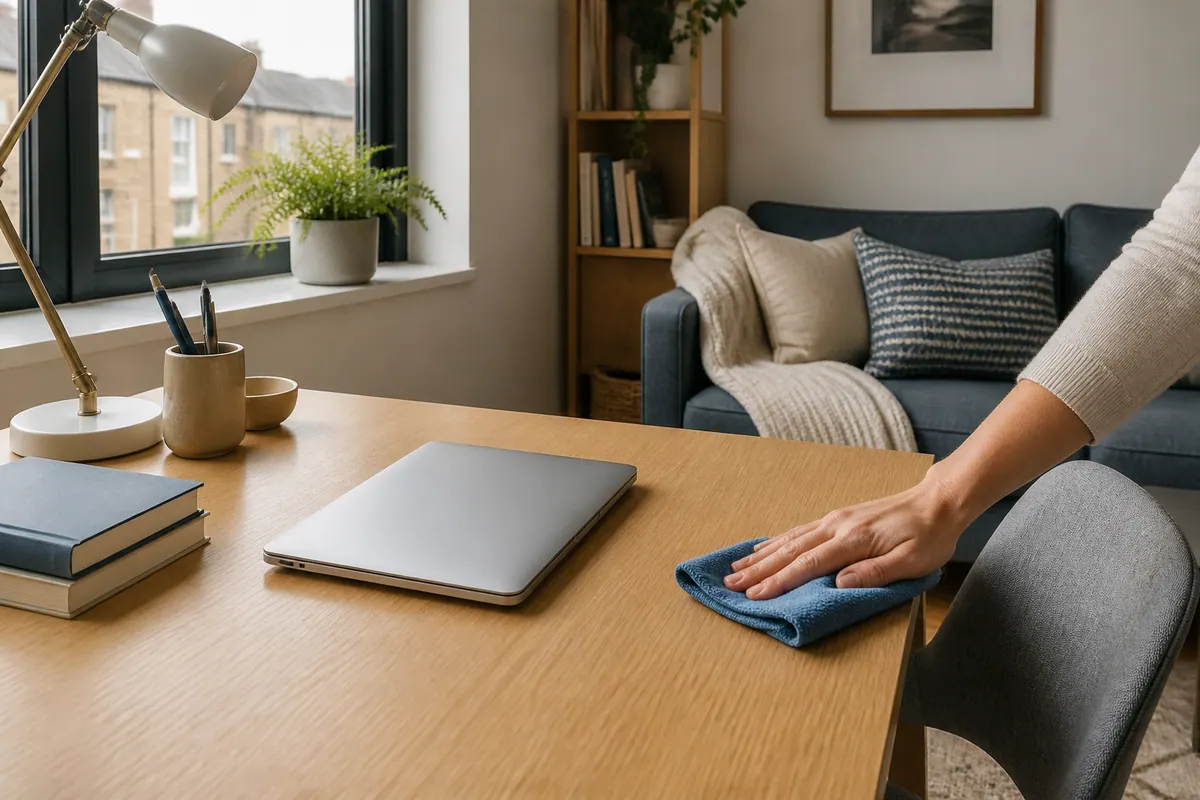
Kitchen · Bathroom
Living areas · Bedrooms
East Sheen / household planning
An East Sheen family room can need attention more often than a reception room reserved for visitors. Build the recurring list around that difference, rather than allocating equal importance to every room.
An occasional room can remain outside a particular visit if that is the agreed scope.
Put loose belongings away from the everyday floor route before arrival. If visitors change the room priorities next time, raise that change before the booked day.
Describe the frequently used seating area and the surrounding accessible floor. If another reception room is not needed this time, say so explicitly.
After a change in family use, review the room coverage with the team. A once-occasional space becoming busy is a scope detail, not simply a new label.
Visit frequency
Compare the amount of upkeep you can manage between visits with the work you want Alesta to maintain.
| Planning point | Weekly | Fortnightly |
|---|---|---|
| Best suited for | Areas needing frequent upkeep | Rooms needing less frequent support |
| Core focus | Regular attention to the chosen areas | Allow the brief to reflect accumulated tasks |
| Priority planning | Make a short core list clear | Rank the work that matters after the gap |
| Visit scope | Set the room list with the team | Confirm the brief for that timetable |
The starting condition matters: a first booking may involve catch-up tasks that will not recur every week.
The routine should reflect the home as it is now. Tell the team when rooms become busier or a task no longer matters.
Room coverage
A kitchen and a bedroom need different preparation. Review the relevant tabs before setting out your household list.
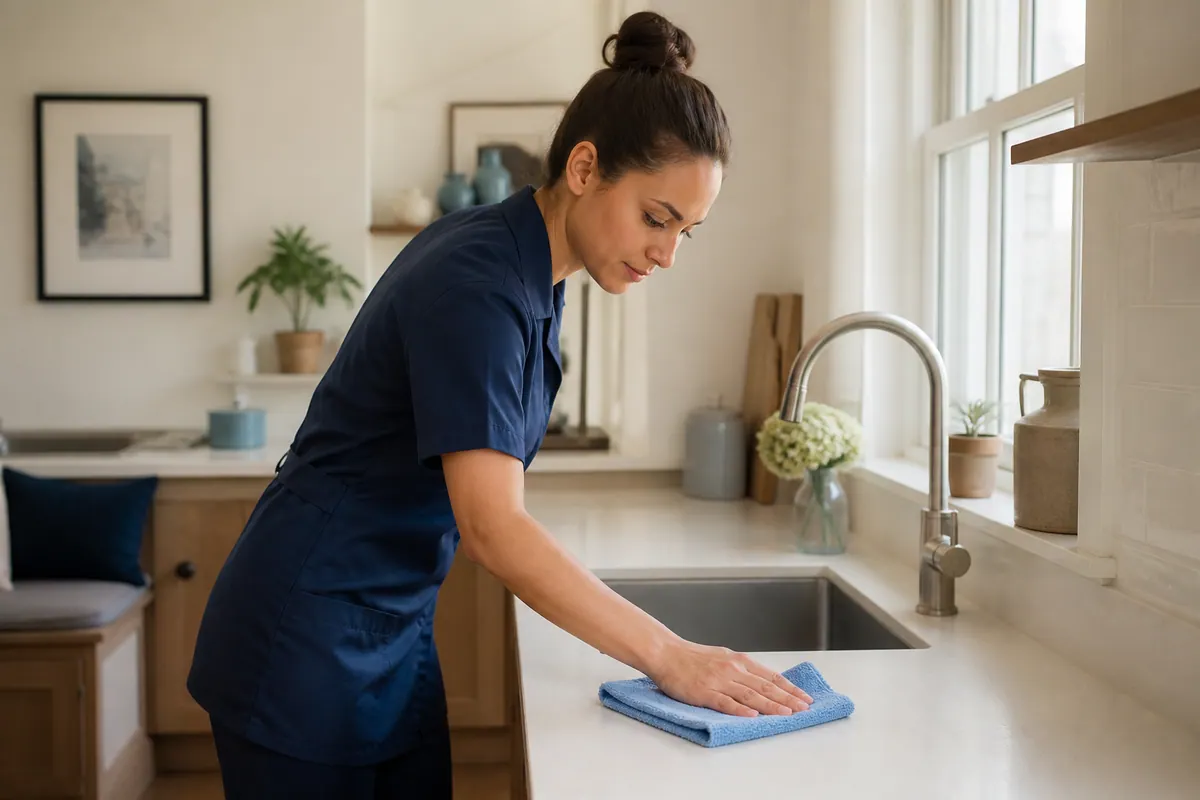
Kitchen
For the kitchen, describe accessible preparation surfaces and the sink; exterior fronts and splashbacks should be clearly listed too.
Stored food and personal items should be moved by the household; do not assume an oven deep clean is included.
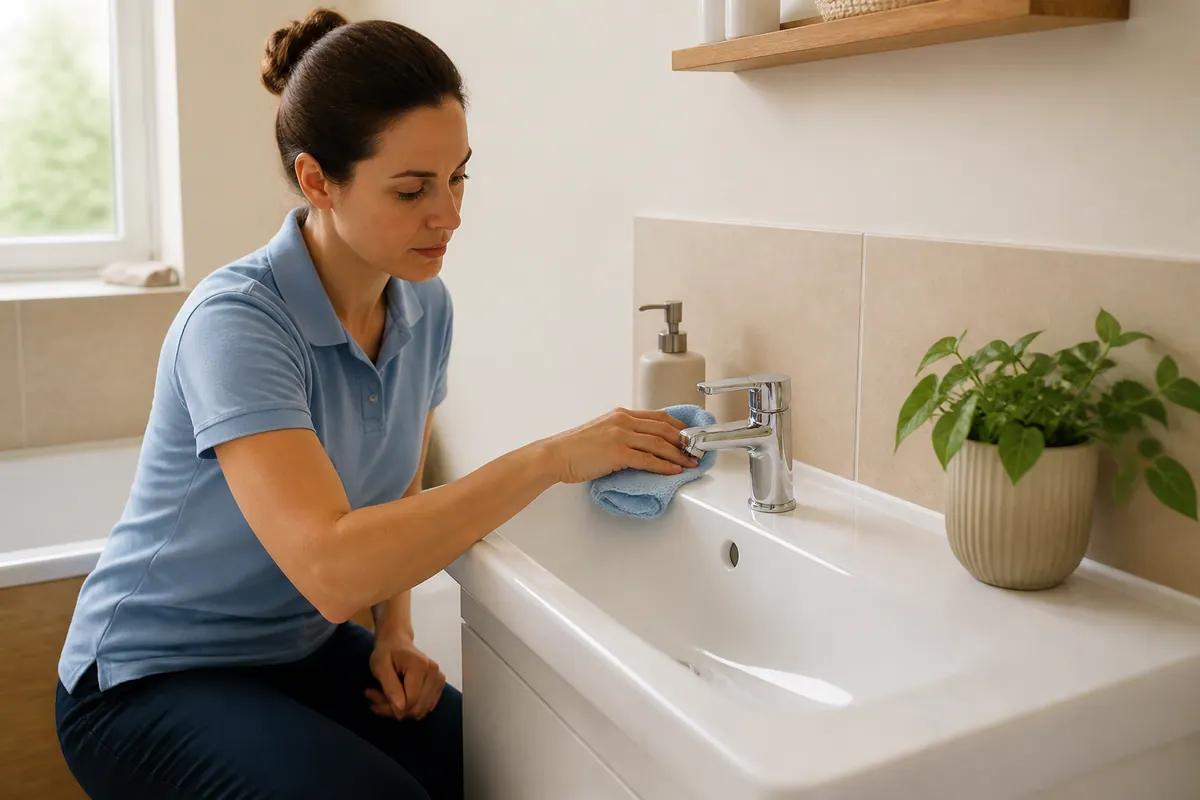
Bathroom
Plan bathroom care around the fittings used daily: sanitaryware, taps and shower, followed by agreed mirrors and reachable tile surfaces.
Do not leave damaged seals or unusual stone finishes unexplained; the cleaner needs those details before starting.
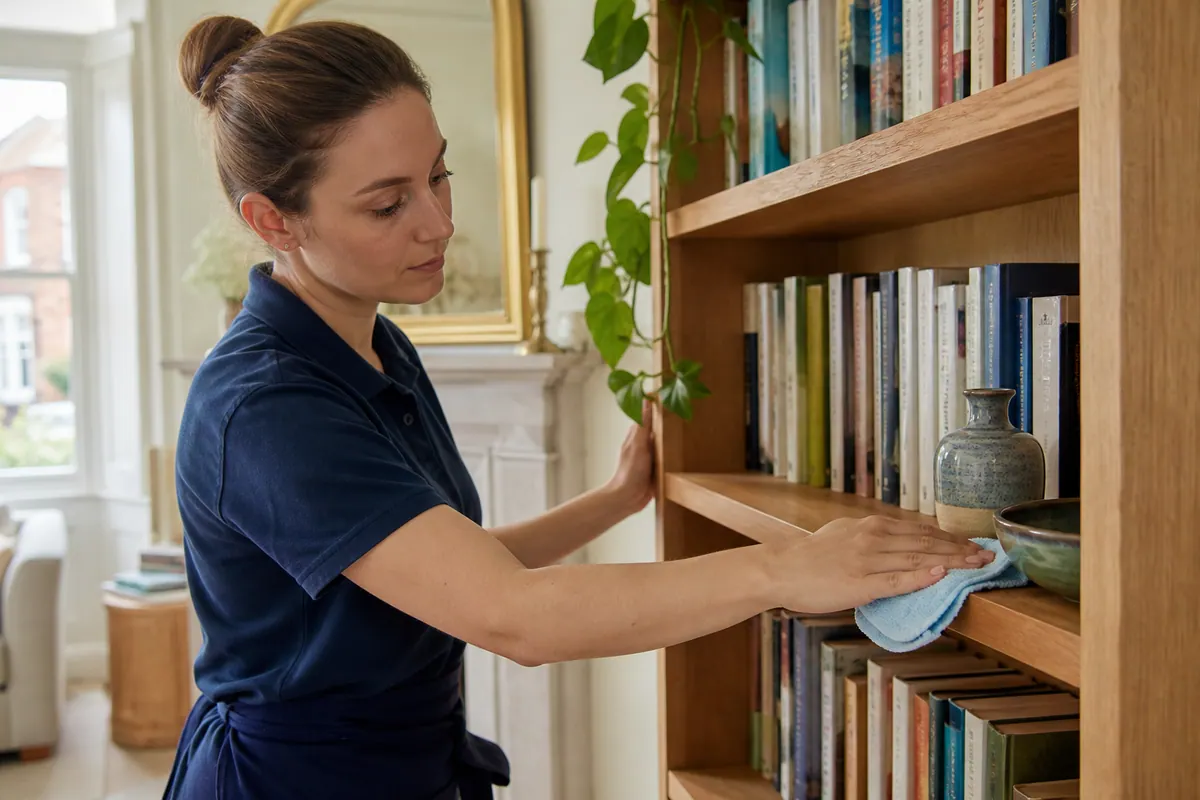
Living spaces
An agreed living room can receive reachable-surface care and dusting, followed by vacuuming and suitable treatment of the floor.
Do not make the cleaner decide where documents belong. Clear them away and identify delicate objects in advance.
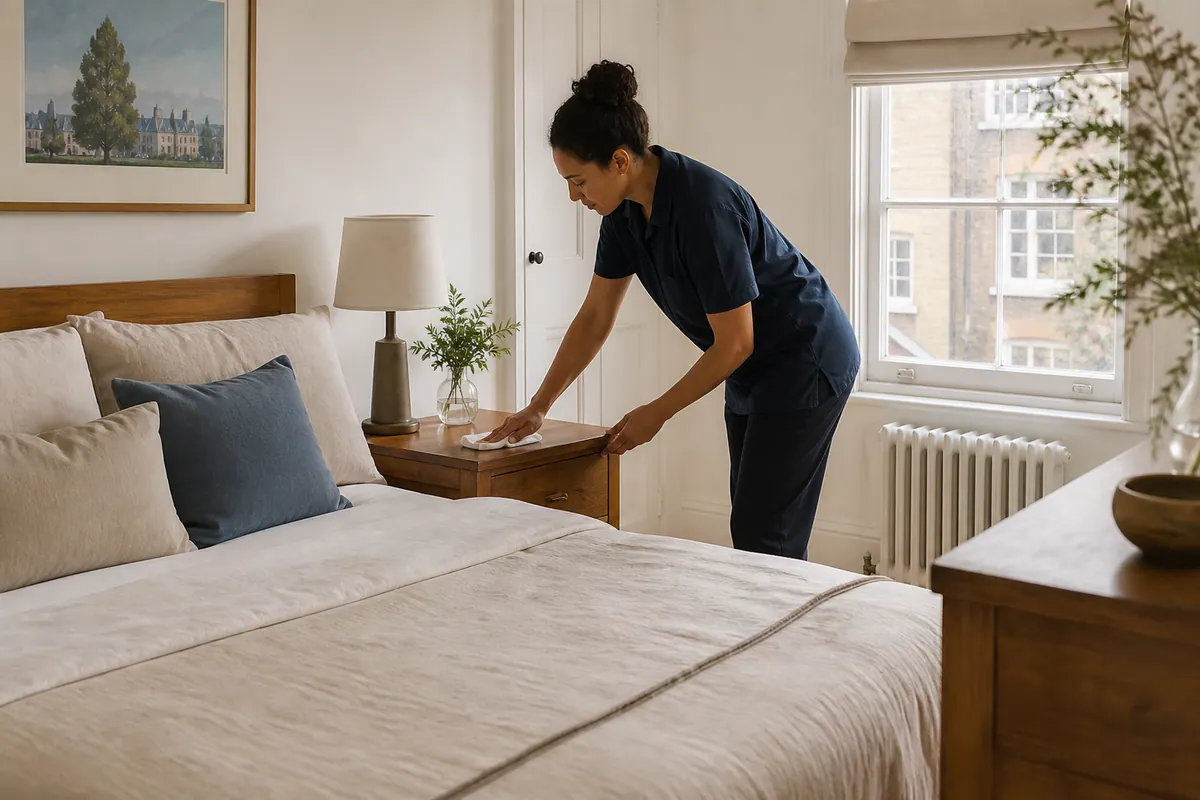
Sleeping rooms
A maintained sleeping room needs a defined scope: reachable dusting, selected surfaces, vacuuming and appropriate floor care.
Agree whether occupied bedrooms are available, and clear private possessions from the areas to be cleaned.
Booking process
Set out the rooms needing help and mention any occupants or pets present during the work.
Set the core work alongside the intended frequency instead of choosing a timetable in isolation.
Settle material-care notes and access before the day, rather than leaving them to arrival.
Core tasks guide the work in the spaces that were agreed for the appointment.
Discuss outstanding requests without assuming they can be absorbed into the next routine visit.
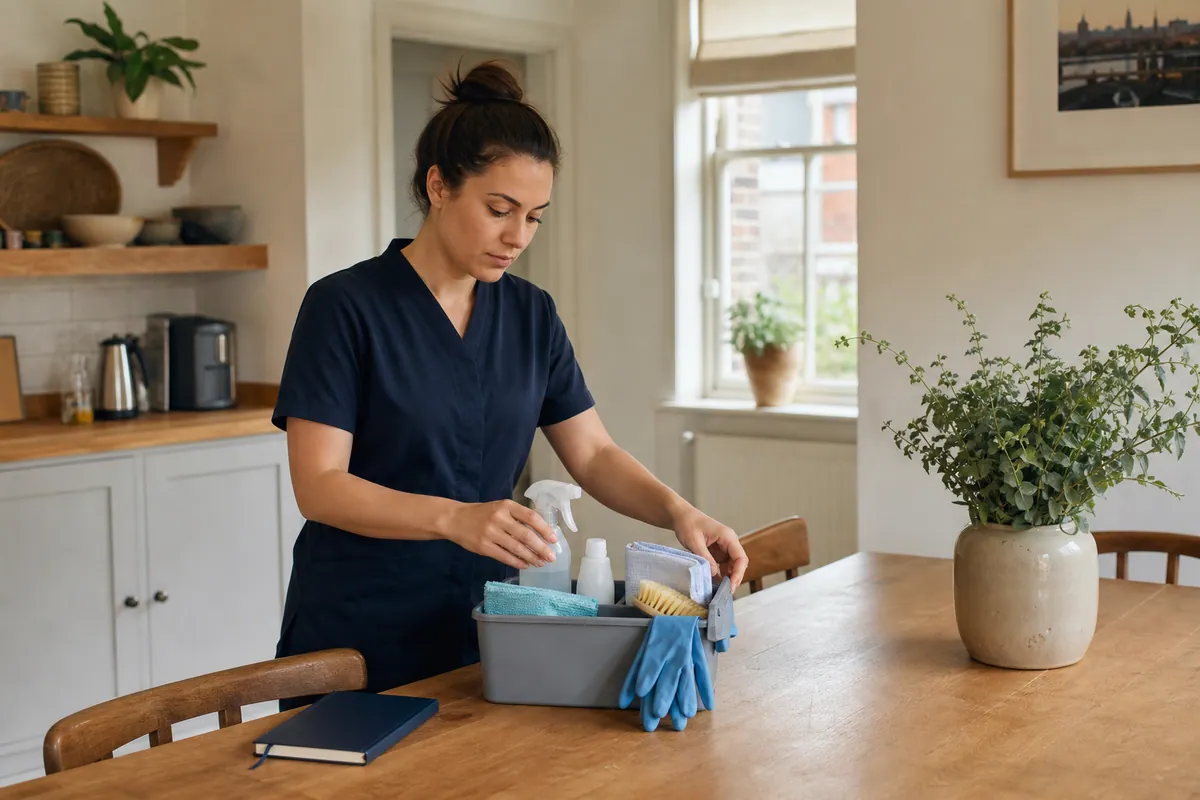
A usable plan for the appointment.
A visit guided by the household list.
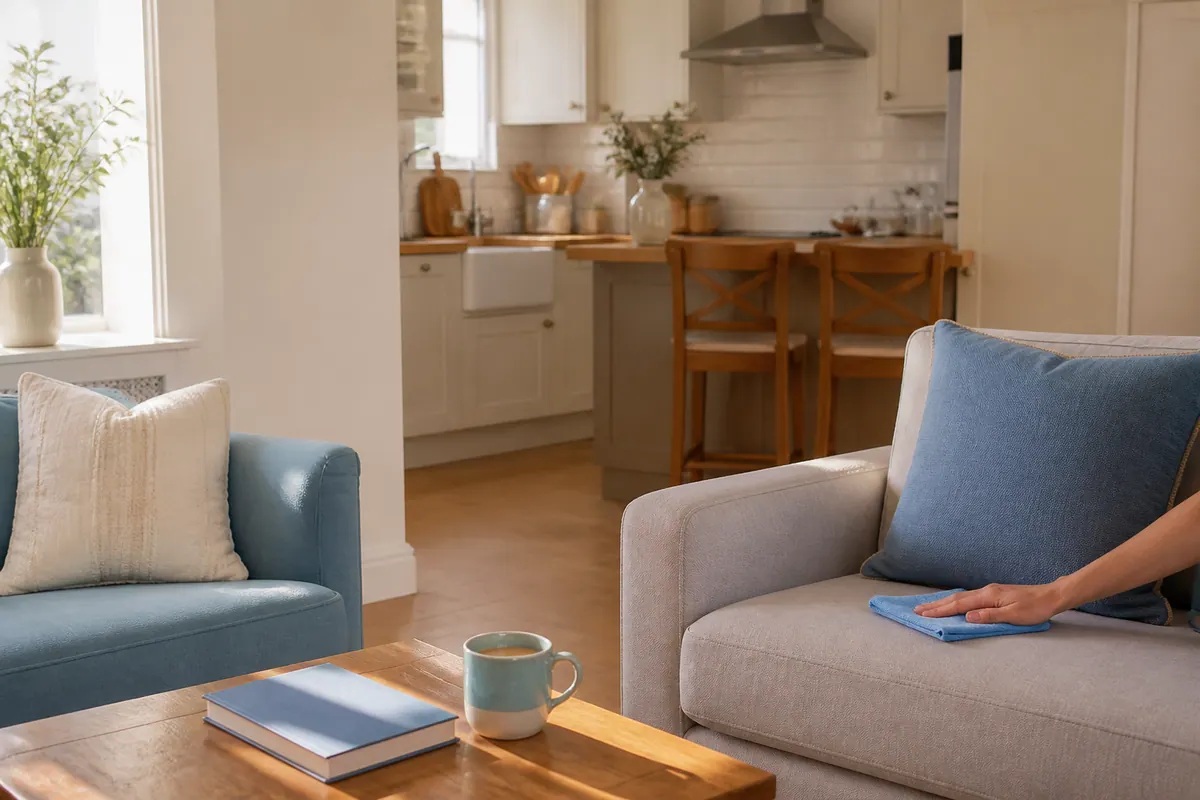
A clearer starting point for later care.
These images show imagined household scenes rather than a recorded cleaning result.
East Sheen / local enquiry
East Sheen bookings need the full postcode and the intended rooms. Rooms, present condition and access all belong in the booking conversation. The planner cannot confirm a cleaner for a chosen day.
For the wider service scope, see Domestic Cleaning, or ask the team about your address.
Map reference
This is an area reference, not a marked Alesta branch or booking guarantee.
Open map in a new tabRoutine planner
Compare a weekly routine with a fortnightly visit and identify the first room. No appointment is made by these selections.
Essential upkeep
The cleaner needs to know which tasks take precedence. Select extras only after the main kitchen, bathroom and floor requirements are clear.
Review optional work whenever the household expands its list. Additional requests need a discussion about the time available.
Household arrangements
The examples help describe access and room use.
An absent household still needs a clear brief, including the used rooms and agreed way into the property.
Clear the areas selected for cleaning instead of expecting personal items to be sorted during the visit.
Decide who will manage the pets and identify doors or areas requiring particular care.
A home office is not automatically available for cleaning. Establish the access window before arrival.
Routine care maintains the lived-in home, not a landlord inspection brief. Keep those requests distinct.
Use one agreed communication route for the room list and entry arrangements, particularly when several people are involved.
Material guidance
Describe delicate coatings, stone and timber when briefing the visit, so the method can be matched to the actual surface.
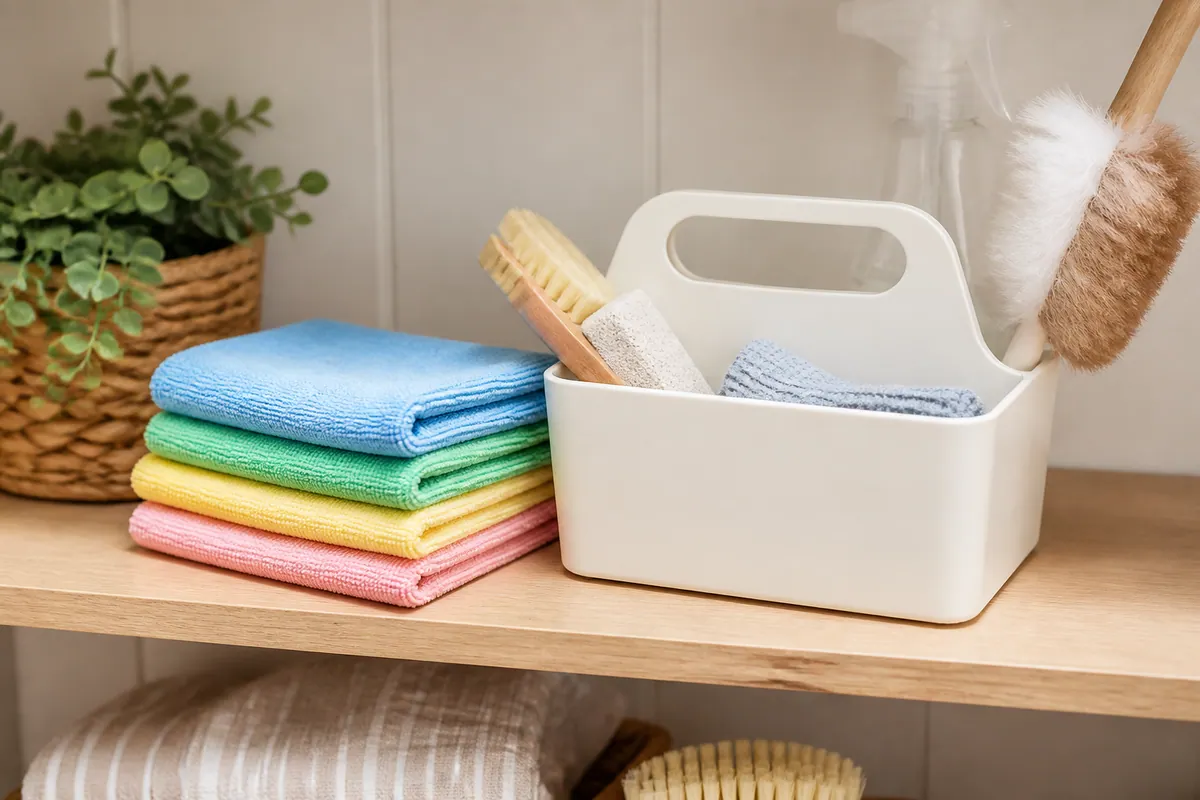
Point out natural stone early so the proposed method can be checked against it.
Describe the coating on the wood and mention existing wear before cleaning begins.
Mention delicate lacquer before furniture dusting or surface work is planned.
A stainless appliance front can be discussed as an exterior surface, not an unlimited appliance task.
Explain any vulnerable painted finish or fitting when agreeing surface care.
Separate services
Do not fold a specialist job into the recurring list by calling it an extra detail. Its scope has to be checked separately.
If extraction is needed, use the dedicated carpet service instead of extending a domestic floor request.
Treat a detailed oven interior as its own service rather than an assumed part of exterior appliance care.
A routine wipe should not be presented as mould removal. Request an assessment of that issue separately.
Outside windows should not be added as an assumed finishing task to a domestic appointment.
Do not use the ordinary recurring list as a substitute for cleaning after building work.
Explain intensive tasks before assuming the recurring household service can absorb them.
Quick answers
Price guides
A price discussion needs the rooms and current condition as well as the preferred frequency.
| Service | Price | Main factors |
|---|---|---|
| Regular domestic cleaning | From £20/hour | The scheduled interval, minimum visit, supplies and entry plan |
| First / one-off domestic visit | From £90 | The first room list, condition and agreed time |
| Specialist / intensive scope | An independent quote is needed | Heavy accumulated work and specialist access requirements |
The hourly guide alone cannot price a household. Include condition, visit length, frequency, products and practical access when enquiring.
Task order
Move a task higher when it matters more, keeping the total work realistic for the agreed appointment.
Practical access
A key collection plan must be confirmed rather than assumed from an address.
Confirm any managed-entry instructions before the appointment rather than leaving reception to decide.
Include alarm arrangements in the confirmed handover, not a public note.
Decide who will manage the pets and identify doors or areas requiring particular care.
A home office is not automatically available for cleaning. Establish the access window before arrival.
Give the known parking details alongside the address when discussing the visit.
A no-entry room needs a clear instruction before arrival, together with any untouched items.
The useful assurance is a defined brief: what can be maintained, how entry works and which tasks need another scope.
Booking questions
Start with the everyday room that prompted the booking. An occasional room can be discussed separately when visitors change its use, rather than assumed to be covered every time.
Clear loose belongings from the booked areas, secure delicate items and tell the team about room boundaries before arrival.
These are entry figures: £20/hour for recurring work and £90 for first/one-off domestic cleaning. Confirm your total and inclusions directly.
The suitable gap depends on how the home is used, not simply its size. Discuss the planned workload before choosing a repeating timetable.
Discuss the revised instruction rather than simply leaving it for arrival. Extra coverage may change how much time the booking needs.
It may differ from later care because the initial tasks have built up. The quoted scope should acknowledge that difference.
Tell the team which materials are present in the family spaces and what equipment is available. Agree the supply arrangement while checking that proposed products suit those finishes.
Tell the team the room’s availability and arrange a different starting area if needed. The restriction belongs in the agreed brief.
Treat extraction as an independent request, even if vacuuming the same room is included in the domestic list.
Contact Alesta with the postcode and intended work. The proposed timetable, supplies and access need confirmation before a booking exists.
Your next step
Prioritise the daily living space. Review rooms after their use changes. Let the team check the proposed scope and timing.
