
Necessary household upkeep
- Accessible food-preparation surfaces and sink
- Bathroom tasks named in the brief
- Accessible dusting surfaces
- The agreed vacuuming route
- Compatible care for listed floors
Kew / Rooms worth putting first
Care notes belong beside the room list
A stone surface beside painted cabinetry can make a small Kew kitchen more varied than it first appears. Explain the materials you know and show any available care guidance before agreeing the work.
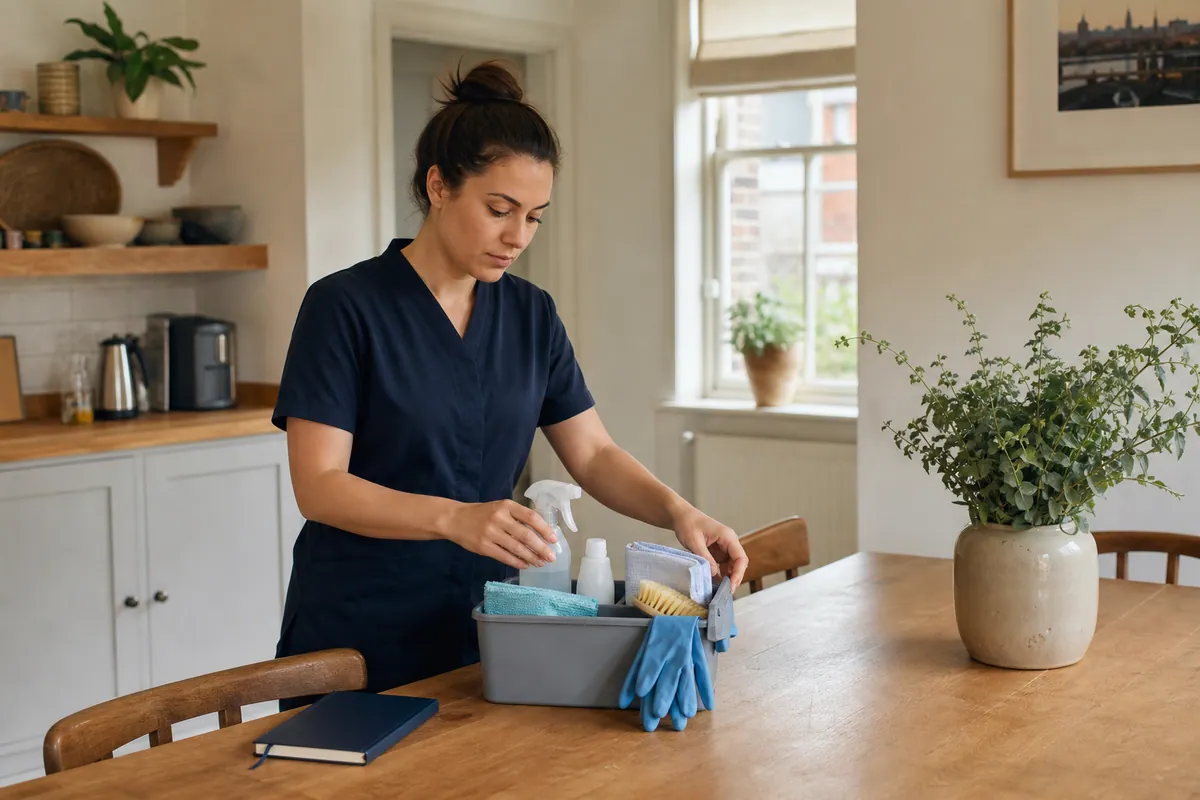
Kitchen · Bathroom
Living areas · Bedrooms
Essential upkeep
Start with dependable household upkeep; do not let a growing list of minor requests displace the essential areas.
Choose a specific reachable detail rather than an unlimited finishing list, and check whether it fits after the essential work.
Kew / household planning
A stone surface beside painted cabinetry can make a small Kew kitchen more varied than it first appears. Explain the materials you know and show any available care guidance before agreeing the work.
The useful distinction is between ordinary upkeep and a finish that needs assessment.
Avoid leaving product choice to the colour of a surface. If the material is uncertain, say so; the room can still be discussed without a restoration promise.
Mention the material of a counter separately from the cupboard finish below it. Their shared location does not establish that the same approach is suitable.
Keep any manufacturer guidance available for the team. Where you do not know what the finish is, explain that uncertainty before asking for a treatment.
Visit frequency
A weekly booking and a fortnightly visit can serve different needs; consider what accumulates between appointments.
| Planning point | Weekly | Fortnightly |
|---|---|---|
| Best suited for | Households with steady room use | Homes with manageable work between visits |
| Core focus | Maintain the confirmed everyday tasks | Prioritise work after the longer interval |
| Priority planning | Keep the recurring essentials legible | A longer interval may change the task order |
| Visit scope | Agree the included work in advance | Coverage still needs confirmation |
A home starting after a cleaning gap can require a different first brief. Agree that work separately from the routine you hope to establish.
Once the starting work is clear, keep a concise maintenance list and revisit it whenever the household changes.
Separate services
A domestic visit is not a substitute for specialist work. Discuss high access, lifting or restoration as distinct requirements.
Request carpet extraction on its own terms rather than treating it as a longer vacuuming task.
Detailed work inside an oven belongs in a separate request, even when its exterior is on the kitchen list.
Mould treatment needs its own planning; a domestic surface clean is not a treatment promise.
Request exterior window cleaning independently, including the access circumstances that affect it.
Explain recent works and their residue separately; routine maintenance is not an after-builders clean.
If the home needs substantial catch-up work, discuss a focused one-off scope before setting a routine.
Price guides
The figures describe service starting points; the agreed work and practical arrangements determine the quotation.
| Service | Price | Main factors |
|---|---|---|
| Regular domestic cleaning | From £20/hour | Frequency and minimum time, room area, materials and access |
| First / one-off domestic visit | From £90 | The initial workload, chosen rooms and time needed |
| Specialist / intensive scope | A separate scope and quote | Specialist tasks, equipment and work beyond ordinary reach |
A quotation reflects the time and condition involved, the amount of space, supply arrangements and access. Ask about the minimum visit too.
Room coverage
The examples below make room requirements easier to describe; they are not a promise to complete every surface in one visit.
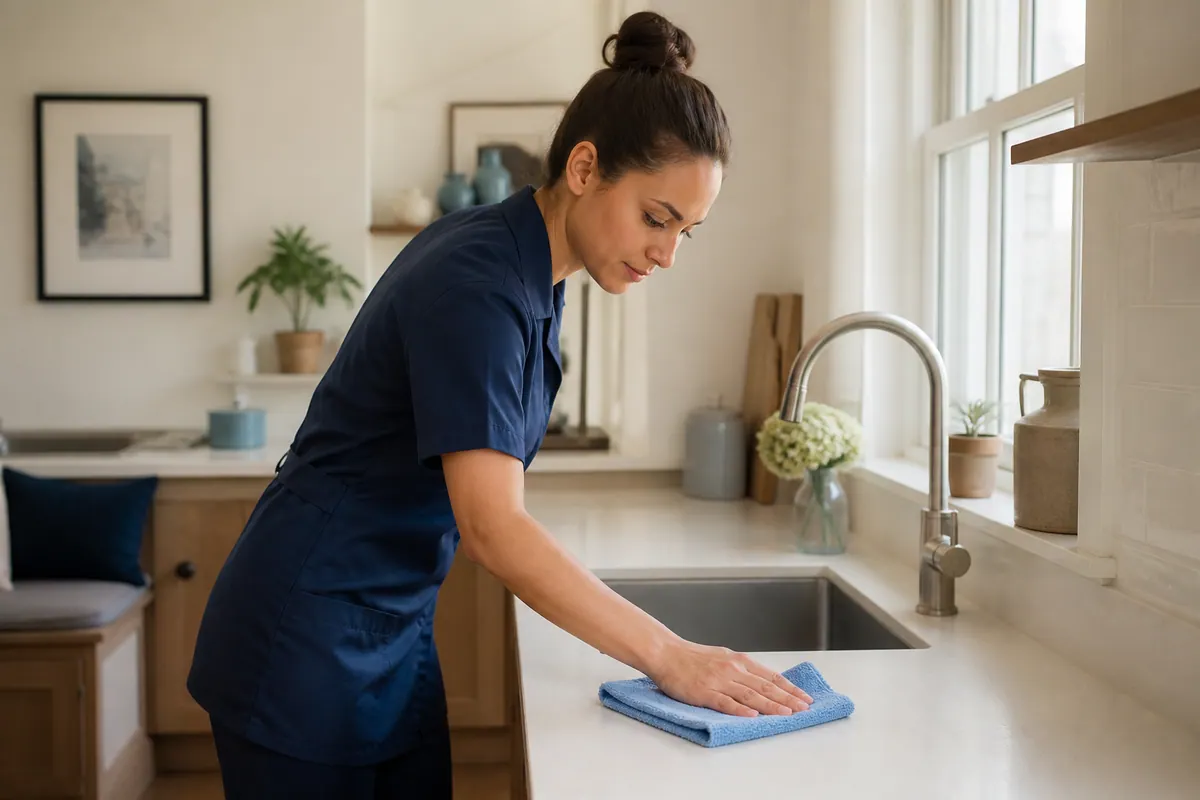
Kitchen
Routine kitchen care can cover reachable worktops and sink surfaces, plus the splashback, fronts and outside of listed appliances.
Remove papers and loose belongings from work surfaces before arrival. Detailed oven cleaning is not part of an exterior wipe.
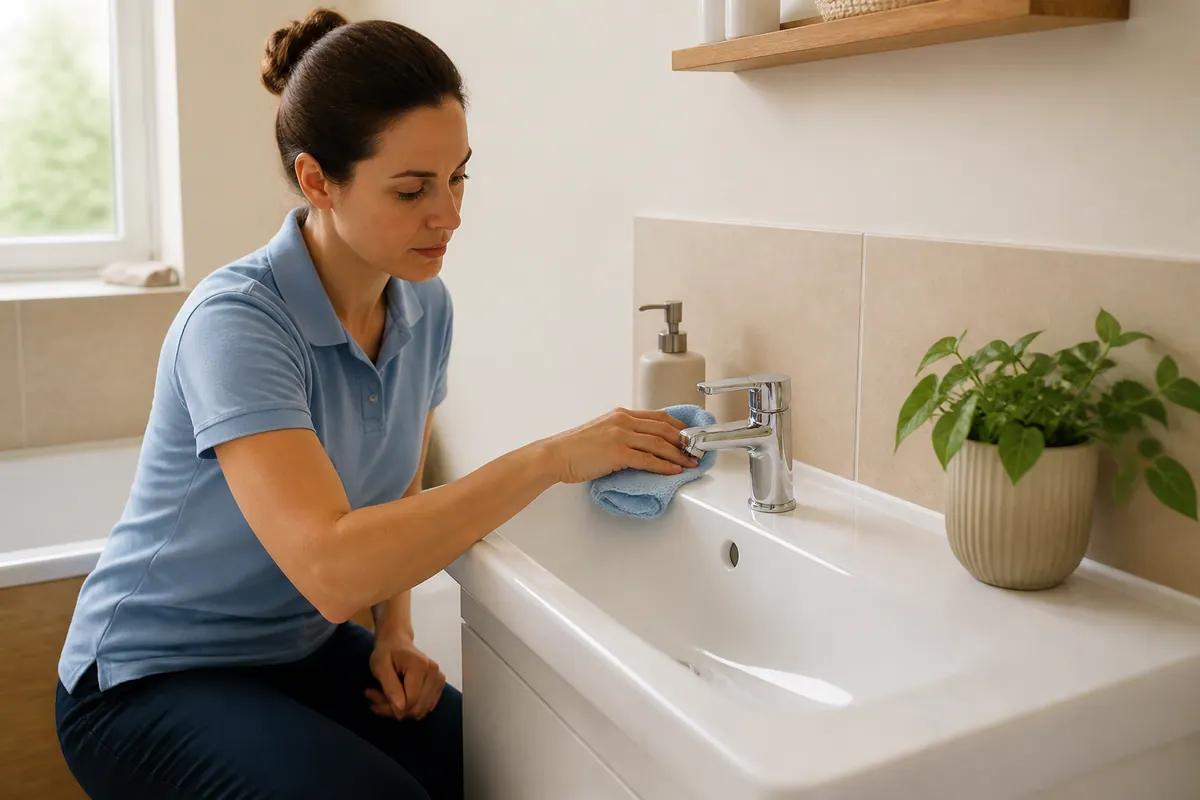
Bathroom
Describe the sanitary fittings and shower area, then identify accessible tiling and mirrors for the bathroom brief.
Show any sensitive surface or failed seal before products are chosen; cleaning cannot restore damaged fittings.
Living spaces
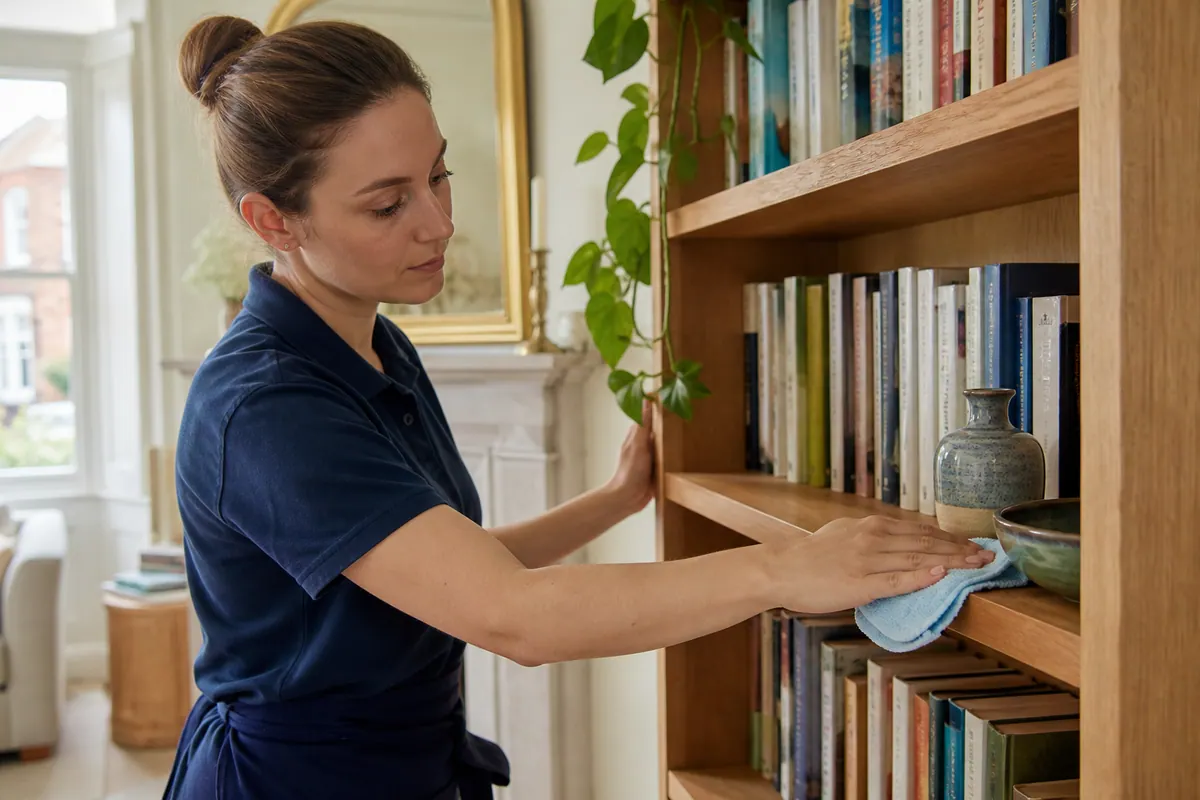
Living-space upkeep focuses on accessible surfaces and the floor, using dusting, vacuuming and a method compatible with the finish.
Put personal documents away and make fragile items secure; name anything that should stay untouched.
Sleeping rooms
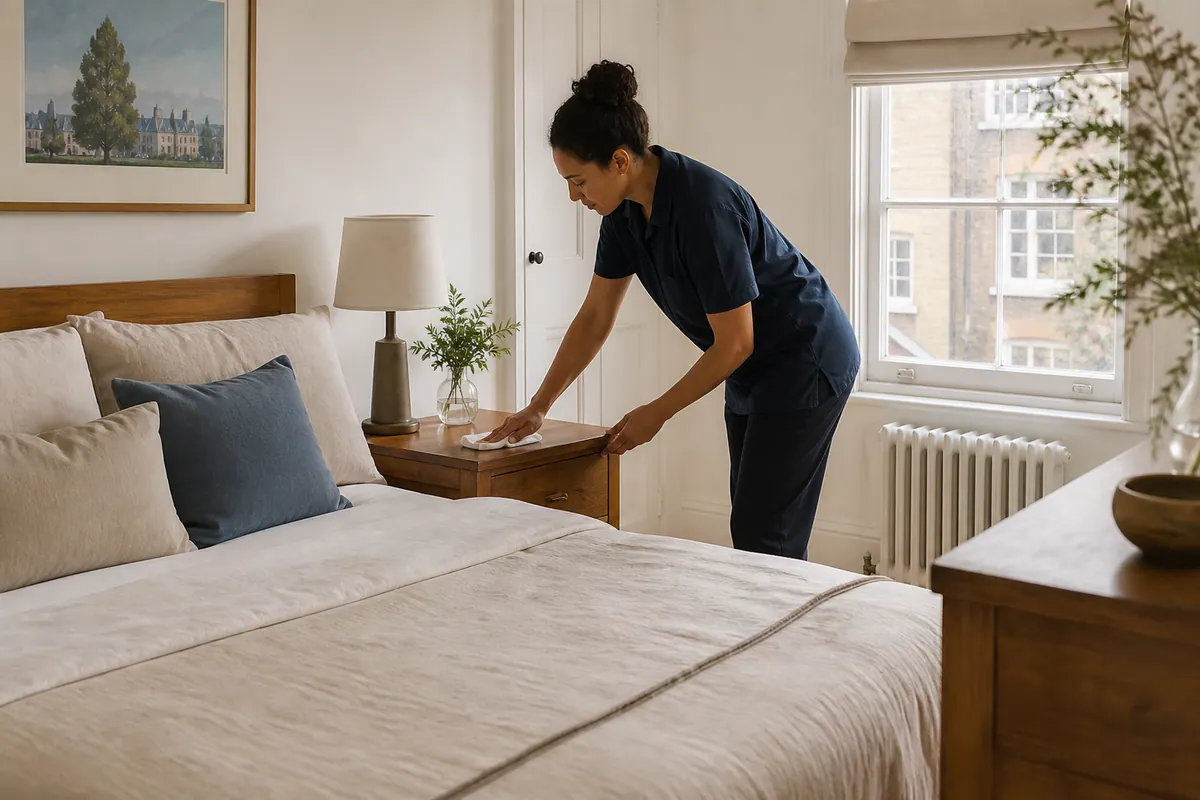
For included bedrooms, plan reachable-surface maintenance with dusting and compatible floor care, including agreed vacuuming.
Name excluded sleeping rooms and store personal items securely before the cleaner arrives.
Household arrangements
Use the examples to explain practical household needs.
Workdays can leave little room for handover; settle access before choosing the rooms to maintain.
Discuss which family rooms receive the most use; put loose possessions away so those surfaces are accessible.
Tell the team where animals will be and how that changes access to the rooms being cleaned.
Calls and occupied workspaces belong in the briefing. Agree whether the office is excluded or available later.
A tenancy does not turn domestic maintenance into end-of-tenancy work. Agree who can approve the room list.
Keep a single current brief with the contact responsible for keys, included rooms and alterations.
Routine planner
Use the controls to organise your enquiry. A useful outline still needs a conversation about duration and availability.
Material guidance
A mixed room can require several cleaning approaches; identify its materials and existing damage at the outset.
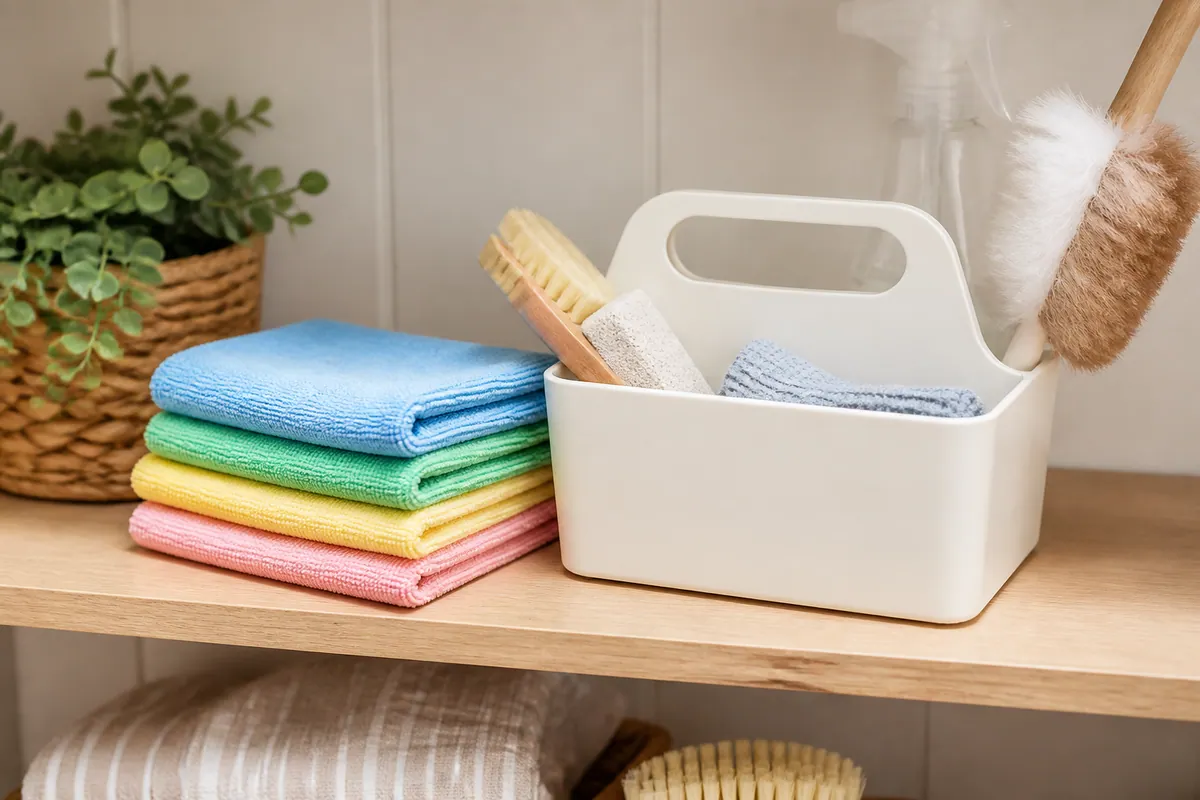
Identify the stone surface rather than asking for a generic bathroom or kitchen product.
Wooden surfaces need their finish identified before an approach to cleaning is agreed.
Coated furniture needs its finish recognised rather than being treated as an ordinary hard surface.
Identify stainless surfaces and keep exterior cleaning distinct from servicing the appliance inside.
Point out flaking or marked painted surfaces so their condition is understood before cleaning.
Quick answers
Task order
Rearrange the list to make your preferences clear, then confirm them with the team; no booking changes are submitted here.
Booking process
Start with the actual rooms and explain who or what may affect access to them.
Discuss a first appointment or recurring rhythm and establish the leading room priorities.
Check how the cleaner will enter and what supplies are agreed for the included surfaces.
Cleaning follows the defined priorities and the material requirements of each included area.
Check the completed priorities and discuss any requirements outside the confirmed maintenance scope.
An understood list before the day.
The confirmed room work takes place.
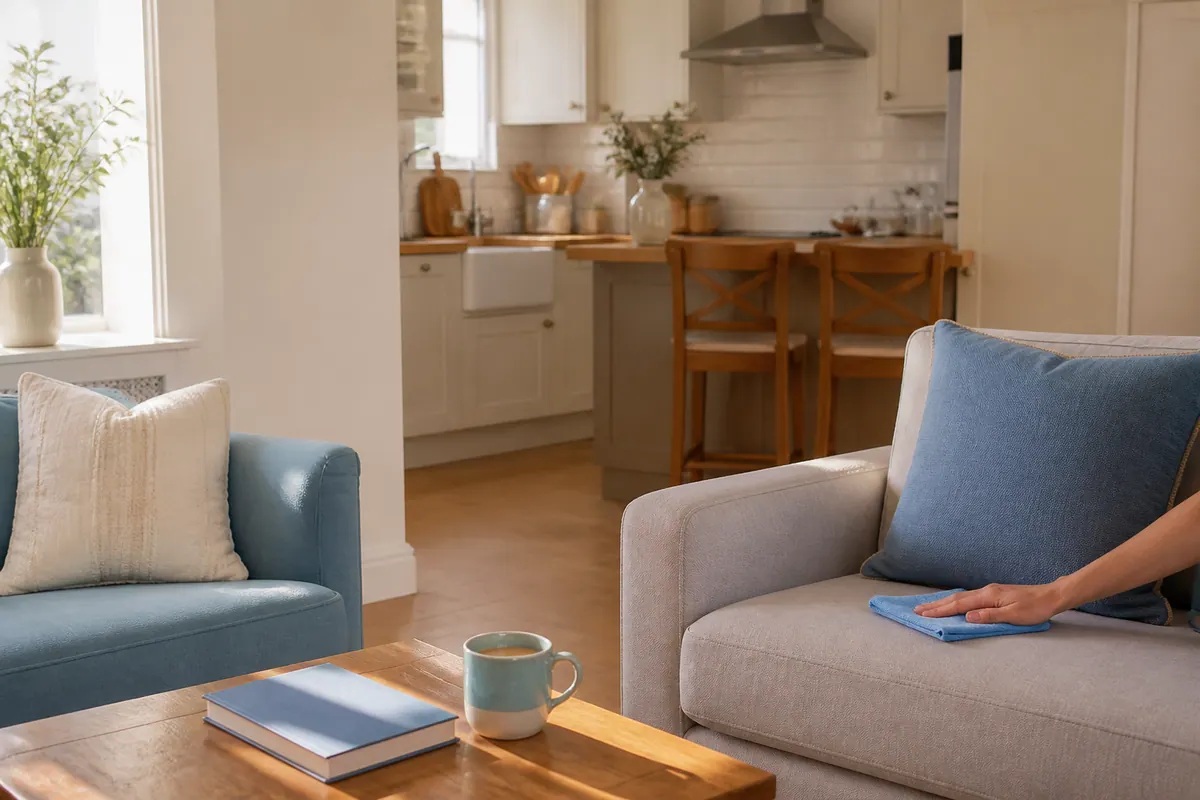
The recurring list remains understandable.
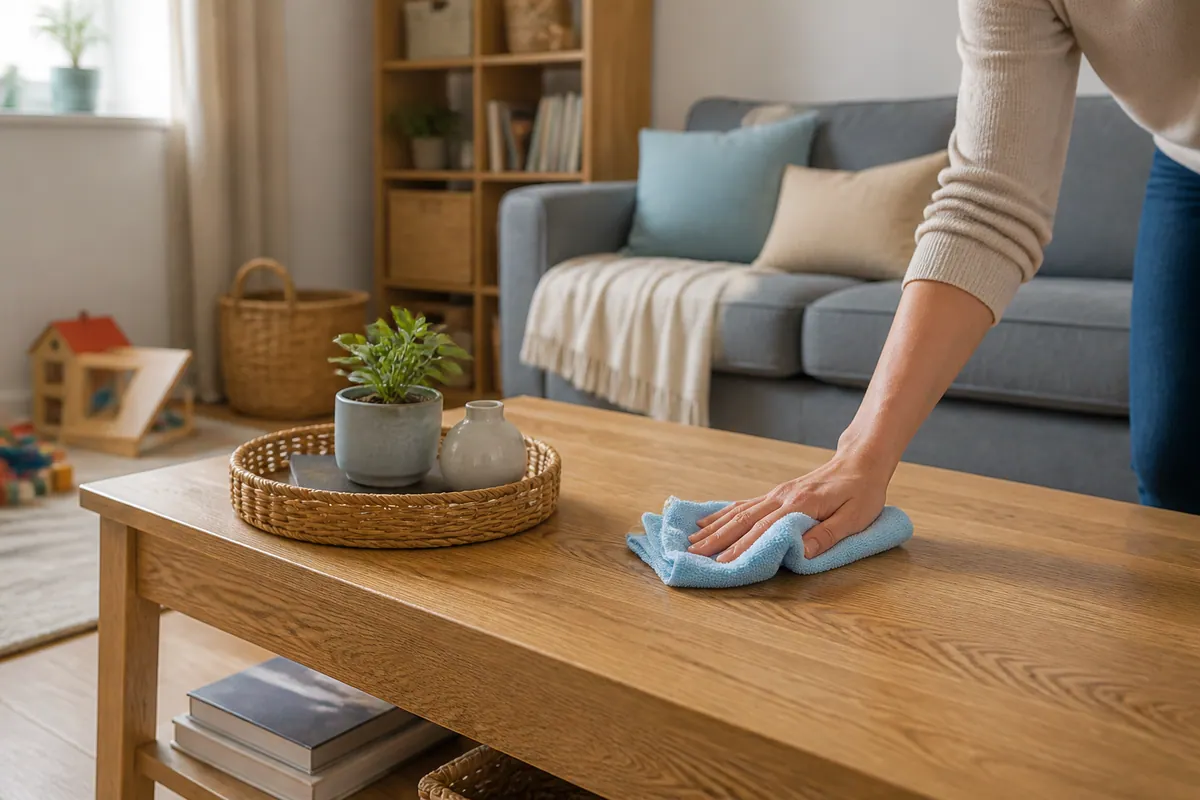
The photographs are illustrative scenes, not evidence of a customer job or transformation.
Practical access
Settle who provides and receives the key before the day, using direct communication with the team.
A concierge can only form part of the plan if the building’s authorisation process is settled.
Agree the alarm procedure directly so entry and leaving the property are covered.
Tell the team where animals will be and how that changes access to the rooms being cleaned.
Calls and occupied workspaces belong in the briefing. Agree whether the office is excluded or available later.
Describe any limitation on parking or unloading before a time is agreed.
List excluded spaces explicitly rather than relying on a closed door as the only instruction.
Confidence starts with knowing the included work and access plan, rather than an unqualified promise to clean everything.
Booking questions
Identify the surface rather than describing everything as a kitchen clean. The team needs to distinguish ordinary maintenance from a finish whose condition requires assessment.
Prepare the listed spaces so the cleaner can reach the surfaces and floor. Personal belongings should be put away by the household.
Alesta’s guides start at £20/hour for regular domestic work and £90 for first/one-off care. Supplies and the minimum visit need checking.
Consider the room activity and work left after the gap. Choosing weekly rather than fortnightly does not by itself fix the required visit length.
A revised room priority can be discussed directly. Do not assume that adding a room or task leaves the original duration unchanged.
A first visit may require additional time where upkeep has lapsed. Confirm its own priorities before assuming the later recurring list applies.
Ask what the booking supplies and explain anything already available in the home. Existing products still need to be appropriate for the finish.
Identify the office and its access restriction before the day. The confirmed room list should show whether another time is practical.
Carpet extraction needs a separate scope and equipment. Mention it explicitly rather than assuming a vacuuming request covers it.
The team must check the address and available schedule, then settle the visit details. An on-page selection is only an outline.
Kew / local enquiry
Kew bookings need the full postcode and the intended rooms. A regular slot requires confirmation of your address and the available schedule, together with supplies and the proposed task list.
For the wider service scope, see Domestic Cleaning, or ask the team about your address.
Map reference
The map gives area context while you discuss the property access.
Open map in a new tabYour next step
Identify stone and coated surfaces. Point out existing wear before cleaning. Discuss the intended visit directly with the team.
