
The first group of tasks
- Reachable counters with the kitchen sink
- Accessible bathroom maintenance
- Routine dusting in agreed areas
- The selected rooms for vacuuming
- Finish-aware floor maintenance
Isleworth / Everyday rooms, clearly planned
Start from the condition that exists
A new Isleworth cleaning routine may need an initial catch-up before it becomes straightforward maintenance. Describe the rooms as they are today, even if the eventual plan is a lighter recurring visit.
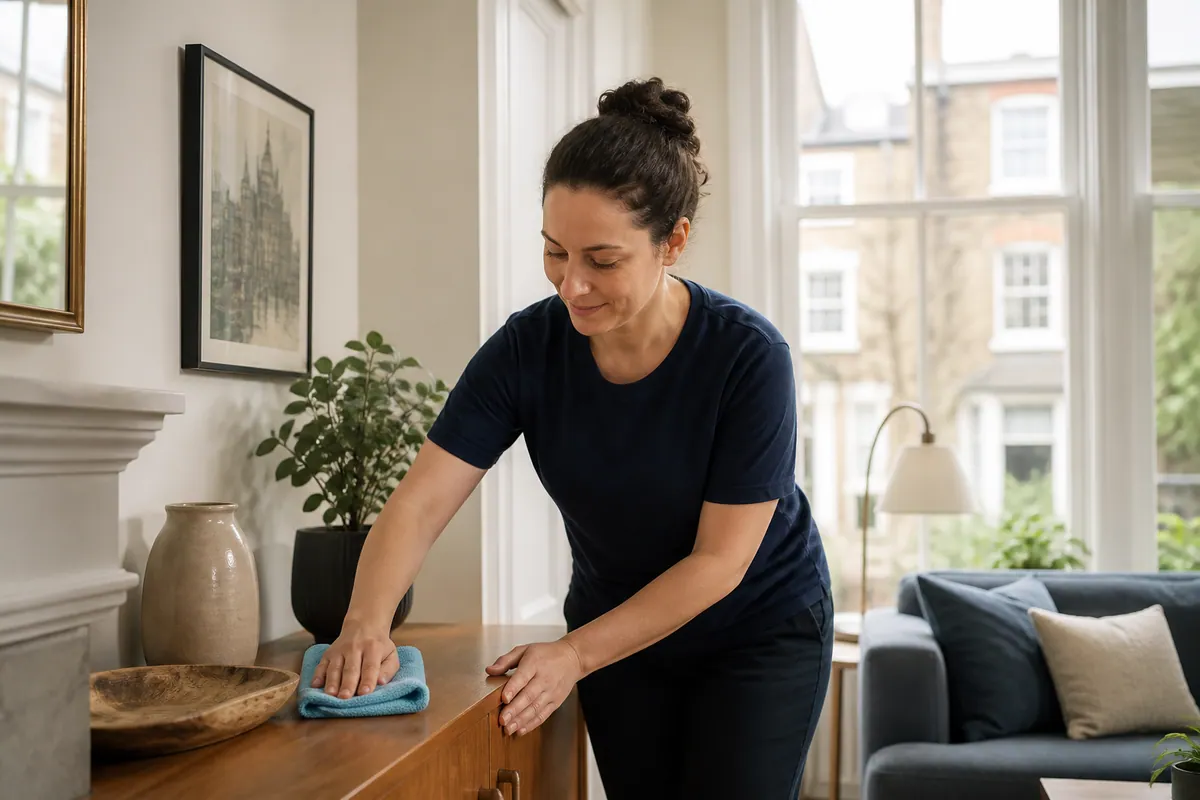
Kitchen · Bathroom
Living areas · Bedrooms
Routine planner
Set out the type of property, preferred interval and leading task below. Treat the result as an enquiry outline only.
Isleworth / household planning
A new Isleworth cleaning routine may need an initial catch-up before it becomes straightforward maintenance. Describe the rooms as they are today, even if the eventual plan is a lighter recurring visit.
The first booking is a chance to establish a realistic maintenance brief, not prove that every task fits.
List the areas that have fallen behind and the ones already kept manageable. That distinction helps the conversation about duration and future frequency.
Identify which rooms already have a manageable level of upkeep. That helps distinguish the recurring core from areas needing extra attention at the start.
Do not describe specialist residue as ordinary catch-up work. If the condition calls for another service, raise that before the first booking is confirmed.

Essential upkeep
Decide what the visit must maintain and what could wait. That order helps make a limited amount of cleaning time useful.
The details column is not an all-inclusive promise. Name the items you want considered and confirm the resulting scope.
Room coverage
Room-by-room planning gives the enquiry useful detail. Tell the team which examples apply and which spaces are excluded.
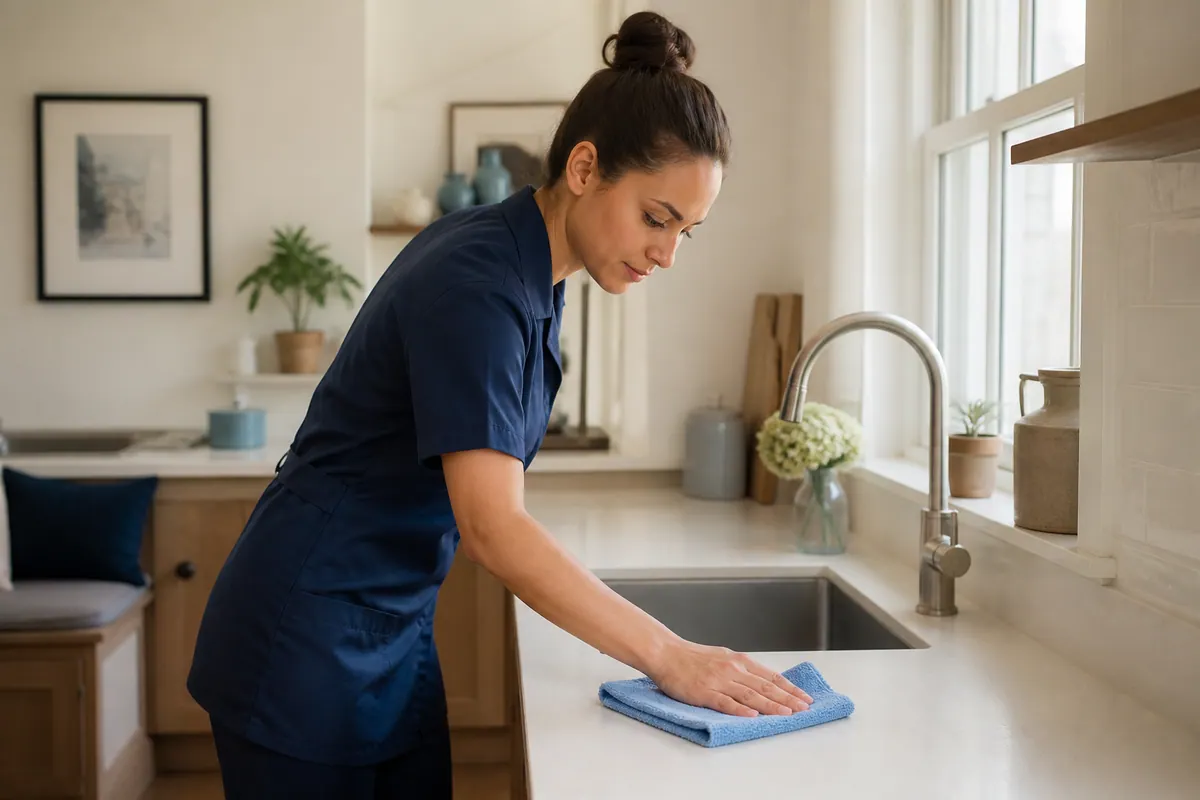
Kitchen
Within the confirmed scope, kitchen maintenance deals with accessible counters, sinks and splashbacks, alongside listed fronts and appliance exteriors.
Clear space around the sink and worktop before the appointment; internal oven cleaning requires its own scope.
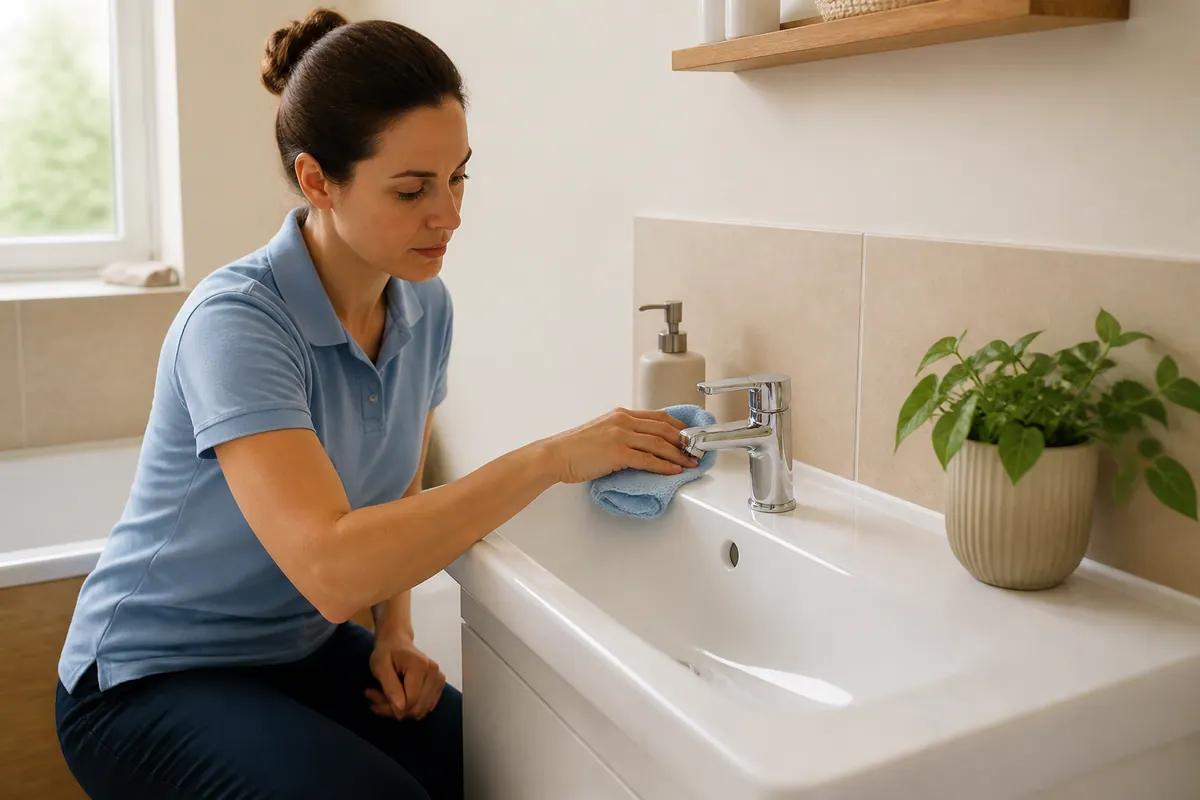
Bathroom
Include the used sanitary fittings and shower in your description, with mirror and accessible tile care confirmed as part of the room.
Share the material instructions for sensitive areas and identify defects; a maintenance clean does not repair them.
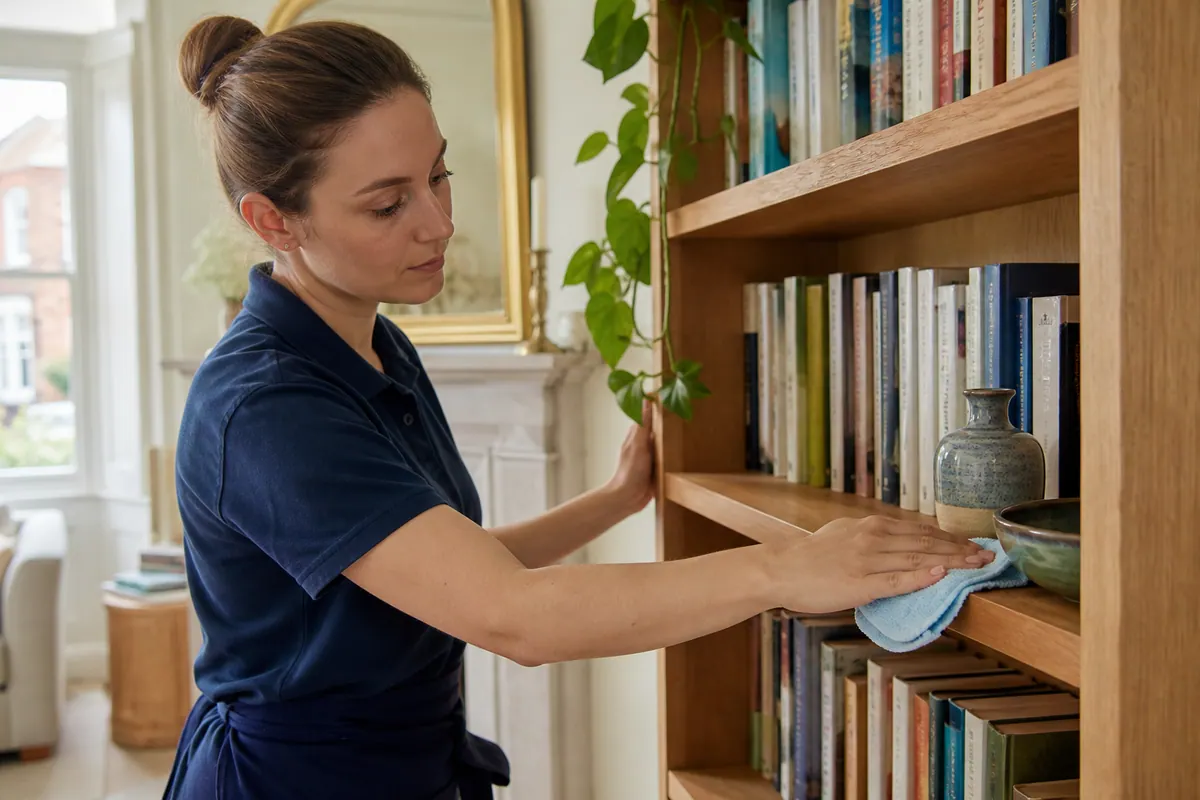
Living spaces
The living-room scope concerns maintained surfaces and floors: accessible dusting, agreed vacuuming and compatible floor care.
Decide where fragile and personal items will stay before the visit; a surface clean is not a storage arrangement.
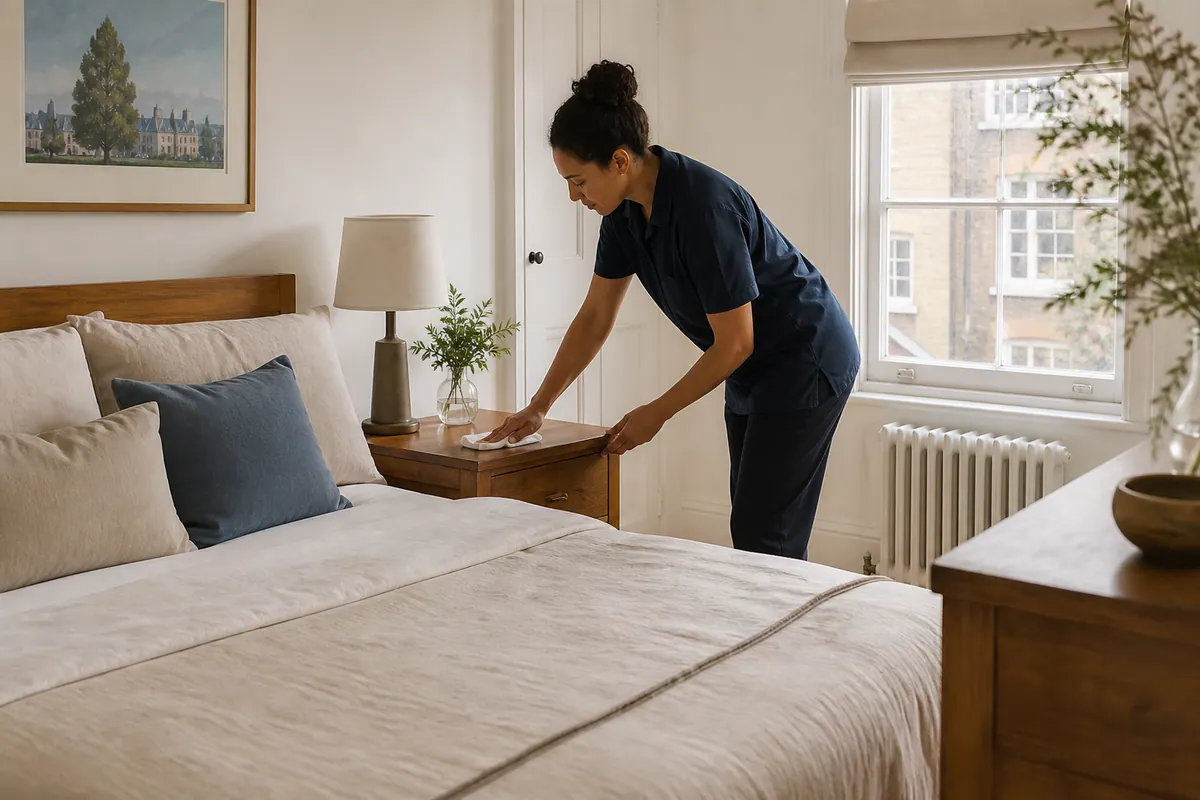
Sleeping rooms
Keep sleeping-space care specific to reachable surfaces, dusting and the included floor areas; appropriate vacuuming can be part of it.
Check that the intended bedrooms are available, with medicines and private items stored by the household.
Visit frequency
Choose the recurring rhythm after looking at household activity and the upkeep needed, rather than room count alone.
| Planning point | Weekly | Fortnightly |
|---|---|---|
| Best suited for | More frequently used areas | A household maintaining areas between visits |
| Core focus | A maintained core room routine | Assess what the interval leaves to maintain |
| Priority planning | Use an agreed main-task sequence | Choose the leading tasks for this interval |
| Visit scope | Define the tasks before the visit | The chosen interval does not fix scope |
Begin with an honest description of the accumulated tasks. The first appointment may need additional time before a recurring pattern is practical.
When the routine becomes established, retain the useful core and discuss new requirements before they alter the workload.
Household arrangements
Use relevant circumstances when preparing the brief.
When your schedule keeps you elsewhere, leave the team a confirmed room list and direct access instructions.
A useful family brief identifies the busiest areas and what can be cleared before the cleaner arrives.
Plan the animal’s location for the visit and check whether the intended room sequence remains workable.
Specify the workspace boundary and whether cleaning there is possible during the agreed visit.
The resident’s maintenance needs should be clearly authorised; check-out work is a separate conversation.
Confirm who has authority to alter the visit, rather than leaving conflicting requests to be resolved at the door.
Material guidance
Point out the materials in the included rooms, including worn or sensitive areas, before an approach is agreed.
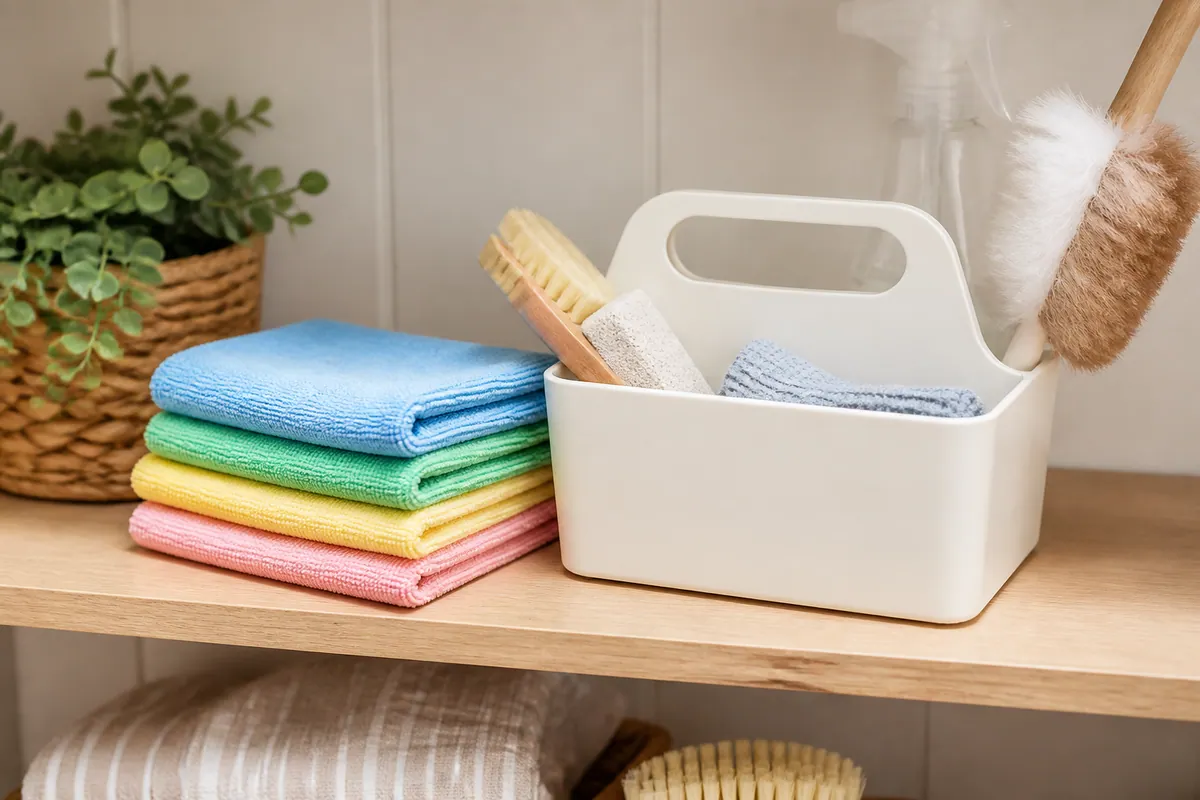
Stone care begins with identification, not an assumption based on the room around it.
Identify finished timber and its maintenance instructions so the cleaner can consider a compatible method.
Point out sensitive furniture coatings so cleaning can be planned around the actual finish.
Name the steel surfaces in scope and clarify any separate request involving an appliance interior.
A painted surface needs its condition explained, especially where the coating is damaged.
Separate services
The services below are not default inclusions. High work, heavy items and restoration also require a separate discussion.
Ask about extraction separately when a carpet needs more than ordinary vacuuming.
Do not infer an internal oven service from a booking that mentions appliance fronts.
Use the dedicated mould service for assessment; routine cleaning does not imply treatment of the underlying issue.
Discuss outside window access through the relevant service rather than assuming it is included.
Recent building work changes the context; discuss that residue under a separate cleaning requirement.
Where ordinary upkeep is not enough, ask about a separately defined one-off clean.
Quick answers
Price guides
The current service guides appear below. Confirm duration, inclusions and the final quote with Alesta.
| Service | Price | Main factors |
|---|---|---|
| Regular domestic cleaning | From £20/hour | Scope, supplies, minimum duration, frequency and location |
| First / one-off domestic visit | From £90 | The accumulated work and the priorities for the first booking |
| Specialist / intensive scope | Separate assessment of the price | Separate service needs and intensive or high-access work |
A useful quote starts with the home’s condition and size, the schedule and time required, then checks supplies, access and any separate tasks.
Task order
The arrows help organise a brief, but any change to the actual cleaning plan must be agreed directly.
Booking process
Describe the condition of the included areas and any limits on when they can be entered.
Connect the frequency discussion to the real household workload and the core room list.
Agree the necessary supplies and access details, including sensitive surfaces and departure instructions.
Agreed household tasks are carried out with the relevant material care in mind.
Confirm the useful maintenance priorities and discuss anything that requires a different scope.
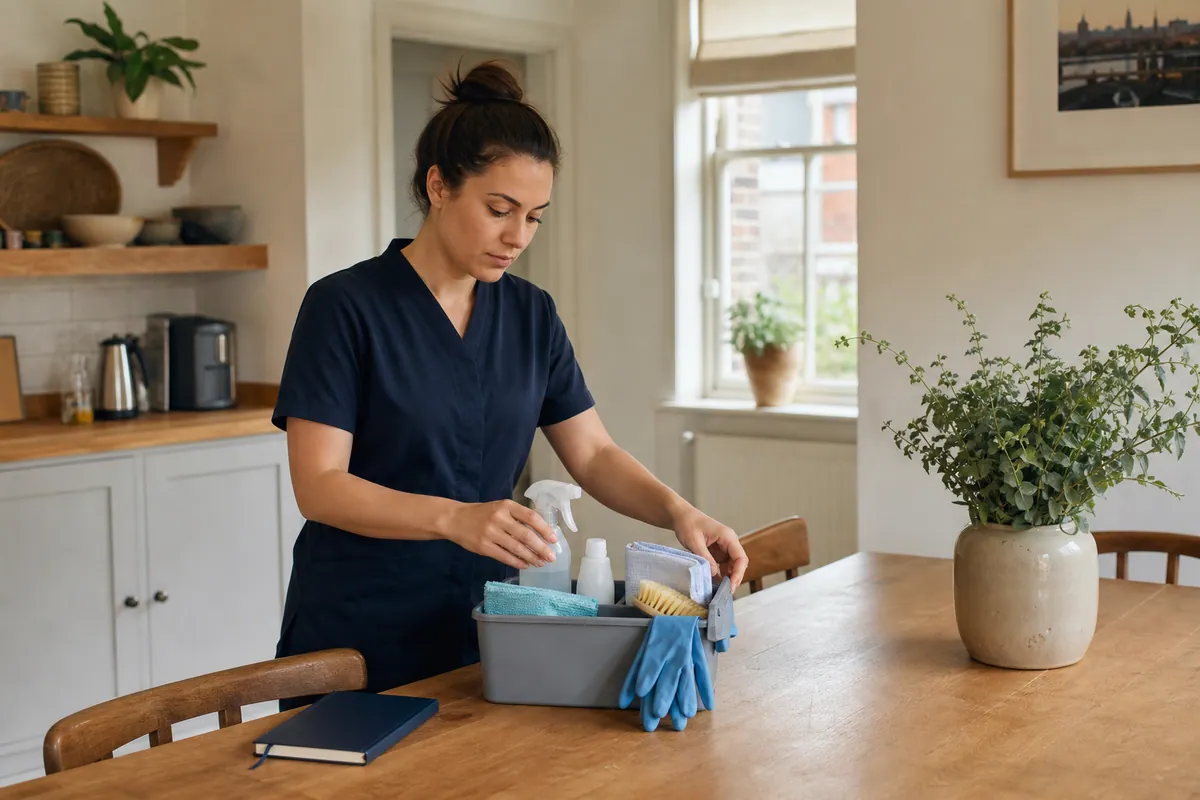
The intended scope made explicit.
Core maintenance follows the plan.
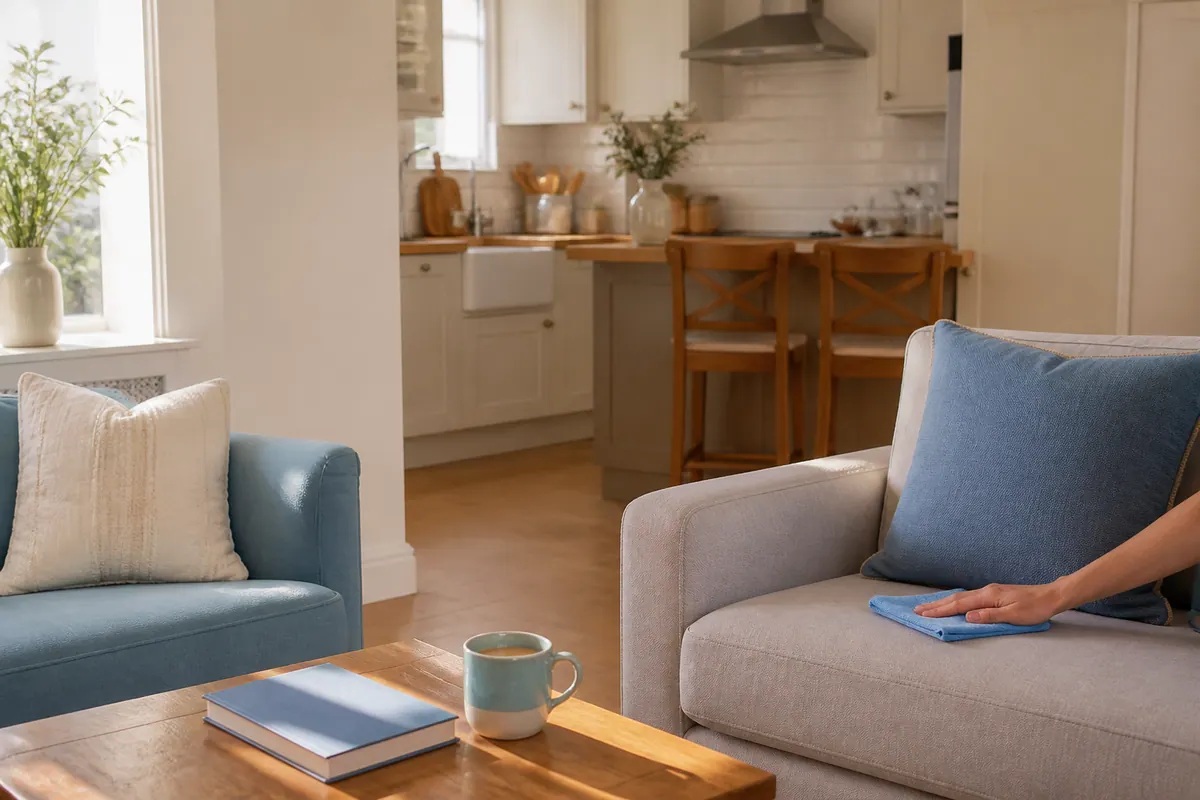
Keep the useful priorities in view.
These are illustrative home-care scenes, not a case study or a photographed customer outcome.
Practical access
Confirm a workable exchange of keys with the team and identify the person responsible.
An entrance desk is not an automatic access arrangement; establish the relevant permission first.
Give the relevant alarm instructions directly, keeping the details out of public messages.
Plan the animal’s location for the visit and check whether the intended room sequence remains workable.
Specify the workspace boundary and whether cleaning there is possible during the agreed visit.
Explain the parking situation in advance where restrictions are known.
Make the no-entry list part of the agreed brief, including anything not to be moved.
Make sure the booking describes real household requirements and suitable products instead of relying on a limitless checklist.
Booking questions
Separate the initial workload from the maintenance you hope to keep later. Tell the team which areas have fallen behind so the first duration is not based on an unrealistic routine.
Prepare the agreed surfaces and floors yourself, then explain pets, access and any excluded space before the appointment.
Use the regular £20/hour starting guide and first/one-off £90 guide to begin the discussion. Ask what the agreed quotation includes.
Look at the work that accumulates and the room use during the interval. Those details make the frequency discussion more useful than a fixed rule.
Ask for the adjustment directly and check the available time if more work is involved. The on-page board does not amend a booking.
An initial visit is not always the same workload as upkeep. Tell the team which rooms have fallen behind when requesting the quote.
For the first appointment, tell Alesta about the equipment already available and any finish instructions. Product provision and suitability should be settled before that starting visit.
Set the office boundary directly with the team. The cleaner needs to know whether the room is out of scope or available at another point.
Use the carpet-cleaning enquiry for extraction; ordinary vacuum care in a domestic visit does not imply that service.
Use the outline in a direct enquiry, then agree availability, work and supplies. The planning tools cannot finalise the booking.
Isleworth / local enquiry
Isleworth bookings need the full postcode and the intended rooms. Explain the actual condition as well as the room count, so products, timing and the entry arrangement can be discussed together.
For the wider service scope, see Domestic Cleaning, or ask the team about your address.
Map reference
This map helps locate the area while the team confirms the actual address.
Open map in a new tabYour next step
Explain the starting workload honestly. Separate catch-up work from later upkeep. Check the final arrangements before confirming.
