
Do not underestimate accumulated work
Begin with an honest description of the accumulated tasks. The first appointment may need additional time before a recurring pattern is practical.
Finchley / Rooms worth putting first
Decide between competing everyday tasks
When floors and dusting compete for attention in a Finchley home, identify the leading requirement. A priority list helps explain the choice without implying that time can expand indefinitely.
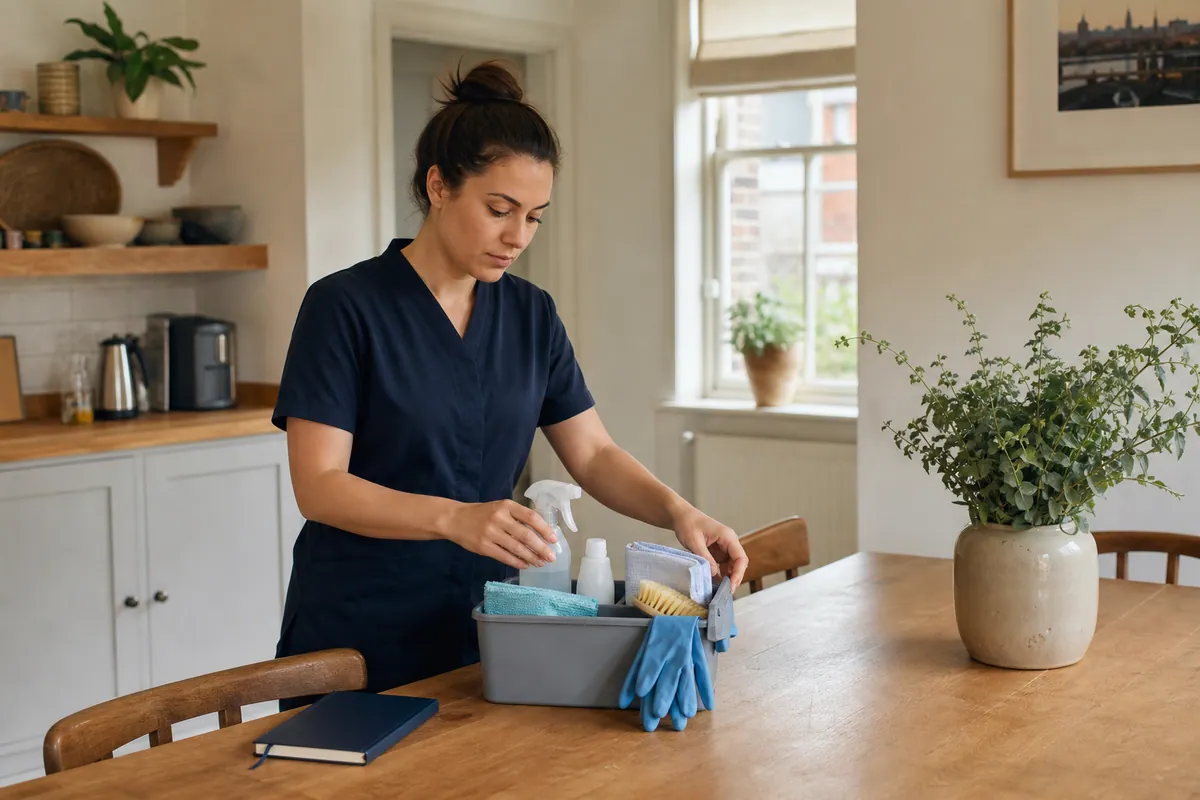
Kitchen · Bathroom
Living areas · Bedrooms
Finchley / household planning
When floors and dusting compete for attention in a Finchley home, identify the leading requirement. A priority list helps explain the choice without implying that time can expand indefinitely.
The intended task order should be visible before the cleaner starts moving through the rooms.
Describe why one area matters more this visit, such as a frequently used living floor. Keep the remaining work within the confirmed scope rather than leaving it open-ended.
Point out the accessible floor area and the furniture surfaces competing for attention. The cleaner needs to understand the actual work behind your ranking.
If an optional detail is lower on the list, state whether it is requested only when agreed time allows. Keep that expectation distinct from a guaranteed inclusion.
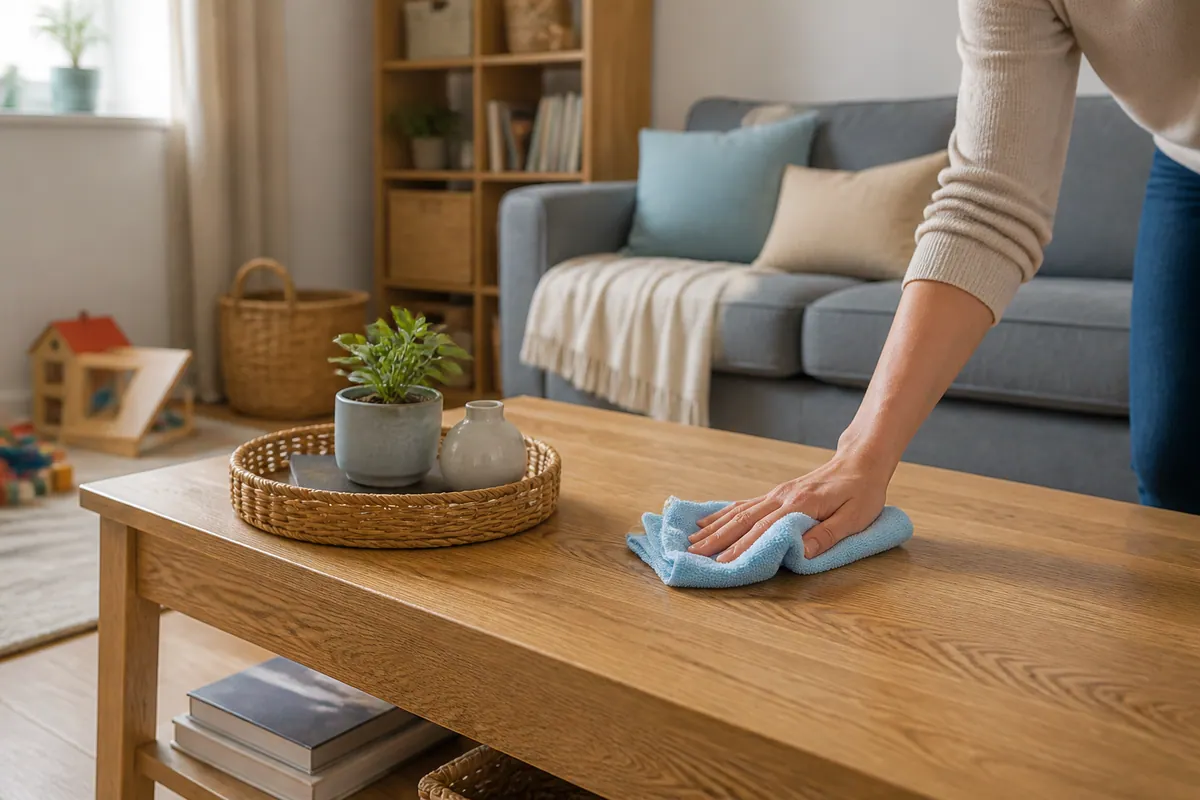
Visit frequency
The relevant question is how the home is used during the gap. Frequency alone does not establish a suitable duration.
| Planning point | Weekly | Fortnightly |
|---|---|---|
| Best suited for | Rooms in active daily use | Upkeep organised at a longer interval |
| Core focus | Care for the regularly included spaces | Set priorities for the less frequent visit |
| Priority planning | State the ordinary tasks that matter | Review the priority list for the longer wait |
| Visit scope | Check the proposed inclusions directly | Agree the work for the longer interval |
Begin with an honest description of the accumulated tasks. The first appointment may need additional time before a recurring pattern is practical.
When the routine becomes established, retain the useful core and discuss new requirements before they alter the workload.
Room coverage
Room-by-room planning gives the enquiry useful detail. Tell the team which examples apply and which spaces are excluded.
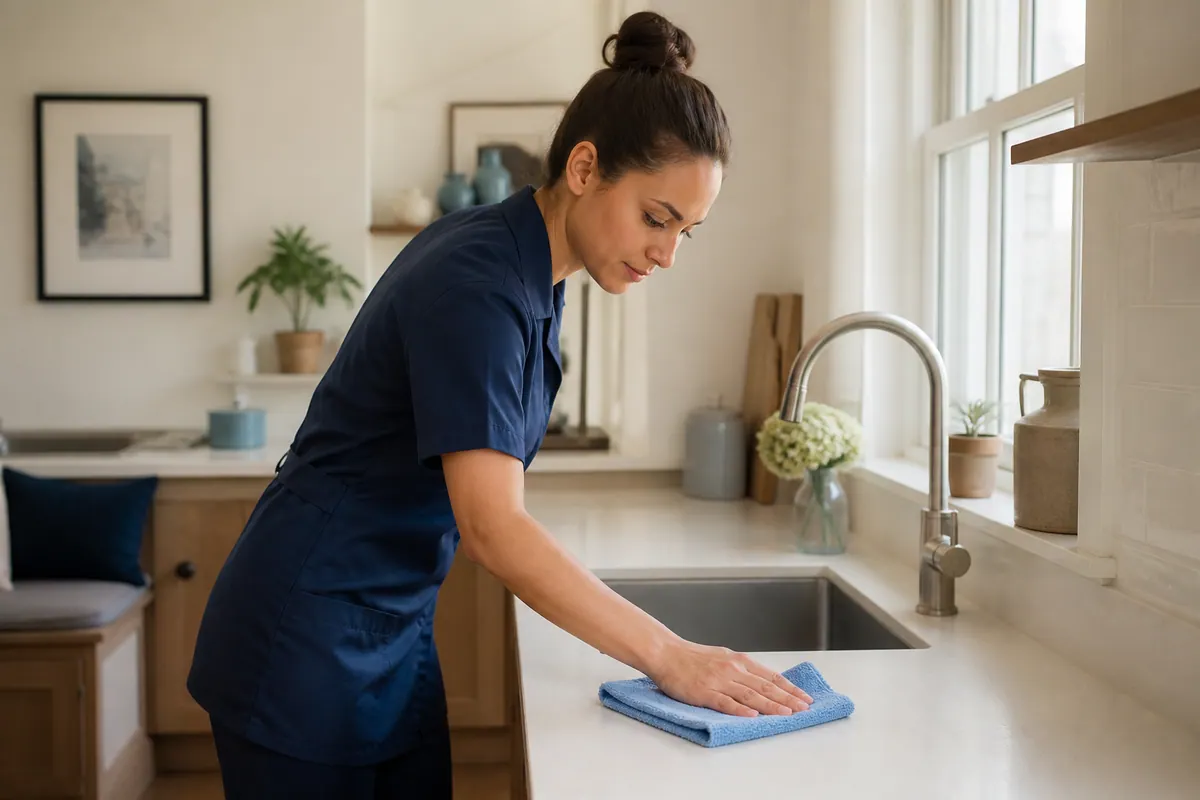
Kitchen
Kitchen upkeep concerns reachable working areas and listed exterior surfaces, including the sink, worktops, splashback and fronts.
Leave the listed preparation surfaces reachable, and raise internal oven work separately if you need it.
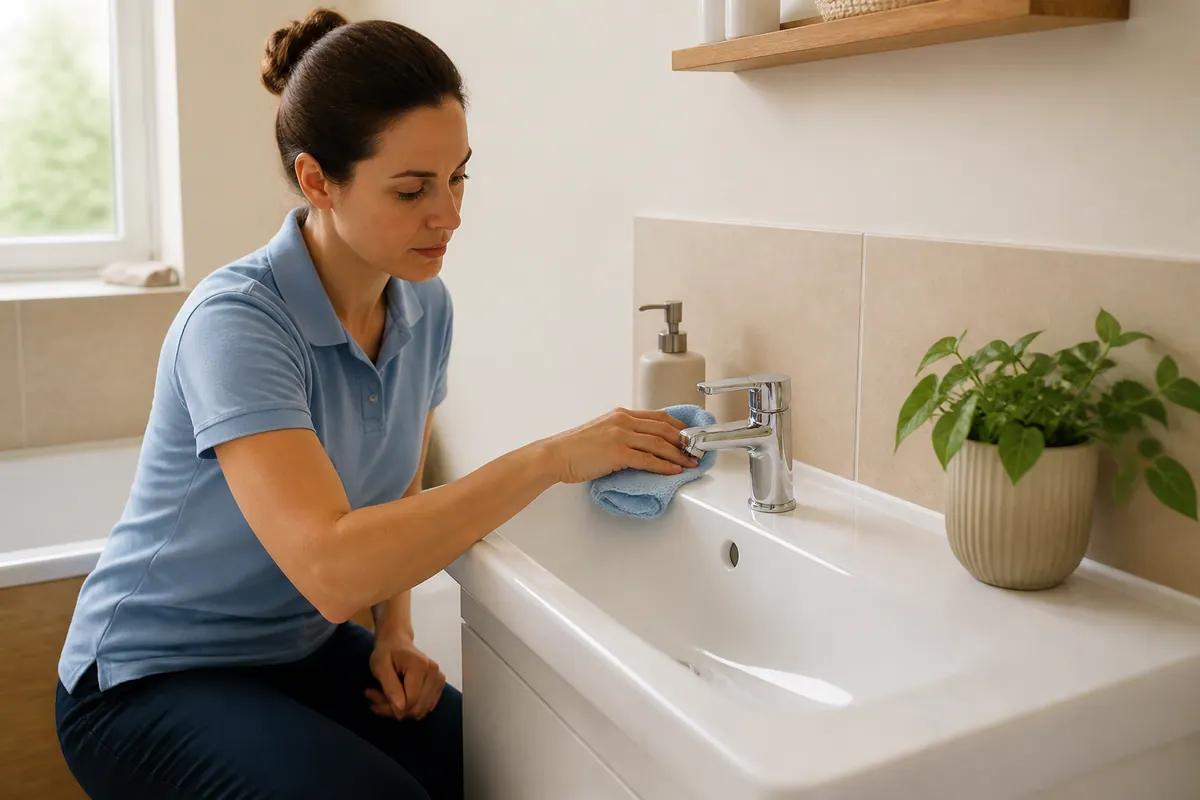
Bathroom
The bathroom list may cover taps, sanitaryware and shower surfaces together with mirrors and tiles that can be reached safely.
Share the material instructions for sensitive areas and identify defects; a maintenance clean does not repair them.
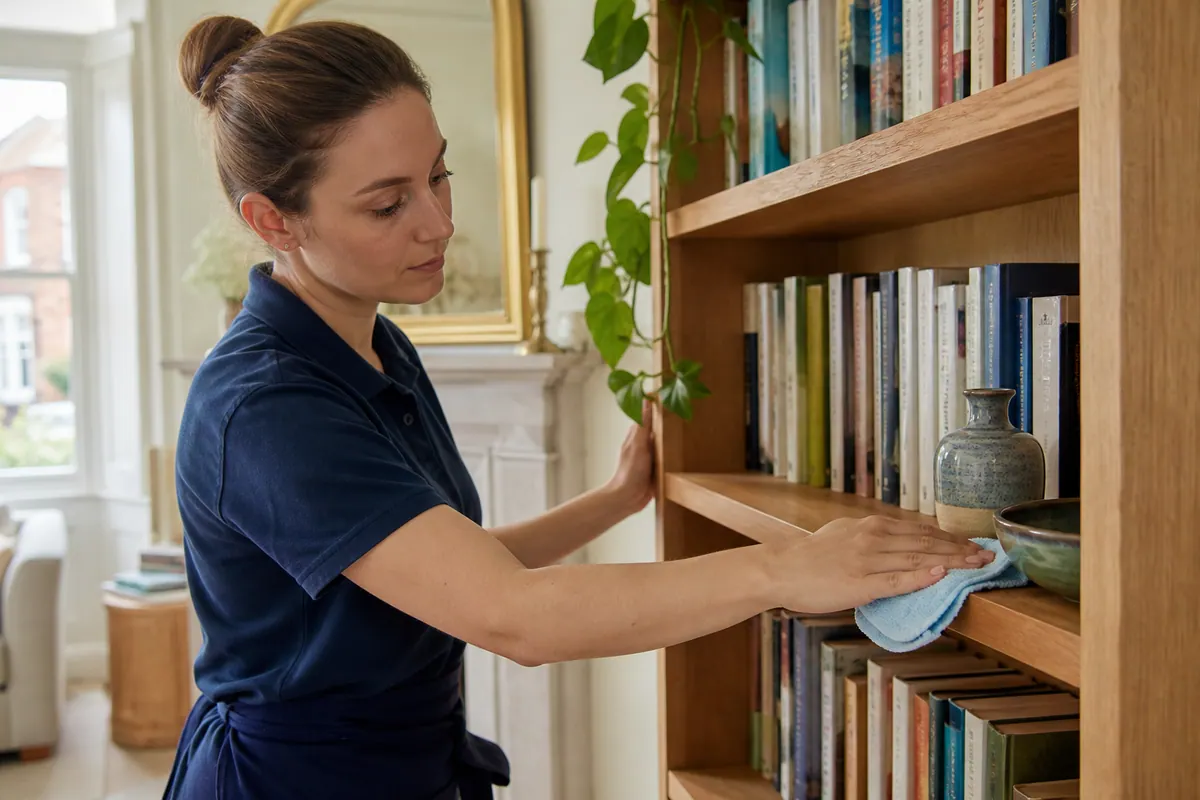
Living spaces
Define the accessible living-space furniture and floors for dusting, vacuuming and cleaning appropriate to the finish.
Store fragile objects and paperwork yourself, and identify belongings the cleaner must leave alone.
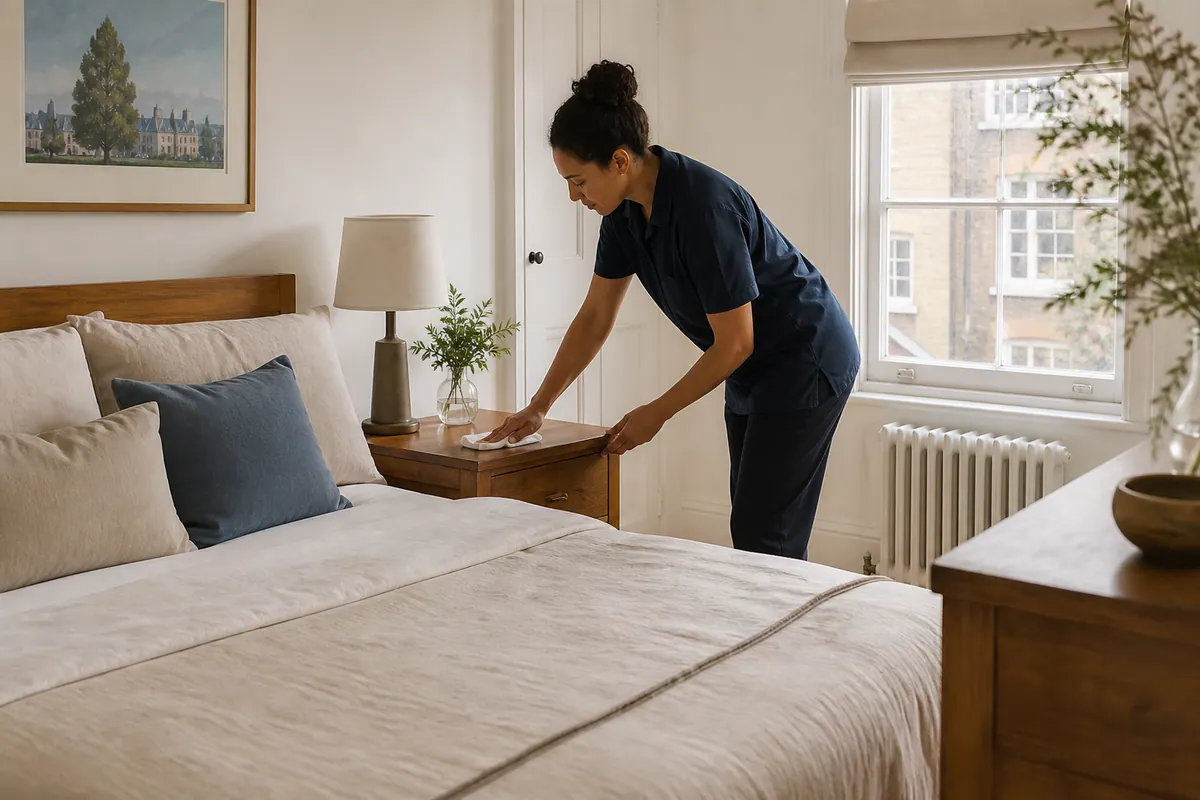
Sleeping rooms
Name the bedrooms you want covered, then describe their accessible surfaces and the floor cleaning needed within the visit.
The household should remove medication from accessible surfaces and explain any no-entry instruction.
Booking process
Describe the spaces, their condition and how the household will use them during the appointment.
Review the practical task list before confirming how often the household needs support.
Settle material-care notes and access before the day, rather than leaving them to arrival.
Work is directed by the agreed priorities and the care required for the included finishes.
Confirm the useful maintenance priorities and discuss anything that requires a different scope.
Decide the rooms before arrival.
Agreed surfaces maintained in order.
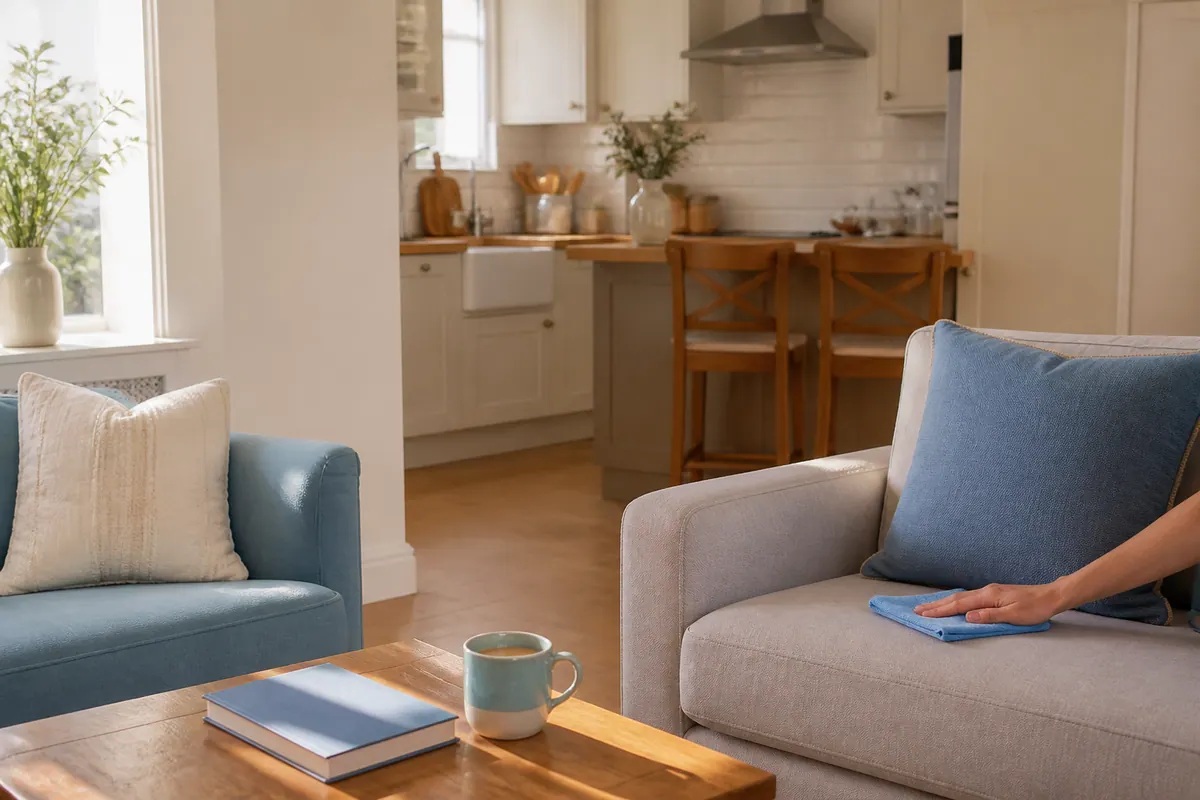
A baseline to review for next time.
These scenes illustrate domestic care; they do not document customer work or a before-and-after result.
Finchley / local enquiry
Finchley bookings need the full postcode and the intended rooms. Ask about room coverage, products, duration and entry before accepting a booking; postcode availability must also be checked.
For the wider service scope, see Domestic Cleaning, or ask the team about your address.
Map reference
This is an area reference, not a marked Alesta branch or booking guarantee.
Open map in a new tabRoutine planner
Think of this as a way to prepare your enquiry; selecting a room or interval does not secure a visit.
Essential upkeep
List the necessary upkeep first, then identify a detail worth rotating. A longer list is not an automatic extension of the appointment.
List the particular detail you want considered and check its place in the appointment; extra coverage is not implied.
Household arrangements
The examples help describe access and room use.
Explain how the cleaner will enter while you work elsewhere and which everyday spaces need maintaining.
Describe the family spaces that need upkeep and prepare the floors before asking for additional detail.
Decide who will manage the pets and identify doors or areas requiring particular care.
Calls and occupied workspaces belong in the briefing. Agree whether the office is excluded or available later.
Confirm the authorised instruction for the lived-in rental; move-out cleaning is not implied by its regular upkeep.
Keep a single current brief with the contact responsible for keys, included rooms and alterations.
Material guidance
Share material-care information before products are selected. Moisture or a method that suits one finish may damage another.
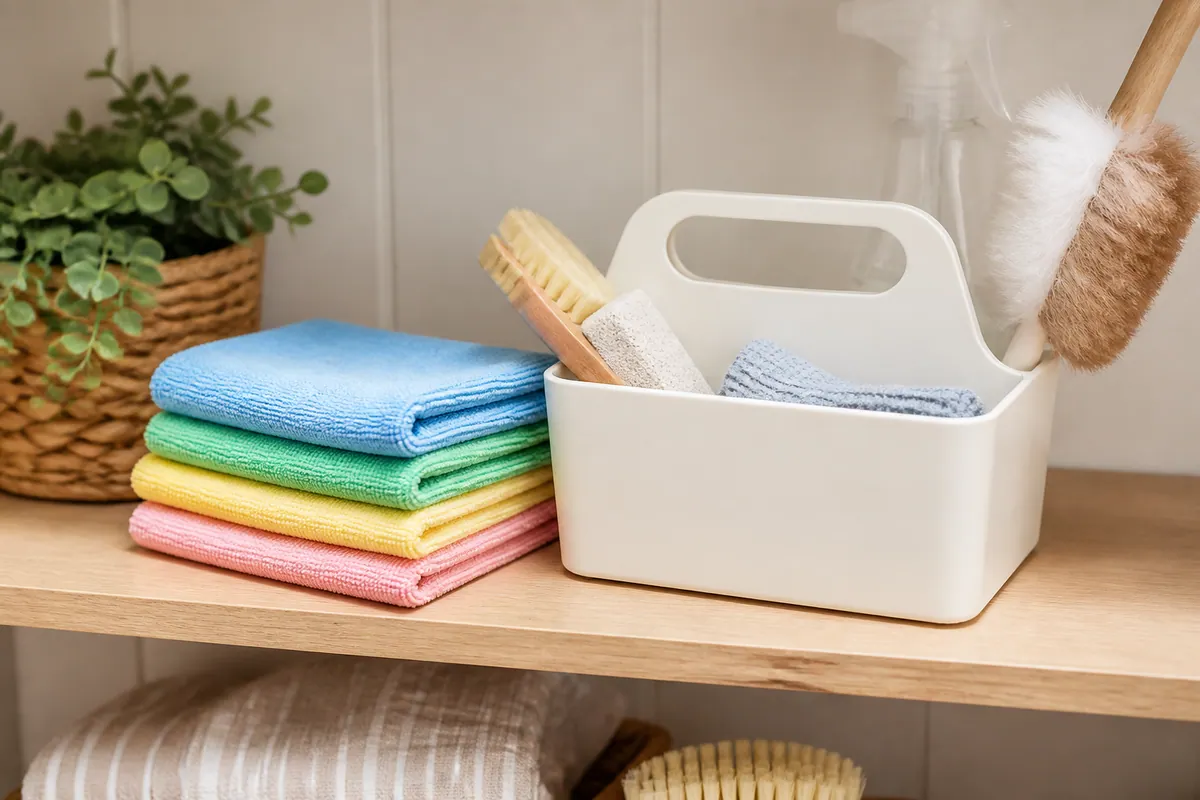
Name the stone and share its maintenance guidance instead of assuming any hard-surface cleaner is suitable.
Explain the wooden surface’s coating and care notes when discussing the cleaning method.
Provide any guidance for the coated furniture rather than treating all hard furnishings alike.
Ask about care of the listed steel finish without turning an exterior request into appliance servicing.
Existing paint damage should be recorded in the discussion, not mistaken for removable dirt.
Separate services
A domestic visit is not a substitute for specialist work. Discuss high access, lifting or restoration as distinct requirements.
Ask about extraction separately when a carpet needs more than ordinary vacuuming.
Do not infer an internal oven service from a booking that mentions appliance fronts.
If mould is a concern, explain it as a separate requirement before arranging ordinary upkeep.
Request exterior window cleaning independently, including the access circumstances that affect it.
Explain recent works and their residue separately; routine maintenance is not an after-builders clean.
Distinguish a planned maintenance appointment from a more intensive catch-up request.
Quick answers
Price guides
Read the starting figures together with the proposed task list and ask for the confirmed total.
| Service | Price | Main factors |
|---|---|---|
| Regular domestic cleaning | From £20/hour | Visit minimum, household size, product provision and postcode |
| First / one-off domestic visit | From £90 | How much catch-up is needed and which areas lead |
| Specialist / intensive scope | Priced after a separate discussion | Intensive work, sensitive materials or another service |
Final cost depends on the intended duration and household workload, with products, access and additional services also relevant.
Task order
Move a task higher when it matters more, keeping the total work realistic for the agreed appointment.
Practical access
Agree the handover and return privately; do not put key instructions in public correspondence.
If entry goes through a concierge, clarify the permissions and how the team reaches the flat.
Explain the authorised alarm steps through a private conversation with the team.
Decide who will manage the pets and identify doors or areas requiring particular care.
Calls and occupied workspaces belong in the briefing. Agree whether the office is excluded or available later.
Flag practical vehicle-access restrictions early instead of leaving them for arrival.
A no-entry room needs a clear instruction before arrival, together with any untouched items.
Good preparation means an agreed task list and a checked access arrangement, with specialist requests identified separately.
Booking questions
Explain which part of the household list matters most and why. If floors take precedence, that should be a visible decision rather than an assumed extension of the appointment.
Put away personal items where you want them kept. Explain access restrictions so the prepared room list matches the actual visit.
From £20/hour is the regular guide, while a first or one-off visit starts at £90. The confirmed scope determines the actual booking.
Consider the room activity and work left after the gap. Choosing weekly rather than fortnightly does not by itself fix the required visit length.
Yes, raise the new order in advance where possible. Any expansion beyond the original work should be confirmed separately.
A first appointment may face work that later maintenance will not. Explain that initial condition before choosing the recurring scope.
Settle the product and equipment arrangement directly. A household preference does not replace checking compatibility with the actual surface.
Yes, explain when the room is unavailable and agree whether it is omitted or entered later. A cleaner should not have to interrupt work to find out.
Carpet extraction needs a separate scope and equipment. Mention it explicitly rather than assuming a vacuuming request covers it.
Take the outline to Alesta and settle the work, supplies and access with an available schedule before considering the visit booked.
Your next step
Rank floors against reachable dusting. Check the effect of extra detail. Ask Alesta to confirm the practical booking details.
