
A workday away from home
For a visit during your workday, settle the entry plan and give the team a defined room instruction.
North Finchley / Care around daily living
Use the first clean to establish the routine
A North Finchley first appointment should reflect the condition the cleaner will see, not an idealised maintenance week. Identify the initial priorities before settling the recurring list.
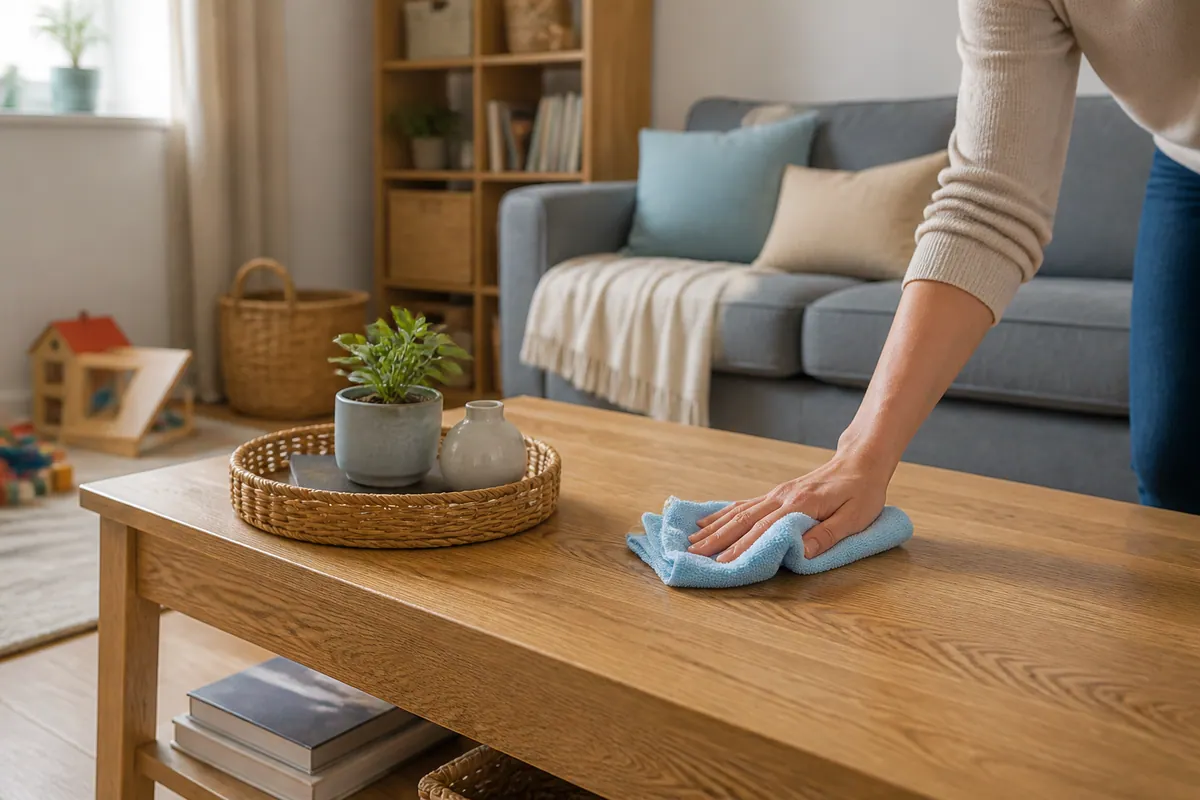
Kitchen · Bathroom
Living areas · Bedrooms
Quick answers
Household arrangements
None of these households has a fixed cleaning package.
For a visit during your workday, settle the entry plan and give the team a defined room instruction.
Keep everyday household areas ahead of occasional rooms, and ensure belongings do not block the agreed work.
A room list needs to account for the animal at home; explain its location and any access restriction.
Tell the team which room cannot be interrupted so another area can lead the appointment.
The resident’s maintenance needs should be clearly authorised; check-out work is a separate conversation.
An authorised household contact should settle any changed priorities before the team arrives.
North Finchley / household planning
A North Finchley first appointment should reflect the condition the cleaner will see, not an idealised maintenance week. Identify the initial priorities before settling the recurring list.
An early review can distinguish recurring needs from tasks that belonged only to the catch-up.
Explain which rooms have had regular attention and which have not. That gives the enquiry a more useful starting point than a blanket request for a standard clean.
Explain what the household currently maintains between appointments. That context helps separate ongoing support from work that has accumulated before the first visit.
Review the proposed routine against the condition actually described, including any sensitive finishes. A first appointment should not inherit an unrealistic future checklist.
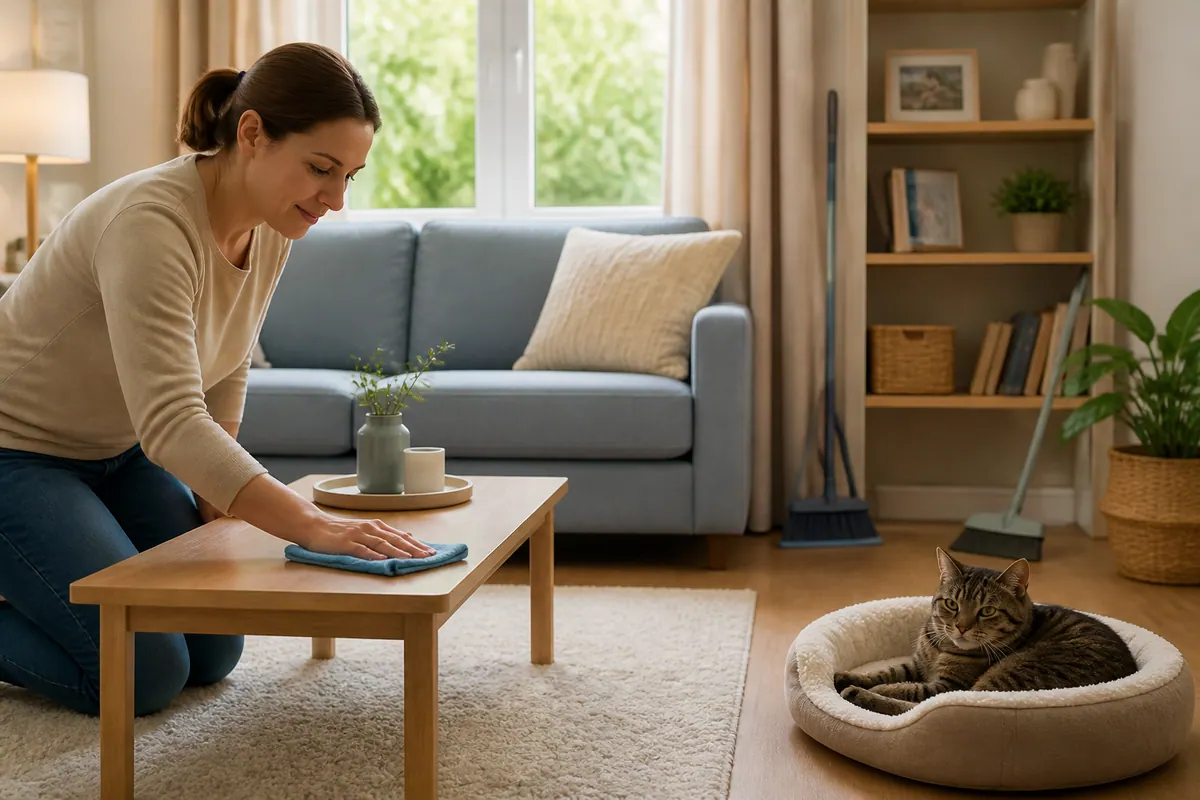
Task order
This priority board illustrates a conversation about task order. It does not send instructions to a booked cleaner.
Price guides
The rate guide is only the beginning; inclusions, minimum time and practical arrangements need checking.
| Service | Price | Main factors |
|---|---|---|
| Regular domestic cleaning | From £20/hour | The scheduled interval, minimum visit, supplies and entry plan |
| First / one-off domestic visit | From £90 | The first room list, condition and agreed time |
| Specialist / intensive scope | An independent quote is needed | Heavy accumulated work and specialist access requirements |
The hourly guide alone cannot price a household. Include condition, visit length, frequency, products and practical access when enquiring.
Routine planner
Set out the type of property, preferred interval and leading task below. Treat the result as an enquiry outline only.
Essential upkeep
The cleaner needs to know which tasks take precedence. Select extras only after the main kitchen, bathroom and floor requirements are clear.
Choose optional work deliberately rather than accumulating a second checklist beneath the main room requirements.
Room coverage
Review the examples for the spaces you intend to include, then agree a realistic room scope with the team.
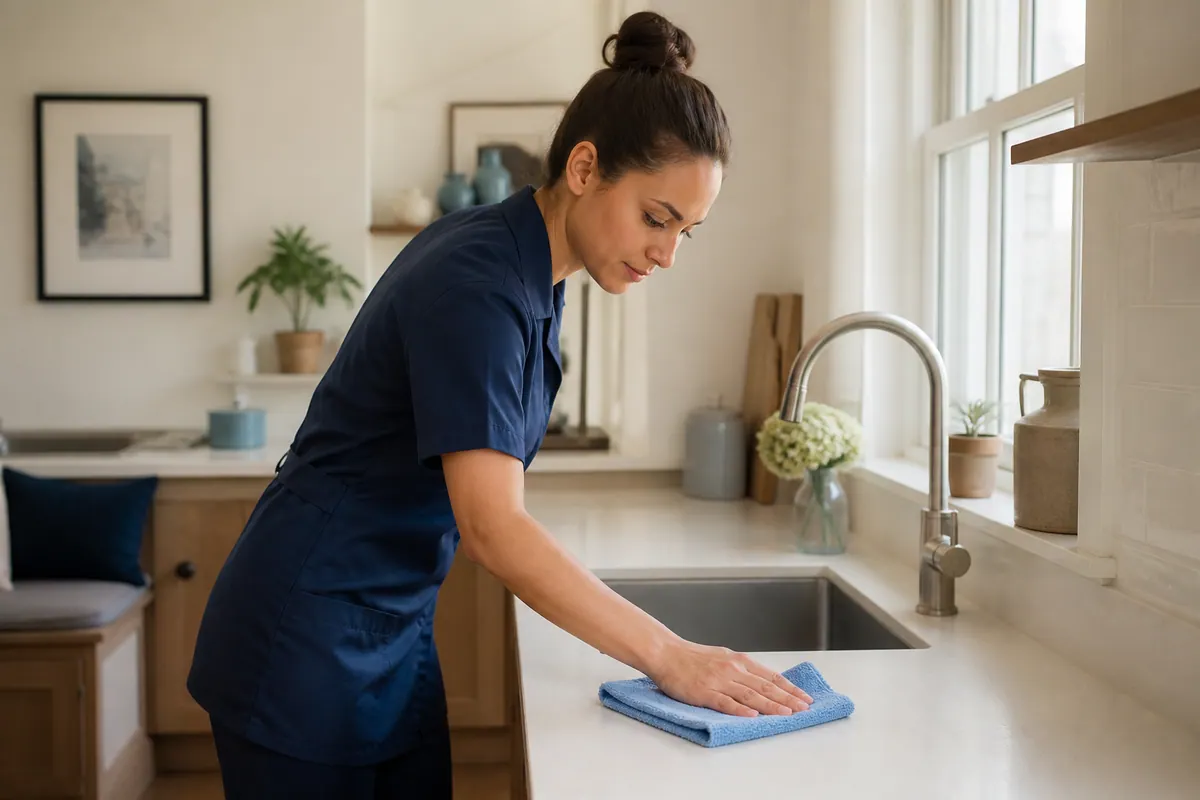
Kitchen
Within the confirmed scope, kitchen maintenance deals with accessible counters, sinks and splashbacks, alongside listed fronts and appliance exteriors.
Put food away and clear the agreed counters; an oven interior needs a separate cleaning request.
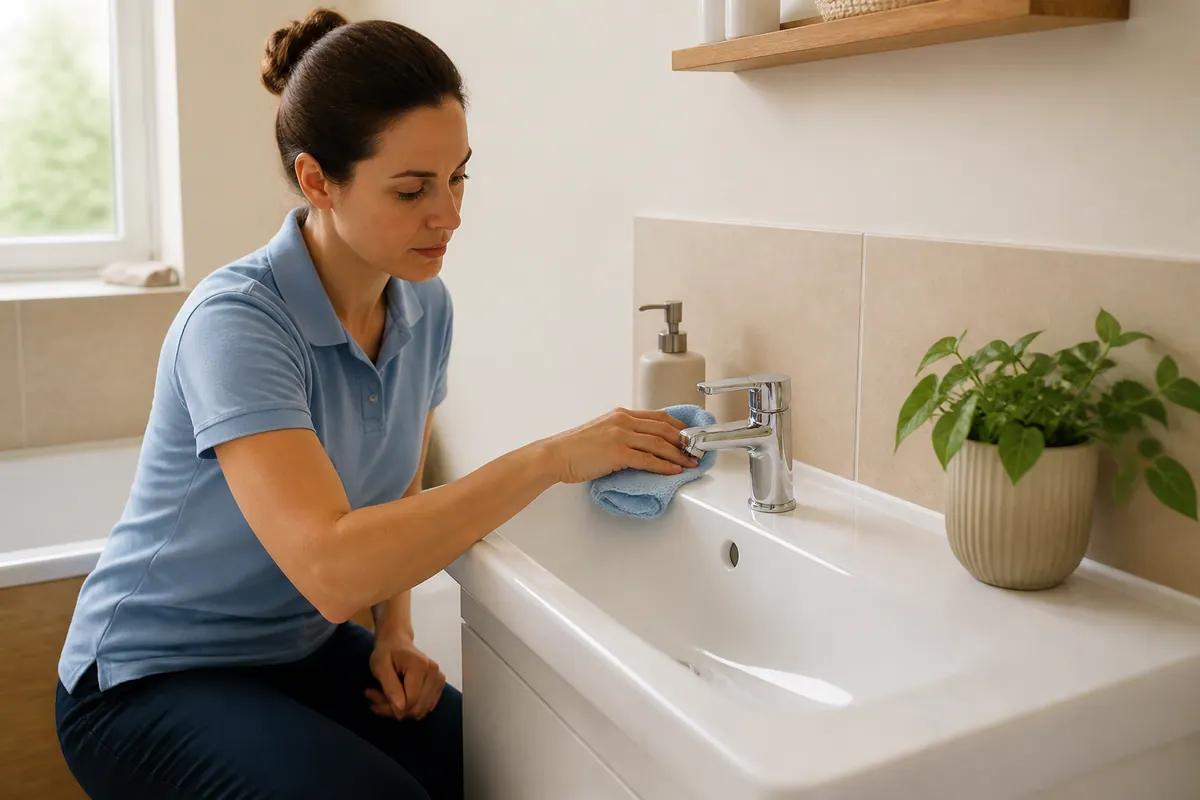
Bathroom
Bathroom upkeep can include sanitaryware, taps, shower surfaces, mirrors and reachable tiles, with material compatibility checked first.
Disclose worn seals and sensitive stone so cleaning expectations do not become repair expectations.
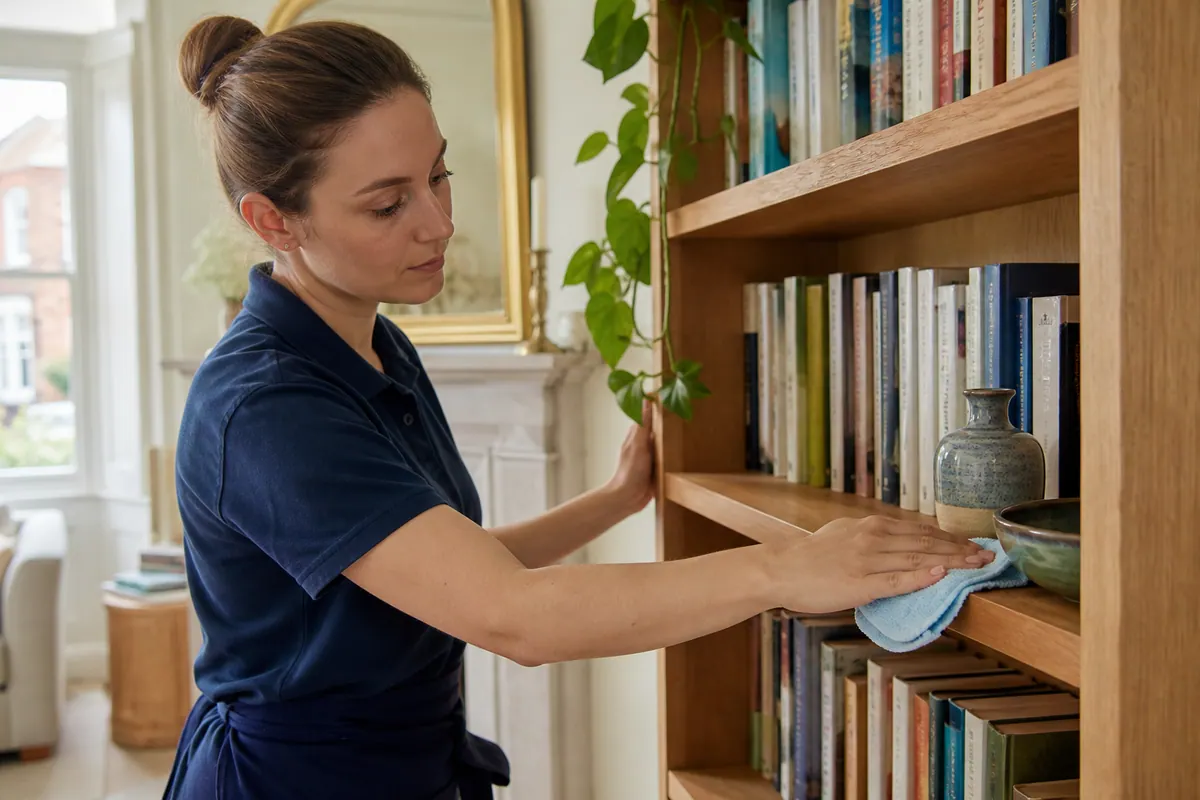
Living spaces
The living-room routine can maintain reachable dusting areas and the confirmed floor space with suitable care.
Put personal documents away and make fragile items secure; name anything that should stay untouched.
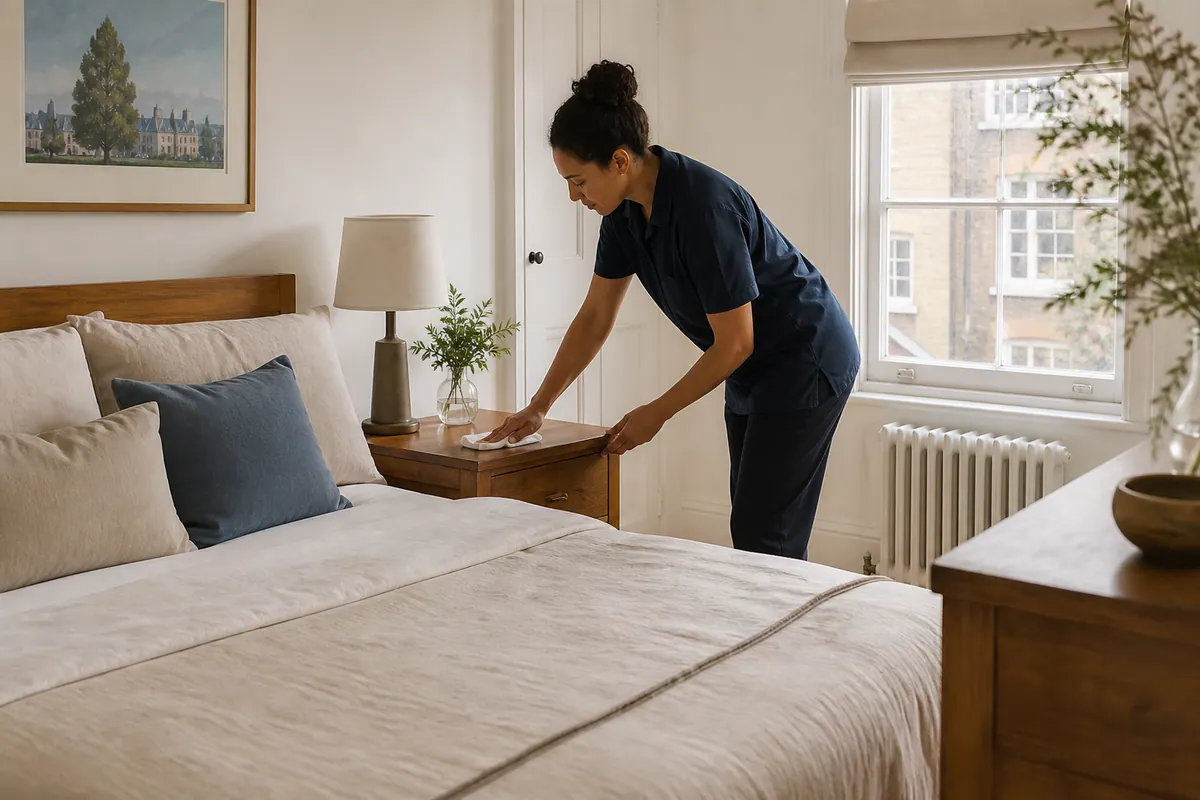
Sleeping rooms
Bedroom upkeep concerns the agreed room surfaces and floors. Dusting and vacuuming depend on access and the confirmed list.
Put medication and personal belongings away; mark any bedroom that should remain private.
Visit frequency
Choose an interval from actual room use and starting condition, not a rule that every home needs the same schedule.
| Planning point | Weekly | Fortnightly |
|---|---|---|
| Best suited for | More frequently used areas | A household maintaining areas between visits |
| Core focus | A maintained core room routine | Assess what the interval leaves to maintain |
| Priority planning | Use an agreed main-task sequence | Choose the leading tasks for this interval |
| Visit scope | Define the tasks before the visit | The chosen interval does not fix scope |
Initial accumulated tasks may change the time required, so explain them before comparing the first visit with later upkeep.
Retain a clear recurring core, then revisit its scope when rooms or household needs change.
Material guidance
A mixed room can require several cleaning approaches; identify its materials and existing damage at the outset.
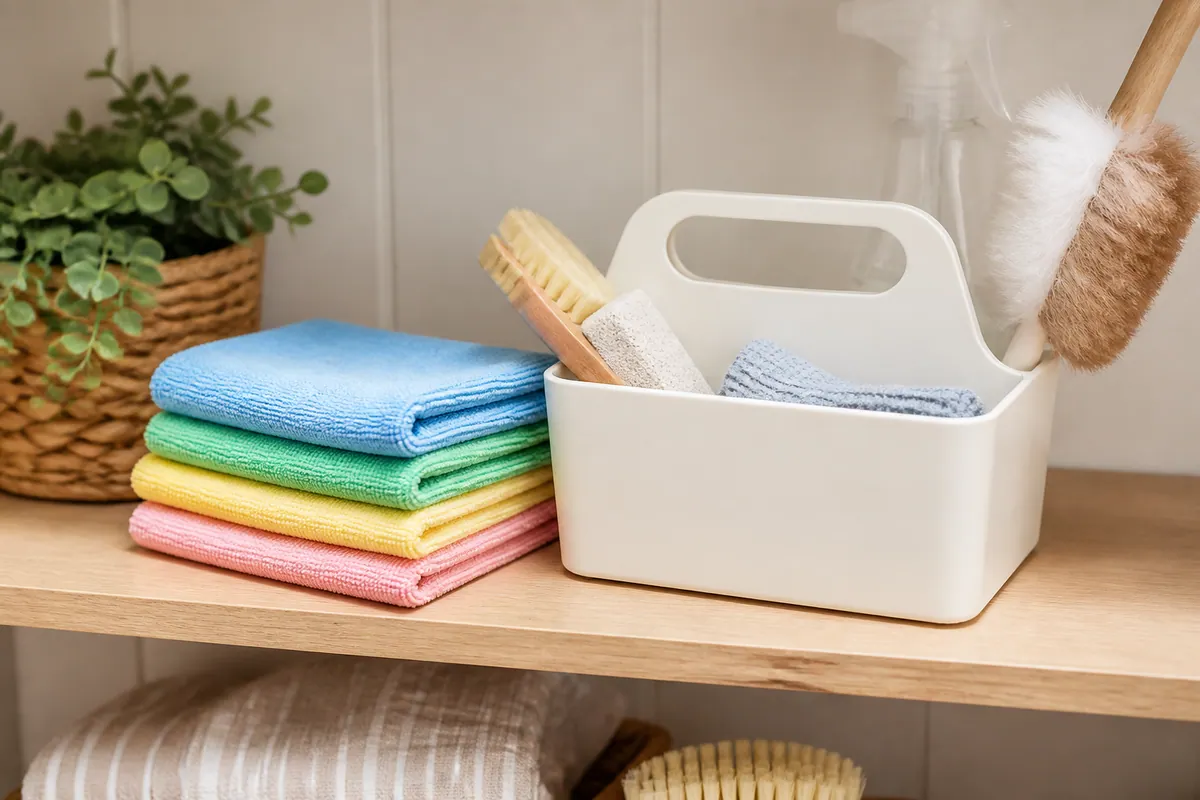
Give the cleaner the known care requirements for stone before agreeing the proposed products.
Identify finished timber and its maintenance instructions so the cleaner can consider a compatible method.
Point out sensitive furniture coatings so cleaning can be planned around the actual finish.
Name the steel surfaces in scope and clarify any separate request involving an appliance interior.
Show damaged or sensitive paintwork before the cleaner starts; routine care does not repair coatings.
Separate services
Ordinary household maintenance has limits; the linked services cover requests needing a different assessment or equipment.
Extraction involves different work from maintaining a carpet with a vacuum; it needs its own enquiry.
Interior oven work should be quoted as a dedicated requirement rather than inferred from kitchen surface care.
A routine wipe should not be presented as mould removal. Request an assessment of that issue separately.
The external side of glazing is a different service from maintaining the occupied rooms.
Dust left by construction can require another scope and should be disclosed before booking.
Explain intensive tasks before assuming the recurring household service can absorb them.
Booking process
Start with the actual rooms and explain who or what may affect access to them.
Work out the priority rooms and preferred rhythm with the team, subject to availability.
Explain surfaces, key arrangements and any parking limitation while confirming supply responsibility.
The defined room scope guides cleaning with compatible methods and accessible tasks.
Review the completed scope and separate any new requirement from the established routine.
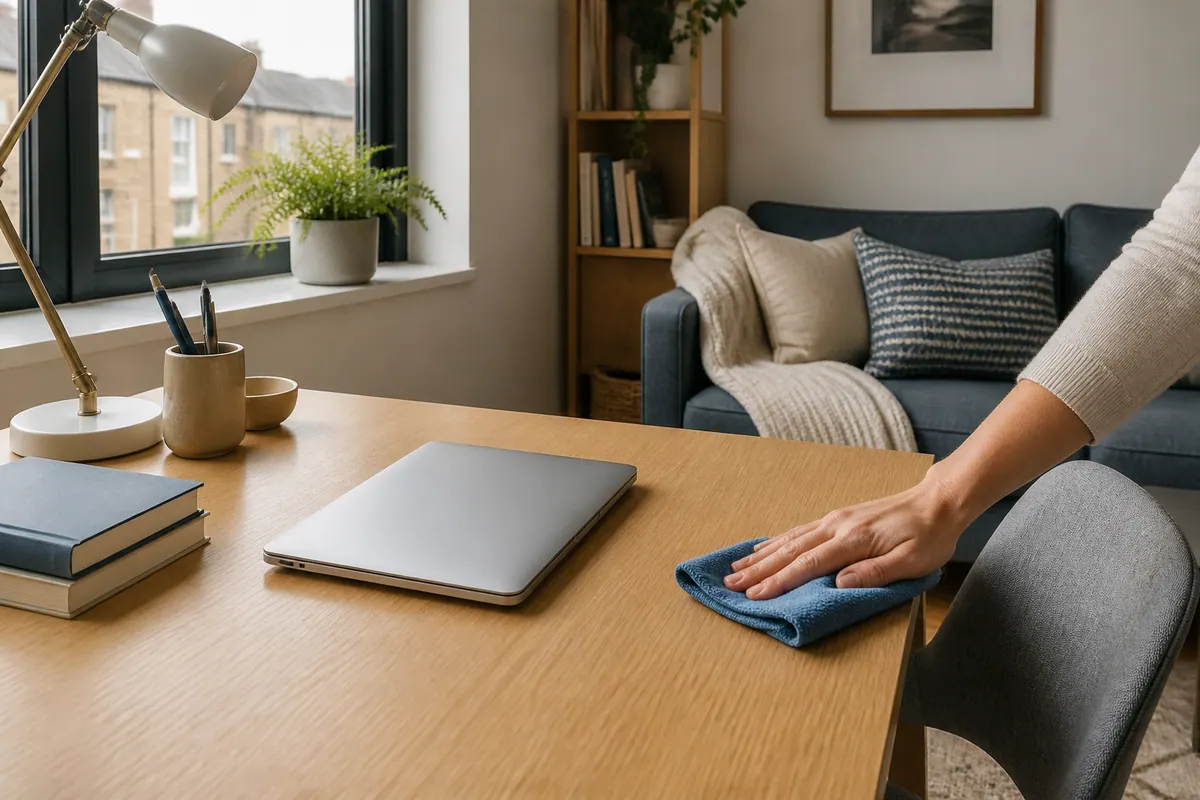
An understood list before the day.
The confirmed room work takes place.
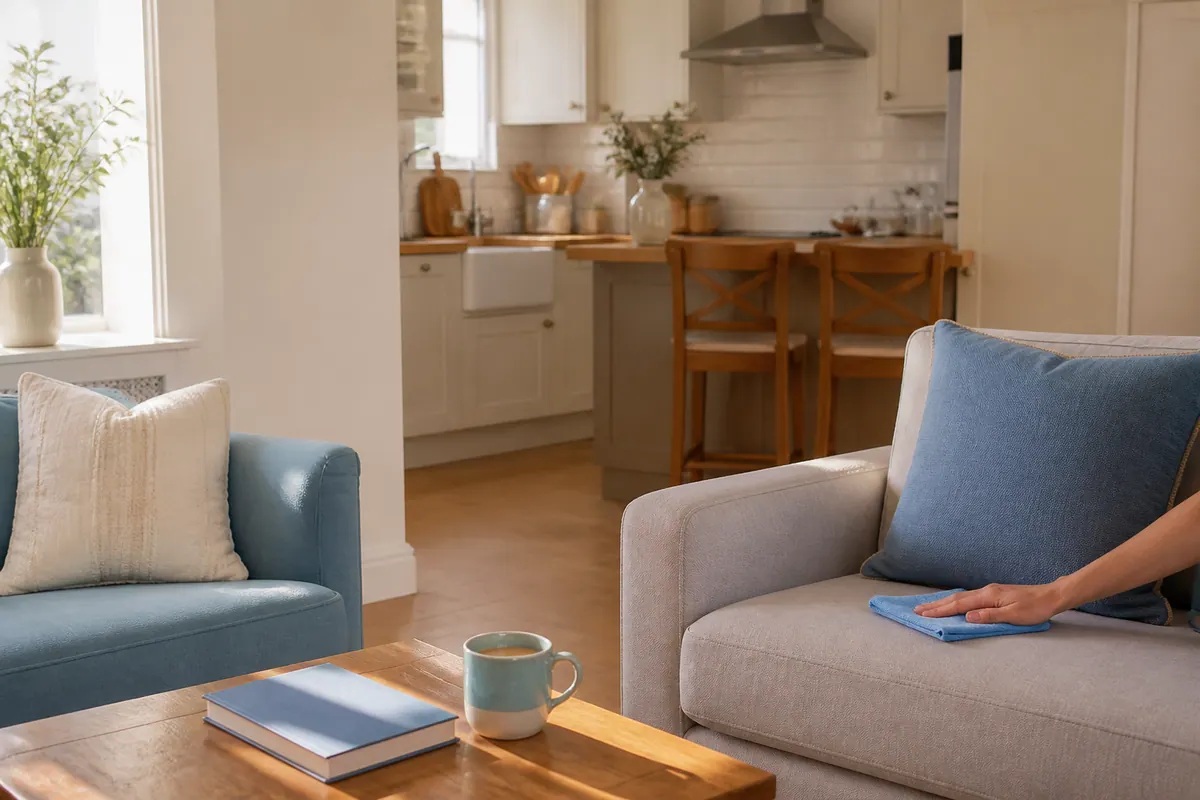
The recurring list remains understandable.
The photographs are illustrative scenes, not evidence of a customer job or transformation.
Practical access
Settle who provides and receives the key before the day, using direct communication with the team.
Check the building’s procedure and the person authorised to admit the cleaner.
Share necessary alarm instructions privately for both arrival and departure.
A room list needs to account for the animal at home; explain its location and any access restriction.
Tell the team which room cannot be interrupted so another area can lead the appointment.
Tell the team about known parking or loading restrictions while arranging the booking.
Identify the areas that remain private even if other rooms on that floor are being cleaned.
The useful assurance is a defined brief: what can be maintained, how entry works and which tasks need another scope.
Booking questions
Describe the condition across the intended rooms before choosing a repeating schedule. The first appointment can reveal which tasks recur and which belonged to an initial catch-up.
Make the confirmed work areas reachable and give clear private-room instructions. The cleaner should not have to choose storage for your belongings.
The recurring guide begins at £20 per hour; first or one-off domestic care begins at £90. Ask for the full quotation and minimum booking.
Explain the workload you expect at the next visit. A weekly or fortnightly request should be considered together with time and current condition.
The household can request a changed priority, but the team needs to know whether this also enlarges the brief.
Describe the accumulated tasks separately. The initial clean can need more time than a visit maintaining an already established routine.
Give the team your material-care information and ask which supplies form part of the appointment. There is no automatic all-products assumption.
Identify the office and its access restriction before the day. The confirmed room list should show whether another time is practical.
An ordinary carpet vacuum does not include extraction. Ask for the dedicated service when that is the work required.
Use the outline in a direct enquiry, then agree availability, work and supplies. The planning tools cannot finalise the booking.
North Finchley / local enquiry
North Finchley bookings need the full postcode and the intended rooms. A regular slot requires confirmation of your address and the available schedule, together with supplies and the proposed task list.
For the wider service scope, see Domestic Cleaning, or ask the team about your address.
Map reference
Use this location view alongside the entry instructions for your address.
Open map in a new tabYour next step
Show the starting room condition. Review the routine after the first booking. Discuss the intended visit directly with the team.
