
Why consider each elevation separately?
Front, side and rear gutters can sit at different levels or above different structures. A clear approach to one section does not establish that every other requested run is reachable.
Rainwater routes · access · clear scope
The condition of the channel matters, but so does the route to it. For gutter cleaning in Ealing, each requested elevation is considered in relation to height, additions, boundaries and usable space around the home. The agreed work removes routine debris from accessible channels and reachable outlets where specified; repairs and hidden pipe or drain issues are separate.
Visible clues
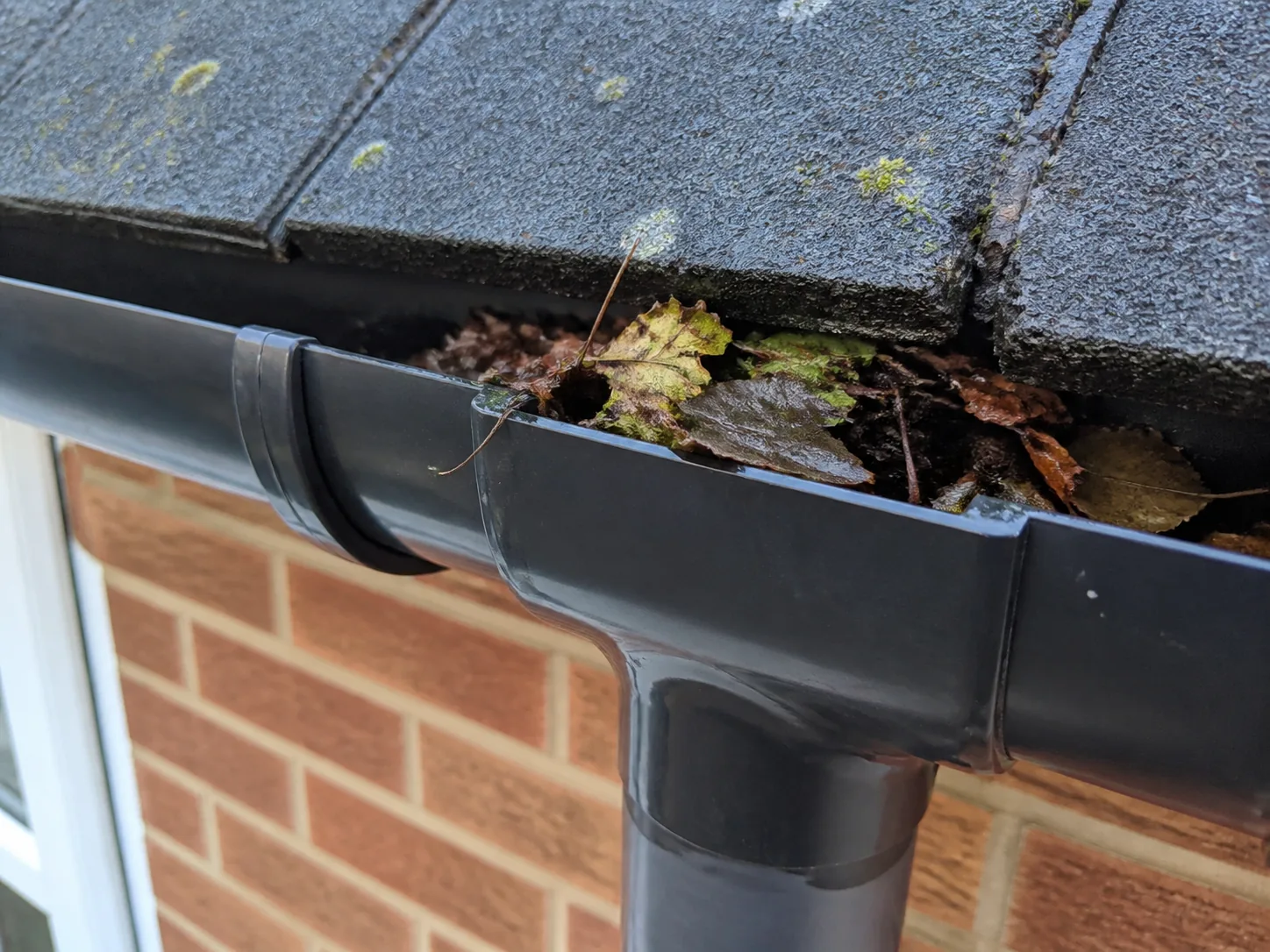
Overflow during rain, streaking below a gutter edge, material visible above the channel or dripping at an outlet can all suggest a flow problem. A gap, crack or sag points towards a component issue as well, and cleaning alone cannot correct it.
Local property context
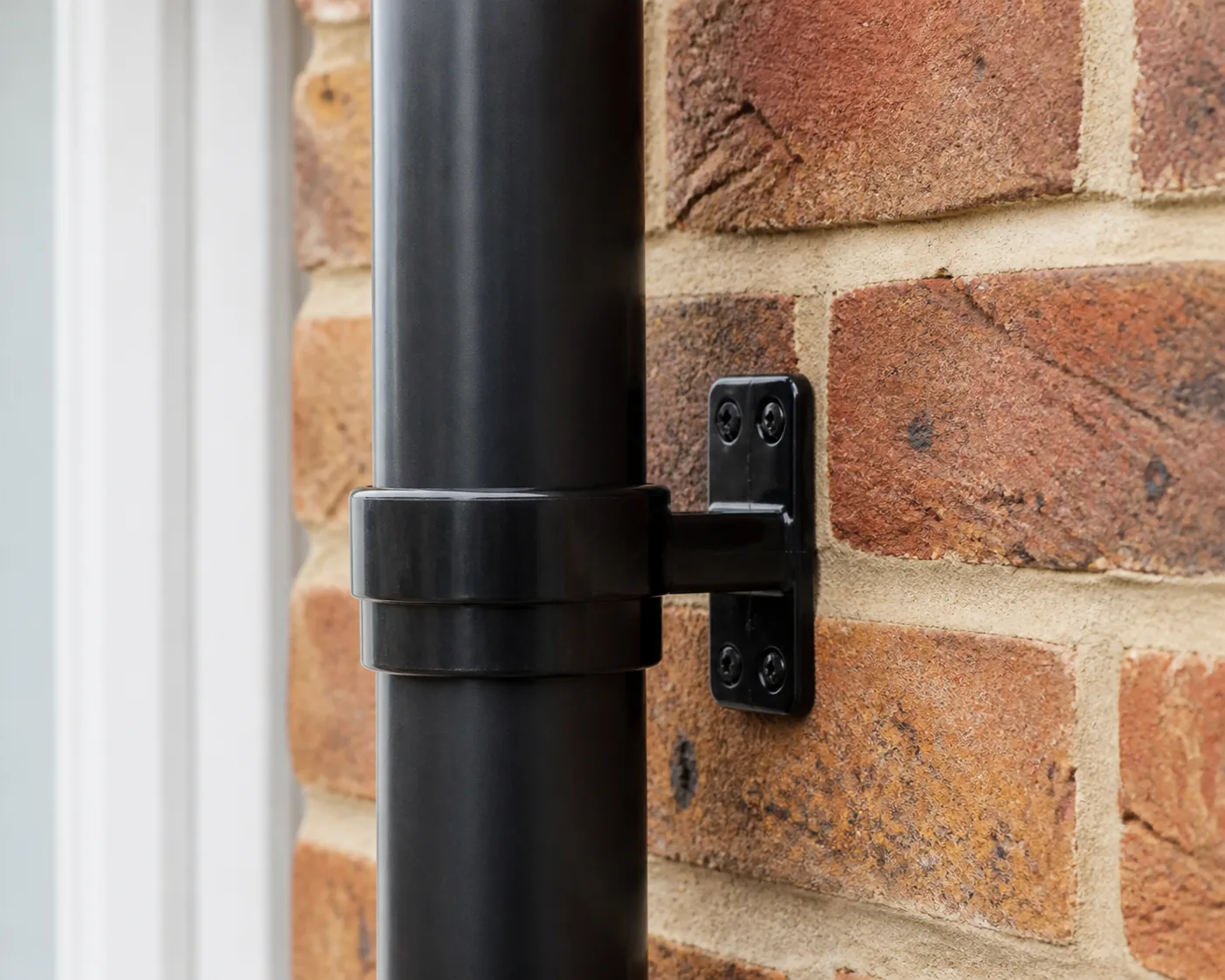
An Ealing home may have an open approach to its front roofline but much less space at the side or rear. A porch, glazed addition, garage roof, planted border or neighbouring boundary could affect a particular channel without preventing work elsewhere. Flats and converted houses may introduce questions about permission and shared entrances as well. It is therefore helpful to describe each requested elevation rather than simply state the property type. The agreed scope can then reflect the runs that can be approached appropriately and the access arrangements available on the day.
Clear access planning also prevents the service boundary from becoming confused. Routine work concerns loose leaves, moss, silt and similar material inside reachable agreed channels. A reachable outlet opening may be added when specified, but the service does not automatically continue down the full pipe. Nor does it include resealing a joint, replacing damaged pieces or investigating underground drainage. If one section cannot be included because its conditions differ from the rest, that limitation should be understood before cleaning starts, together with any appropriate next assessment.
Useful access information includes the requested side of the home, roof level, structures beneath the eaves, gate arrangements and any shared space. Ground conditions and surrounding features may change what is practical. No particular access method is promised before the actual property has been considered.
| Property situation | Access or gutter consideration |
|---|---|
| Mid-terrace with enclosed rear access | Entry to the back may need an agreed route through the property or another suitable arrangement. |
| Semi-detached house with a side addition | The addition may restrict one roof edge even when front and rear channels are straightforward. |
| Home with a garage roof below the eaves | The garage position and its own guttering should be described so both reach and scope are clear. |
| Converted house with shared exterior parts | The responsible party and access permission should be established before an appointment is confirmed. |
Structured service guide
| Area | Service position |
|---|---|
| Agreed accessible roof-edge channel | Routine material cleared |
| Reachable outlet named in scope | Loose debris removed |
| Gutter beyond an unassessed obstruction | Not assumed included |
| Faulty seal or bracket | Needs repair consideration |
| Concealed pipe or drain | Needs a separate service |
Structured service guide
| Example | Treatment |
|---|---|
| Wind-blown residue in a trough | Cleaning task |
| Leaves around a reachable opening | Cleaning task when agreed |
| Split corner piece | Repair question |
| Channel with failed support | Repair question |
| Water escaping through a worn seal | Repair question |
Structured service guide
| Detail to provide | Planning value |
|---|---|
| Affected elevation and level | Identifies the requested run |
| Porch, garage or conservatory | Shows what lies beneath it |
| Side and rear entry | Clarifies practical reach |
| Shared boundary or communal space | Highlights permission needs |
| Amount of visible accumulation | Adds context for the clean |
Structured service guide
| Property circumstance | Question to settle |
|---|---|
| If the rear has no external route | How agreed entry will be provided |
| If a garage lies below the main eaves | Which roof edges are requested |
| If exterior parts are shared | Who can authorise the work |
| If one channel remains unreachable | Whether partial cleaning is still useful |
Seasonal context
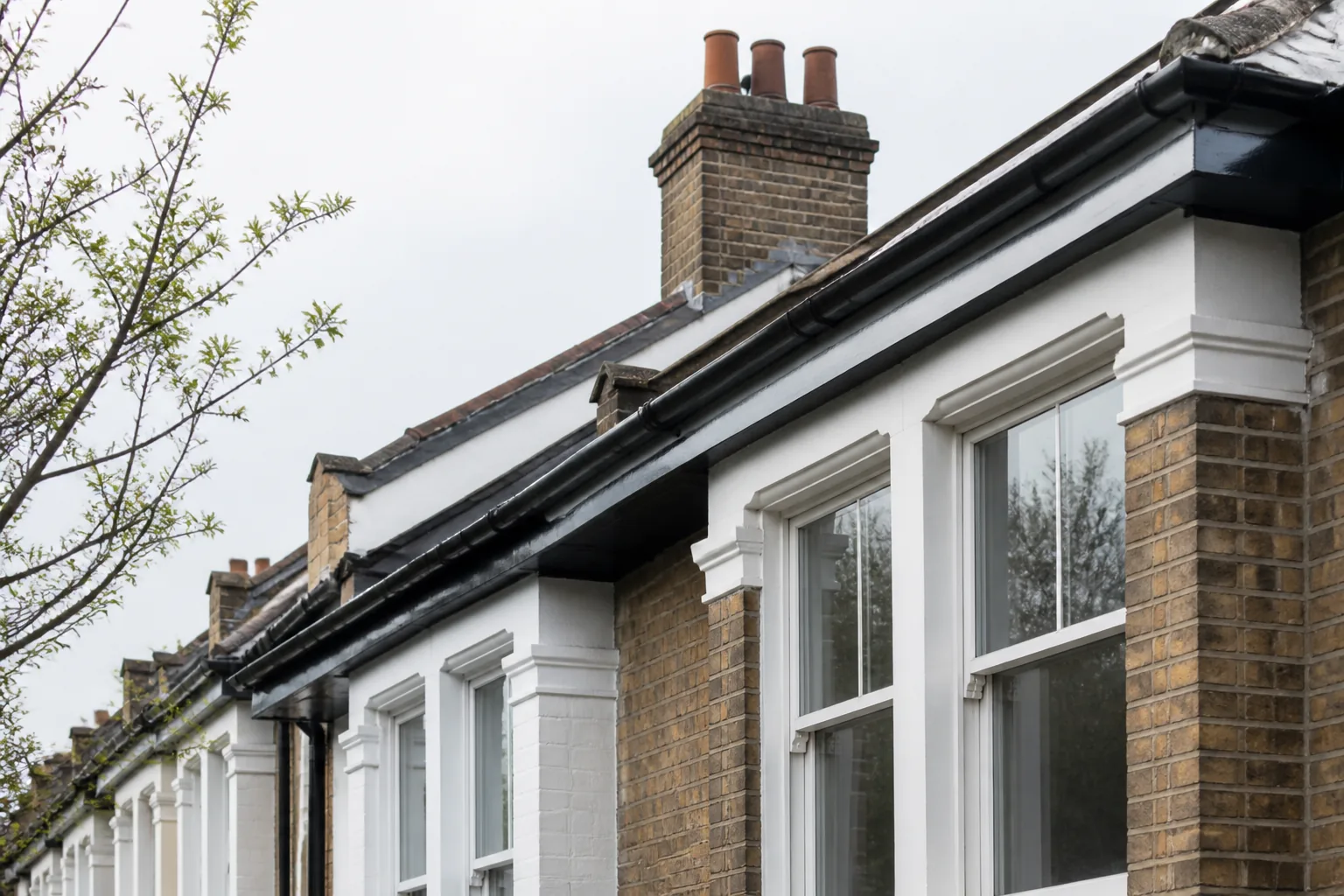
Leaves can arrive in a short burst, while fine material and roof moss may build more quietly. Exposure and nearby vegetation can affect one elevation more than another. The sensible time for a check depends on what is happening at that address, especially after visible overflow or previous rapid accumulation.
Nearby trees, roof moss, gutter shape and exposure can all affect how quickly material accumulates. A visible symptom is more useful than applying one fixed timetable to every address.
A clear service sequence
Quick answers
Front, side and rear gutters can sit at different levels or above different structures. A clear approach to one section does not establish that every other requested run is reachable.
Mention gates, enclosed gardens, narrow passages, shared areas and structures beneath the gutter. Also identify the roof level and affected side so the proposed coverage can be considered realistically.
They may be, particularly if they collect debris or connect to a relevant outlet. Each section still needs to be accessible and explicitly included rather than assumed from the main roofline.
A crack is a repair concern. Loose debris may be removed from an agreed accessible run where appropriate, but sealing or replacing the damaged part is not routine cleaning.
Not necessarily. The reachable opening could be unobstructed while a restriction exists farther down. Routine outlet attention does not confirm or clear the concealed length of the connected pipe.
It can if entry or permission has not been arranged. Confirming responsibility, gates and communal routes beforehand helps ensure that the requested sections match the access actually available.
Ealing service area
Nearby gutter-cleaning pages
Before booking
Yes. Its position beneath a roof edge may restrict the usable approach to that channel. Describe the addition when enquiring so the section can be considered properly instead of being assumed to fit the routine scope.
It includes removal of ordinary loose build-up from the accessible gutter runs agreed for the visit. Reachable outlet openings can be added by agreement. Damage, concealed pipe blockages and underground drains are assessed outside that scope.
A garage can sit beneath the requested channel, alter approach space or have separate guttering that also needs attention. Explaining whether its roof edge is included avoids uncertainty about both access and the amount of work.
Clearing material may stop water backing up around the connection if debris caused the problem. A joint that still leaks because it is worn, loose or displaced needs repair rather than further routine cleaning work.
The accessible portion can be identified, but remaining build-up elsewhere may continue to affect flow. That limitation should be discussed before work begins, and the unreachable section may require another access assessment to address it.
Responsibility varies and should not be assumed. A leaseholder, landlord, freeholder or managing party may need to approve work or provide access. The person enquiring should establish the relevant arrangement for exterior maintenance with them first.
Staining shows that water may have repeatedly reached that surface, but it does not identify why. Overflow, a leaking joint, roof detail or another moisture source can produce marks, so the underlying cause needs consideration.
No. Accessible material at the opening may be cleared when agreed, while an obstruction farther inside the pipe requires separate assessment. Reachability at the top does not extend the routine scope through concealed pipe sections.
Their requested channel lengths, roof levels, additions, entry routes and debris can differ. A property that looks similar from the street may have distinct rear conditions, so pricing is based on the actual defined work.
Ensure arranged gates and shared routes are available, and flag any change affecting access. You do not need to attempt work at height. Practical property information is the safest and most useful preparation for the appointment.
Discuss the actual roofline
Pricing follows the reachable, agreed task. Relevant details include channel length, roof heights, separate elevations, obstacles below the eaves, debris volume and outlet attention. A quotation for routine cleaning should remain distinct from later repair, specialist access, deep downpipe or drainage requirements.
