
Flats & apartments
allow access around the repair.
BARNES · ORIGINAL TIMBER DETAILS
Replace hardware while keeping the original timber in view.
A Barnes handle replacement may reveal worn holes or a split beneath the original plate. Photograph the hardware where it sits and explain what timber appearance you want retained.
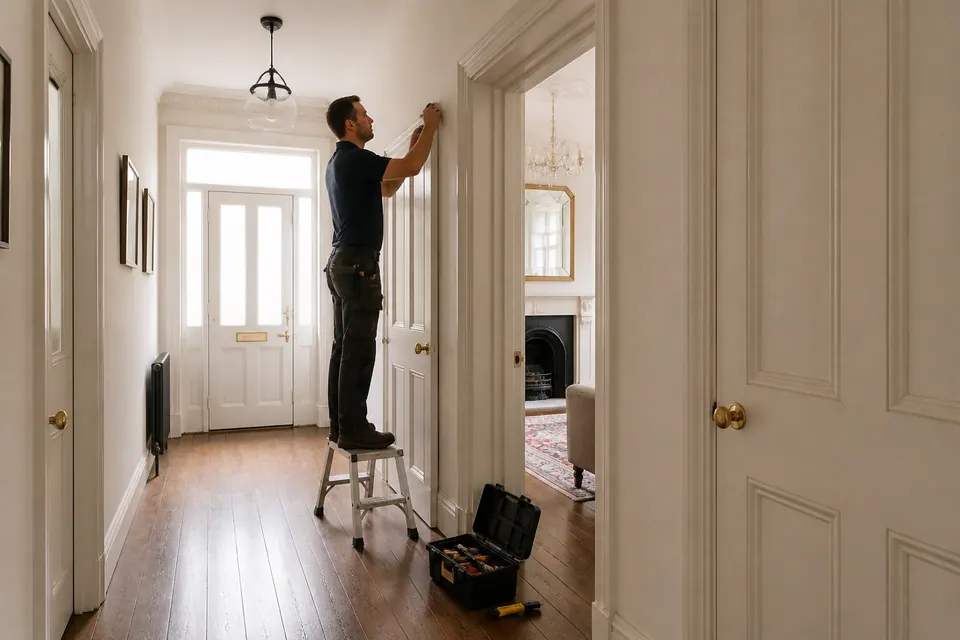
BARNES IN PRACTICE
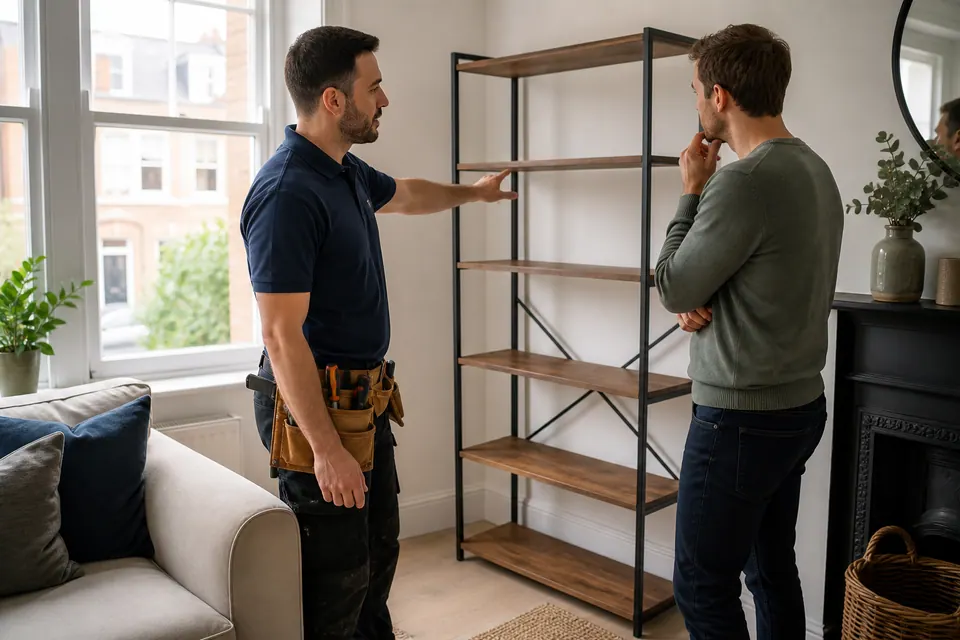
Replace hardware while keeping the original timber in view.
Measure fixing spacing and the plate footprint before choosing a substitute. The replacement must suit the mechanism as well as the visible shape and finish.
Show the surrounding material rather than hiding damage behind the proposed part. A new screw or larger plate does not automatically restore the strength of an old fixing point.
Where the request extends into timber repair or matched carpentry, make that distinction explicit. Local adjustment and wider restoration should not share an undefined promise about the finished surface.
Assemble new furniture separately from existing timber repairs; Keep TV mounting independent of decorative timber details; Show splits and worn fixing points beneath the hardware.
BUILD A REALISTIC LIST
Identify which original hardware should remain and what timber condition lies behind it. Decide on replacement only after those requirements are understood.
| Situation | A practical next step |
|---|---|
| Simple familiar task | Record the original plate and accessible measurements before dismantling. |
| Several jobs or awkward fitting | Request assessment where worn holes or splits surround the fixing. |
| Uncertain wall, load or fixing | Do not use a larger plate to conceal unassessed material failure. |
| Gas, structure or fixed electrics | Refer security and structural elements beyond decorative hardware repair. |
DIFFERENT ROOMS, DIFFERENT BRIEFS
allow access around the repair.
preserve identifiable original details.
approve non-matching replacement hardware.
label similar fittings by opening.
state when the affected room is available.
clarify alteration authority.
Homeowner? Measure fixing spacing and the plate footprint before choosing a substitute. The replacement must suit the mechanism as well as the visible shape and finish.
Landlord or manager? Owners should approve alternatives where exact original hardware cannot be retained.
Tenant? Ask the owner to approve non-matching replacement hardware.
CLEAR BEFORE YOU BOOK
Quote hardware, timber condition and finish requirements distinctly.
New furniture assembly is offered as a separate service beside the original-timber repair, with product details reviewed before booking.
Do not assume decorative timber supports a new shelf or screen load.
| Task | Pricing basis | Guide |
|---|---|---|
| Repair or fitting | Show splits and worn fixing points beneath the hardware | Reviewed quote |
| Small furniture assembly | Assemble new furniture separately from existing timber repairs | From £30 |
| Several small jobs | Several fittings can be reviewed if their original details are recorded individually. | Agreed combined work |
| Complex mounting | Keep TV mounting independent of decorative timber details | Mounting assessment |
For the published small-item guide, see Alesta’s furniture assembly page . Other fitting and repair requests are quoted individually.
Separate retaining the visible handle from repairing its backing and matching the finish. Worn holes or splits may make a wider carpentry scope necessary beyond a straightforward exchange.
FROM SMALL FIX TO FINISHED JOB
Record the original fitting and accessible dimensions.
Agree whether retaining hardware or replacing it is the priority.
Show supporting timber damage without forcing unstable parts.
Discuss broader carpentry before extending a minor adjustment.
Review operation and the explicitly agreed timber finish.
START WITH THE TASK
Assemble new furniture separately from existing timber repairs.
02 ↗Assess shelf supports where old holes remain.
03 ↗Compare the original handle and replacement mechanism.
04 ↗Keep TV mounting independent of decorative timber details.
05 ↗Position accessories without assuming trim is load-bearing.
06 ↗Show splits and worn fixing points beneath the hardware.
QUICK JOB FINDER
Assemble new furniture separately from existing timber repairs.
Explore this service ↗WALK THROUGH THE PROPERTY
ROOM NOTES
Keep TV mounting independent of decorative timber details. Explain the screen position relative to existing joinery.
View the relevant service ↗| Job type | Example | Property area | Service |
|---|---|---|---|
| Assembly | Assemble new furniture separately from existing timber repairs | Furniture position | Furniture assembly |
| Mounting | Position accessories without assuming trim is load-bearing | Fitting wall | Fittings |
| Adjustment | Compare the original handle and replacement mechanism | Opening clearance | Door repair |
| Timber work | Assess shelf supports where old holes remain | Storage space | Carpentry |
QUICK ANSWERS
Quote hardware, timber condition and finish requirements distinctly.
Suitable minor adjustment differs from broader restoration or replacement carpentry.
Several fittings can be reviewed if their original details are recorded individually.
Compare full mechanism and footprint specifications before buying.
Previous repairs and damaged fixing material can change planned labour.
New furniture assembly is offered as a separate service beside the original-timber repair, with product details reviewed before booking.
Do not assume decorative timber supports a new shelf or screen load.
Owners should approve alternatives where exact original hardware cannot be retained.
A JOB, MADE VISIBLE
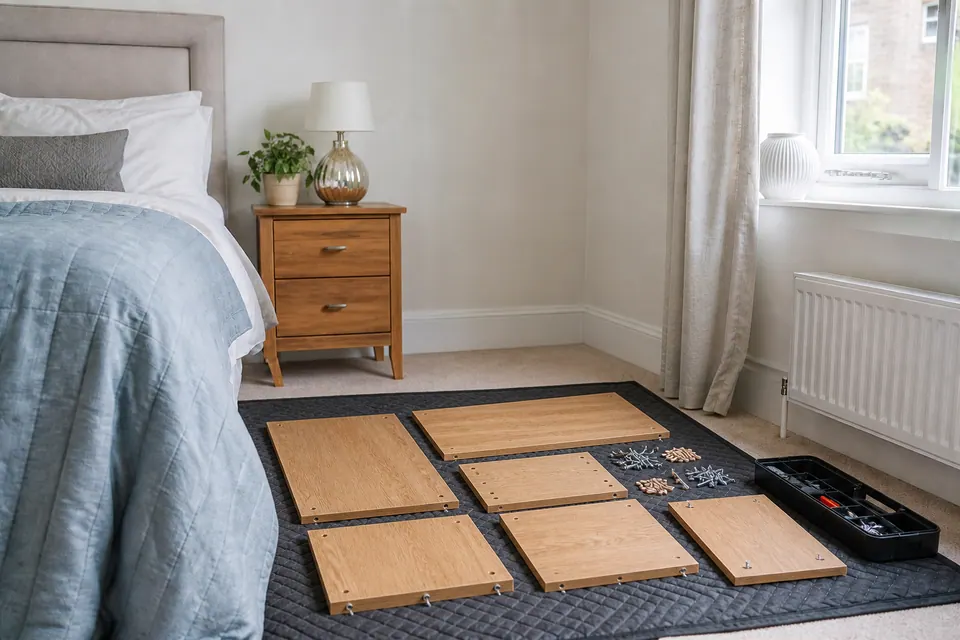
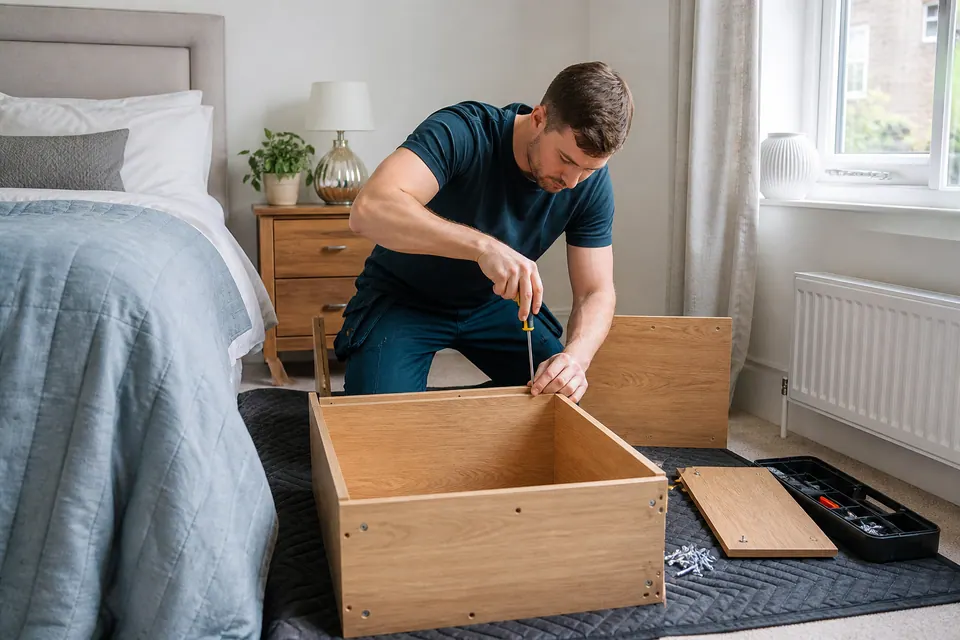
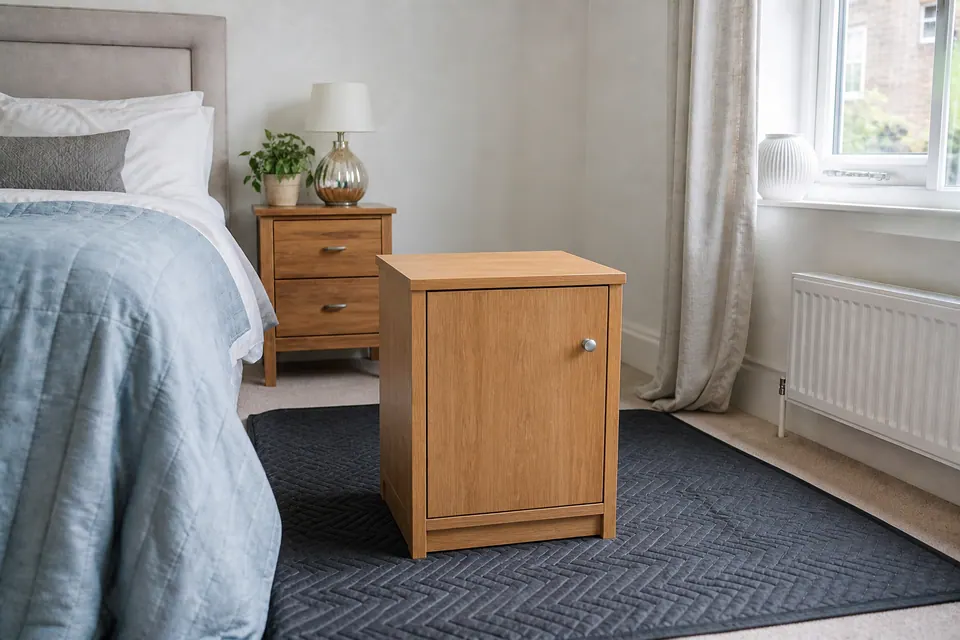
Illustrations explain assembly stages; they do not document a customer project.
PLAN THE ARRIVAL
Give the Barnes postcode and describe access to the original hardware. Check availability before dismantling a fitting whose condition or footprint needs recording in place.
Area orientation
THE DETAILS OF YOUR VISIT
Begin with safe accessible measurements and an in-place photograph. Do not force damaged hardware merely to expose its footprint for an enquiry.
It may cover marks, but that does not establish a sound fixing. The timber beneath still needs assessment before replacement is assumed.
No. Mechanism, spindle arrangement and plate dimensions also need compatibility. Provide the complete replacement specification alongside the existing hardware.
Say so and show its condition. The scope can distinguish preserving that component from replacing damaged support material, without promising every item is repairable.
No. Its position relative to the fixing matters even when a plate covers it. Report structural damage to the material rather than treating it as decoration.
Only if a suitable scope is agreed. A small hardware task does not automatically include wider sanding, matching or decorative restoration.
Retain them labelled with the item. Their dimensions and arrangement may help identify a suitable replacement or explain how the original fitting worked.
Where the supporting timber or desired fitted result needs more than the defined hardware adjustment, ask for the appropriate carpentry assessment and specification.
State which original details must remain and what visible repair would be acceptable. This makes appearance a deliberate requirement rather than an assumed guarantee.
TURN THE LIST INTO A PLAN
Show the old component and the timber beneath its edges. State which original details matter so replacement and repair options can be reviewed against the intended finish.
Task images are illustrative.
