
Quote to scope
Price the correct door service after the assembly is identified.
ISLEWORTH · COMPLETE DOOR ASSEMBLY
Identify the door mechanism before asking for adjustment.
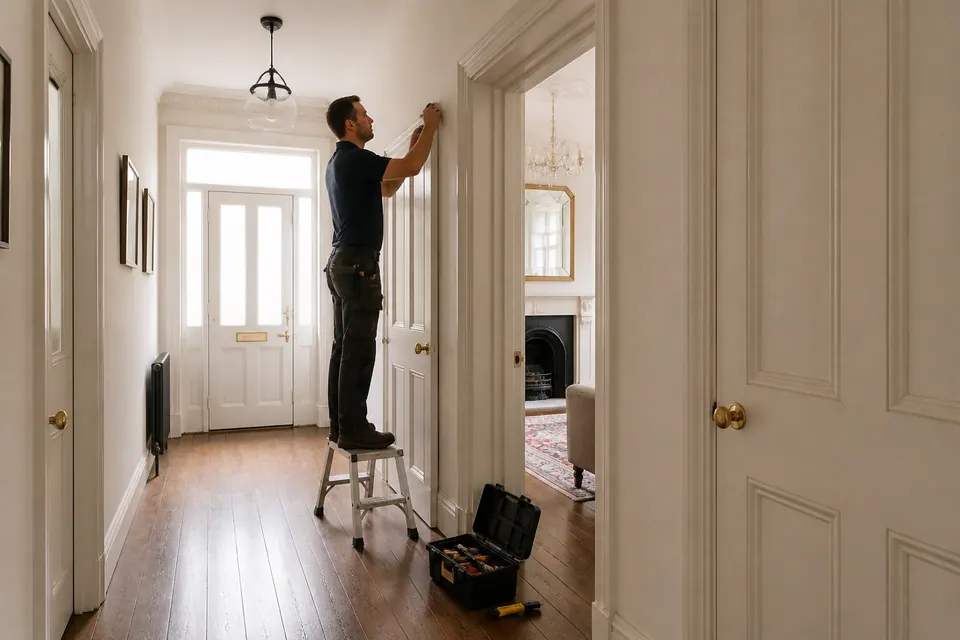
An Isleworth door enquiry should show the closer and latch as well as the handle. A specialist mechanism or fire-rated assembly cannot be treated like ordinary loose decorative hardware.
BUILD A REALISTIC LIST
Identify the complete door assembly before selecting work. Record the symptom while leaving closers, labels and security components in their existing condition.
| Situation | A practical next step |
|---|---|
| Simple familiar task | Photograph labels and mechanisms without removing them. |
| Several jobs or awkward fitting | Ask for assessment when the closer or rating is uncertain. |
| Uncertain wall, load or fixing | Do not assume rubbing justifies trimming a specialist door. |
| Gas, structure or fixed electrics | Use locksmith expertise for security mechanisms rather than general adjustment. |
START WITH THE TASK
Place assembled furniture outside the door’s operating space.
02 ↗Keep shelf projections away from closing mechanisms.
03 ↗Show the closer, latch and any rating information.
04 ↗Check screen projection against the opening leaf.
05 ↗Avoid accessories that obstruct door movement.
06 ↗Report the symptom without prescribing trimming or removal.
QUICK JOB FINDER
Place assembled furniture outside the door’s operating space.
Explore this service ↗ISLEWORTH IN PRACTICE
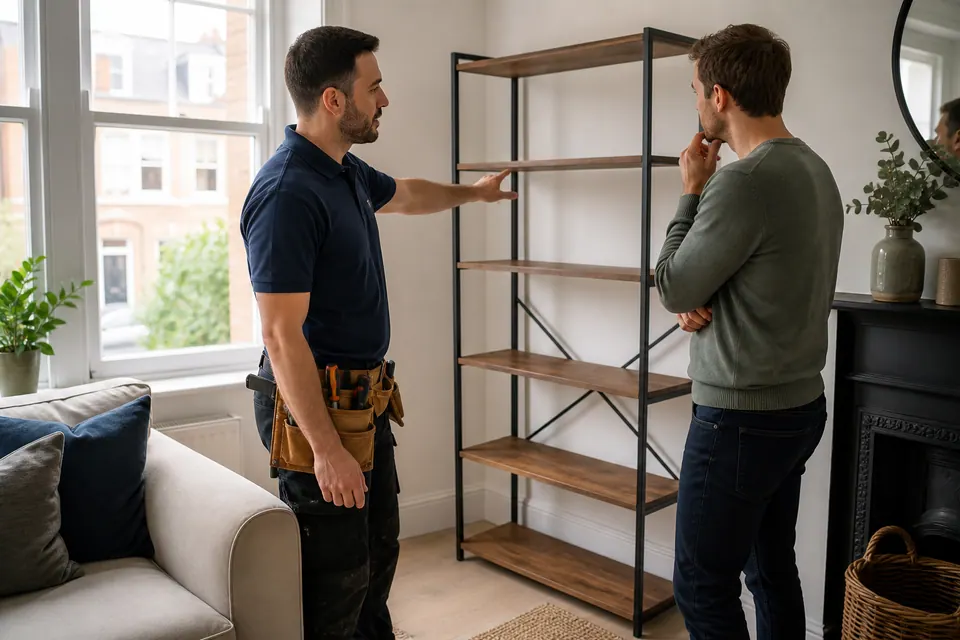
Identify the door mechanism before asking for adjustment.
Describe what happens in normal operation: rubbing, incomplete latching or movement at the lever. Those observations are more useful than an instruction to remove material immediately.
Photograph any visible rating information and the whole opening. Do not remove labels or interfere with a closer merely to make the door behave differently for a demonstration.
Separate security-lock work from suitable internal-door repairs. The right service depends on the actual assembly, even when the apparent defect looks minor.
Place assembled furniture outside the door’s operating space; Check screen projection against the opening leaf; Report the symptom without prescribing trimming or removal.
FROM SMALL FIX TO FINISHED JOB
Photograph the whole opening, closer and visible rating information.
Identify the appropriate scope before selecting replacement hardware.
Leave specialist mechanisms intact while arranging access.
Discuss any assembly-specific requirement before proposing alteration.
Review the agreed operation and record separate specialist recommendations.
CLEAR BEFORE YOU BOOK
Price the correct door service after the assembly is identified.
Furniture assembly is available separately from door assessment; show the supplied model and any conflict with opening clearance.
Nearby accessories must not obstruct the door’s proper movement.
| Task | Pricing basis | Guide |
|---|---|---|
| Repair or fitting | Report the symptom without prescribing trimming or removal | Reviewed quote |
| Small furniture assembly | Place assembled furniture outside the door’s operating space | From £30 |
| Several small jobs | Several door concerns can be reviewed without treating their mechanisms as equivalent. | Agreed combined work |
| Complex mounting | Check screen projection against the opening leaf | Mounting assessment |
For the published small-item guide, see Alesta’s furniture assembly page . Other fitting and repair requests are quoted individually.
The quote needs the door type and requested operation, not simply a loose-handle label. Specialist mechanisms or frame damage may require a different service or scope.
DIFFERENT ROOMS, DIFFERENT BRIEFS
identify entrance rating information.
show frame and hardware condition.
approve changes to door components.
distinguish ordinary and specialist openings.
explain the closure problem.
identify maintenance responsibility.
Homeowner? Describe what happens in normal operation: rubbing, incomplete latching or movement at the lever. Those observations are more useful than an instruction to remove material immediately.
Landlord or manager? Owners or managers should authorise changes to the identified assembly.
Tenant? Ask the owner to approve changes to door components.
WALK THROUGH THE PROPERTY
ROOM NOTES
Check screen projection against the opening leaf. Review the screen position with the door fully open.
View the relevant service ↗| Job type | Example | Property area | Service |
|---|---|---|---|
| Assembly | Place assembled furniture outside the door’s operating space | Furniture position | Furniture assembly |
| Mounting | Avoid accessories that obstruct door movement | Fitting wall | Fittings |
| Adjustment | Show the closer, latch and any rating information | Opening clearance | Door repair |
| Timber work | Keep shelf projections away from closing mechanisms | Storage space | Carpentry |
QUICK ANSWERS
Price the correct door service after the assembly is identified.
Ordinary adjustments differ from rated-door and security work.
Several door concerns can be reviewed without treating their mechanisms as equivalent.
Check replacement specifications against the actual door equipment.
Required assessment and compatible parts determine the planned work.
Furniture assembly is available separately from door assessment; show the supplied model and any conflict with opening clearance.
Nearby accessories must not obstruct the door’s proper movement.
Owners or managers should authorise changes to the identified assembly.
A JOB, MADE VISIBLE
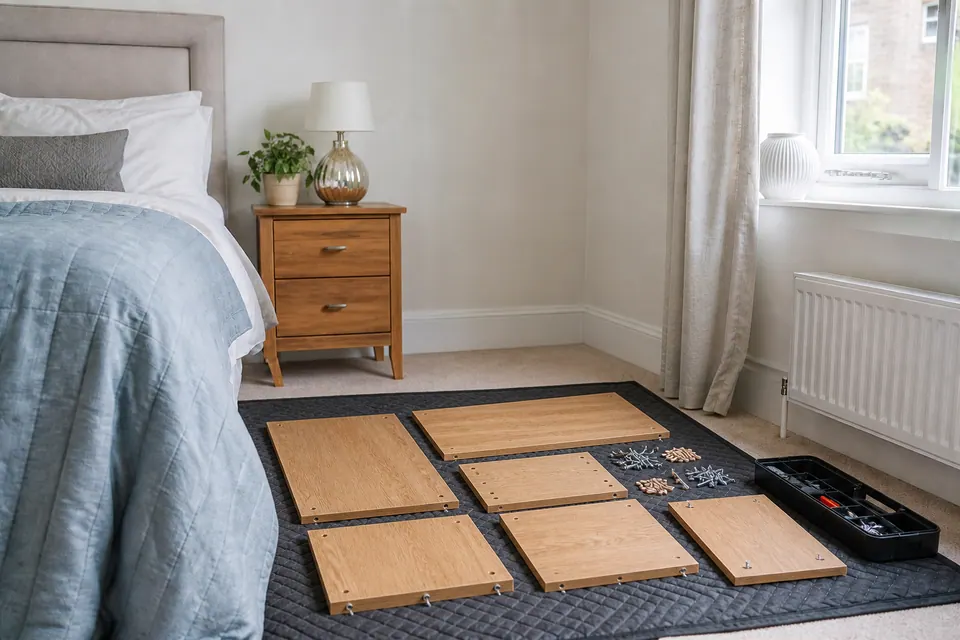
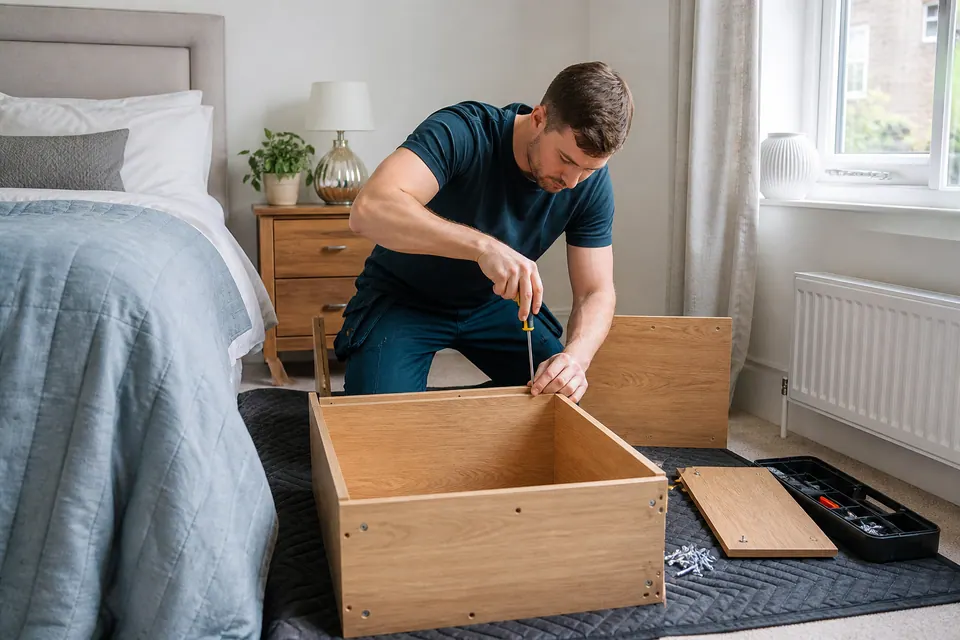
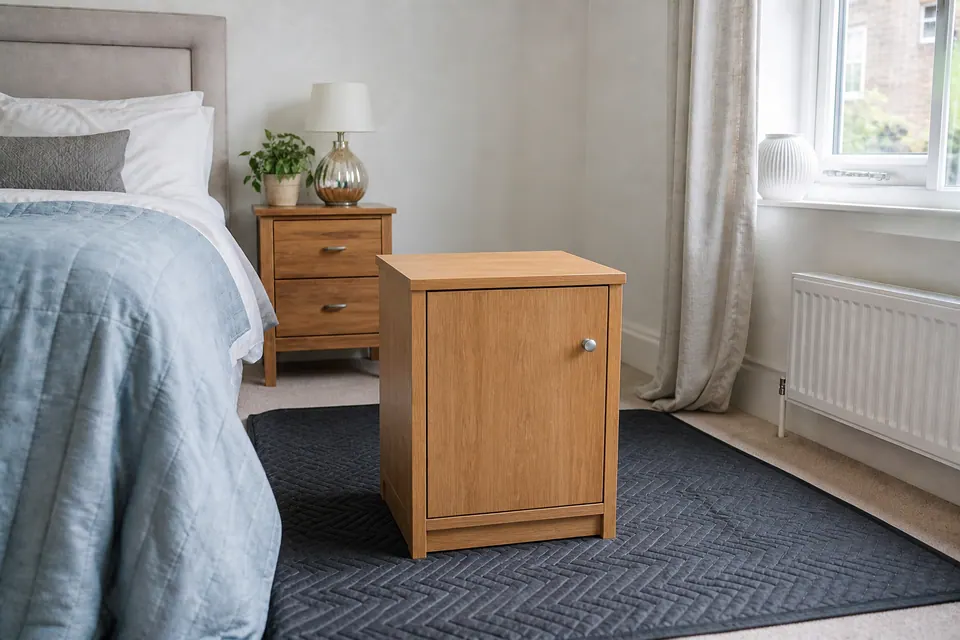
Illustrations explain assembly stages; they do not document a customer project.
PLAN THE ARRIVAL
Provide the Isleworth postcode and explain which door controls access to the work area. Ask about availability after sharing its rating or specialist hardware information where known.
Area orientation
THE DETAILS OF YOUR VISIT
It helps identify the complete assembly and its requirements. The service should not be selected from one visible component in isolation.
Do not assume so. Identify the rating and construction for appropriate assessment before any alteration or material removal is proposed.
No. Show its current arrangement and describe the symptom. Interfering with the mechanism is not necessary to provide an initial brief.
Treat it as a locksmith requirement. Keep security hardware distinct from a general internal-door fitting request.
Say what is known and provide clear views without dismantling the assembly. Absence of a visible label in your photo does not establish the door type.
Its dimensions and mechanism must be compatible. Share the proposed specification and the existing hardware rather than relying on finish alone.
No. Alignment, hardware and surrounding clearances require assessment. The symptom does not determine a safe or appropriate method by itself.
Show their projection and the door’s movement. The furniture arrangement may create a conflict that should not be solved by casually altering a specialist door.
Confirm the door type, requested operation and appropriate service. Specialist components and any wider frame repair should not disappear inside a generic handle adjustment description.
TURN THE LIST INTO A PLAN
Describe the door’s behaviour and show its complete mechanism. That allows the request to be directed appropriately without treating every closer or lock as ordinary hardware.
Task images are illustrative.
