
Quote to scope
Quote the hinge fault with supporting-panel damage identified separately.
BECKENHAM · CUPBOARD FRONT ALIGNMENT
Look beyond the hinge on an uneven cupboard front.
A Beckenham cupboard door rubbing its neighbour needs a view of both fronts. The hinge may be adjustable, but panel damage or incompatible hardware can change what is appropriate.
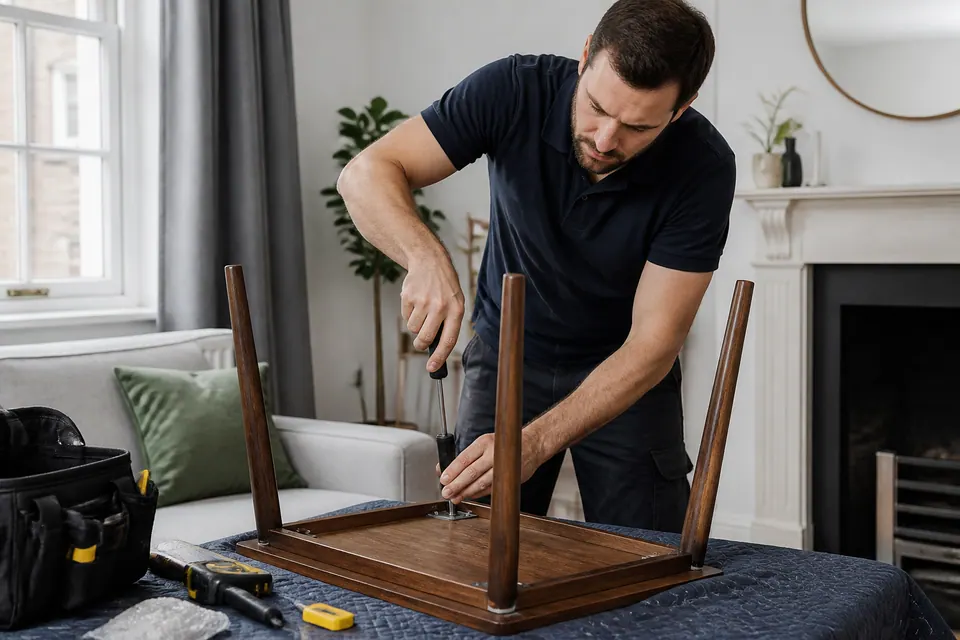
BUILD A REALISTIC LIST
Record the rubbing edge and the front’s natural position. Do not choose new hardware before the hinge and its supporting panel have been considered together.
| Situation | A practical next step |
|---|---|
| Simple familiar task | Photograph adjacent fronts before prescribing an adjustment. |
| Several jobs or awkward fitting | Ask for assessment when rubbing accompanies loose hinge fixings. |
| Uncertain wall, load or fixing | Do not force a hanging door into alignment for the photograph. |
| Gas, structure or fixed electrics | Treat service faults behind the cupboard as separate trade work. |
START WITH THE TASK
Distinguish assembling a new cupboard from repairing its front.
02 ↗Check shelf contents against cabinet condition.
03 ↗Keep cabinet hinges separate from internal-door mechanisms.
04 ↗Assess any media cabinet before assuming support for a screen.
05 ↗Inspect handle fixings independently of hinge alignment.
06 ↗Show rubbing edges and damaged hinge holes together.
QUICK JOB FINDER
Distinguish assembling a new cupboard from repairing its front.
Explore this service ↗BECKENHAM IN PRACTICE
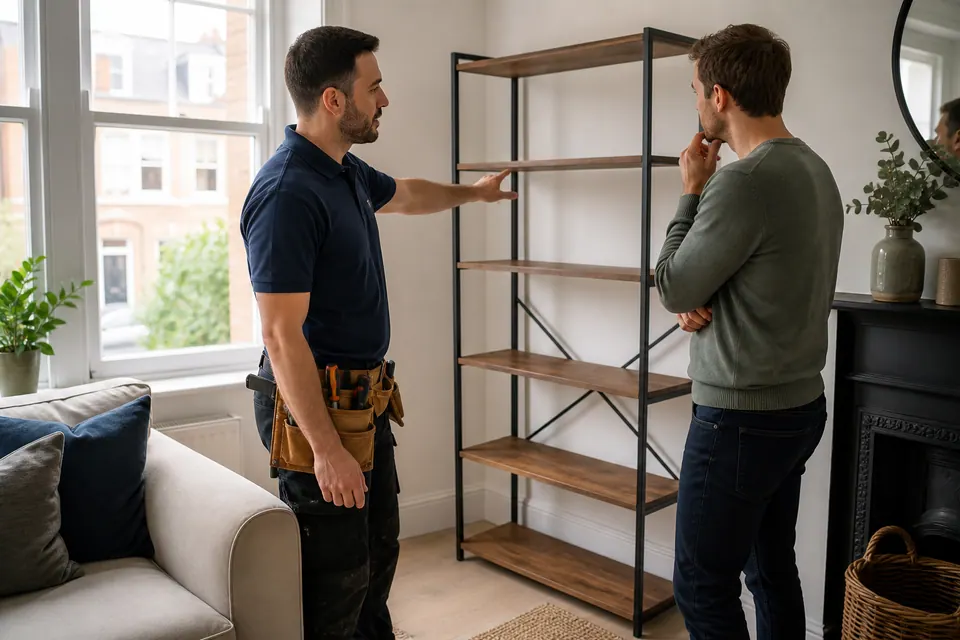
Look beyond the hinge on an uneven cupboard front.
Photograph the cabinet closed, then the hinge and its fixing into the side panel. This connects the visible gap with the mechanism and the material supporting it.
Describe whether rubbing began gradually or after a part was changed. Keep any spare hinge with its packaging so its specification can be compared rather than guessed from appearance.
Do not force a hanging front into position to make the photograph look tidy. Show its present condition and flag any loose or damaged material for assessment.
Distinguish assembling a new cupboard from repairing its front; Assess any media cabinet before assuming support for a screen; Show rubbing edges and damaged hinge holes together.
FROM SMALL FIX TO FINISHED JOB
Photograph the rubbing fronts and the open hinge area.
Compare any spare component with the existing mechanism.
Allow access while leaving the natural fault visible.
Discuss damaged fixing material before treating replacement as sufficient.
Check closing movement and record any pending panel repair.
CLEAR BEFORE YOU BOOK
Quote the hinge fault with supporting-panel damage identified separately.
A new supplied cupboard can be assembled under a reviewed product scope, separate from repairing the existing front.
Do not assume cabinet supports suit additional screen or shelf loads.
| Task | Pricing basis | Guide |
|---|---|---|
| Repair or fitting | Show rubbing edges and damaged hinge holes together | Reviewed quote |
| Small furniture assembly | Distinguish assembling a new cupboard from repairing its front | From £30 |
| Several small jobs | Handle changes can be reviewed alongside alignment as distinct tasks. | Agreed combined work |
| Complex mounting | Assess any media cabinet before assuming support for a screen | Mounting assessment |
For the published small-item guide, see Alesta’s furniture assembly page . Other fitting and repair requests are quoted individually.
Distinguish hinge adjustment, compatible replacement and repair of failed board. A spare mechanism alone does not establish that the cabinet has a usable fixing point.
DIFFERENT ROOMS, DIFFERENT BRIEFS
allow access to the open cabinet.
record previous hinge replacements.
approve any changed hardware finish.
identify the affected cupboard precisely.
show alignment of storage fronts.
name the replacement approver.
Homeowner? Photograph the cabinet closed, then the hinge and its fixing into the side panel. This connects the visible gap with the mechanism and the material supporting it.
Landlord or manager? The owner should approve component alternatives and broader panel repair.
Tenant? Ask the owner to approve any changed hardware finish.
WALK THROUGH THE PROPERTY
ROOM NOTES
Assess any media cabinet before assuming support for a screen. Describe the screen installation independently of the cabinet fault.
View the relevant service ↗| Job type | Example | Property area | Service |
|---|---|---|---|
| Assembly | Distinguish assembling a new cupboard from repairing its front | Furniture position | Furniture assembly |
| Mounting | Inspect handle fixings independently of hinge alignment | Fitting wall | Fittings |
| Adjustment | Keep cabinet hinges separate from internal-door mechanisms | Opening clearance | Door repair |
| Timber work | Check shelf contents against cabinet condition | Storage space | Carpentry |
QUICK ANSWERS
Quote the hinge fault with supporting-panel damage identified separately.
Suitable cabinet adjustment depends on the mechanism and material condition.
Handle changes can be reviewed alongside alignment as distinct tasks.
Compare spare hinges with the existing type before assuming compatibility.
Damaged fixing points or unavailable components affect the work period.
A new supplied cupboard can be assembled under a reviewed product scope, separate from repairing the existing front.
Do not assume cabinet supports suit additional screen or shelf loads.
The owner should approve component alternatives and broader panel repair.
A JOB, MADE VISIBLE
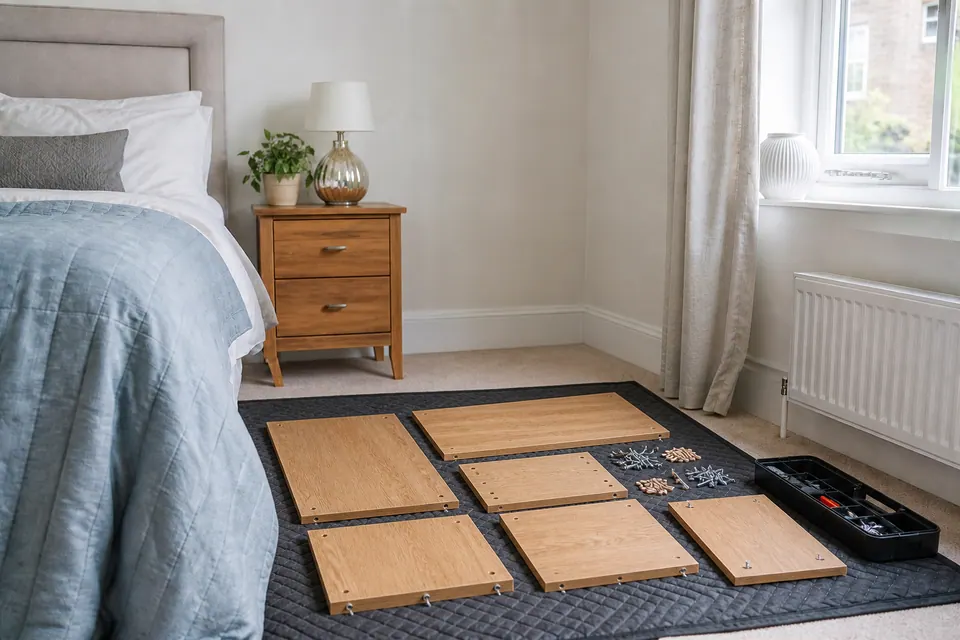
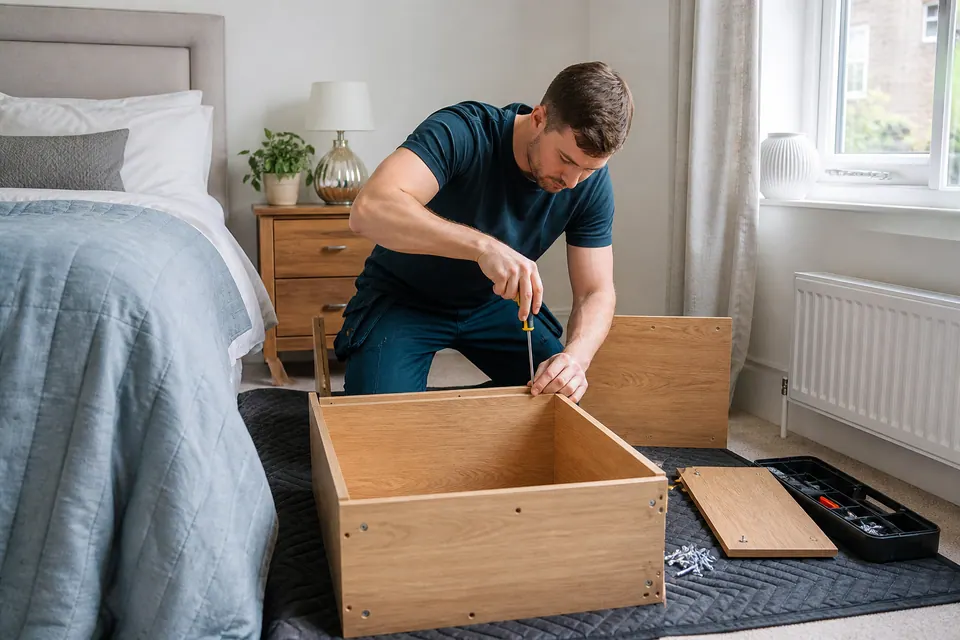
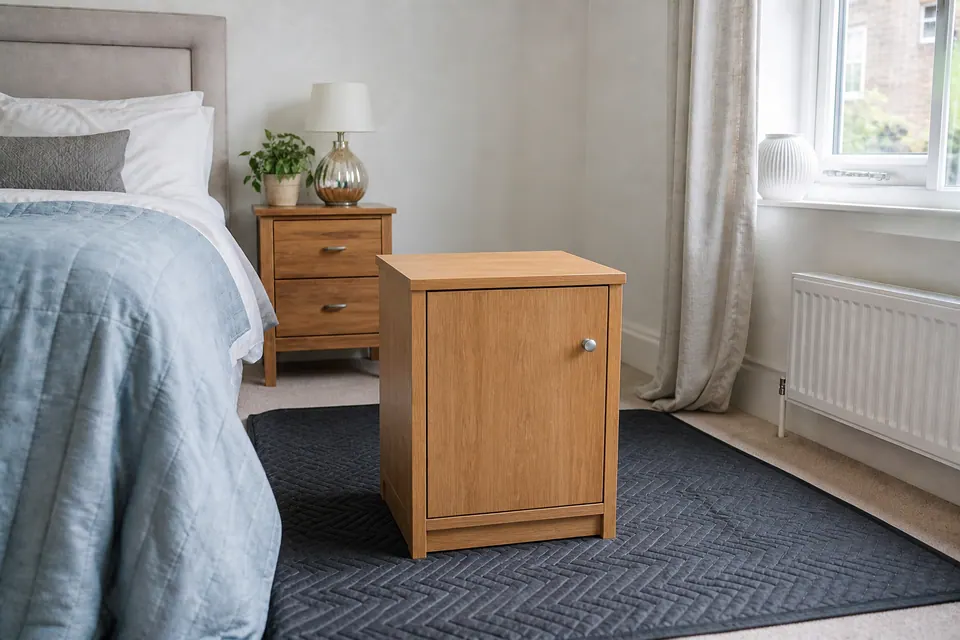
Illustrations explain assembly stages; they do not document a customer project.
PLAN THE ARRIVAL
Provide the Beckenham postcode and identify the cupboard’s room. Confirm availability before removing the front or buying several replacement hinges for an unassessed alignment fault.
Area orientation
THE DETAILS OF YOUR VISIT
It may be an option, but the mechanism and supporting panel need assessment. Rubbing alone does not establish that adjustment will resolve the fault.
Its position helps show the relationship causing contact. A close-up of one hinge cannot explain the full pattern of gaps.
Compare its specification and fixing arrangement first. Similar appearance does not ensure compatibility with this front and cabinet.
Show that damage clearly. A replacement hinge may still lack a sound fixing point, so the material needs consideration alongside the hardware.
Show its current position without unsafe handling or force. The natural misalignment is useful information for defining the repair.
Yes. Mention which component changed and when the rubbing began. That history can help avoid treating the present symptom as unrelated wear.
Do not assume that outcome before assessment. Explain the condition and desired result so adjustment, compatible hardware or broader work can be distinguished.
List their dimensions and finish separately. They may be reviewed alongside the hinge fault but should not be presumed part of alignment work.
Review the agreed closing movement and gaps without forcing the front. Any panel damage or pending replacement requirement should remain explicitly recorded.
TURN THE LIST INTO A PLAN
Send the closed-cabinet view and the fixing into its side panel. Together they describe both the visible rubbing and the material supporting the hinge.
Task images are illustrative.
