
Flats & apartments
identify package storage and access.
ORPINGTON · PARTS LINKED TO FAULTS
Prepare a home repair list with the parts beside it.
An Orpington household enquiry is stronger when each proposed part stays linked to its fault. A bag of spare handles does not explain which door or drawer needs attention.
DIFFERENT ROOMS, DIFFERENT BRIEFS
identify package storage and access.
show original hardware dimensions.
approve replacement specifications beforehand.
label parts with their room.
distinguish repair from new assembly.
name the purchase approver.
Homeowner? Use one photograph of the complete item and another of the problem area. Add the replacement specification only after the location and symptom are clear.
Landlord or manager? Clarify who owns each item and can approve replacement or cosmetic changes.
Tenant? Ask the owner to approve replacement specifications beforehand.
BUILD A REALISTIC LIST
Keep each replacement beside the fault it is intended to address. Separate products ready to fit from parts awaiting delivery or selection.
| Situation | A practical next step |
|---|---|
| Simple familiar task | Photograph the whole item before isolating its spare component. |
| Several jobs or awkward fitting | Ask for review when one bag contains hardware for several faults. |
| Uncertain wall, load or fixing | Do not choose replacement parts by finish alone. |
| Gas, structure or fixed electrics | Refer structural and regulated service work outside minor repairs. |
ORPINGTON IN PRACTICE

Prepare a home repair list with the parts beside it.
Use one photograph of the complete item and another of the problem area. Add the replacement specification only after the location and symptom are clear.
Separate requests that are ready from those awaiting a delivery or decision. That distinction helps prevent an appointment being planned around components that cannot yet be fitted.
State whether the desired result is restored operation or a changed appearance. Decoration, structural work, gas and fixed electrical alterations need their own appropriate scopes.
List the supplied furniture model rather than its box count alone; Send screen and bracket references together; Keep spare hardware labelled with its existing fault.
CLEAR BEFORE YOU BOOK
Match the price to numbered faults and approved replacement components.
Assembly is offered for suitable supplied furniture; the exact model and instructions are needed to review each request.
Include accessory loads and supporting surfaces rather than spare fixings alone.
| Task | Pricing basis | Guide |
|---|---|---|
| Repair or fitting | Keep spare hardware labelled with its existing fault | Reviewed quote |
| Small furniture assembly | List the supplied furniture model rather than its box count alone | From £30 |
| Several small jobs | Several repairs can share review if their parts and outcomes remain identifiable. | Agreed combined work |
| Complex mounting | Send screen and bracket references together | Mounting assessment |
For the published small-item guide, see Alesta’s furniture assembly page . Other fitting and repair requests are quoted individually.
The quote should name the fault and approved component together. Changed appearance, supporting-material damage or unresolved delivery can affect the actual work beyond swapping visible hardware.
START WITH THE TASK
List the supplied furniture model rather than its box count alone.
02 ↗Describe the planned shelf contents and support surface.
03 ↗Match each replacement handle to a named door.
04 ↗Send screen and bracket references together.
05 ↗Identify every accessory’s intended location.
06 ↗Keep spare hardware labelled with its existing fault.
QUICK JOB FINDER
List the supplied furniture model rather than its box count alone.
Explore this service ↗WALK THROUGH THE PROPERTY
ROOM NOTES
Send screen and bracket references together. Show the screen wall without unrelated close-ups.
View the relevant service ↗| Job type | Example | Property area | Service |
|---|---|---|---|
| Assembly | List the supplied furniture model rather than its box count alone | Furniture position | Furniture assembly |
| Mounting | Identify every accessory’s intended location | Fitting wall | Fittings |
| Adjustment | Match each replacement handle to a named door | Opening clearance | Door repair |
| Timber work | Describe the planned shelf contents and support surface | Storage space | Carpentry |
FROM SMALL FIX TO FINISHED JOB
Connect each proposed part to a photographed fault.
Mark delivery and approval decisions still unresolved.
Keep products grouped with the item and room labels.
Discuss additional damage before expanding a component exchange.
Compare the included repairs with their intended operating results.
A JOB, MADE VISIBLE
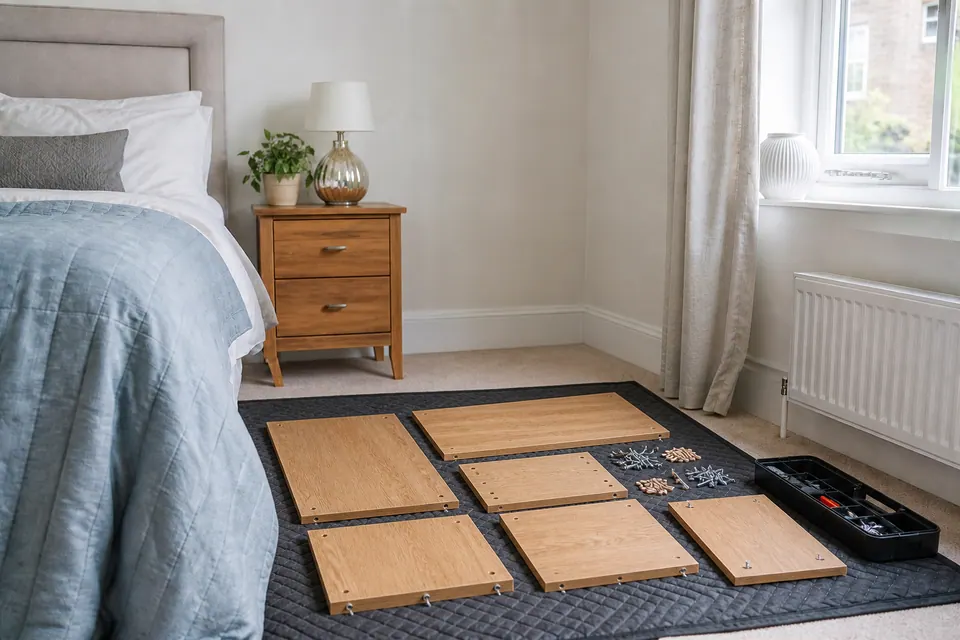
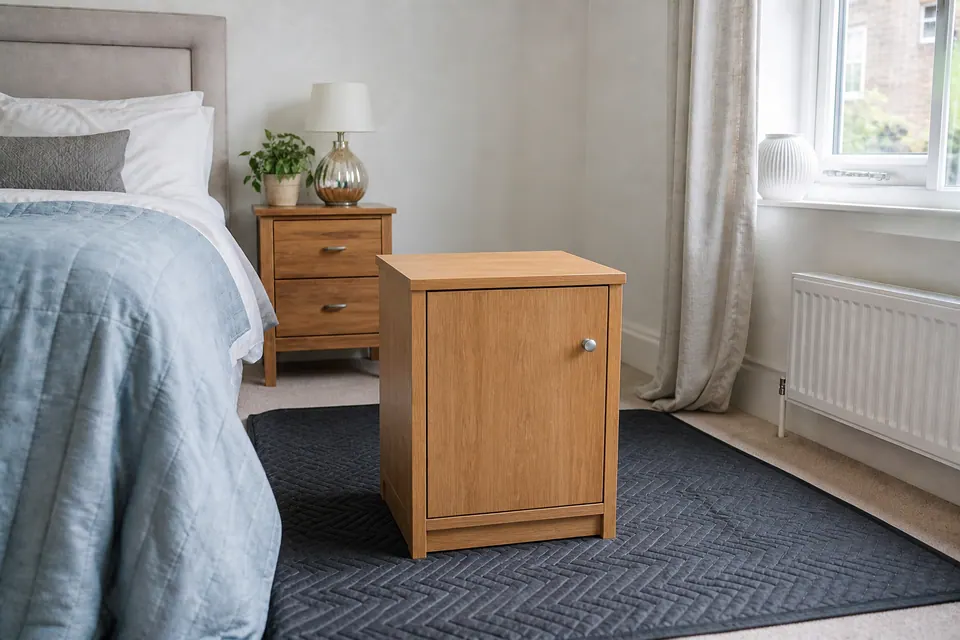
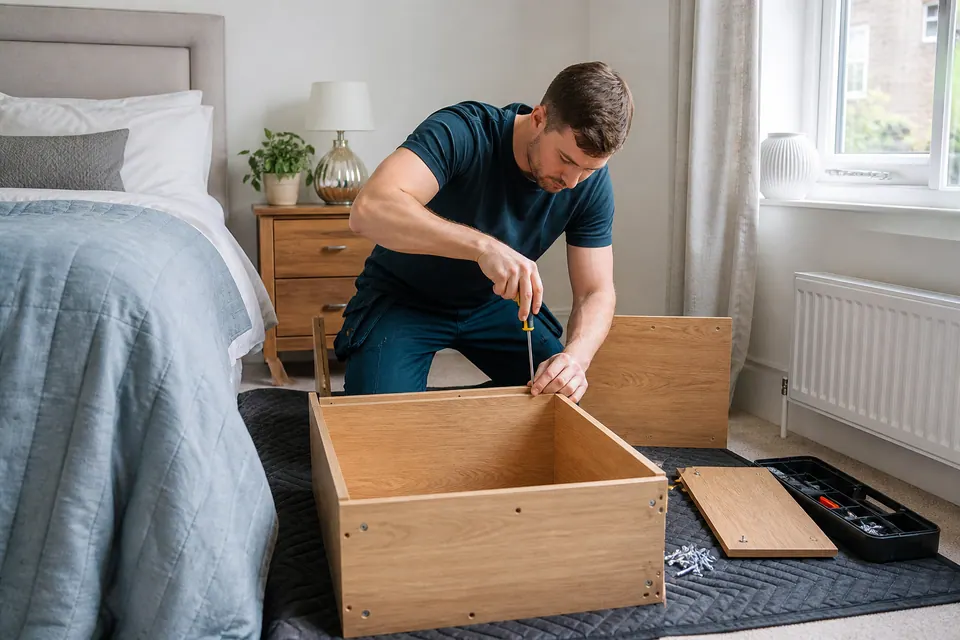
Illustrations explain assembly stages; they do not document a customer project.
QUICK ANSWERS
Match the price to numbered faults and approved replacement components.
Suitable small hardware work is distinct from service or structural alteration.
Several repairs can share review if their parts and outcomes remain identifiable.
Compare replacement specifications before assuming spare handles are compatible.
Pending deliveries and uncertain damage influence the appointment plan.
Assembly is offered for suitable supplied furniture; the exact model and instructions are needed to review each request.
Include accessory loads and supporting surfaces rather than spare fixings alone.
Clarify who owns each item and can approve replacement or cosmetic changes.
PLAN THE ARRIVAL
Send the Orpington postcode and rooms containing the listed fittings. Check appointment options once the products already delivered and parts still pending are clearly separated.
Area orientation
THE DETAILS OF YOUR VISIT
Include the affected item and fault as well. A component photograph alone does not establish where it fits or why replacement is needed.
Simple labels help connect photographs, parts and requested outcomes. This is especially useful where several fittings look alike but have different dimensions.
Mark it as pending and update the enquiry when it arrives. The planned work should not assume that all ordered parts are present.
Yes, describe it separately. Restoring movement and changing appearance involve different decisions even when they concern the same item.
Dimensions and fixing arrangements must be compatible. Provide the specification rather than choosing solely by finish or the shape of the lever.
State what happens during normal use and show visible damage. Avoid prescribing a repair method where the cause has not been assessed.
Agree supply and selection before relying on that arrangement. Unresolved components may affect what is included or ready to complete.
Record them separately for appropriate specialist review. They are not general handyman work simply because other minor repairs are being discussed.
Match the included work to the numbered items, approved components and desired results. Keep deliveries, decoration and specialist exclusions clearly visible.
TURN THE LIST INTO A PLAN
Share the complete item, its symptom and the proposed replacement together. This makes the repair request more useful than a photograph of assorted spare hardware.
Task images are illustrative.
