
Flats & apartments
confirm the tenant’s entry instructions.
LEWISHAM · APPROVED RENTAL TASKS
Give a rental repair list a clear decision maker.
A tenant may report a loose wardrobe hinge while the owner wants a replacement handle elsewhere. A Lewisham maintenance enquiry works best when those requests retain separate ownership and approval notes.
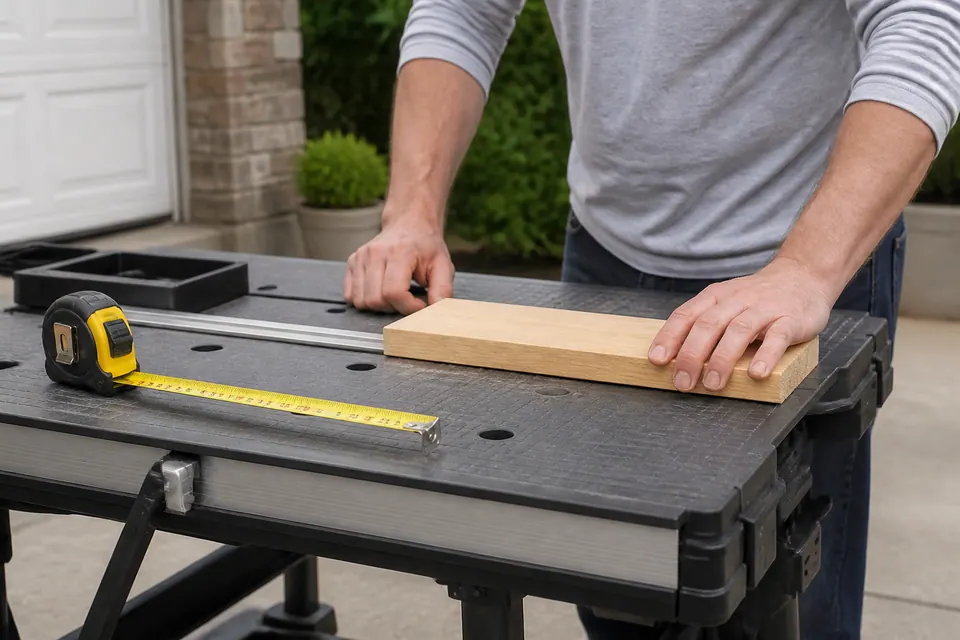
LEWISHAM IN PRACTICE
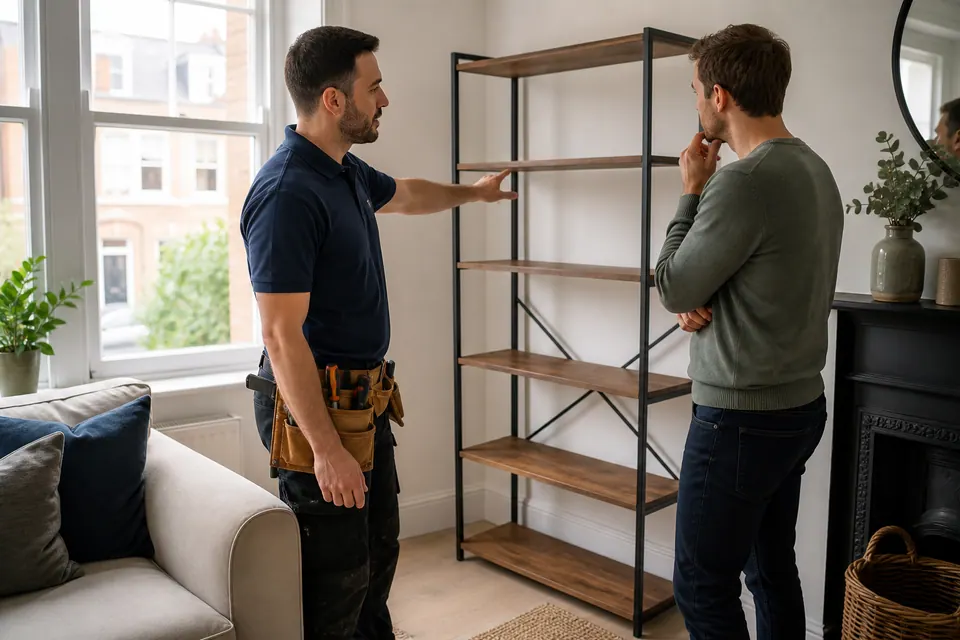
Give a rental repair list a clear decision maker.
Number the photographed faults rather than sending an undifferentiated room inventory. Record whether each item belongs to the landlord or the occupant before a replacement is discussed.
Access permission is not the same as spending authority. The person meeting the handyman should know which repairs are approved and how an unexpected damaged panel will be referred back.
Keep cleaning, gas checks and electrical faults outside the minor-repair list. They can be identified at the same time without being included in a general handyman appointment.
Identify whose flat-pack cabinet needs assembly; Obtain approval for drilling at the TV position; Match each loose fitting to an authorised outcome.
BUILD A REALISTIC LIST
Separate approved repairs from inventory observations. The selections below help organise requests, but an occupant opening the door does not authorise additional work.
| Situation | A practical next step |
|---|---|
| Simple familiar task | Record ordinary observations without assuming every mark needs intervention. |
| Several jobs or awkward fitting | Ask for help when several approved fittings need different components. |
| Uncertain wall, load or fixing | Do not install a replacement where the supporting panel has failed unchecked. |
| Gas, structure or fixed electrics | Route safety systems and specialist faults outside the inventory’s minor-repair list. |
DIFFERENT ROOMS, DIFFERENT BRIEFS
confirm the tenant’s entry instructions.
record existing condition before replacement.
separate landlord fixtures from personal furniture.
label repeated faults by floor.
identify the furniture’s responsible owner.
name the spending-authority contact.
Homeowner? Number the photographed faults rather than sending an undifferentiated room inventory. Record whether each item belongs to the landlord or the occupant before a replacement is discussed.
Landlord or manager? Send access and approval contacts separately where those roles differ.
Tenant? Separate landlord fixtures from personal furniture.
CLEAR BEFORE YOU BOOK
The quotation should identify the approved numbered defects and replacement costs.
Assembly can be arranged for approved furniture; identify ownership and send its product documents for review.
Obtain drilling permission and provide the wall item’s actual load.
| Task | Pricing basis | Guide |
|---|---|---|
| Repair or fitting | Match each loose fitting to an authorised outcome | Reviewed quote |
| Small furniture assembly | Identify whose flat-pack cabinet needs assembly | From £30 |
| Several small jobs | Owner and tenant requests can be reviewed together without merging their approvals. | Agreed combined work |
| Complex mounting | Obtain approval for drilling at the TV position | Mounting assessment |
For the published small-item guide, see Alesta’s furniture assembly page . Other fitting and repair requests are quoted individually.
Identify which numbered repairs the owner is funding and which tenant items are separate. Replacement decisions or wider damage can change the scope and require approval before extra costs arise.
FROM SMALL FIX TO FINISHED JOB
Number the reported defects and identify landlord or tenant ownership.
Obtain approval for each repair and any allowed replacement choices.
Give the access contact the same numbered brief as the decision maker.
Refer unexpected damage or substitute parts to the authorised person.
Separate completed repairs from inventory observations and deferred specialist work.
START WITH THE TASK
Identify whose flat-pack cabinet needs assembly.
02 ↗Separate landlord shelving from tenant additions.
03 ↗Describe the internal latch fault precisely.
04 ↗Obtain approval for drilling at the TV position.
05 ↗Record ownership of mirrors before relocation.
06 ↗Match each loose fitting to an authorised outcome.
QUICK JOB FINDER
Identify whose flat-pack cabinet needs assembly.
Explore this service ↗WALK THROUGH THE PROPERTY
ROOM NOTES
Obtain approval for drilling at the TV position. Number the living-room defects in photographs.
View the relevant service ↗| Job type | Example | Property area | Service |
|---|---|---|---|
| Assembly | Identify whose flat-pack cabinet needs assembly | Furniture position | Furniture assembly |
| Mounting | Record ownership of mirrors before relocation | Fitting wall | Fittings |
| Adjustment | Describe the internal latch fault precisely | Opening clearance | Door repair |
| Timber work | Separate landlord shelving from tenant additions | Storage space | Carpentry |
QUICK ANSWERS
The quotation should identify the approved numbered defects and replacement costs.
Loose fittings may suit handyman work; an entire inventory is not one repair.
Owner and tenant requests can be reviewed together without merging their approvals.
Record whether replacements are owner-supplied or still awaiting selection.
Missing authority or unavailable parts can leave individual tasks pending.
Assembly can be arranged for approved furniture; identify ownership and send its product documents for review.
Obtain drilling permission and provide the wall item’s actual load.
Send access and approval contacts separately where those roles differ.
A JOB, MADE VISIBLE
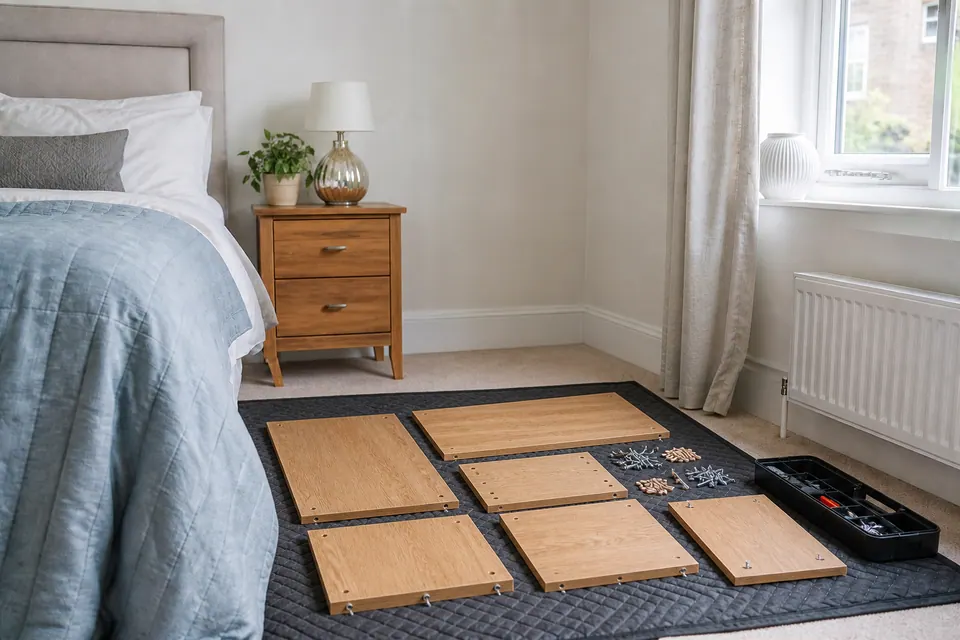
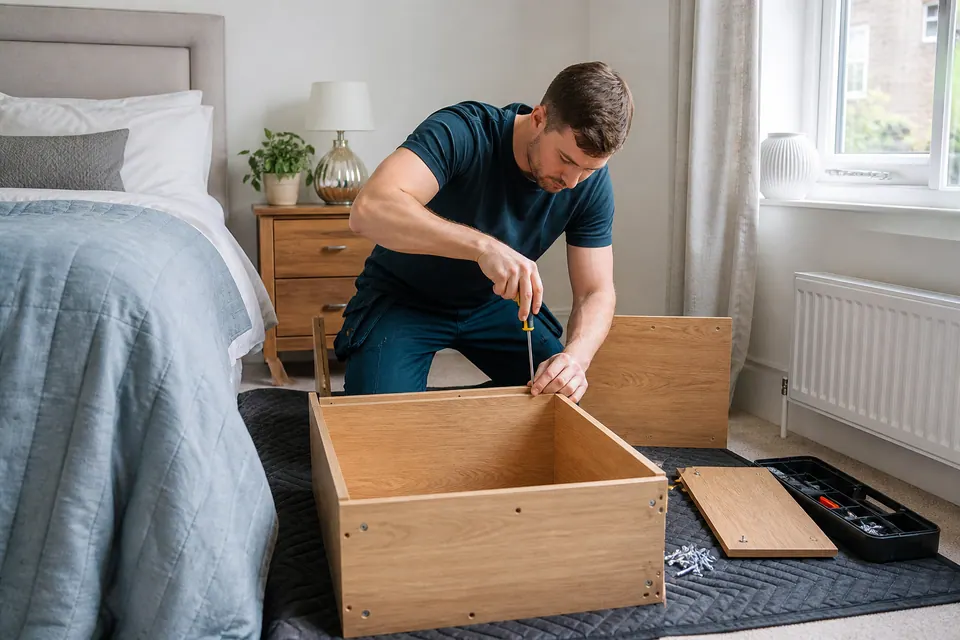
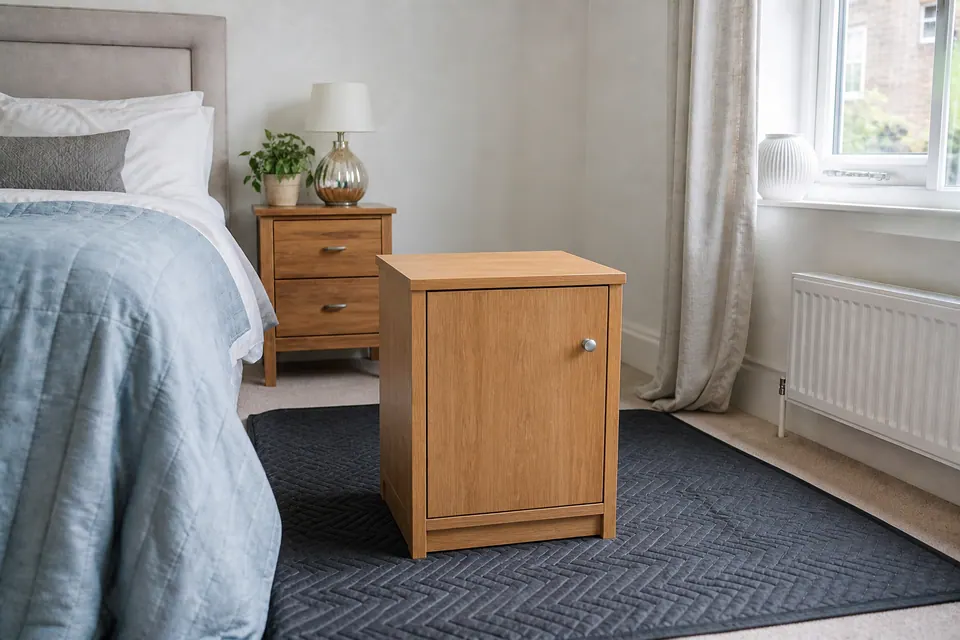
Illustrations explain assembly stages; they do not document a customer project.
PLAN THE ARRIVAL
For a Lewisham rental, send the postcode and the occupant’s entry arrangement. Confirm appointment availability with both access and approval contacts before relying on a handover window.
Area orientation
THE DETAILS OF YOUR VISIT
Only under the authority agreed with the owner or manager. Explain replacement limits before access is arranged so the decision is not improvised.
No. Distinguish recorded condition from requested work. A cosmetic mark may need no action, while a loose fitting deserves its own description.
Agree how uncertain items will be handled beforehand. Work outside the approved scope may need deferral rather than an assumed replacement decision.
It can be identified, but ownership, authorisation and charging arrangements need clarity. Do not merge those costs by implication.
The approving contact and access contact should recognise the numbered items. A shared brief reduces confusion between similar cupboard doors or fittings.
Not by default. Cleaning and minor maintenance are separate services, even when both are needed before another occupant arrives.
Report it separately to the appropriate qualified service. The presence of other small repairs does not make gas work a handyman task.
Identify the required component and obtain approval for any changed scope or cost. A part allowance should not be invented on arrival.
Compare the numbered requests with what was completed, changed or left pending. Keep deferred specialist work visible rather than calling the entire inventory resolved.
TURN THE LIST INTO A PLAN
Bring the owner-approved repair list and the occupant’s photographs together. A clear distinction between access, ownership and replacement authority makes the maintenance request easier to assess.
Task images are illustrative.
