
Authorised opening
The customer’s right to enter is checked before a suitable method is considered at the identified door.
Door history · ownership · current symptom
A short door history helps separate old alterations from the fault happening now. Record the property arrangement, responsible entrance, known hardware changes and present key or handle behaviour without guessing a cause.
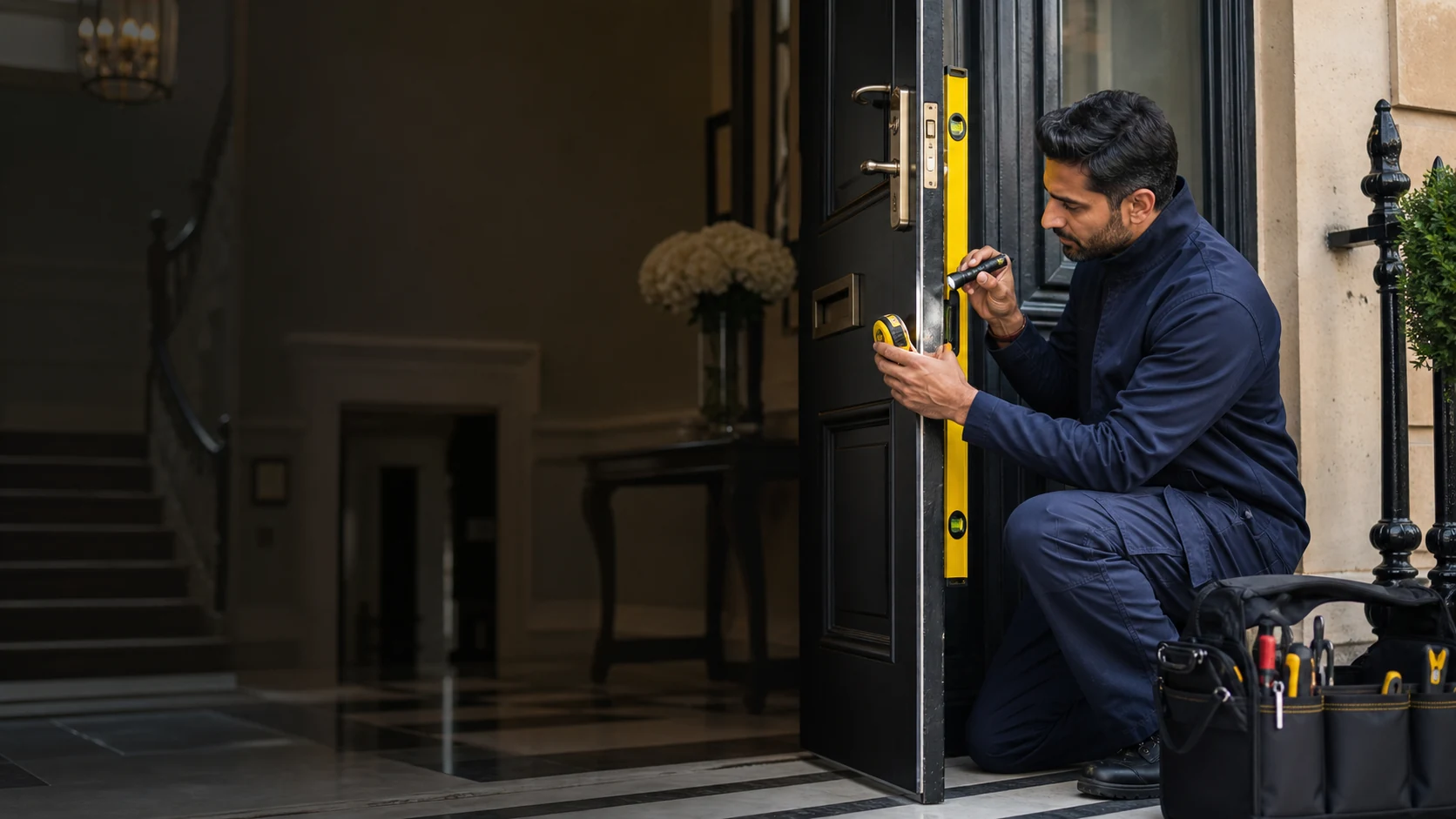
Property-first history
A front door on a single household terrace sits within a different decision structure from a common door serving converted flats. An estate entrance can involve management, caretakers and electronic access before the resident reaches a private lock. The property arrangement tells the locksmith who can authorise work and which records may exist. It does not diagnose the hardware.
Give the exact door a stable name and state who controls it. Add known alterations: a past lock change, a new closer, a repaired frame or refurbishment around the entrance. Include only information you genuinely hold. A date can help organise inspection, but the newest work should not automatically be treated as the reason for today’s symptom.
| History field | What to include | How it helps |
|---|---|---|
| Property arrangement | Single house, conversion, estate flat or managed common route | Identifies likely authority and access questions |
| Door identity | Street entrance, flat door, rear gate, store or communal lobby | Keeps photographs and findings tied to the correct opening |
| Responsible party | Owner, tenant, landlord, freeholder, estate or managing agent | Shows who can approve opening, parts and changes |
| Known alteration | Documented lock, handle, closer, frame or decoration work | Provides context without claiming causation |
| Earlier operation | How the key, handle, latch and closing action worked before | Creates a factual comparison with current behaviour |
| Current symptom | Door state, first date, safe observations and affected users | Guides fault assessment at the actual entrance |
Read old preparation carefully
Timber doors can show earlier lock cases, rim cylinders, handle positions or repaired cut-outs. A cover plate may protect old preparation or conceal a previous alteration. Send a whole-door view, both hardware faces, the edge and frame keeps. Do not remove a plate to discover what is behind it before the visit.
The locksmith can compare visible preparation with the present lock and door condition. If a replacement is proposed, ask which existing holes remain, what new preparation is needed and who will complete joinery or decoration. A larger plate should not be used as an unexplained substitute for a proper making-good decision.
In a managed or communal door, past alterations may be recorded by the freeholder or estate team. Request those records where they matter instead of assuming that a previous resident’s description is authoritative.

Current problem first
Describe what happens now: whether the door is open or closed, how far the key turns, how the handle moves and whether the latch meets the frame. Stop forcing any part that has become stiff. If the door is already open and can remain safely open, a comparison away from the frame may be useful. Do not close an unreliable entrance solely for testing.
| Current observation | Useful history | Next step |
|---|---|---|
| Key has become progressively difficult | Known key copies, earlier lock work and changes in door contact | Assess key, lock and frame relationship before parts are selected |
| Handle no longer returns | Handle-set age if documented and any recent removal | Leave assembled and inspect handles, spindle and mechanism |
| Latch misses the keep | Frame repairs, hinge work and when closing changed | Review door position and hardware together |
| Key snapped | Condition of the key and whether stiffness was already present | Retain pieces and separate extraction, opening and repair decisions |
| Unknown keys remain after occupancy changed | Door schedule and copies actually handed over | Plan a proportionate key-control response with the authorised owner |
| Common entrance fails after building work | Documented work and responsible contractor or manager | Report chronology without assigning blame; management commissions assessment |
Service route from findings
The customer’s right to enter is checked before a suitable method is considered at the identified door.
Present condition decides whether adjustment or a serviceable component can restore dependable operation.
Compatibility, desired outcome, preparation and key quantity are agreed rather than copied from an old part.
Lost or unreturned keys are assessed by address risk, legitimate users and owner authority.
Splits, movement and previous repairs can need a joiner or door specialist alongside locksmith hardware.
Powered releases, intercoms and shared controls remain within the manager’s appointed service route.
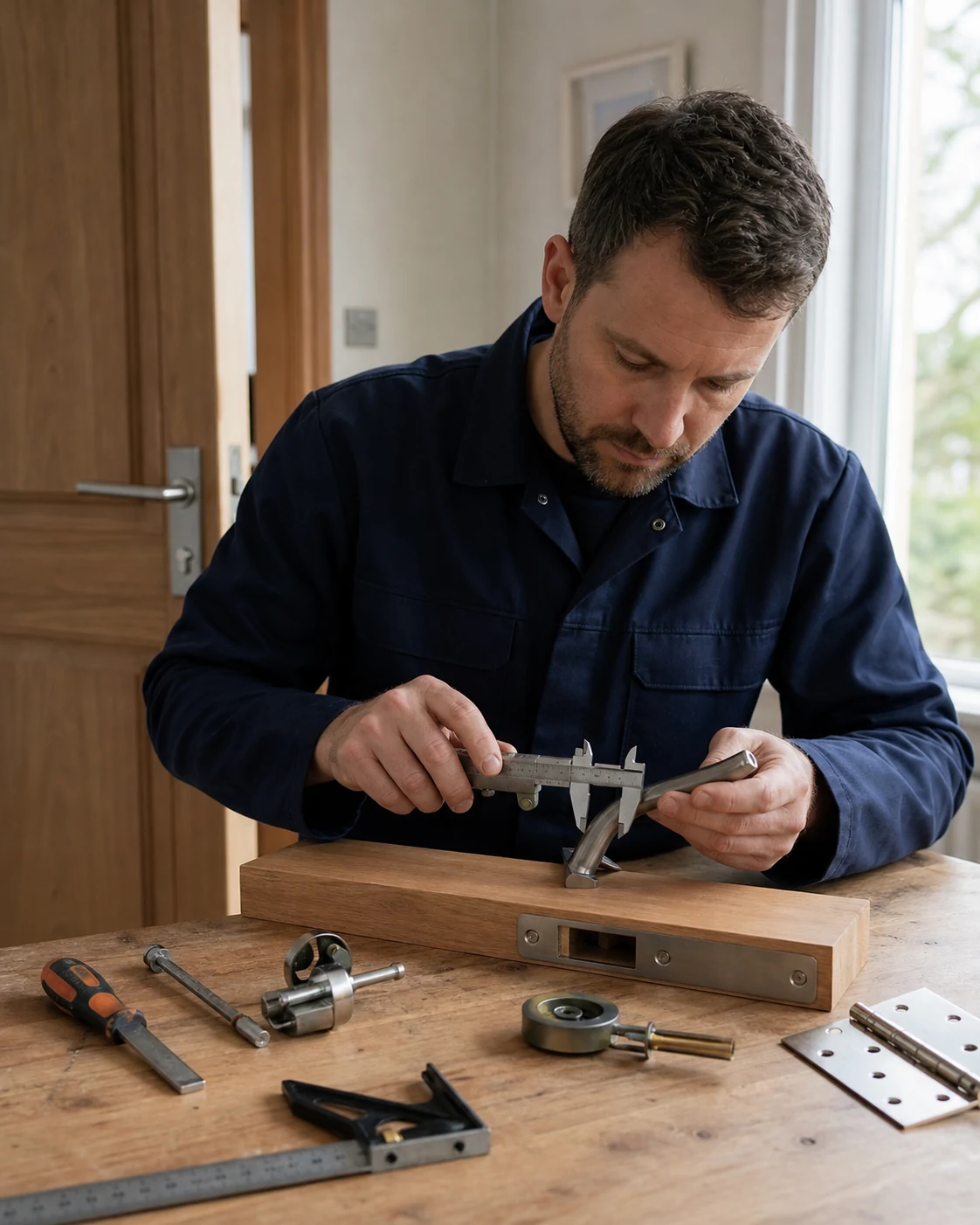
Bow property context
Bow enquiries can involve Victorian terraces, estate flats, conversions and managed communal entrances. These contexts suggest where useful records or decision-makers may sit. They do not establish tenure, lock type, fire performance or the cause of a fault at a particular address.
For a terrace, include front, rear and garden entrances if the security outcome covers them. For a conversion, separate the common front-door history from the private flat. For an estate, give the block and entrance identifier, estate contact and private-door details. A common entrance may have a mechanical lock, closer and electronic release with separate maintenance histories.
Where a flat has changed occupancy, provide the known key handover and landlord authority. Where management has recently commissioned entrance work, give the reference or document without turning chronology into an accusation.
| Setting | Likely history source to ask for | Scope boundary |
|---|---|---|
| Single household terrace | Owner records, invoices and known previous alterations | Private lock work versus door and decorative repair |
| Converted house | Freeholder or agent for common door; occupier for flat entrance | Communal history versus private history |
| Estate flat | Estate office or housing manager for shared access records | Estate-appointed work versus resident instruction |
| Rear or basement entrance | Owner, tenant and gate holder for the complete route | Access permission versus lock authority |
| Managed electronic entrance | Management incident and maintenance records | Mechanical locksmith work versus access-control systems |
Quote the present scope
Price depends on access, door state, labour, method, compatible parts and any repair outside the lock. Bow alone cannot support a reliable figure. A useful quote states which history was available and which facts still require inspection.
The quote identifies documents and customer observations used for preparation.
Current operation and preparation determine the proposed work.
Parts, destructive methods and making good receive explicit approval.
Installed hardware, keys, tests and limitations join the door history.
If an old cut-out or hidden repair changes the plan, request a revised scope before work expands. Do not allow uncertainty to be hidden beneath a generic “standard lock” description.
Bow locksmith FAQ
Share reliable dates, invoices, product records and observations connected with the exact door. Avoid guesses about work you did not witness or documents you do not hold.
Not automatically. The date can guide inspection, but key, lock, handles, door and frame still need present assessment.
The freeholder, managing agent, estate office or other responsible building party may hold records and should authorise common entrance work.
Leave fixed plates and hardware in place. Photograph them and let the locksmith assess whether removal is needed within an authorised scope.
Say that clearly. Full-door photographs, present operation and on-site measurements can support an evidence-led proposal without an invented history.
No. Age alone does not determine condition or suitability. The desired outcome, operation, compatibility and documented requirements matter.
A tenant can report observations and documents they hold. The landlord or owner may still need to approve alterations and provide wider property records.
Record it before work. Locksmith hardware, joinery, structural door repair and decoration should be assigned as distinct tasks.
Keep the exact door, product, keys, work completed, operation tests, access limits and any issue returned to the owner or building manager.
Nearby coverage
Use service pages for the task and current nearby pages for related property guidance.
Let present evidence update the history
Send the property arrangement, known changes, current symptom, safe images and responsible contact for a finding-led scope.
