
Private mechanical lock
The resident or owner can authorise opening, fault assessment and compatible work within the apartment boundary.
Current access · work period · secure handover
A lock repair or key change in a managed building should preserve legitimate access before, during and after the work. Plan who enters now, what may be interrupted and how residents receive the finished arrangement.
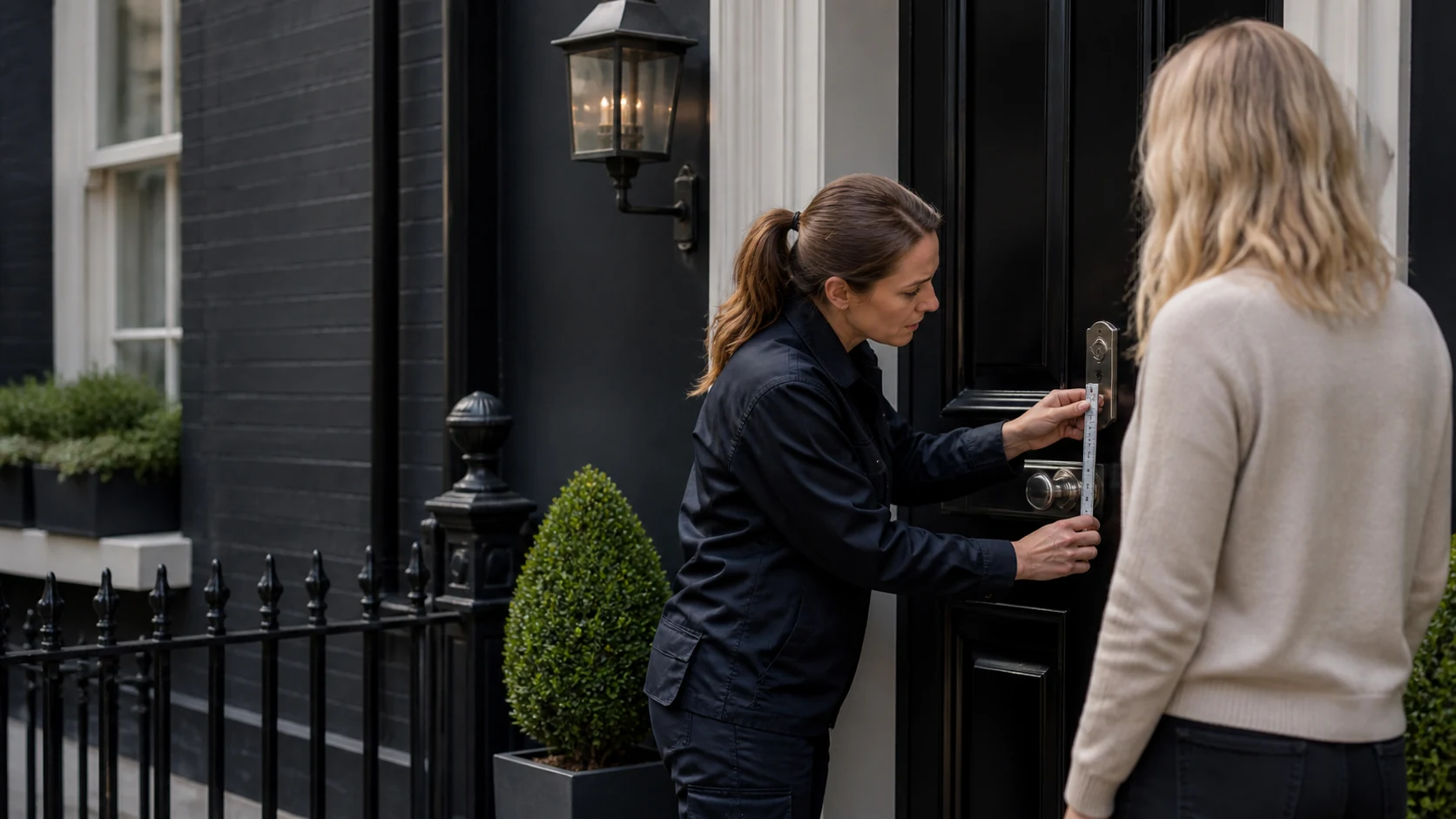
Access continuity
For a private apartment lock, list the residents, owner or landlord and any authorised management access. For a common entrance, the building manager should know which residents, staff and contractors rely on the door. The locksmith does not need personal details beyond the practical authority and key plan, but the person commissioning the work should understand who must retain entry.
This is especially important when a private key change follows a tenancy or ownership event. Agree the number of keys and recipient before fitting. At a communal entrance, do not alter a mechanical component or master-key arrangement on one resident’s instruction. Concierge support with arrival does not equal authority to change everyone’s access.
| Continuity stage | Private apartment | Managed common route |
|---|---|---|
| Current access | Authorised keys, occupants and alternative lawful entry | Keys, fobs, concierge and visitor process currently in use |
| Work authority | Owner, tenant or landlord decision boundary | Freeholder, managing agent or appointed building representative |
| Possible interruption | Door opening, temporary loss of locking and key handover | Common door availability and resident communication managed by the building |
| Completion outcome | Reliable operation and agreed private key issue | Restored authorised common access under management testing |
| Unresolved finding | Door, frame or part proposal returned to owner | Electronic, closer or structural issue returned to management |
Private-door lockout
State whether you are outside the building or only outside the apartment. Prepare reasonable evidence of occupancy, ownership or authorised management. If identification is inside, explain which building or property contact can support verification. The concierge may help confirm the route, but the locksmith still needs an appropriate basis for private entry.
Opening and restoring security are separate outcomes. A suitable method depends on the actual lock and door state. If destructive work or a replacement component becomes necessary, the authorised customer should approve it. Ask how the apartment remains secure if the final compatible part is not confirmed during the first attendance.
Do not use emergency stairs, balconies or neighbouring properties as improvised routes. Where a person is in immediate danger, call the emergency services and follow the building’s emergency procedure.
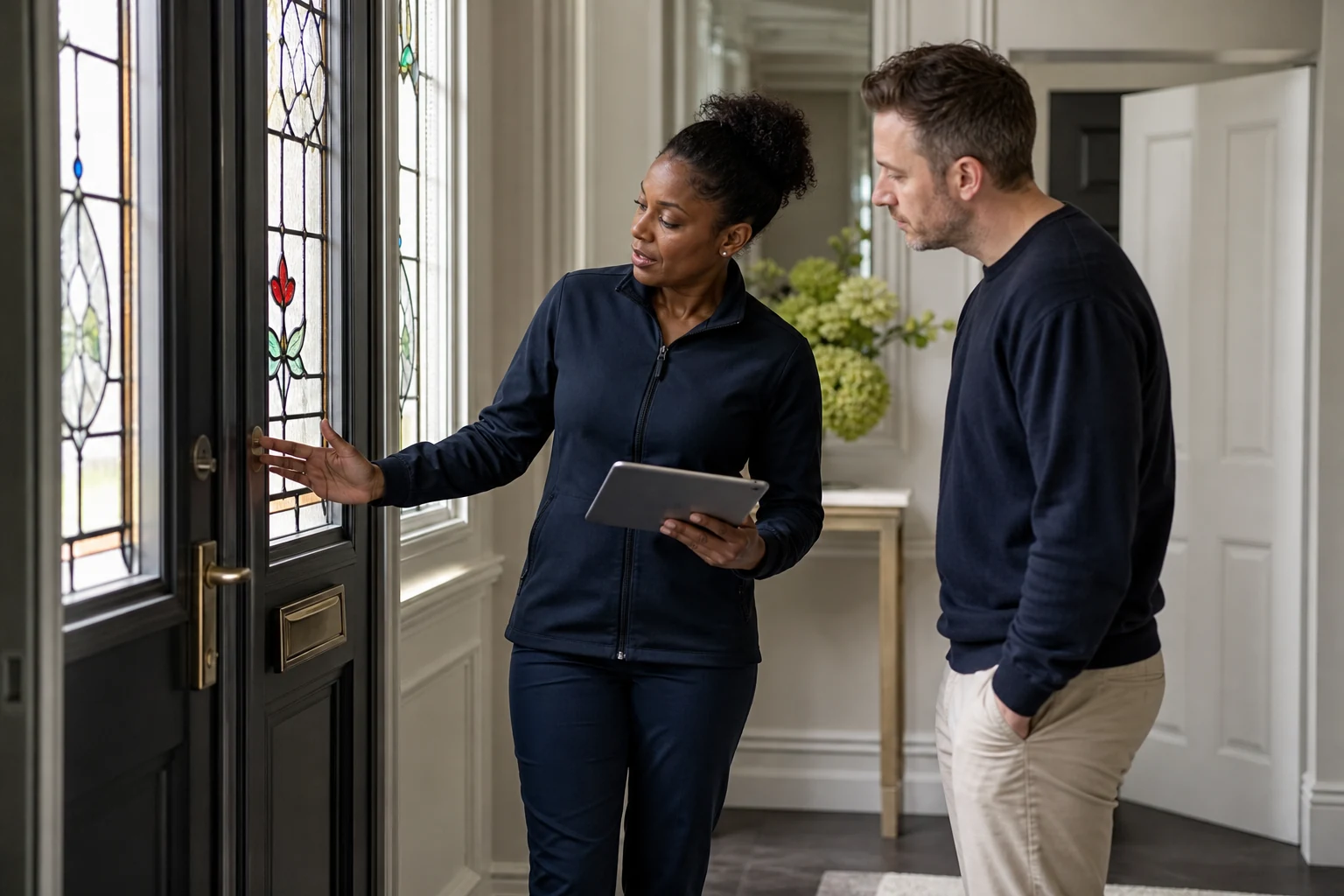
Common entrance continuity
Electronic common access can involve a fob or credential, reader, controller, powered release, intercom, closer and mechanical latch. Record the action and response in order. Residents should not open control boxes or repeat resets. Management can route the incident to locksmith, access-control, electrical or door services from that evidence.
| Observed state | Continuity question | Management decision |
|---|---|---|
| One fob fails while others work | Can the resident use another authorised route temporarily? | Review credential status before changing physical hardware |
| All credentials respond but latch stays closed | How will legitimate users enter while assessment is arranged? | Allocate powered release and mechanical latch checks |
| Door opens but does not close securely | How is the entrance supervised under building procedure? | Assess closer, hinges, frame and latch under authority |
| Mechanical override key will not turn | Who holds another authorised credential or route? | Commission key, cylinder, lock and door-pressure assessment |
| Intercom fails for one apartment | Can reception use the established visitor process? | Route the apartment or system issue without replacing the common lock blindly |
| Planned common lock change | How will all legitimate users receive continued access? | Approve hardware, key distribution and communication as a building project |
Keep the scopes separate
The resident or owner can authorise opening, fault assessment and compatible work within the apartment boundary.
Management controls shared lock, latch and key changes that affect multiple users.
Credentials, readers, controllers, intercoms and powered releases may need an appointed access specialist.
Hinges, frame, leaf and closing equipment can need another repair scope alongside lock work.
Private keys go to named authorised occupants; common keys follow the building register.
Only the responsible manager or owner should approve interim access and communicate it to users.
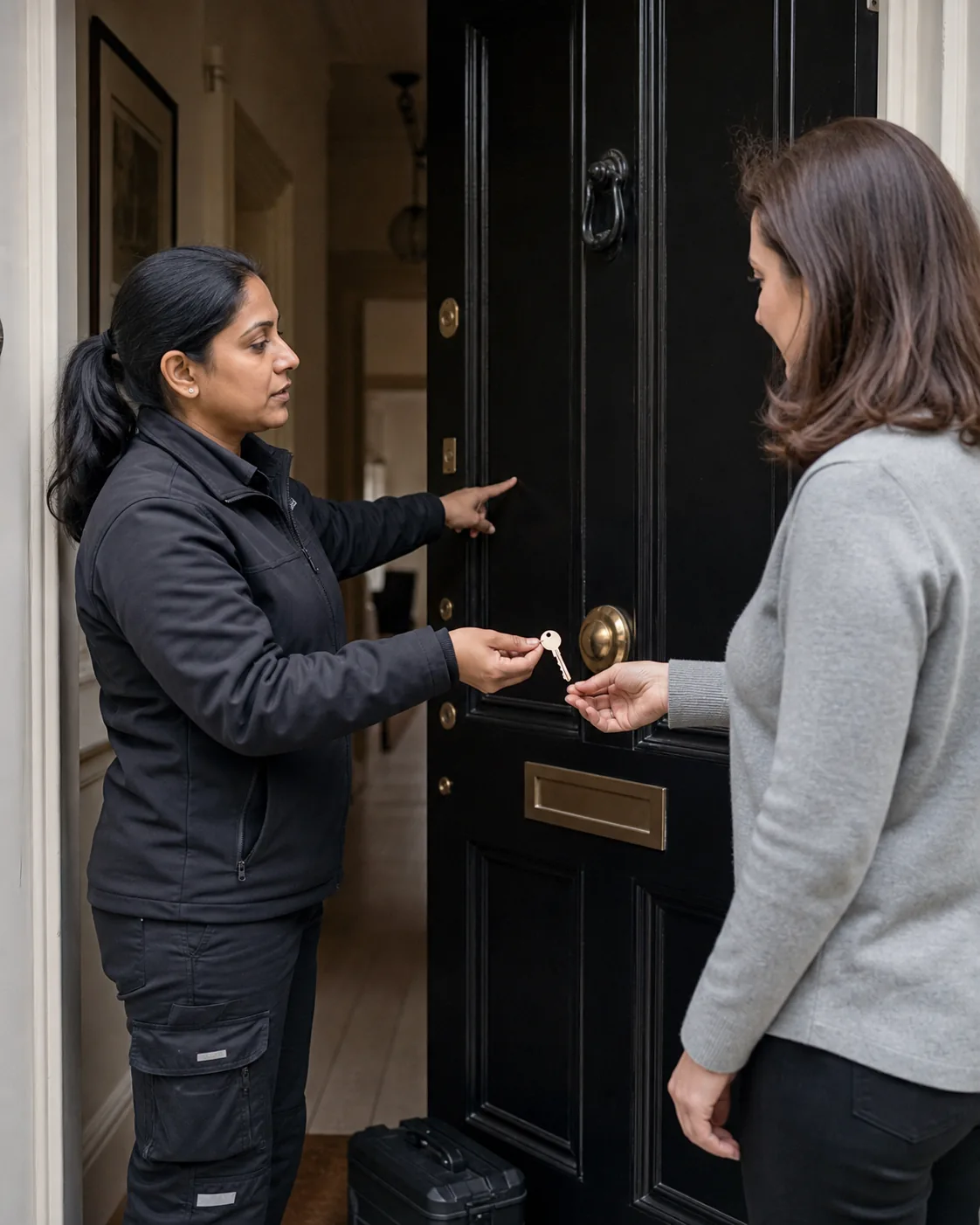
Stratford property context
Stratford enquiries can involve high-rise apartments, concierge-managed developments and older terraces. A tower may use reception, controlled floors and electronic common access before the private door. A terrace usually places front and rear entrances under one household, although conversions can add shared thresholds.
For a managed apartment, use the building’s actual visitor, contractor and incident procedure. Identify the floor and private door, plus the manager responsible for common systems. For a terrace, list all exterior entrances and legitimate key holders. If the property is divided, separate the common front-door decision from the flat lock.
Do not infer response arrangements, fire-door status or lock specification from building height or age. Current records and authorised parties provide those facts.
| Setting | Continuity preparation | Scope distinction |
|---|---|---|
| High-rise apartment | Reception, lift, controlled floor, private door and fallback contact | Building circulation versus apartment locksmith work |
| Concierge-managed block | Contractor process, resident confirmation and key recipient | Concierge assistance versus alteration authority |
| Electronic common entrance | Credential, intercom, release, closer and latch observations | Access-control system versus mechanical component |
| Older terrace | Front, rear and side routes, occupants and owner instruction | Private access continuity versus separate door repair |
| Converted terrace | Freeholder contact, common threshold and exact flat | Shared key plan versus private key plan |
Quote the interruption and handover
Price depends on route, timing, verification, door state, labour, method and compatible parts. Stratford alone cannot establish it. Ask the quotation to state access assumptions and the completed user outcome.
Private and common legitimate access is recorded before work starts.
The responsible owner or manager controls any temporary change.
Opening, repair, hardware and exclusions match the authorised door.
Keys, tests and unresolved system findings reach the correct people.
If the planned part is unavailable or the access route cannot be used, document that limitation and agree another stage. Do not leave an informal key or access workaround outside the building’s or owner’s record.
Stratford locksmith FAQ
It records who can enter before work, what may be interrupted, who approves changes and how keys or access are restored afterwards.
Only where that authority has genuinely been assigned. Reception support and the owner or landlord’s hardware decision should otherwise remain separate.
State your position, flat and verification route. Arrange reception and floor access while keeping the private-door customer available for method and part decisions.
No. Credential administration, reader, controller, power, release and mechanical latch should be distinguished before physical replacement is proposed.
The building’s authorised representative should manage quantities and distribution. A locksmith handover should follow that register rather than an informal resident list.
Do not improvise a security or safety arrangement. The responsible building manager should set and communicate any temporary measure.
The locksmith should explain the finding, keep the door secure within the agreed scope and provide a later compatible proposal rather than fitting an uncertain substitute.
The route is often controlled by one household, but front, rear and converted-flat thresholds still need separate symptoms, users and authority.
Include the door, work, hardware, keys, operating tests, access restored and any common-system or door issue returned to management or owner.
Nearby coverage
Use the service pages for the task and current area pages for nearby access guidance.
Protect legitimate access through every stage
Send the current users, managed route, private symptom, approval contact and planned handover for an accountable visit.
