
Access assessment
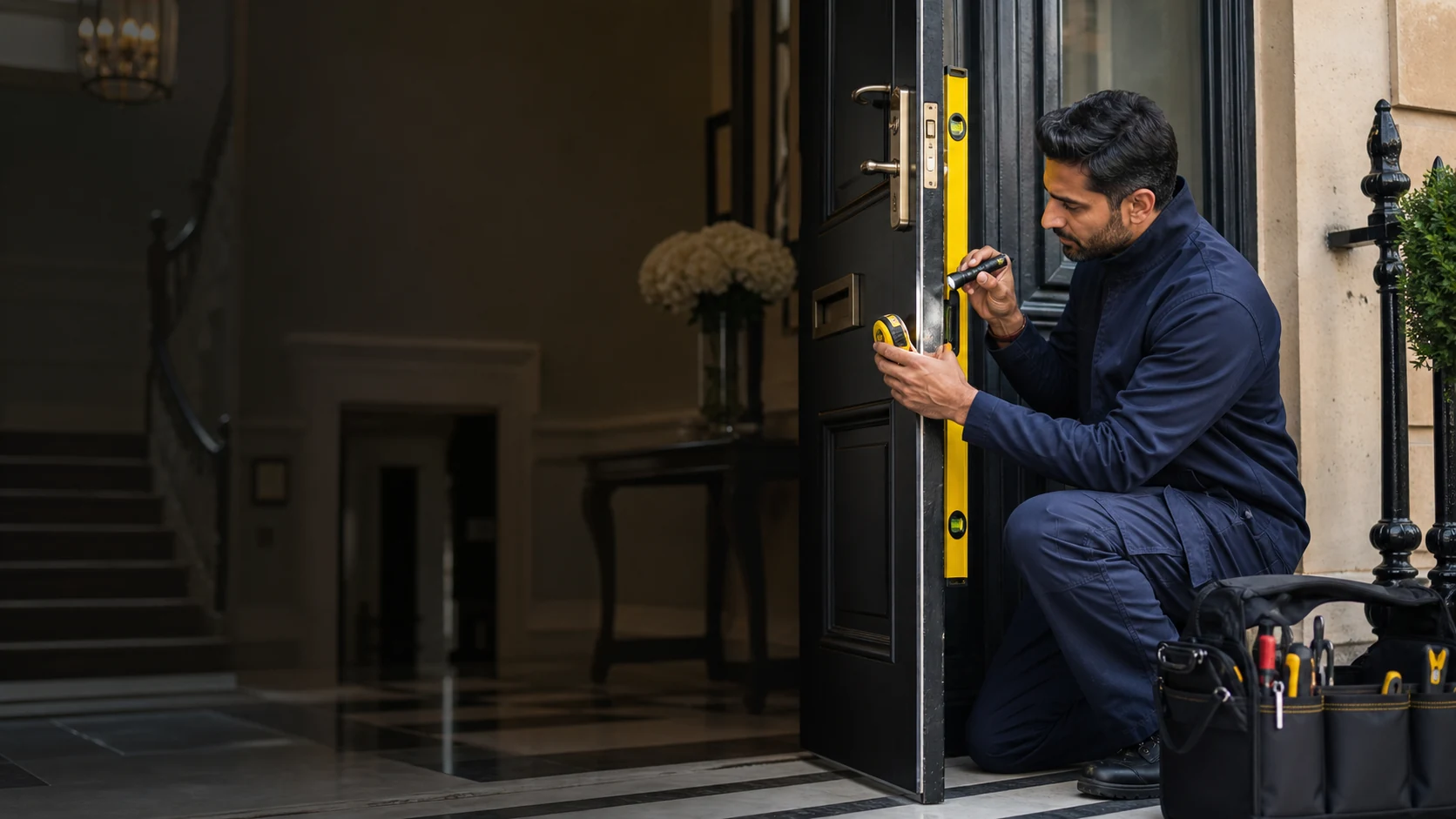
Confirms the person’s authority, the correct door, its present state and a proportionate opening approach.
Identify the door · identify the decision-maker
A lock problem in a block can sit on a private flat door, a shared entrance or the boundary between the two. This guide helps residents and managers route each symptom without assuming that the person who reports it is also responsible for commissioning the work.
First decision
Begin with a description that another person could use to find the door. “The front door” is not enough in an estate or tower where the route may include a gate, block entrance, reception door, lift lobby and private flat entrance. Give the building or block, entrance label, floor where relevant, and whether the door serves one household or several.
The answer changes the instruction route. A resident may be able to authorise work on a privately controlled flat lock, subject to their tenancy or lease. A shared entrance normally belongs within the building’s management process, even when one resident first notices the fault. Reporting a communal problem is useful; it does not by itself grant permission to alter common hardware.
| Door or access point | Who should usually be contacted first | What the report should contain |
|---|---|---|
| Private flat entrance | Occupier, owner or landlord under the relevant occupancy agreement | Proof of authority, door state, key behaviour and safe photographs |
| Communal block entrance | Managing agent, housing provider, freeholder or estate team | Entrance identifier, affected users, mechanical symptoms and any electronic indication |
| Gate serving several homes | Party responsible for the shared estate or development route | Whether the gate is open or closed, manual hardware condition and access-control behaviour |
| Internal lobby or shared corridor door | Building manager or nominated facilities contact | Exact level, door label, closing action and whether safe passage is affected |
| Store, meter or service cupboard | Owner or authorised service manager for that space | Purpose of access, key status and evidence of permission |
| Door whose status is unclear | Landlord, lease manager or building contact before alteration | Photographs, plan or lease reference sufficient to identify the boundary |
Resident action
A resident can make a precise report, preserve a broken key, keep photographs and explain how the entrance behaved before the problem. Those steps improve the handover whether the eventual instruction comes from the resident, landlord or management team. Avoid dismantling a closer, removing a common lock or defeating an electronic release to create temporary access.
For a private flat door, state whether you are inside or outside, whether the door is open or closed, and whether another safe entrance exists. Describe the key, handle and latch separately. If a key has snapped, retain every piece and stop further attempts with tools or adhesive. If the door is open but unreliable, do not close it merely to reproduce the fault.
For a common entrance, include the block name or number and the best contact for building authority. Tell management if the symptom affects all credentials, only one user, the mechanical key, the release button or the physical closing action. These observations help split the work between locksmith, door, access-control and electrical responsibilities.
Next-step matrix
Words such as “broken lock” can hide several different conditions. The key may be damaged, the cylinder may turn without operating the mechanism, the latch may meet the frame incorrectly, or the common release may not respond. Choose the next professional conversation from what can be observed safely. Product selection follows inspection and authority.
| Observed condition | Useful first route | Decision still to make |
|---|---|---|
| Authorised occupier is outside a closed private flat | Locksmith access assessment | Opening method, subsequent repair and any replacement need |
| Private key turns stiffly while the door remains open | Lock and door relationship assessment | Whether the cause sits in the key, lock, alignment or more than one element |
| Latch works away from the frame but not when closing | Door, hinge, keep and lock inspection | Adjustment, component repair or separate door work |
| One common-entry fob fails but other users enter normally | Building access administrator | Credential status before hardware attendance |
| Every electronic credential fails at a communal door | Management’s access-control or electrical route | Whether a separate mechanical defect also exists |
| Mechanical common lock is visibly loose or jammed | Management-authorised locksmith assessment | Repair, replacement, door preparation and key distribution |
| Door will not close into the frame | Building manager plus appropriate door or locksmith trade | Safe interim management and division of repair responsibility |
What each route includes
A request can begin with one immediate problem and uncover a second piece of work. An authorised opening does not automatically approve a replacement. Equally, a replacement cylinder does not resolve a door that has moved against its frame. Ask for each decision to appear distinctly in the agreed scope.
Confirms the person’s authority, the correct door, its present state and a proportionate opening approach.
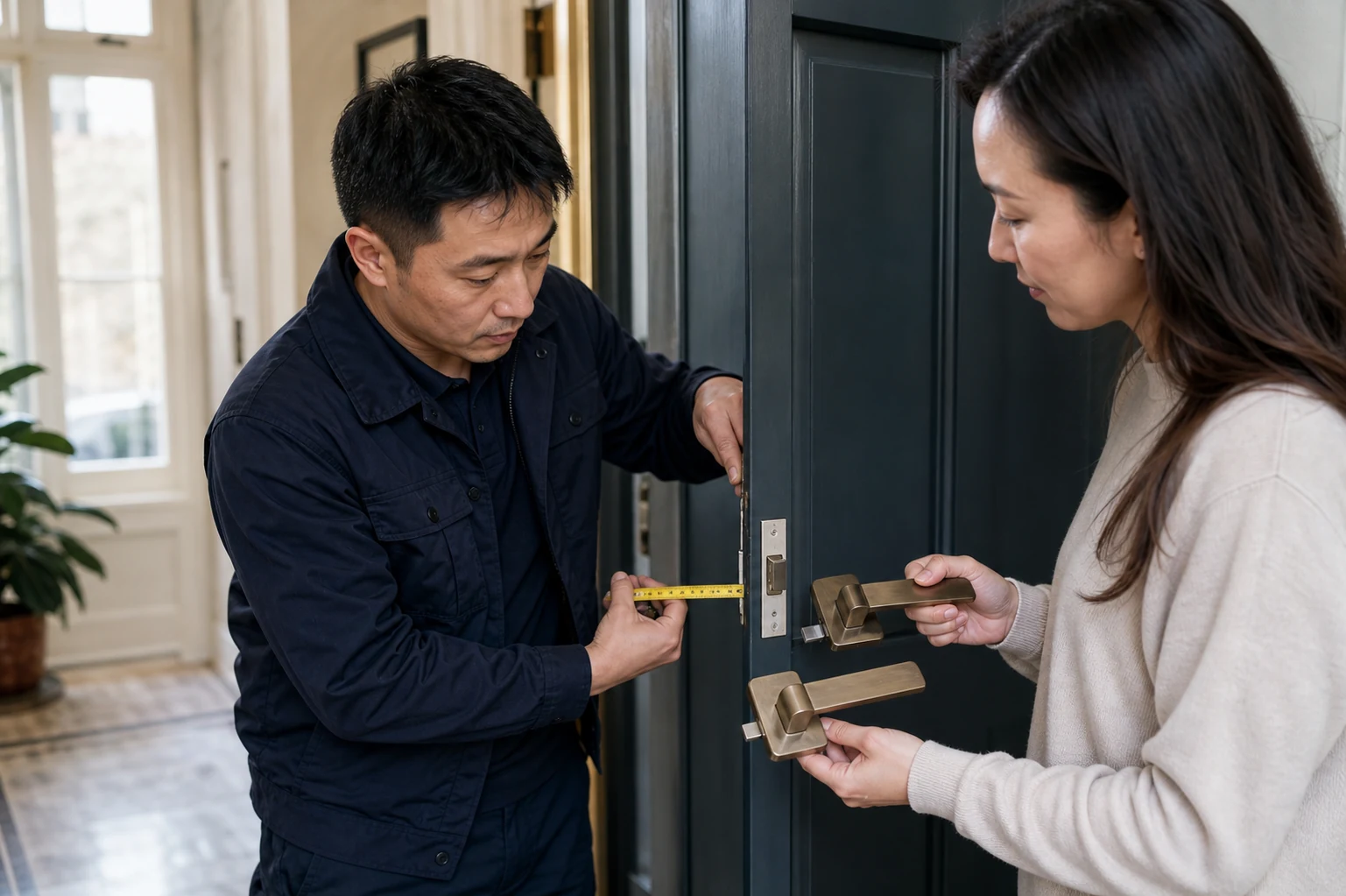
Considers key, cylinder, case, handles, latch, door position and frame contact before attributing the fault.
States what can be adjusted or serviced, what remains worn, and how reliable operation will be checked.
Records compatibility, preparation, key quantity, required evidence and the person approving a material change.
Returns communal authority, powered releases, credential administration and wider door issues to the appointed route.
Identifies the door, completed action, retained or removed parts, issued keys, tests and unresolved boundaries.
Poplar building context
Poplar includes estate flats, newer towers and buildings with communal entrances. That broad context can help prepare the right questions, but it cannot establish the tenure, door specification, access system or responsible party at an individual address. Use documents and named building contacts rather than assumptions based on appearance.
In an estate setting, include the block and entrance reference, housing or estate contact, and whether the problem is at the shared entrance or private flat. In a managed tower, add reception or concierge procedure, visitor registration requirements and any rules for contractor access. Do not ask reception staff to approve alterations unless their role explicitly includes that authority.
A communal entrance can combine a closer, mechanical latch, electric release, reader and intercom. Report each observable behaviour separately. The building may appoint different contractors for the physical door, mechanical lock and powered system. A locksmith can address an authorised mechanical scope without claiming responsibility for every connected component.
Residents who rent should check the reporting and approval terms that apply to their home. Leaseholders may also need management consent where work interacts with a common system or building-controlled door standard. These are document questions, not conclusions that can be drawn from a postcode.
| Commissioner | Information to assemble | Boundary to confirm |
|---|---|---|
| Resident instructing private work | Identification, occupancy evidence, landlord contact where required, photographs and key details | Right to enter versus authority to alter the hardware |
| Landlord or letting manager | Property authority, tenant access arrangements, inventory and desired key-control outcome | Urgent access versus planned improvement |
| Housing or estate team | Block reference, common-door ownership, contractor procedure and affected-user report | Mechanical work versus electronic access and door maintenance |
| Managing agent or freeholder | Door schedule, required approvals, site contact, access windows and handover recipient | Private demise versus common parts |
| Concierge or reception contact | Registration steps, loading or lift access and authorised commissioning contact | Site facilitation versus permission to change locks |
| Commercial occupier within a mixed building | Lease boundary, nominated key holder, opening arrangements and shared-route contact | Unit entrance versus landlord-controlled access |
Quote by identified scope
Cost depends on the actual door, its open or closed state, access conditions, labour, chosen method, compatible parts and any work outside the lock. The area name alone cannot provide those details. A useful request tells the provider who is instructing, what that person controls, and which observations remain unconfirmed.
Name the block, level and entrance so attendance is planned for the right threshold.
Identify the person entitled to request access and the party able to approve alterations.
Inspect the lock, door and frame before settling repair, adjustment or replacement.
Agree parts, any destructive step, making good and work assigned to another trade.
Return keys, operating tests and unresolved communal issues to the correct owner.
If the visit reveals that a supposed private fault belongs to common hardware, pause expansion of the scope and contact management. If a communal report proves to concern only one credential, let the access administrator check that credential before common hardware is altered.
A clean handover
At the end of work, note the exact entrance, who instructed it, what was inspected and what changed. Record the number of keys issued without publishing key codes in general correspondence. Where parts were removed, agree whether they are returned, retained for a defined reason or disposed of with authority.
Test the door through its normal operating sequence with the authorised customer or site contact. A private entrance may need checks from both sides. A common door may require the manager to coordinate credential, intercom or powered-release testing outside the locksmith’s mechanical scope. State any limit rather than marking the whole access route as resolved.
Assign outstanding matters by role: resident, landlord, manager, door contractor, access-control provider or electrician. This final allocation prevents a vague observation from circulating between parties without a decision-maker.
Poplar locksmith FAQ
You can report the problem, but authority to alter the lock depends on ownership and your tenancy or lease. Confirm the position with the landlord or relevant property documents when it is unclear.
The building’s managing agent, housing provider, freeholder or estate team should normally commission changes to a shared entrance. A resident can still make the first detailed report.
Contact the landlord or letting route required by your agreement and prepare identification and occupancy evidence. The locksmith must still verify authority at the actual address.
No. Compare whether other authorised credentials work and report the reader, release and mechanical door behaviour separately to building management.
Concierge staff may facilitate entry or contractor registration, but alteration authority should come from the party whose role covers the relevant door.
No. Report the door state and keep people away from unsafe improvisation. Management should choose a safe interim measure and appoint the appropriate contractor.
Use the lease, tenancy information, door schedule, block plan or written confirmation from the responsible property contact. Photographs identify the door but do not determine legal ownership.
Only where the correct parties have authorised each scope and the provider is appropriate for both. Keep instructions, parts and handover records distinct for each entrance.
Request a record of the identified door, work completed, parts, issued keys, operating checks, limitations and any matter referred to management or another trade.
Nearby coverage
Choose the service page for the task and nearby pages for other building-access guidance.
Put each door on the right route
Provide the precise entrance, present condition, private or communal status, safe images and named commissioning contact for a properly bounded assessment.
