
Private lockout
Give authority, exact door state and what happened to the key before an opening method is agreed.
Gate · lobby · corridor · private door
A gated route contains several security points. Identify the first threshold that fails, the later doors that still work and the manager or resident who controls each stage.
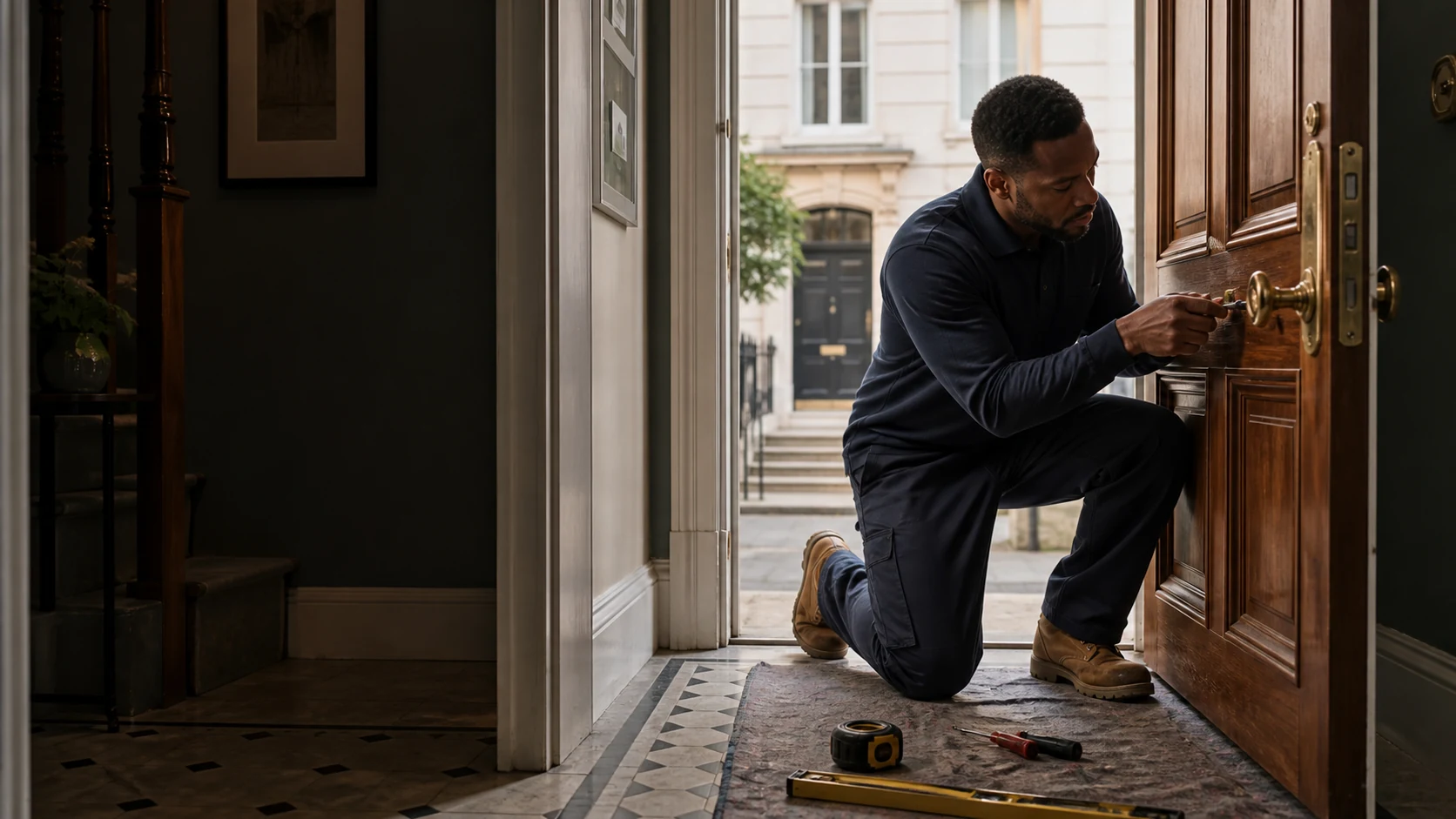
Gated-route isolation
Describe the journey in order and stop at the first failed threshold. State whether a mechanical key, fob, intercom, keypad or remote action was used and what happened. Then note whether later doors are known to work for other authorised users. This isolates the report without asking residents to bypass security or test areas they cannot lawfully reach.
A vehicle gate, pedestrian gate and building door can use different equipment and owners. The visible lock may be only one mechanical element beside powered controls, hinges, closers or operators. Residents should not open control boxes, disconnect equipment or stand in a moving gate path. Management should receive the route record and assign the appropriate provider.
| Threshold | Observation to record | Responsible contact |
|---|---|---|
| Vehicle gate | Remote or credential response, movement, stopping point and visible obstruction from a safe distance | Development or gate manager, not a private-door customer alone |
| Pedestrian gate | Key, latch, closer and powered release behaviour | Freeholder, managing agent or authorised route owner |
| Main building entrance | Fob, intercom, mechanical override, latch and closing action | Building manager for common access |
| Internal controlled door | Floor, door label, users affected and response sequence | Management or access administrator |
| Private flat entrance | Door state, private key and handle symptom, occupant authority | Resident, owner or authorised landlord |
| Alternative route | Whether management has an established lawful option | Responsible route owner, never an improvised resident bypass |
Management approval
A manager can release a gate or arrange an escort so the locksmith reaches a private door. That does not necessarily make management the customer for the apartment lock. A resident can authorise private work within their rights but should not alter a shared gate or lobby cylinder. Record both contacts where the visit crosses both areas.
For common faults, give management the door label, time, user action and physical response. If only one credential is affected, administration may be relevant before hardware. If several users cannot open a mechanically stuck latch, management can commission the corresponding assessment. Avoid promising which part has failed from a message.
Where identification is locked inside the private flat, explain the property and building contacts available for verification. Gate admission alone does not prove authority over the dwelling.
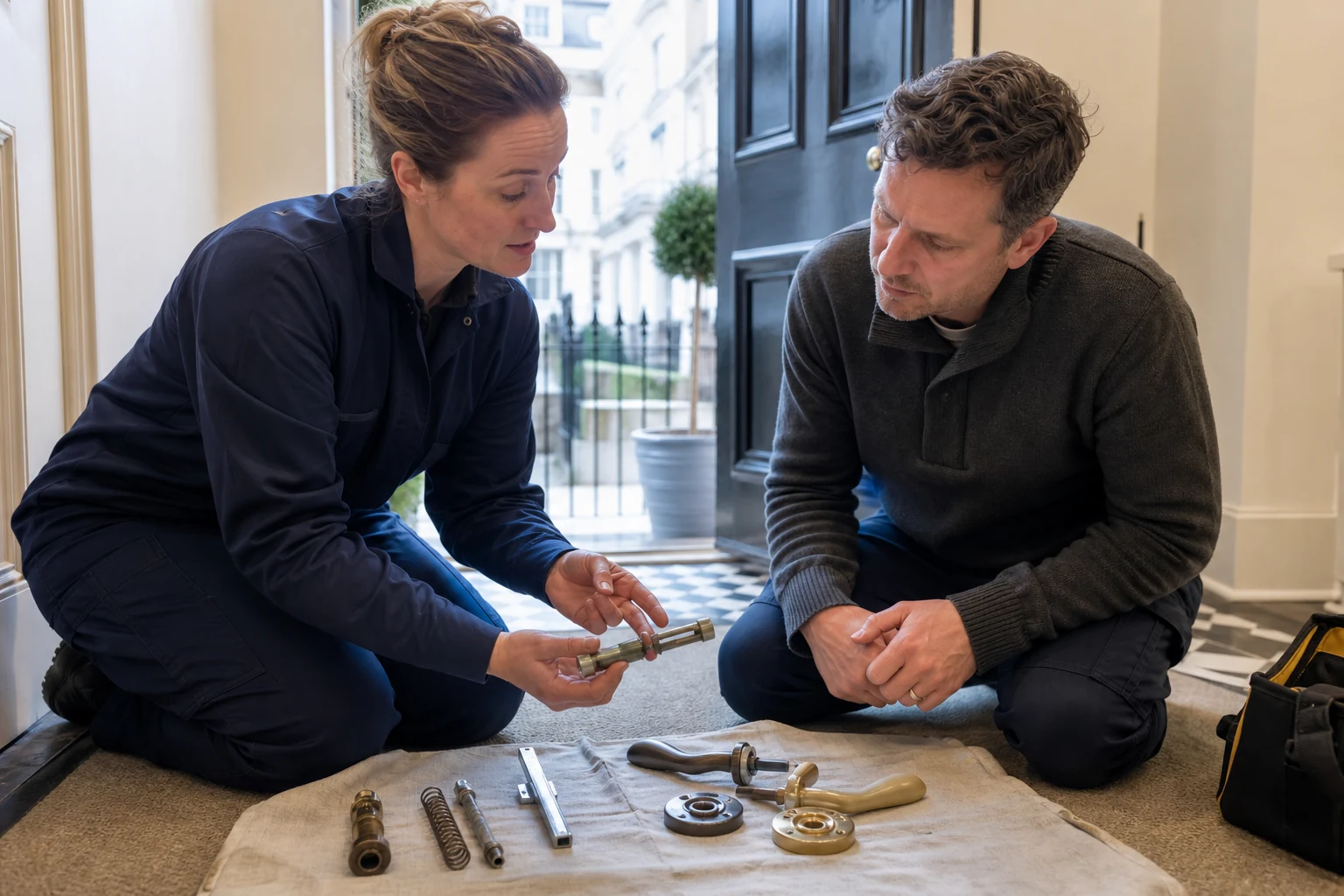
Gate, door or powered system?
A locksmith may assess authorised mechanical locks, cylinders and latches. Gate structure, hinges, operators, motors, controls, readers and intercoms can require management to appoint other providers. The same entrance can therefore generate several related but separate scopes.
| Reported behaviour | Mechanical question | Other system question |
|---|---|---|
| Key turns but pedestrian gate stays latched | Does the cylinder transmit movement to a serviceable latch? | Is a powered release also holding or misbehaving? |
| Fob reads but gate does not move | Is a mechanical latch or obstruction involved? | Credential, controller, power and operator require managed assessment |
| Gate opens but will not return securely | Does the latch meet its keep? | Closer, hinges, operator or gate structure may require another scope |
| Intercom works but building door remains shut | What do latch, lock and door pressure do? | Release command, power and controls need investigation |
| Private flat key breaks | Can the fragment be extracted and lock condition assessed? | Common gate systems are unrelated unless separately reported |
| Frame or gate post is damaged | Can the lock be secured within sound material? | Structural gate or door repair may be necessary |
Private work at the route end
Give authority, exact door state and what happened to the key before an opening method is agreed.
Key, handle, latch, alignment and frame are assessed rather than inferred from the common gate problem.
Missing or unreturned private keys lead to an owner-led user and quantity plan.
Measurements, existing preparation and documented building requirements guide compatible hardware.
Lock and temporary securing remain separate from frame, leaf, glazing and finish repair.
Gate or lobby observations return to management and do not enlarge private work automatically.
Limehouse property context
Limehouse enquiries can involve riverside developments, converted buildings and gated entrances. These contexts support a threshold-by-threshold plan. They do not establish actual exposure, management rules, response times or the lock fitted at an individual address.
In a development, identify vehicle and pedestrian routes separately and follow the current management process. In a converted building, a substantial common entrance can serve private flats with different owners. A direct street-entry home may avoid common gates but still have rear or side access requiring its own key holder.
Actual weather exposure, gate construction and door condition should be observed rather than inferred from the riverside label. Where a gate or entrance is powered, residents should report behaviour but leave system access to authorised providers.
| Setting | Route preparation | Scope boundary |
|---|---|---|
| Gated development | Pedestrian and vehicle routes, management contact and private door | Gate system versus apartment locksmith work |
| Riverside apartment building | Actual entrance exposure, reception, floor access and door records | Observed condition versus assumptions from location |
| Converted building | Common entrance owner, internal route and exact flat | Freeholder approval versus private owner instruction |
| Direct street entrance | Door, frame, rear route and household authority | Private lock work versus door repair |
| Powered pedestrian gate | Credential, release, latch, closer and structural observations | Mechanical component versus operator or access controls |
Quote the failed threshold
Price depends on access, management coordination, door state, labour, method and compatible parts. Limehouse alone cannot determine it. A clear quote names the threshold and the evidence available.
Management provides lawful passage to the authorised work area.
Mechanical, powered, structural and private boundaries are recorded.
The responsible party accepts labour, parts and changed findings.
The completed threshold is tested and unresolved route issues are returned.
If one closed gate prevents access to the private door, the locksmith should not claim to have assessed the flat hardware. Record the limitation and agree the next stage with the correct contacts.
Limehouse locksmith FAQ
Name the exact gate, user action, credential or key response, physical movement and users affected. Keep away from moving parts and closed control boxes.
A locksmith may address authorised mechanical lock elements. Operators, motors, controls, power and structural gate work can require other appointed specialists.
The freeholder, managing agent or responsible development body should authorise work and protect access for all legitimate users.
No. Reader response, controller, powered release, mechanical latch, alignment and gate movement still need to be distinguished.
Arrange lawful gate release through management. The private door cannot be represented as assessed if the route never became available.
Often these are separate systems and authorities, but the actual key arrangements should be confirmed before any promise is made.
Separate lock and temporary securing from structural repair, welding, joinery, glazing or decoration as relevant to the actual entrance.
Look for the named threshold, management access, investigation, labour, hardware, exclusions and the approval route for powered or structural findings.
Return the common door label, functions tested, mechanical work, keys where applicable, limitations and any powered or structural next step.
Nearby coverage
Use service links for the task and live area pages for connected access arrangements.
Find the first failed threshold
Send the sequence, user action, manager, private contact and safe observations for a correctly assigned assessment.
