
Can the earlier quote be used again?
The current extent, material and access should be reviewed. A previous price does not establish an unchanged scope.
East Sheen / THE LIVING ROOM, REVISITED
Explain the change without rebuilding the story around it.
If a living-room patch has appeared again, identify the earlier treated area and the interval before the new change. Include present seating or storage arrangements so the enquiry can consider access without assuming furniture caused the marks.
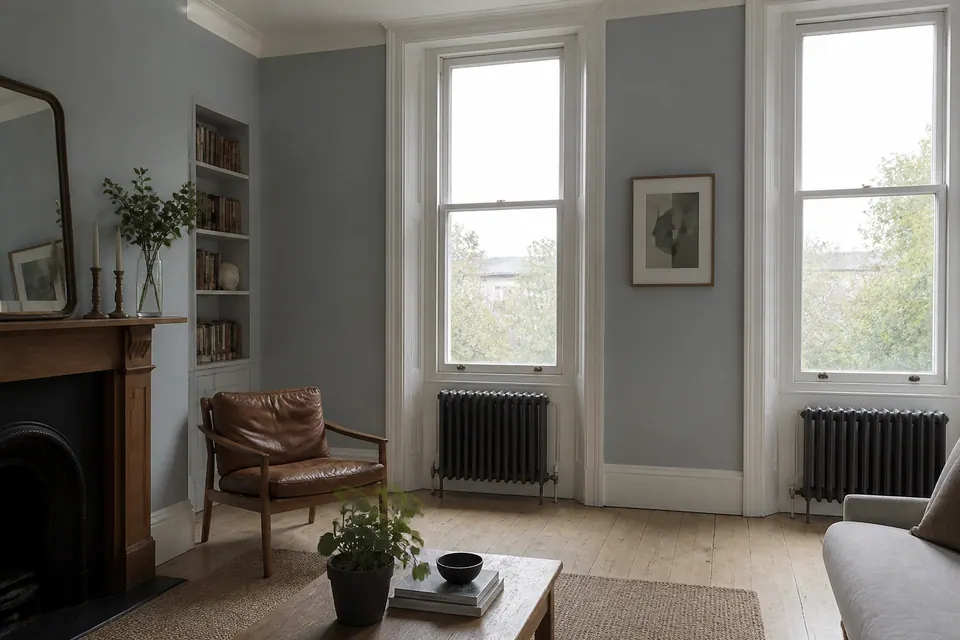
Previous boundary · new change · access
East Sheen / THE PROPERTY BRIEF
The room arrangement is useful context; it should not become a convenient diagnosis.
Provide the present wall view and any reliable earlier record, with the approximate interval between treatment and the new marks. Explain changes in seating or storage only as observed facts. For the East Sheen enquiry, discuss access and current material suitability separately from any unresolved moisture question.
02 / DIRECT ANSWERS
The current extent, material and access should be reviewed. A previous price does not establish an unchanged scope.
Do not cover the current evidence simply to meet the decorative plan. Ask about suitability and remaining appearance limits first.
Do not make that conclusion from location alone. Describe the arrangement and any changes as context for assessment.
Not necessarily. The present condition, accepted area and method may differ from the earlier work.
Ask for preparation and room-use guidance for the proposed treatment. Do not assume the work can be completed around occupied seating.
No. It can be part of the enquiry but needs its own location, material and sequence.
Show the new boundary and distinguish it from the previous area. A changed extent may alter the scope.
No permanent outcome should be assumed. Continuing moisture and material condition may need separate attention.
East Sheen / ACCESS & PEOPLE
Explain the obstruction without unsafe movement. The accepted preparation should make clear who arranges access.
Identify the unseen boundary. Do not claim that concealed material was included in earlier treatment without evidence.
Record the actual change and what it exposed. A new layout does not establish a cause or a remedy.
Share the current view and known earlier work with the authorised contact. Keep the report factual rather than assigning blame for room use.
Identify the actual treated wall and earlier scope. A general maintenance entry may not show which finish was included.
Discuss access, present suitability and cosmetic expectations separately. A room refresh does not eliminate the need to review returning marks.
04 / A CONTROLLED APPROACH
Use available records without inventing precision. Separate remaining stain from a new visible change.
Describe furniture and material condition. Do not move heavy items or disturb the wall merely to complete the enquiry.
Follow the current proposal rather than assume the earlier method should be repeated. Changed extent or damage may need another decision.
Retain the treated boundary and remaining questions. Later observations should refer to the same identifiable wall area.
The sequence supports a better comparison without claiming that every repeat appearance has one explanation.
Do not label the whole room unnecessarily.
Making space does not itself remove the issue.
Staining or damage may need another discussion.
The images explain a process and are not customer evidence of a recurrence cure or identical before-and-after results.
05 / QUOTATION, NOT GUESSWORK
For East Sheen, send the current affected extent and known earlier treatment with the approximate return interval. State furniture access clearly so the quotation reflects the actual room rather than automatically repeating an old visit.
Review the current treatment quotation ↗| Present concern | Quotation approach | Context to provide |
|---|---|---|
| Limited suitable visible patch | Photos may help with a quote | Material and current boundary |
| Returning or spreading marks | Assessment may be needed | Reliable interval and previous work |
| Damaged or partly hidden area | Specialist quotation may be required | Material limits and access uncertainty |
Agree the current inclusions and exclusions. A repeat booking should not imply identical conditions, a cosmetic guarantee or correction of every moisture issue in the room.
06 / ROOM-BY-ROOM CONTEXT
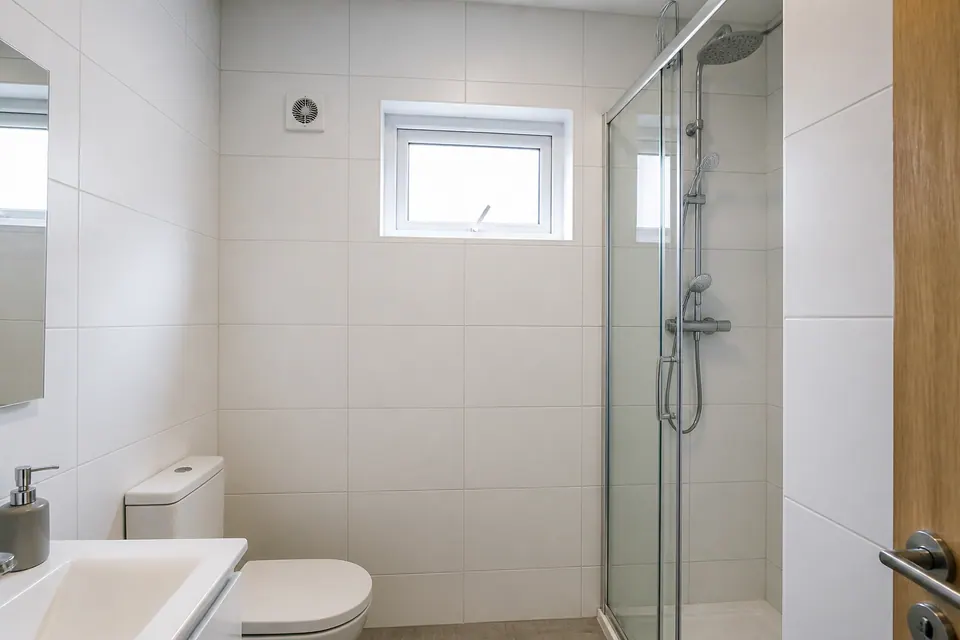
Give the bathroom material and its own history. Marks noticed together do not prove they developed together.
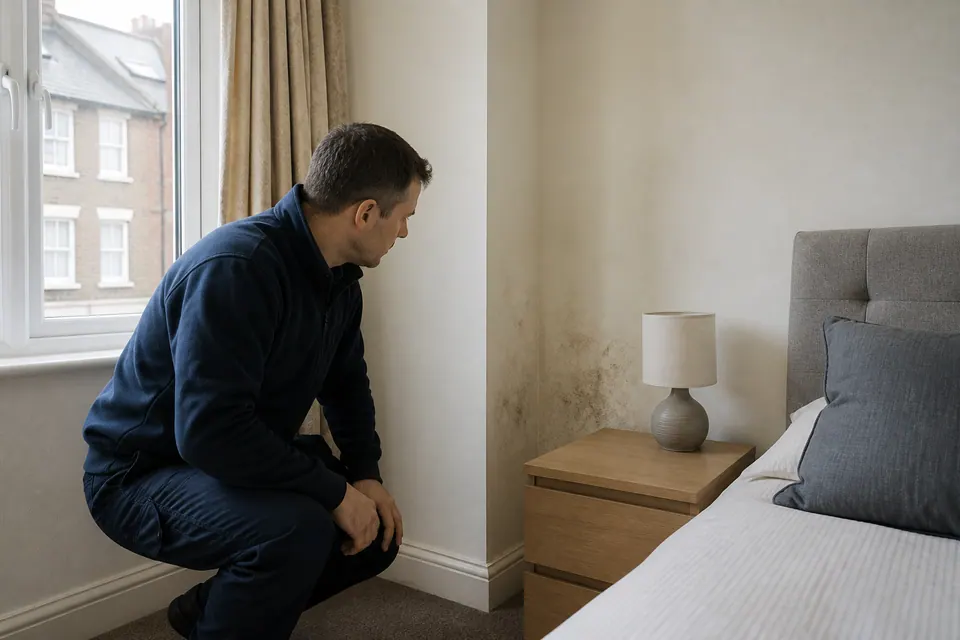
Identify the affected wall and any known previous work. Similar furniture arrangements do not establish an identical cause.
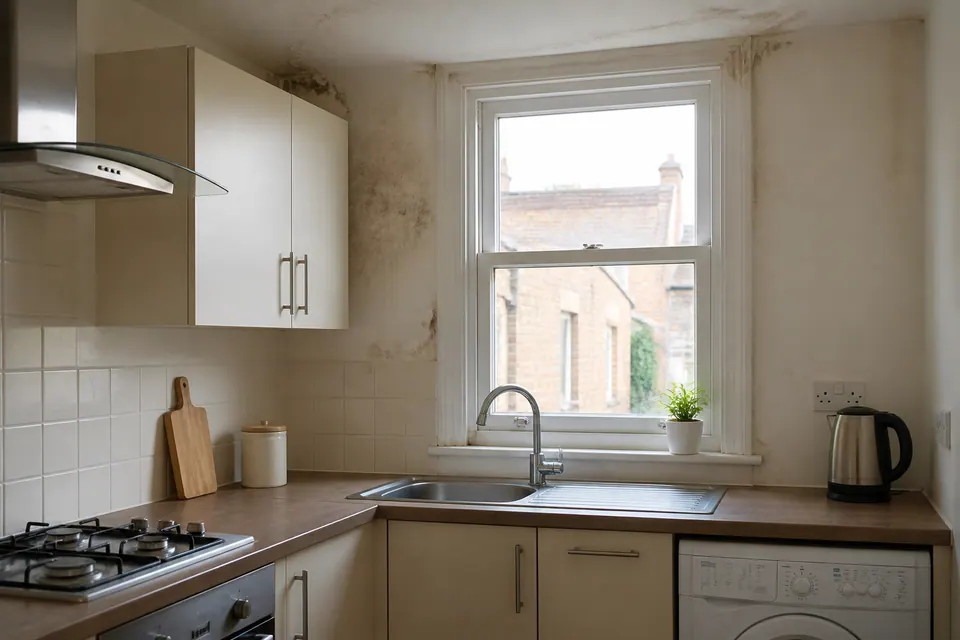
Keep confirmed water observations distinct from assumptions based on room use. State which finish is involved.
Compare the old and new boundaries and explain seating access. Distinguish remaining stain from a new change.
Clarify the location and authority for another area. The living-room booking does not include communal surfaces by default.
Describe the actual history and material. Floor position alone does not justify borrowing the living-room explanation.
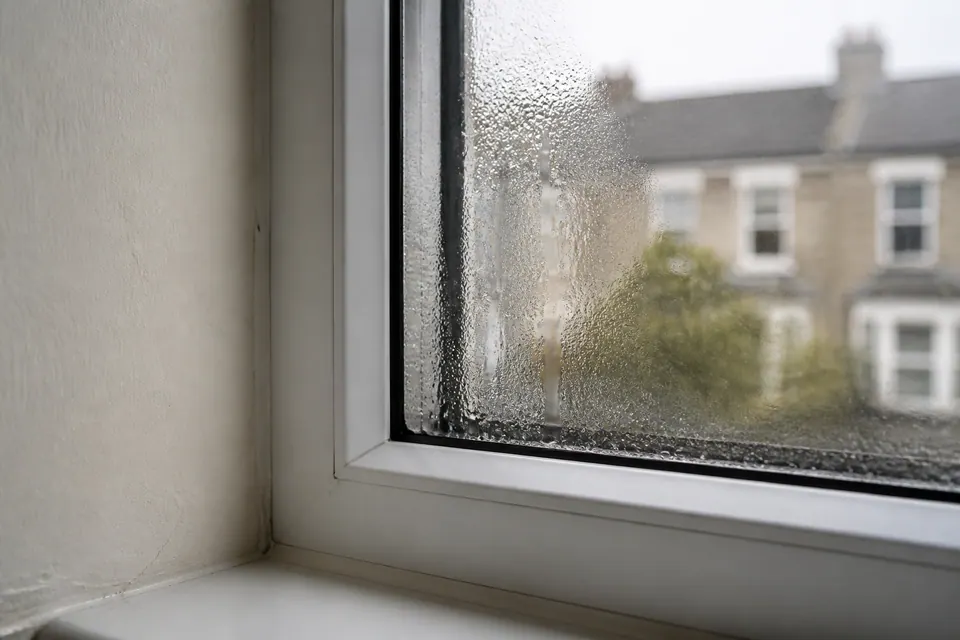
07 / WHEN IT COMES BACK
Keep a view that includes a recognisable part of the room as well as the affected boundary. Record the approximate date and actual accepted treatment area so later changes are not confused with an adjoining untouched finish.
If furniture moves, note the change but do not assume it explains the outcome. A newly revealed patch and a returning treated patch should remain different observations.
If the earlier method or interval is unknown, state that and focus on the present material.
08 / SEPARATE THE QUESTIONS
The current finish, earlier treatment and known water history help assessment. Furniture position by itself should not be used to assign the cause.
| Observation now | Useful earlier information | Question still open |
|---|---|---|
| Marks inside the old boundary | Previous view or described extent | Current suitability and recurrence context |
| Marks beyond the earlier area | What was visible before | Whether the scope has changed |
| Stain that remained throughout | Earlier cosmetic result | Appearance limits versus new growth |
| Area exposed by rearrangement | Previously hidden portion identified | Condition that was not assessed before |
Access preparation and treatment are different tasks. Discuss any movement safely and do not assume rearrangement resolves the underlying moisture question.
The same room can have an incomplete treatment history and an unresolved water question. Keep both explicit rather than fill either gap with a furniture explanation.
| Question | Mould | Damp |
|---|---|---|
| Where the marks are now | A named visible finish and boundary | Not a complete moisture diagnosis |
| What changed in appearance | Return, residual stain or newly exposed area | Not proof of a single source |
| What treatment can consider | The present suitable surface and access | Not automatic correction of room conditions |
| What needs another decision | Damaged finish or decorative expectations | Further investigation or repair if indicated |
09 / LOCATE THE ISSUE
A room-wide description can blur old stains, new patches and areas recently uncovered. Identify each observation on the finish where it appears.
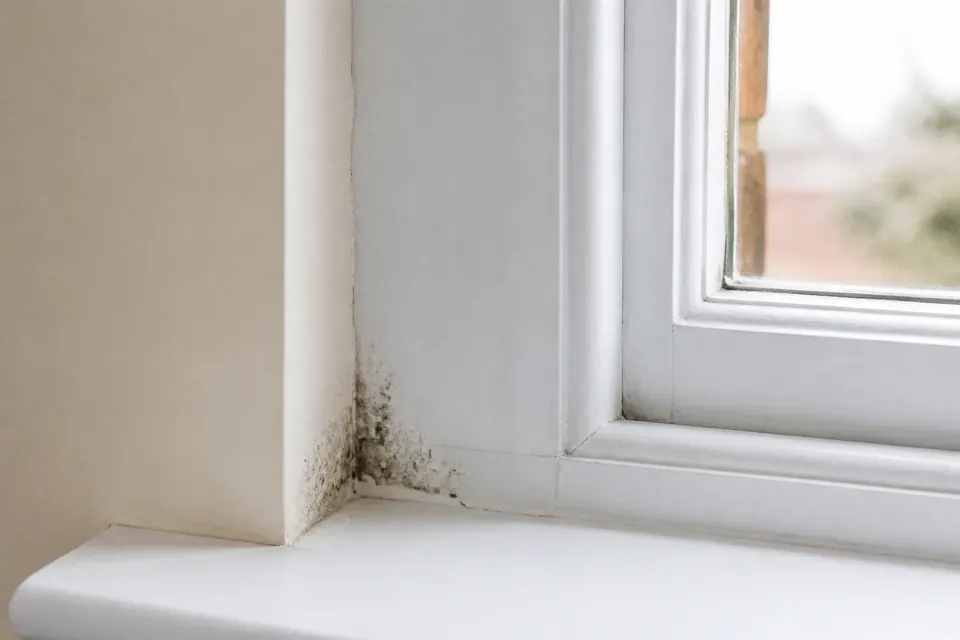
Show whether the current marks sit within the previous treated area or beside it. Keep the frame and wall histories separate where needed.
Record them as another location with their own material and history. Do not transfer the living-room recurrence account to them.
Describe what is actually known there. Similar-looking marks do not confirm the same source or previous treatment history.
Explain the room boundary and finish. An open-plan layout does not make every affected surface one continuous request.
Show the accessible view and explain any obstruction. Do not drag heavy furniture merely to prove the entire boundary.
Photograph safely and state its height. Newly noticed marks should not be labelled returning without a reliable earlier record.
Say that the area was previously hidden if that is true. Newly exposed material is not automatically a failed treatment.
An accurate comparison helps avoid treating an entire living room as recurrent when only one identified portion has visibly changed.
East Sheen / PLAN THE APPOINTMENT
For the East Sheen address, provide the postcode, present wall view and reliable earlier treatment details. Confirm the appointment arrangement before preparing access around seating or storage.
Use the map to identify the area when discussing the property.
Load the East Sheen map.
East Sheen / BEFORE BOOKING
These questions help keep the East Sheen comparison accurate and the proposed work specific.
Give an approximate interval and say it is approximate. Do not invent a date to make the history appear complete.
No. Furniture movement may affect access but is not itself mould removal or proof that a moisture issue is resolved.
State that it remained after the earlier work, separately from any new marks. Cosmetic residue and recurrence should not be automatically merged.
Explain that it was previously hidden. Do not call it a return of treated growth unless you know that area was included before.
It can help if it shows the relevant boundary. Make clear when it was taken and what it can actually demonstrate.
Current condition, extent and access need review. An earlier proposal is context, not confirmation of today’s scope.
No. Report observations without assigning a cause or blame from their position alone.
Yes, identify it separately with its own finish and history so one recurrence account is not copied across the home.
Keep the accepted area, relevant instructions and any unresolved moisture or decorative question for a clearer later comparison.
A MORE PRECISE REPEAT ENQUIRY
Send the current view, approximate return interval and furniture access details. Ask for a proposal based on the present finish rather than an assumed repeat.
The room scenes are illustrative and do not show a customer’s recurring patch or prove a permanent result.
