
Can Alesta treat the wall without moving equipment?
It depends on the actual access and suitable area. Show the available gap and confirm what can be included instead of assuming appliance movement is part of the visit.
Twickenham / UTILITY SPACES
The equipment beside a patch is part of the context.
A utility room can contain plumbing, laundry equipment and several different finishes. Explain the marked wall and any observed water event without assuming which appliance or activity caused it.
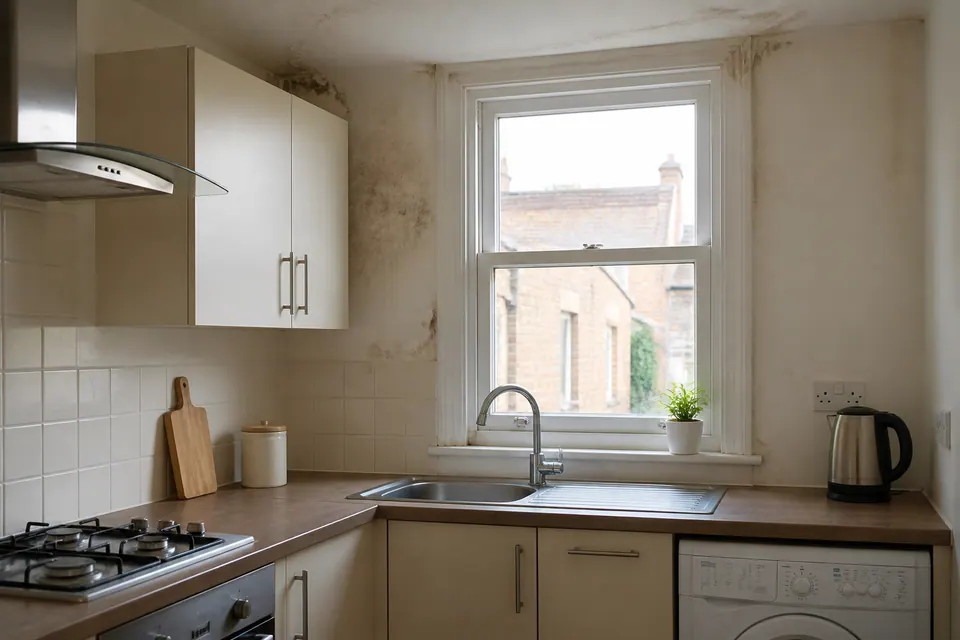
Visible finish · obstructions · known events
Twickenham / THE PROPERTY BRIEF
A small visible patch can sit in a difficult working position.
Show the relationship between the wall, appliances and storage in your Twickenham enquiry. If equipment cannot be moved by the person providing entry, say that before arranging a visit. Treatment of a suitable exposed finish should not imply servicing, disconnection or access behind every fitting.
02 / DIRECT ANSWERS
It depends on the actual access and suitable area. Show the available gap and confirm what can be included instead of assuming appliance movement is part of the visit.
No servicing or repair should be inferred from mould removal. Report confirmed water issues and clarify separate arrangements for the equipment where needed.
Small suitable accessible areas may be considered from photographs. Multiple, recurring or complex concerns can require assessment or a specialist quotation; restricted access also matters.
Clarify the existing condition first. Painting does not replace mould treatment, and an unstable coating or continuing moisture may require another decision.
Continuing moisture may be relevant, but recurrence does not identify a specific appliance fault. Give dates, observations and known work rather than an assumed diagnosis.
Ask after the proposed area and method are understood. Preparation, access and return guidance cannot be reliably reduced to a standard utility-room duration.
Describe stored items and ask for preparation advice. Do not assume that contents handling or treatment is included with the wall.
Provide its own photographs and history. A quotation for one exposed utility wall does not automatically include another room or material.
Twickenham / ACCESS & PEOPLE
Someone using the equipment regularly may have observed an incident the booking contact did not see. Keep that first-hand information identifiable.
Explain the restricted route and the functions sharing the space. Ordinary access to the room may not provide a suitable approach to the affected wall.
Identify which panels or fittings are fixed. The scope should not assume they can be removed during a wall-treatment visit.
Report the visible condition and actual water events. Confirm the booking permissions without treating this page as advice on legal responsibility.
Share known appliance or plumbing repairs and any unresolved items. Ensure the person providing entry receives the agreed preparation information.
Separate the intended wall treatment from servicing, replacement or redecoration. Coordinate those tasks only after their individual requirements are clear.
04 / A CONTROLLED APPROACH
Locate the mark within the utility layout and distinguish confirmed water history from a suspicion about equipment.
Clarify preparation and the available working space. Any other task needed to provide access should be discussed before scheduling.
Carry out the agreed work on the accessible finish. Hidden portions and appliance components should not be silently added to the scope.
Identify remaining marks, inaccessible areas and relevant moisture questions, together with the applicable return instructions.
These stages explain the treatment enquiry, not an appliance inspection or a complete utility-room refurbishment.
Record the exposed mark in context.
Treat the suitable reachable finish.
Clarify any separate repair or access need.
The sequence is illustrative, not customer before-and-after evidence or a permanent-result promise.
05 / QUOTATION, NOT GUESSWORK
A narrow strip behind equipment is not equivalent to the same dimensions on an unobstructed wall. Explain what can be reached and keep any necessary access work separate from the proposed mould treatment.
Read the published treatment scope ↗| Present situation | How it is considered | Useful clarification |
|---|---|---|
| Small suitable exposed patch | A photographic quotation may be possible | The available working gap and coating |
| Several areas or recurring growth | Assessment to define the scope | Separate locations and earlier work |
| Complex damp or damaged material | Specialist quotation required | What is visible, damaged or inaccessible |
Ask which exposed area the total covers. Do not interpret a wall quotation as agreement to disconnect appliances or inspect every concealed fitting.
06 / ROOM-BY-ROOM CONTEXT
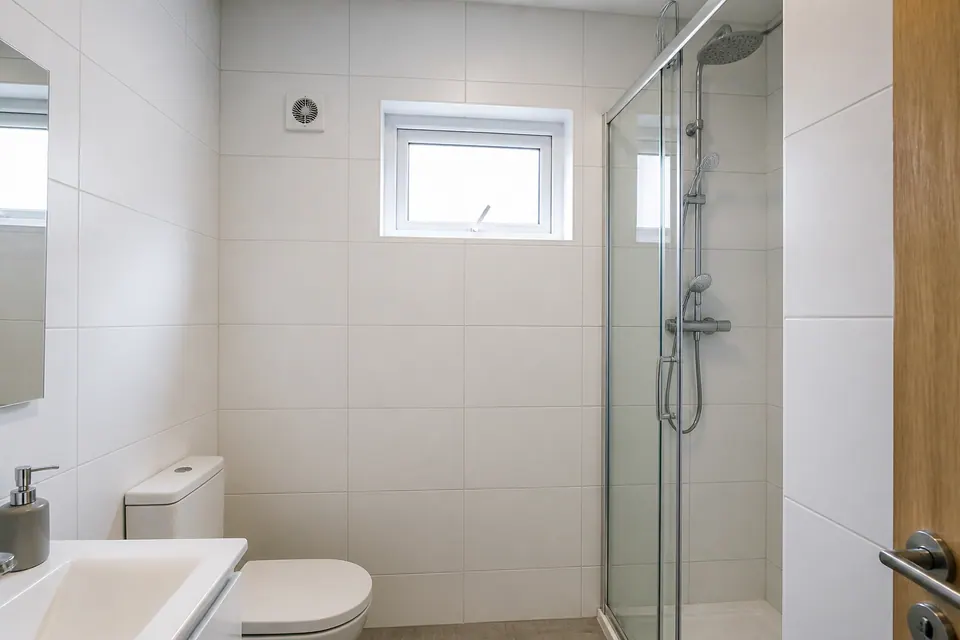
Identify the finish and wet-use pattern separately from utility equipment, even if laundry is sometimes stored there.
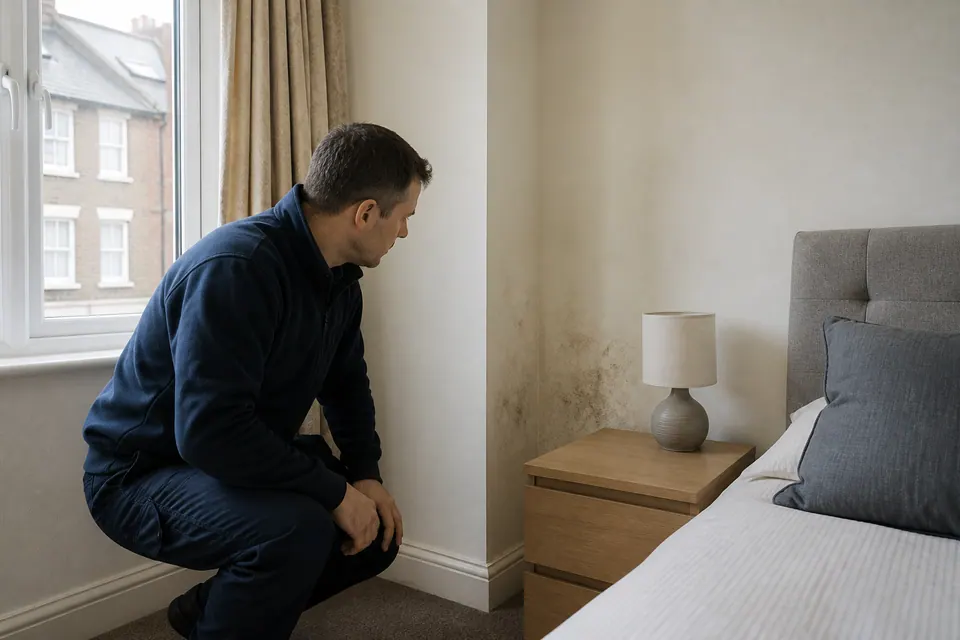
Show the patch and furnishings; sleeping arrangements need their own preparation and return discussion.
Distinguish kitchen fittings from the adjoining utility layout and label each affected finish.
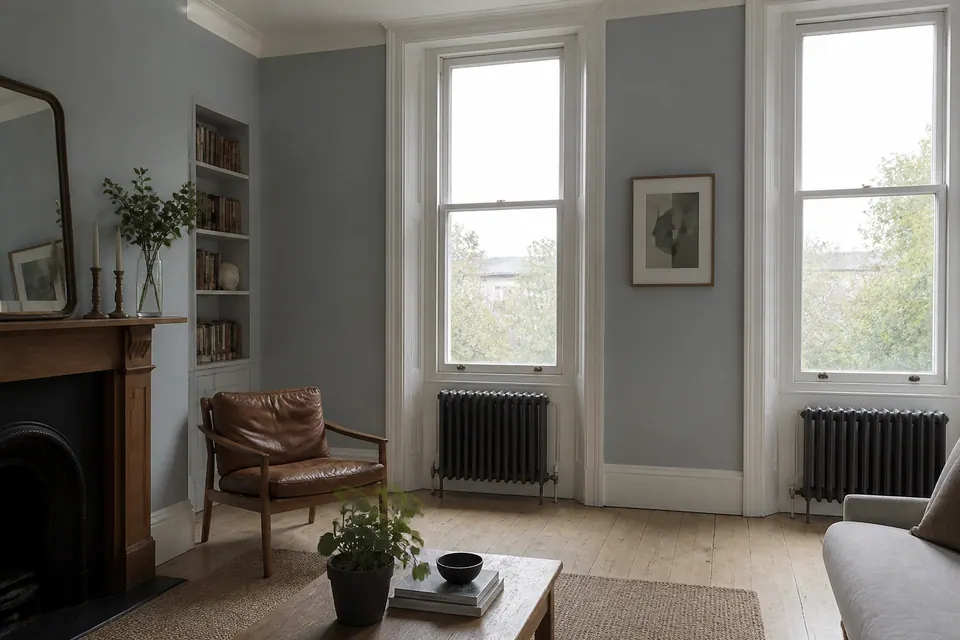
Describe a neighbouring wall independently instead of assuming moisture has travelled from another room.
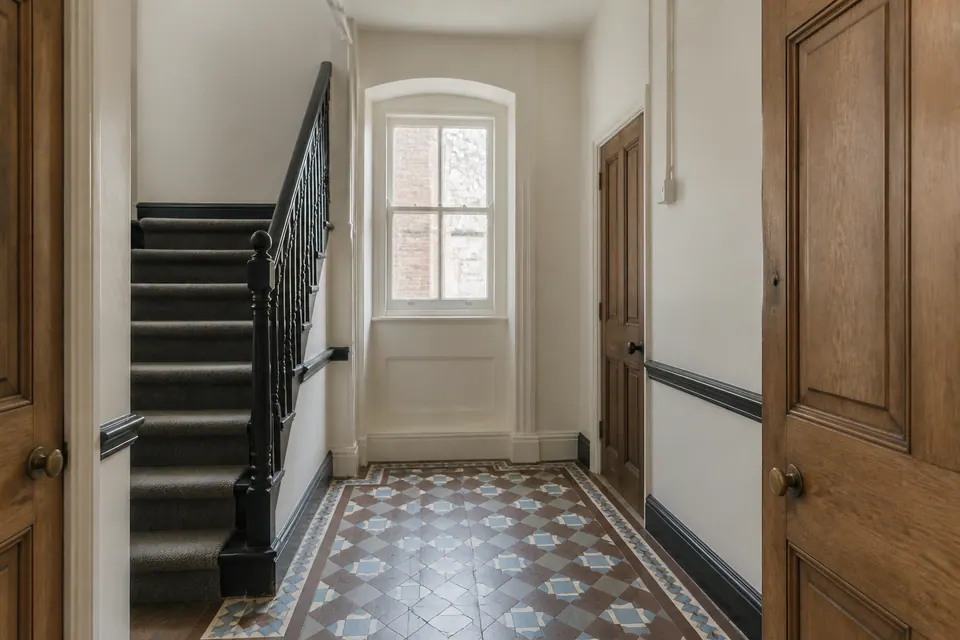
Clarify the section involved and the person authorised to arrange work there.
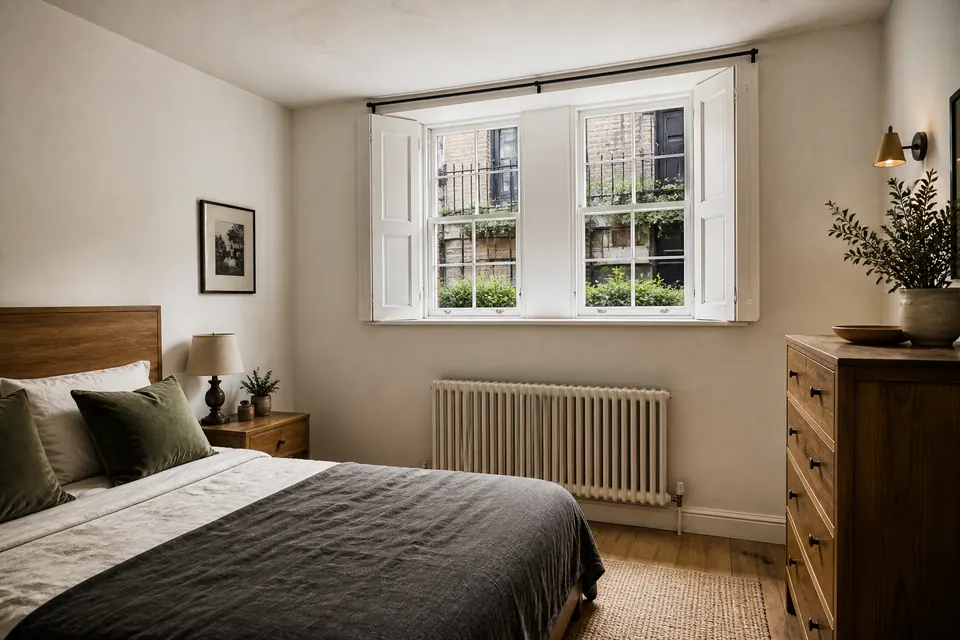
Provide actual water history and access limits without inferring a structural diagnosis from its position.
07 / WHEN IT COMES BACK
Keep comparison photographs oriented against the same fitting or wall edge. If equipment or storage has moved, say so; a different view may expose an older mark rather than show new growth.
Include actual water observations and confirmed servicing or repairs between appearances. A returning patch can justify another assessment, but it does not establish that a particular machine caused it.
Note dates, the visible outline and changes in access. Leave periods without observations unrecorded rather than assuming the condition was unchanged throughout.
08 / SEPARATE THE QUESTIONS
Record what happened and where water was actually noticed. That gives a clearer starting point than assigning a fault from the position of the patch.
| Observed condition | Relevant context | Question still open |
|---|---|---|
| Spotting beside laundry equipment | The exposed coating and layout | What conditions are affecting that finish? |
| A mark after a known water event | Date and confirmed repair information | What remains wet or damaged now? |
| Paint changing above a fixed unit | The visible height and obstruction | Can the finish be safely approached and treated? |
| An odour within a narrow gap | What is visible and what is not | Is another assessment needed beyond the exposed area? |
Repairing appliances, changing pipework or creating access must be separately clarified. Their presence in the room does not add them to a surface-treatment quotation.
Describe each without implying that one service automatically resolves both.
| Question | Mould | Damp |
|---|---|---|
| The description | Growth affecting an accessible finish | Excess moisture in the room or material |
| Information to share | Position, extent and coating condition | Known water events and current observations |
| The connection | Growth may return if moisture persists | Several contributors may need consideration |
| The next step | Agree suitability and the exposed scope | Clarify any separate investigation or repair |
09 / LOCATE THE ISSUE
Use the closest room setting and explain what prevents a clear view or approach. The equipment in a photograph does not establish the cause of an adjacent mark.
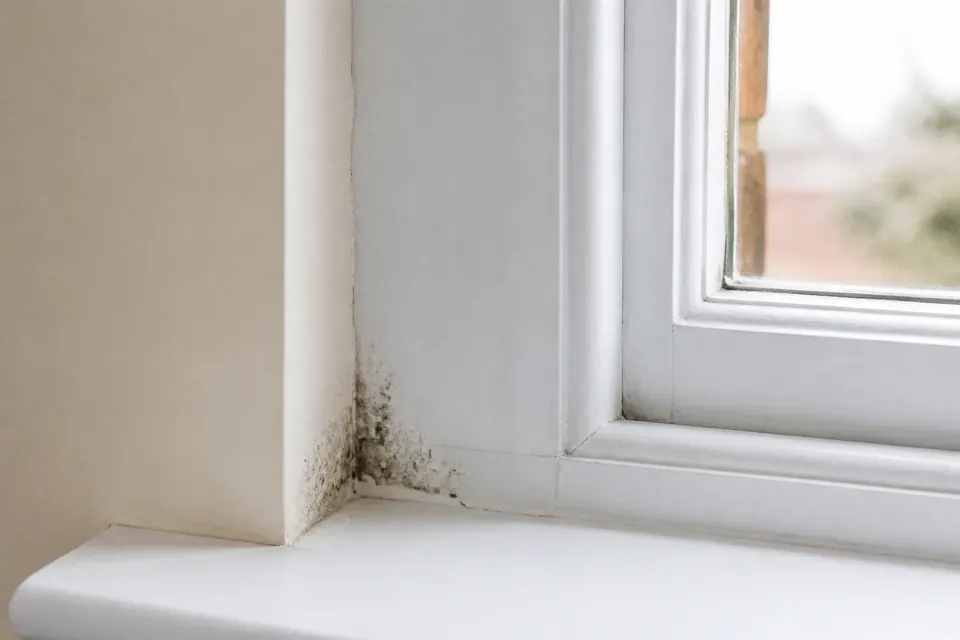
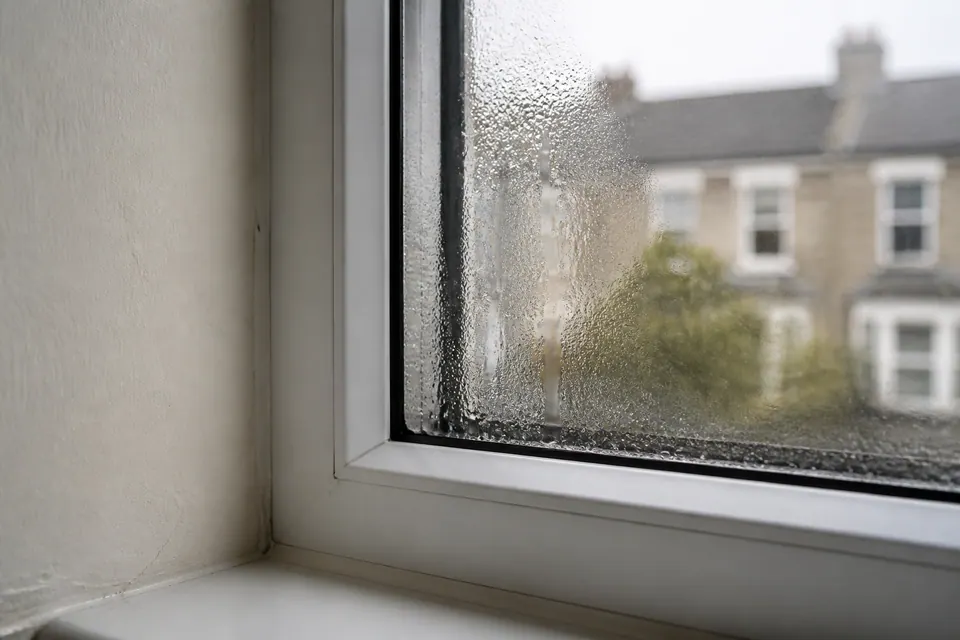
Include the sill and adjoining wall in a wider view. Mention water noticed there, but keep assumptions about condensation, glazing or nearby pipework separate.
Describe the affected coating and how the space is arranged. The presence of laundry does not, by itself, establish why a particular patch appeared.
Identify the actual wall mark and current access. Do not connect it to equipment stored nearby unless that relationship is known.
Label the two areas separately where they have different fittings or finishes. A photograph of the connecting doorway can explain the layout without implying a single cause.
Record this mark independently, including its dates. Sharing a wall or doorway does not prove that two visible concerns have one explanation.
Photograph from an ordinary accessible position and describe the obstruction. Do not climb onto equipment to obtain a closer picture.
State the limit of the visible opening. Neither the hidden extent nor the condition of a concealed backing should be inferred from the exposed edge.
A utility-room label does not confirm mould or identify a fault. The visible condition and reliable history still need assessment.
Twickenham / PLAN THE APPOINTMENT
Send the Twickenham postcode and explain the route to the room. Confirm availability and any access dependency before arranging separate equipment work around the proposed visit.
Identify who can explain known incidents or repairs if the person meeting the team does not use the equipment.
Load the area map.
Twickenham / BEFORE BOOKING
Clarify the wall, the equipment and the available approach before combining them in one request.
Do not move or disconnect equipment simply for the enquiry. Show the available view and explain the obstruction so access can be discussed appropriately.
No. Report the location and any actual water or operating incident, but proximity alone does not establish the cause.
Describe its dimensions, finish and access. Alesta can clarify whether a suitable limited scope can be considered without assuming the hidden wall is included.
Give the incident and repair information, together with the current appearance. Do not treat completion of a repair as proof of the condition behind every finish.
Ask for preparation instructions based on the actual work. Explain what is stored nearby and avoid moving potentially affected contents elsewhere without guidance.
Only rely on the agreed surfaces. Describe the backing and its visibility separately rather than assuming all materials in the same recess are covered.
Request the applicable room-use instructions for the proposed method. Do not infer unrestricted use from the end time of the appointment.
Report the odour as an observation and identify the inaccessible area. It does not confirm visible mould or define a surface-treatment quantity.
No decoration should be assumed. Clarify remaining staining, material condition and any separate reinstatement after the treatment scope is understood.
Twickenham / EXPLAIN THE LAYOUT
Send a wide view, the visible dimensions and confirmed water history. Separate the treatment request from equipment servicing or work needed to create access.
The interior images illustrate property settings rather than completed utility-room treatments or appliance repairs.
