
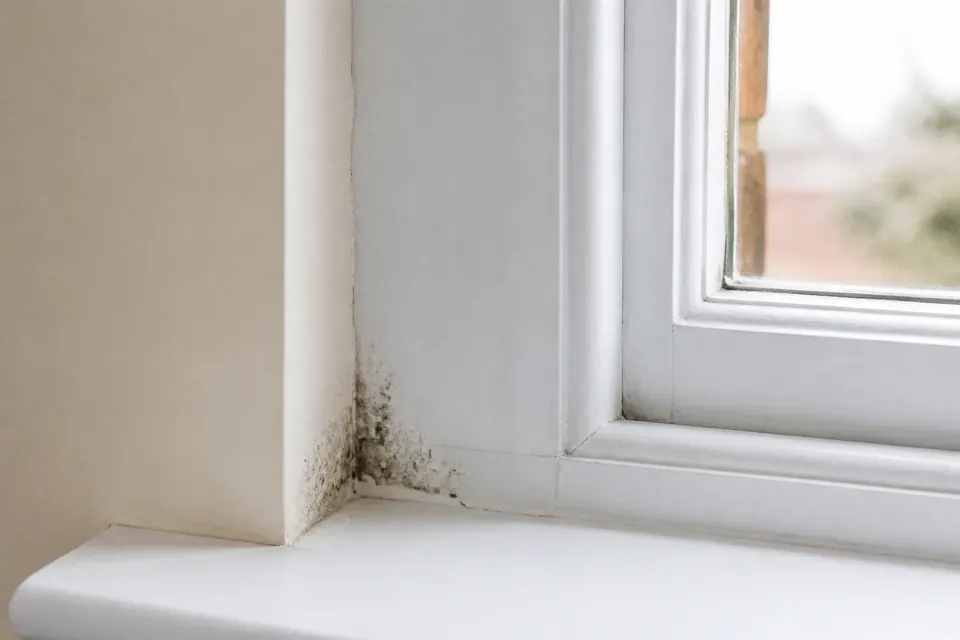
A window-side patch
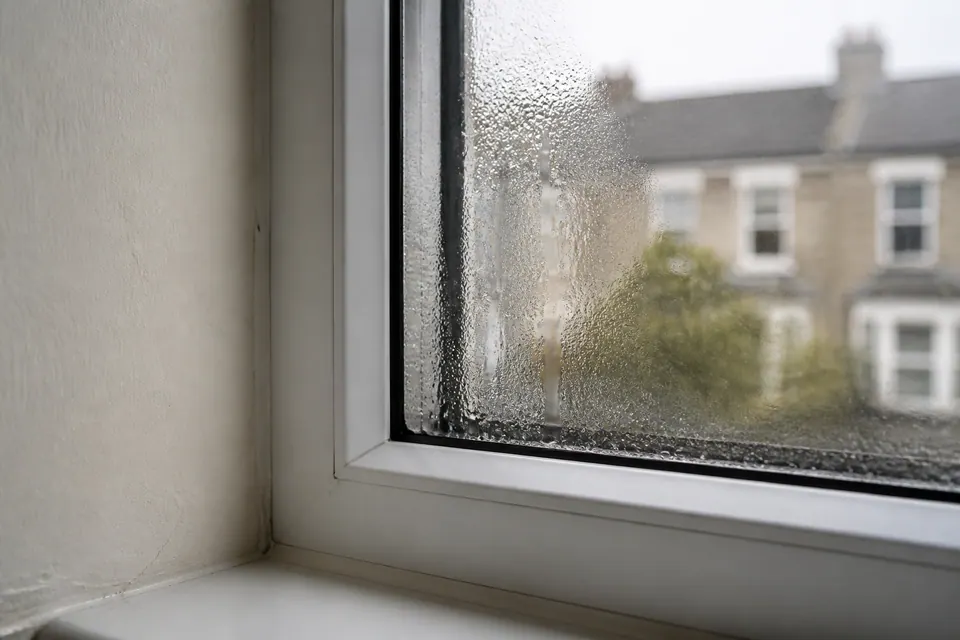
Show the edge on the reveal and some adjoining finish. Keep the frame and wall distinct if both are part of the enquiry.
Teddington / DEFINE WHAT CAN BE SEEN
Start with a useful boundary, not a guessed total.
Show where the visible patch ends on the finish and include some surrounding material in the same view. For the Teddington enquiry, identify the surface if known and ask which uncertainties need resolving before the quotation can be agreed.
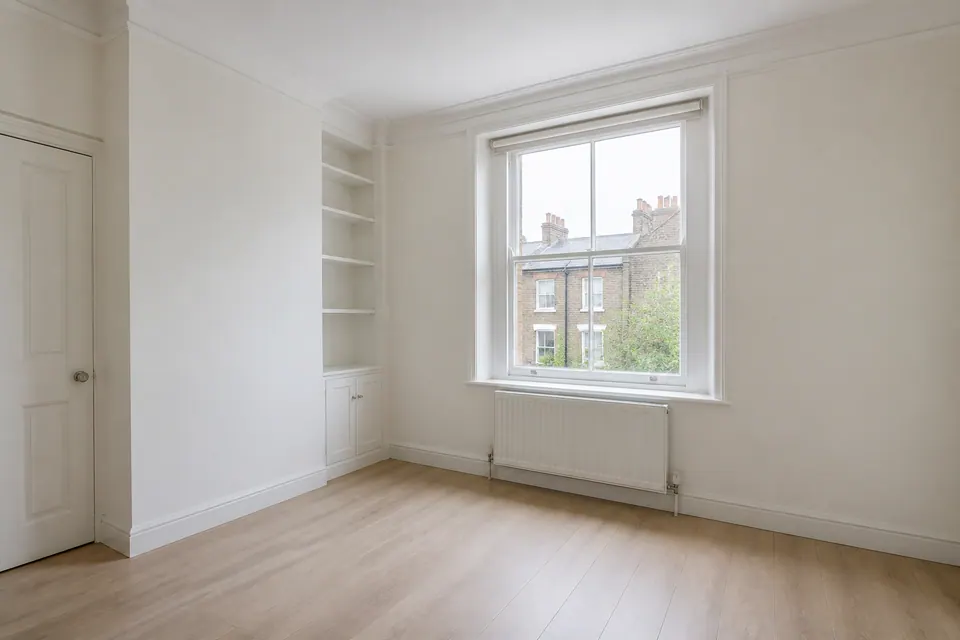
Patch edge · surrounding finish · access
01 / SEPARATE THE QUESTIONS
Even a clear photograph cannot establish every material or moisture condition. Use it to describe the visible request and identify what remains uncertain.
| Provided detail | Useful purpose | Limit to retain |
|---|---|---|
| Visible edge in a wider view | Locates the requested surface | Does not establish concealed extent |
| Known material description | Supports a suitability discussion | Does not prove its hidden condition |
| Adjacent unaffected-looking finish | Gives visual context and scale | Does not certify it is problem-free |
| Earlier treatment or water history | Adds relevant sequence | Does not determine cause by itself |
Material damage, access and unresolved moisture questions can affect the proposal. Do not assume a precise-looking area figure removes the need for assessment.
A visible boundary concerns what can be seen on the finish. It should not be presented as a map of water within the construction.
| Question | Mould | Damp |
|---|---|---|
| What is the removal request? | The suitable visible surface identified | Not the entire unseen moisture pathway |
| What supports the initial discussion? | Current appearance, material and access | Confirmed water or repair history |
| What remains uncertain? | Concealed finish or material suitability | Source and extent of an unresolved issue |
| What may need separate agreement? | Damaged material or decoration | Further investigation and repair |
02 / LOCATE THE ISSUE
The useful unit is the surface needing review, not automatically the whole room. Include enough context to show its position and any limit to what can be seen.
Show the edge on the reveal and some adjoining finish. Keep the frame and wall distinct if both are part of the enquiry.
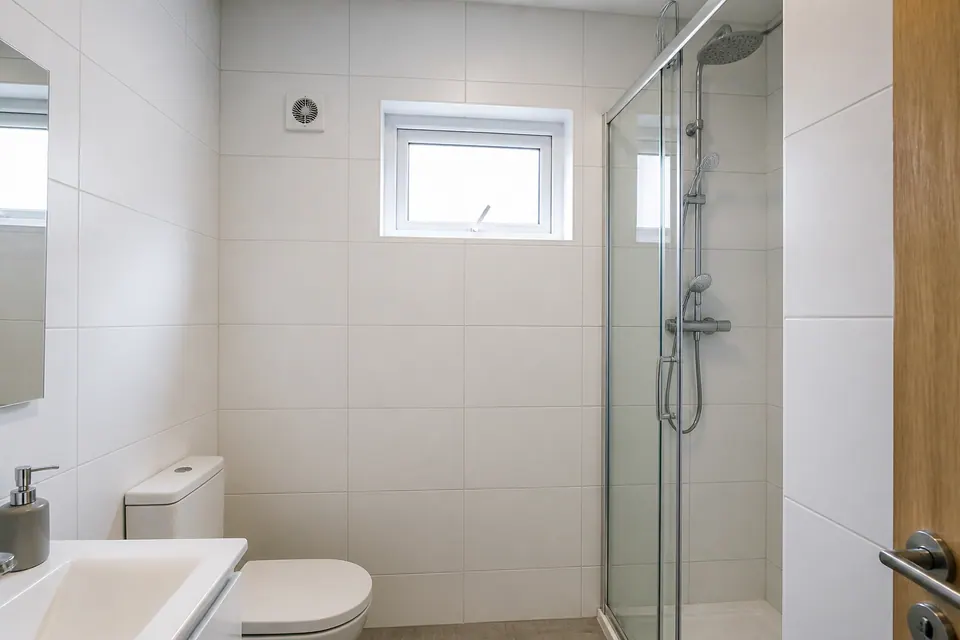
Identify wall, ceiling or sealant rather than using one area estimate for several materials. Their boundaries and treatment limits may differ.
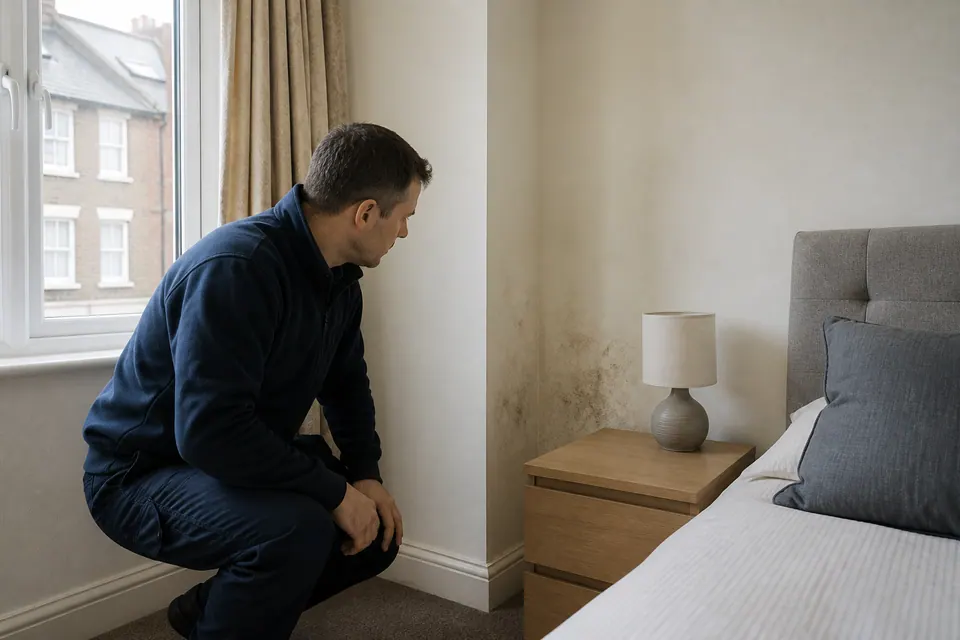
Include a wider view and state where furniture obscures it. Do not extend the visible measurement into unseen material.
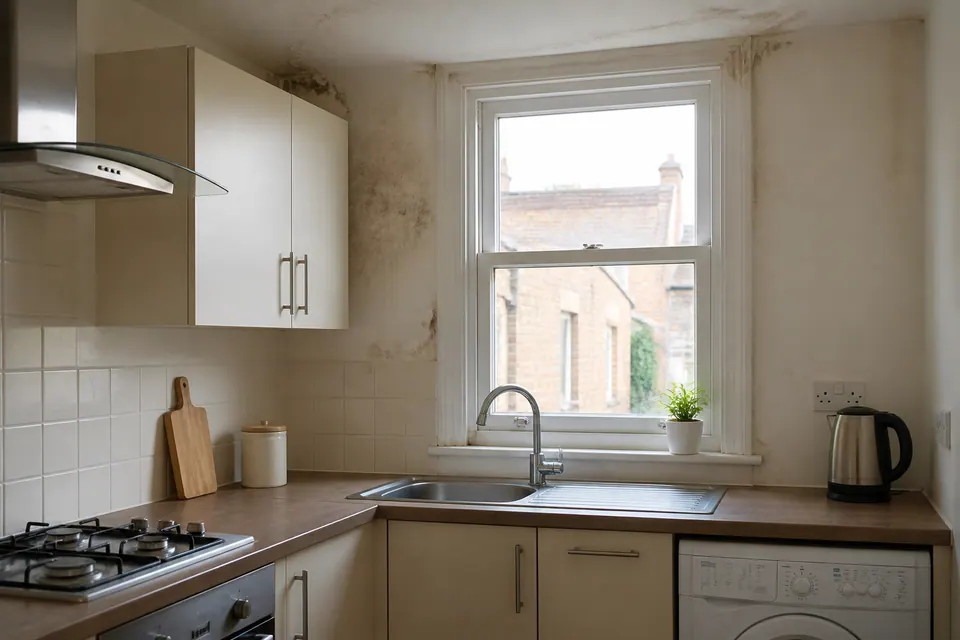
Show the affected finish and nearby context without assuming an appliance or fitting explains the marks. Give confirmed history separately.
Describe the current patch and surrounding decoration. Do not include the entire feature wall simply because its colour is continuous.
Use a safe view from below and explain any uncertainty in extent. Do not climb or scrape to obtain a precise figure.
State what the opening reveals and what remains behind fixed parts. The total concealed area is not established by the visible edge.
The surrounding view helps explain the request. It does not prove hidden material is unaffected or establish a moisture source.
Teddington / THE PROPERTY BRIEF
A clear brief says both what is included and what has not been established.
For the Teddington room, provide a contextual view and a closer image showing the patch edge where safely possible. Identify the material, present damage and any known recurrence. Ask whether those details support a quotation or whether inspection is needed to resolve uncertainty before the scope is accepted.
04 / A CONTROLLED APPROACH
Provide contextual and detail views where safe. Identify the finish and state what cannot be seen.
Ask whether material, access or history needs further assessment. Do not convert an unanswered question into an assumed inclusion.
Follow the agreed boundary and method. Newly revealed material or a changed condition may need a scope review.
Keep the accepted surface identifiable and note remaining appearance or repair matters separately.
This sequence makes the request easier to understand without pretending a photograph answers every question.
A close-up alone may hide the location.
Material and access should be explicit.
Unseen or excluded areas remain outside the result.
These process images are illustrative, not customer evidence of measured coverage or guaranteed complete removal.
05 / QUOTATION, NOT GUESSWORK
For Teddington, show the visible extent, material and access with relevant history. The purpose is to clarify the proposal, not to force a fixed price from evidence that leaves suitability or concealed condition unresolved.
Review the initial quotation guidance ↗| Evidence supplied | Possible route | Remaining clarification |
|---|---|---|
| Small suitable accessible finish | Photos may support pricing | Material, extent and preparation |
| Several areas or recurrent marks | Assessment may be needed | Individual boundaries and history |
| Damaged or uncertain surfaces | Specialist quotation may be appropriate | Suitability and separate repair needs |
If the evidence changes, review the proposal before work. A clear area description supports agreement but is not a guarantee that every related task is included.
06 / WHEN IT COMES BACK
A later photograph should show whether marks returned inside the treated area, appeared beyond it or became visible after an obstruction was removed. Keep those descriptions separate rather than treating all change as one recurrence.
Record the approximate interval and any confirmed work between views. Do not assume an unchanged cause simply because the patch occupies a similar position.
A recognisable corner or fitting can make comparisons clearer without altering or marking the surface.
Teddington / ACCESS & PEOPLE
Show the full edge and adjacent finish. State material and damage rather than relying on a size alone.
Describe furniture or fixed fittings that limit the view. Do not include hidden dimensions as confirmed scope.
Separate coatings, sealant or joinery in the description. A shared patch outline does not make them interchangeable.
Send the visible evidence to the authorised contact without modifying the finish. Keep uncertainties clearly stated.
Ensure the requested area matches the photographs and authority given. Avoid a vague whole-room instruction when only one finish has been reviewed.
Check that the proposal names the material and exclusions as well as the area. Decorative expectations should be discussed independently.
08 / ROOM-BY-ROOM CONTEXT
Label the material and boundary for each surface. Do not merge ceiling, wall and sealant into one unsupported total.
Show where furniture limits the view and keep hidden portions unconfirmed.
Use a contextual photograph to locate the finish. Nearby equipment should not be presented as a diagnosed source.
Include surrounding decoration so the accepted area is clear. A continuous paint colour does not define the treatment boundary.
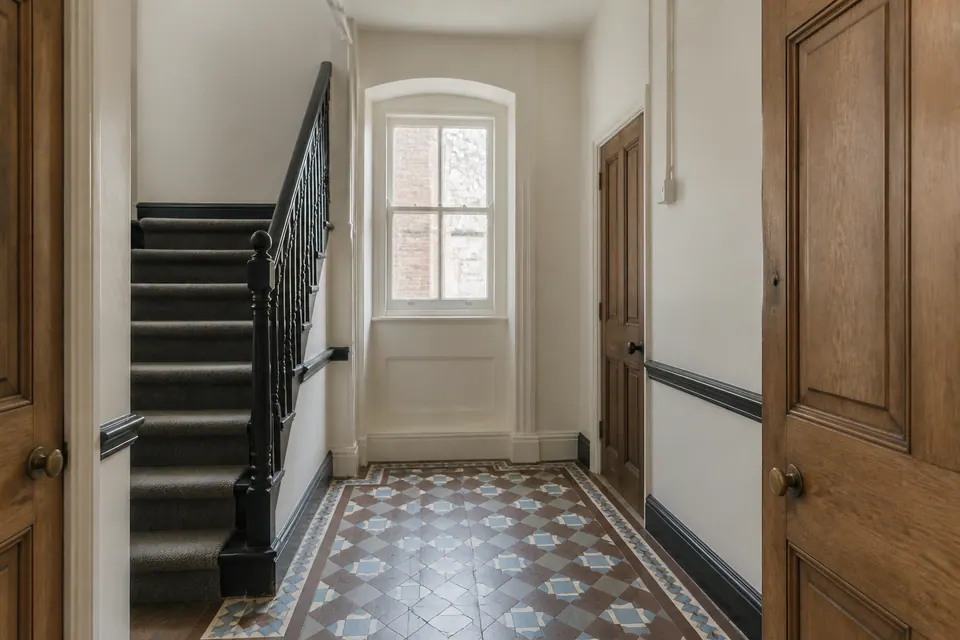
Clarify the exact area and permission for work. A private-room estimate does not authorise communal treatment.
Record present condition and actual history. The location should not substitute for a defined material and visible extent.
09 / DIRECT ANSWERS
Yes, explain that it is approximate and include photographs. Do not risk unsafe access to obtain an exact measurement.
Do not mark or alter the finish merely to prepare the enquiry. A clear photograph and description can identify the visible boundary.
Provide an updated view and say what changed. A quotation should not rely on an outdated extent without that information.
No. Material, condition, access and the accepted method still affect timing.
Ask for guidance once the proposed method and preparation are clear. A visible area estimate is not a return-use instruction.
Describe the materials separately. A combined figure can hide different treatment or replacement questions.
State the limitation rather than dismantling it or guessing the hidden area.
No. A surface boundary does not establish the unseen extent or source of moisture.
Teddington / PLAN THE APPOINTMENT
For the Teddington address, send the postcode with photographs that identify the current finish and access. Confirm appointment arrangements after the quotation questions have been reviewed.
The map can help locate the property area during the discussion.
Load the Teddington area map.
Teddington / BEFORE BOOKING
These Teddington questions focus on clarity rather than asking you to diagnose or disturb the material.
Show the patch in its room context, with a visible edge and material information where known. Explain anything the view leaves out.
No. State that it is unknown and provide the best safe view. Guessing can create a misleading treatment assumption.
It helps locate the boundary and understand the view. It does not certify the surrounding material or prove a source.
Do not move heavy items or reach unsafely merely to obtain dimensions. Explain the obstruction and leave hidden extent unconfirmed.
No. Suitability, damage, access and unresolved history can still require review even when the visible size is clear.
Provide updated information before the scope is agreed or work starts. The earlier view may no longer describe the request accurately.
Yes. Their condition and treatment limits may differ even where the marks appear to cross one continuous area.
No. Ask how uncertainty is handled and which areas are actually accepted rather than assuming concealed surfaces are included.
Keep the agreed boundary, material and exclusions so a later change can be compared with the actual treated area.
MAKE THE VISIBLE SCOPE UNDERSTANDABLE
Send the postcode, current boundary and material details with access limits. Ask which questions remain so the accepted work matches the evidence supplied.
Illustrative room photographs do not establish customer measurements, hidden conditions or guaranteed treatment outcomes.
