
An occupied flat
The resident may know when water is noticed, while another contact holds repair records. Bring those observations together without treating either as a complete diagnosis.
Richmond / WINDOW MATERIALS
A frame and its surround are not one finish.
When a mark crosses from joinery onto plaster, identify both parts in your Richmond enquiry. Alesta can consider the suitable accessible surfaces without assuming that treatment also restores a damaged frame or decorative coating.
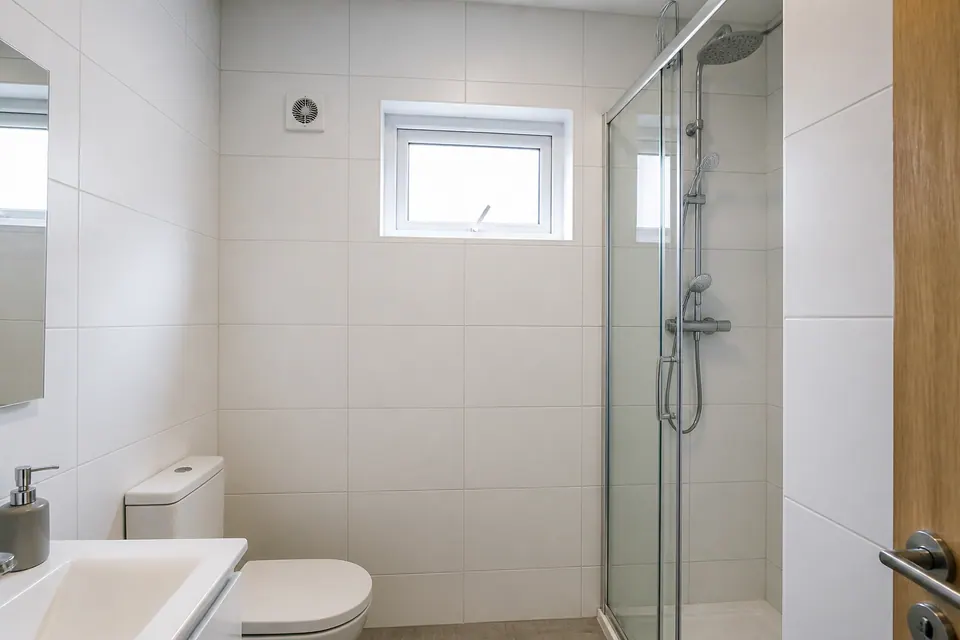
Coating · joint · exposed edge
Richmond / ACCESS & PEOPLE
The resident may know when water is noticed, while another contact holds repair records. Bring those observations together without treating either as a complete diagnosis.
Identify delicate finishes or fittings that need a separate handling decision. Treatment suitability is not determined by the overall appearance of the room.
Explain the intended decoration, but clarify the existing coating and remaining marks before deciding when another finish can be applied.
Share what is visible and when it changes. Confirm the booking permissions without relying on this page to decide legal responsibility for the window.
Provide confirmed frame or sealing work, including its extent. A repair to one component should not be described as an inspection of everything around it.
Ask whether the assessed finish may retain staining or need reinstatement. Keep that outcome distinct from the removal of suitable growth.
02 / LOCATE THE ISSUE
Use the selector to locate the concern, then identify the actual finish. A room name tells us less about suitability than whether the mark is on paint, timber, paper or another exposed material.
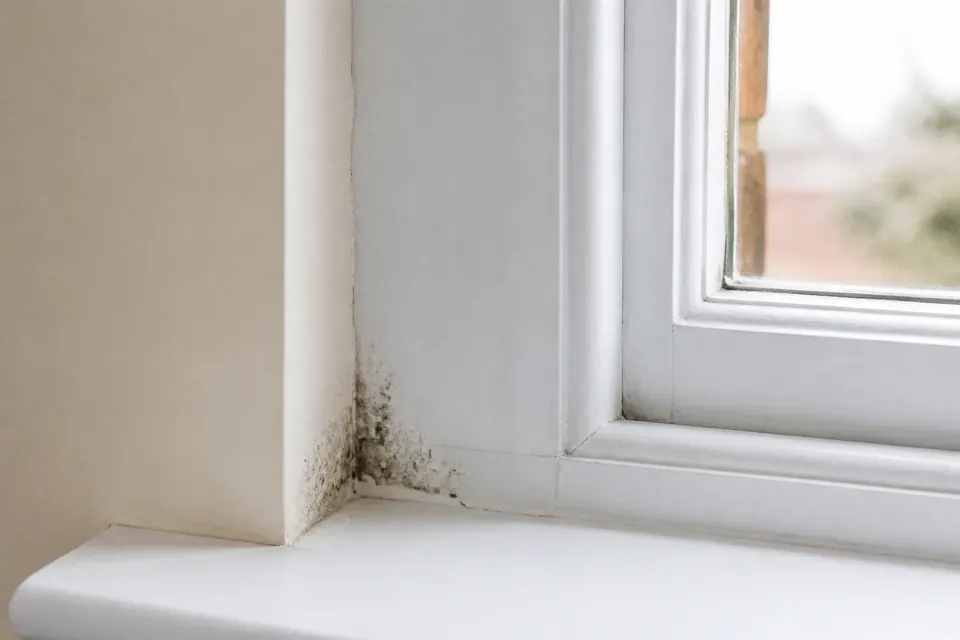
Distinguish the frame from the painted reveal and any flexible joint. Their proximity does not make them one treatment surface or establish which component is allowing moisture nearby.
Point out transitions between paint, tile and sealant. A failed joint may need separate replacement even where a neighbouring finish can be considered for treatment.
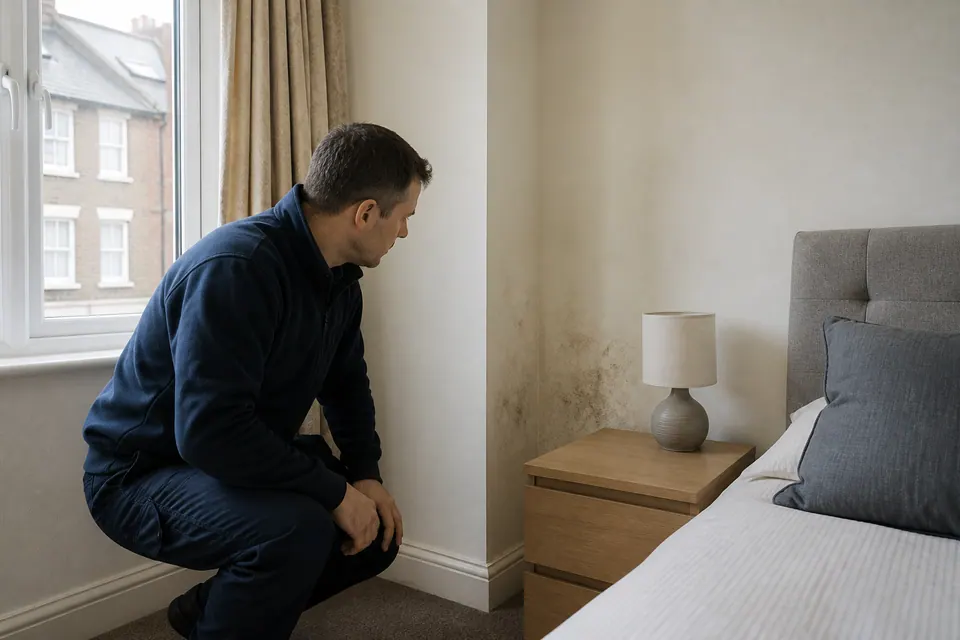
Explain whether the window surround meets wallpaper or painted plaster. Include any already visible lifting edge without peeling material back for the photograph.
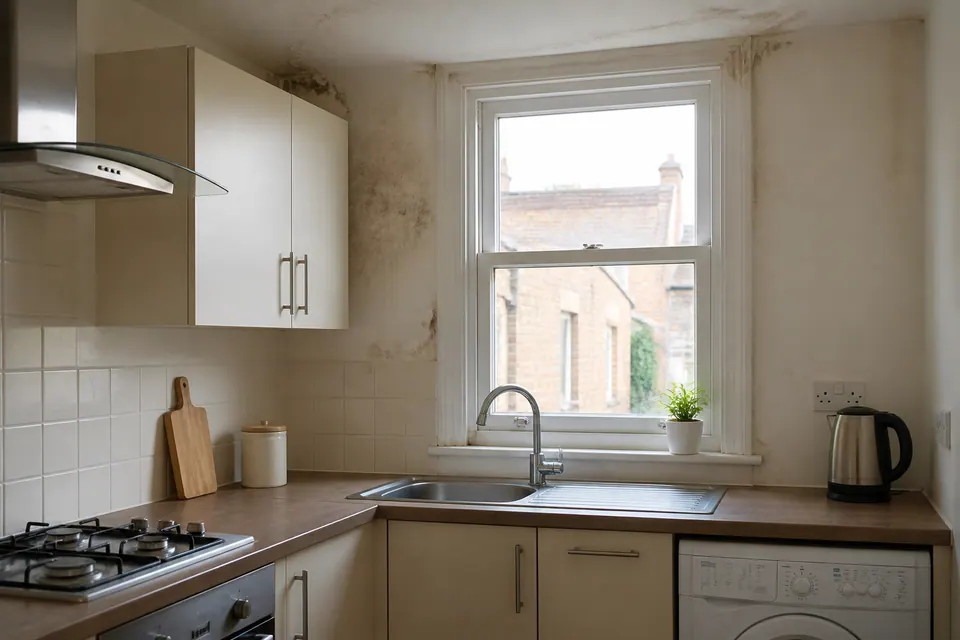
Show the relationship between the reveal, worktop and splashback. Name the exposed part you are asking about rather than including fixed fittings by assumption.
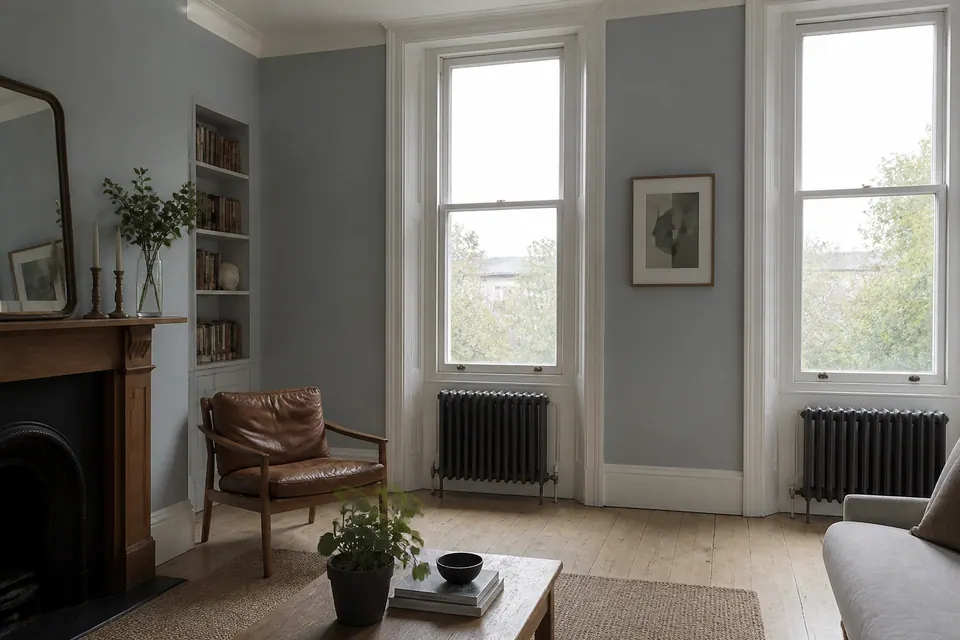
Photograph the marked section and its adjoining faces from an accessible position. Different coatings or a delicate decorative detail can affect the proposed approach.
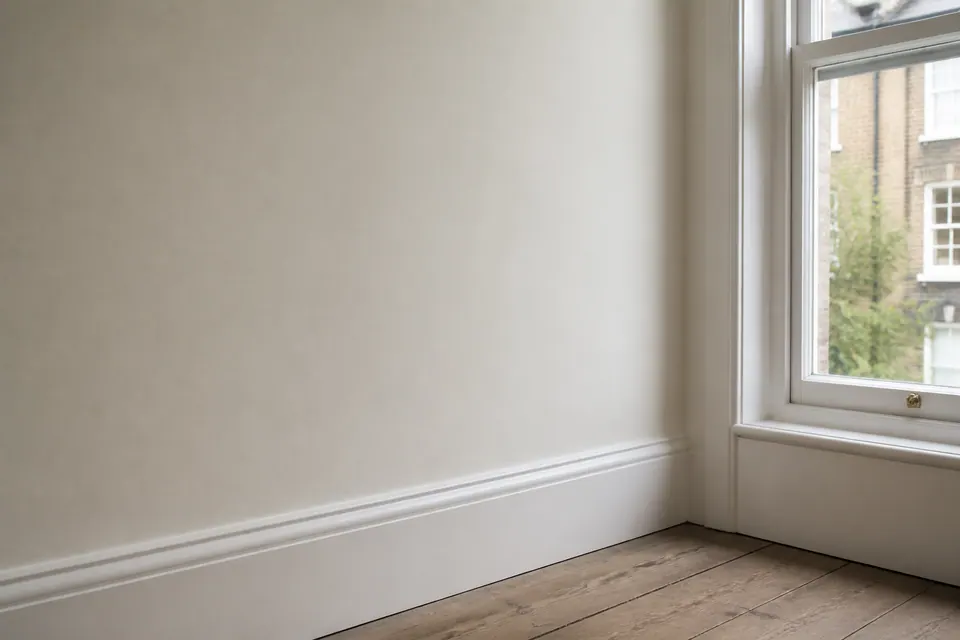
Report blistering or loss of adhesion separately from the visible growth. Removing growth does not promise to reinstate the coating or repair the substrate.
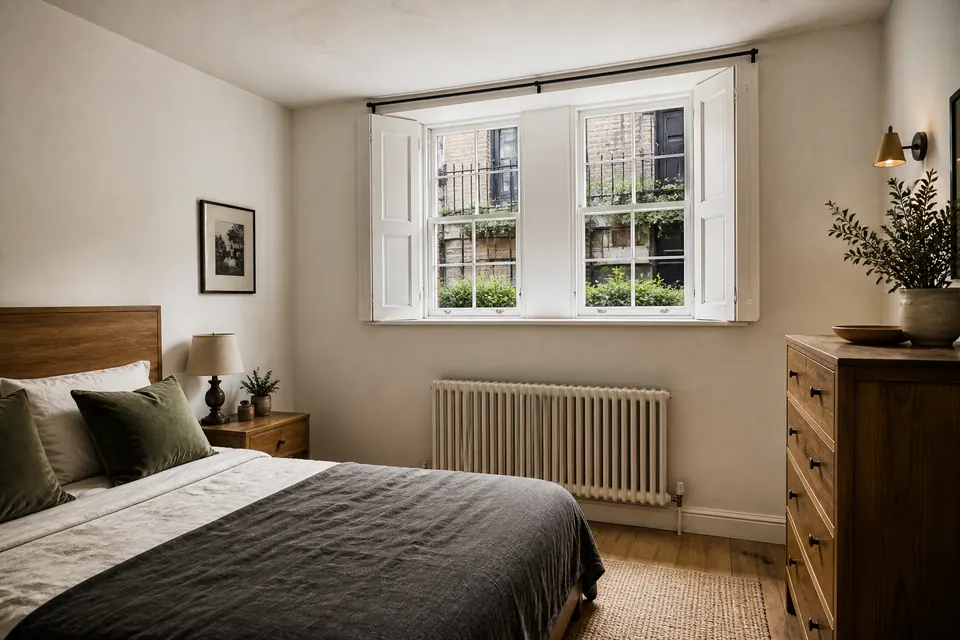
Indicate the part of the finish that can actually be seen. Leave inaccessible backing described as unknown rather than extending the measured patch into it.
Not every discoloured joint or coating confirms mould. The condition, position and moisture history need to be considered together.
03 / SEPARATE THE QUESTIONS
A crossing pattern does not prove that every component has the same defect. Show the boundaries and report water observations without assigning a cause from the photograph.
| Visible detail | Relevant observation | Question to clarify |
|---|---|---|
| Spots on painted plaster | Water noticed nearby | Is the coating suitable for the proposed method? |
| Marks along a timber edge | Earlier joinery work, if known | Is deterioration a separate repair concern? |
| Discolouration beside a flexible joint | The joint’s visible condition | Does replacement need another agreement? |
| A patch reaching the adjoining wall | The outline and timing of change | Which finishes form the assessed area? |
Frame repairs, sealing, replacement materials and colour matching are not implied by a mould-removal quote. Identify those expectations before arranging work.
One concerns the affected surface; the other concerns moisture conditions.
| Question | Mould | Damp |
|---|---|---|
| Meaning | Fungal growth on a material | Excess moisture affecting the setting or fabric |
| What may be recorded | Spots and their visible boundary | Water, wet-looking areas or an incident history |
| Why both matter | Treatment does not establish that a component is repaired | Continuing moisture may support further growth |
| Next decision | Agree suitable accessible finishes | Clarify any further moisture investigation |
Richmond / THE PROPERTY BRIEF
Describe the junction, not an assumed defect.
If both joinery and plaster are marked in your Richmond room, label the photographs by component. Include any known earlier sealing or painting work as history. A treatment proposal should identify which finishes are suitable and which concerns belong to another repair or decorative task.
05 / QUOTATION, NOT GUESSWORK
Give the affected dimensions for each component rather than the full window opening. Alesta’s quotation should reflect the suitable accessible work, not an assumed package of glazing, joinery and redecoration.
Read the assessment scope ↗| Present condition | Quotation route | Useful evidence |
|---|---|---|
| Small suitable exposed finish | Photographs may support pricing | Dimensions and component labels |
| Several affected parts or recurrence | Assessment to establish the scope | Separate views and earlier treatment history |
| Damaged material or complex moisture concerns | Specialist quotation needed | Visible deterioration and unresolved questions |
Ask which components are included and what visible marks may remain. A quotation for the reveal should not be interpreted as a promise to restore the entire window.
06 / DIRECT ANSWERS
Do not assume compatibility from their position beside each other. Identify both finishes and any deterioration so the appropriate scope can be discussed.
Its dimensions matter, but so do material condition and access. Suitable small areas may be quoted from photographs; complexity or recurrence can require assessment.
Painting is not a substitute for addressing mould. Clarify the present condition, suitable treatment and any separate decorative work before applying a new finish.
Not necessarily. Record when and where water is noticed, along with confirmed repairs, but leave the cause open for assessment.
Do not expect a surface visit to repair a deteriorated component. Joinery work and removal of suitable growth are different requirements.
Ask after the finishes, extent and access have been reviewed. The number of windows alone does not establish a reliable duration.
Discuss the proposed method and room use beforehand. Follow the agreed restrictions and return guidance instead of assuming ordinary access throughout.
Keep a dated comparison of the same component and describe any new water observation. A return does not identify the moisture contributor by itself.
07 / A CONTROLLED APPROACH
Review the visible boundaries and the known materials. Keep uncertain specifications uncertain rather than assigning a coating from appearance alone.
Agree access around furnishings and fittings, together with instructions appropriate to the proposed method. Do not disturb a fragile finish for a clearer photograph.
Work on the suitable accessible surfaces in the agreed scope. Deteriorated components may require a different, separately arranged task.
Clarify remaining staining, decorative limitations and relevant moisture questions. Ask which changes should be reported after the visit.
These stages describe treatment planning, not an identical outcome for every material.
Locate the patch across the components.
Treat the assessed suitable surfaces.
Separate residual marks from repair needs.
The sequence is illustrative and does not document a customer result or guarantee permanent removal.
08 / ROOM-BY-ROOM CONTEXT
Separate painted surrounds from tiles and flexible joints; describe deteriorated material as well as spotting.
Show the reveal in relation to wallpaper, a bed or curtains, with practical access discussed before the visit.
Distinguish the exposed coating from a splashback or fitted unit; plumbing assumptions should remain separate.
Include delicate decoration and adjoining clean finish so the marked boundary can be understood.
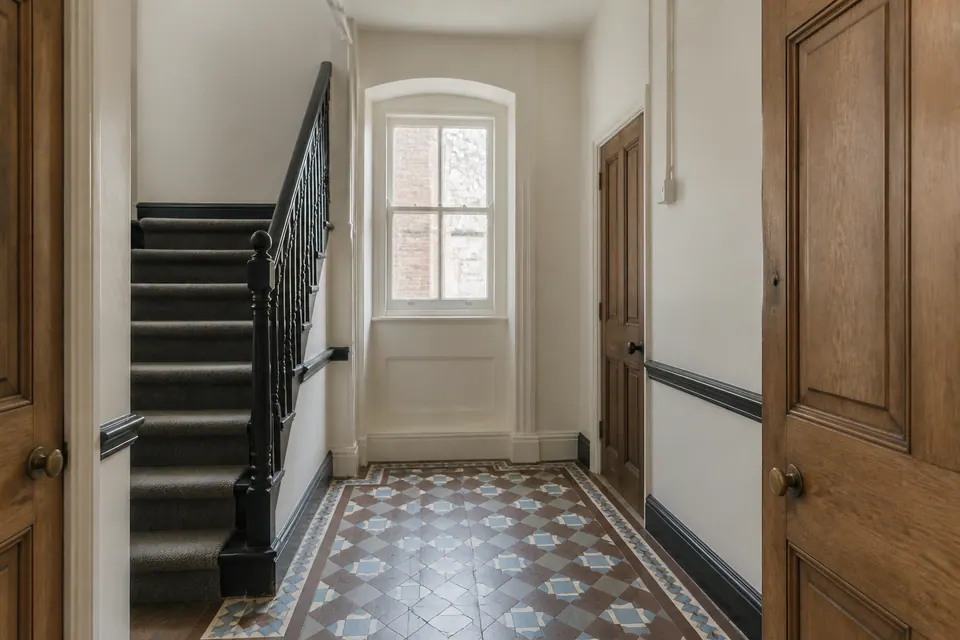
Identify which window or wall belongs in the enquiry and who can authorise access to that part.
Report the actual materials and water history without inferring a structural diagnosis from the floor level.
09 / WHEN IT COMES BACK
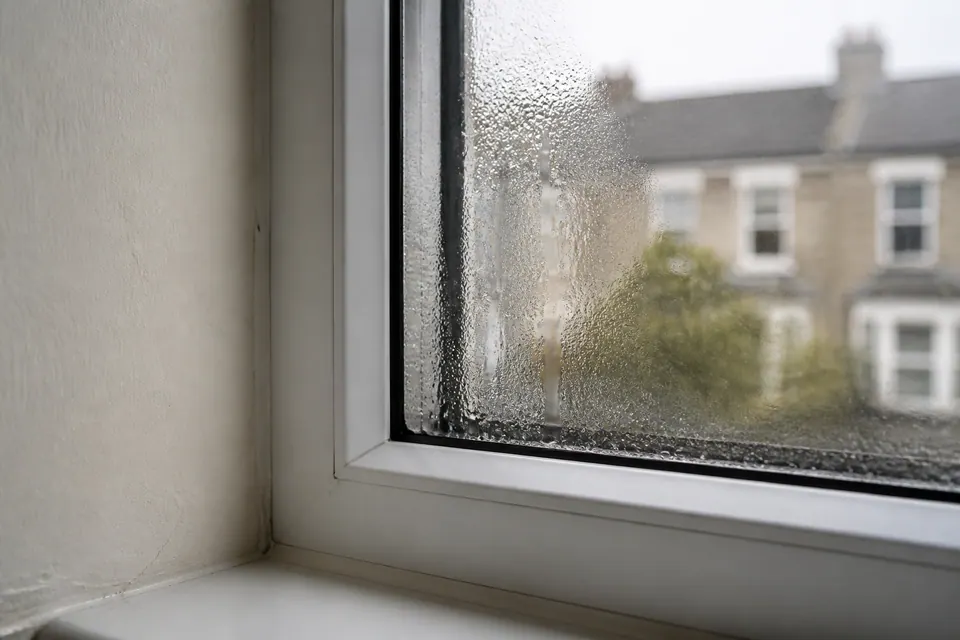
A later photograph is clearer when the frame edge, reveal and adjoining wall remain identifiable. A close crop of a different part may make two separate marks appear to be the same recurrence.
Record the interval and any painting, sealing or confirmed repair between appearances. Continuing moisture may be relevant, but the position on a junction does not identify a failed component.
Label the frame and reveal separately, retain the dates and say if the coating changed. Do not scrape or expose another layer to recreate an earlier view.
Richmond / PLAN THE APPOINTMENT
Send the Richmond postcode with component-labelled photographs. Confirm availability and explain curtains, shutters or furnishings that restrict the approach to the affected finish.
Mention who can supply the previous repair details if the person meeting the team does not hold them.
Load the area map.
Richmond / BEFORE BOOKING
Clarify the component and coating before combining different surfaces in one request.
Yes, clearly labelled views help identify different finishes. Include a wider image showing their junction so the close views retain context.
Describe what you know and leave the specification uncertain. Do not scrape or peel it to identify a layer for the enquiry.
Do not assume so. Show the existing edge and explain the condition so suitability and any reinstatement requirement can be assessed.
It records work that was done, not the condition of every surrounding material. Include current observations as well as the repair history.
Describe them and ask about access preparation first. Handling delicate or heavy fittings should be agreed rather than automatically included.
Not necessarily. Suitable growth, staining and damaged coatings are different conditions; clarify the realistic finish outcome before booking decoration.
Give the marked dimensions on each affected component instead, with the opening shown for context. The entire opening may not be the treatment area.
Provide dated comparisons and any changes in water observations or earlier work. The position alone cannot specify which component needs repair.
Do not assume glazing, joinery or sealing is included. Keep those requirements separate from the agreed accessible mould-treatment scope.
Richmond / KNOW THE MATERIAL
Send separate component views and the known water history. Discuss suitability before combining treatment, repair and decoration into one expectation.
Interior illustrations show property context rather than evidence of completed customer window treatment.
