
Three rooms checked on one day
Keep the discovery dates while acknowledging that the signs may not have appeared simultaneously.
PEST CONTROL / EALING
Several rooms, one inspection brief.
Separate discovery from recurrence.
Finding marks in three rooms on the same day does not show that the problem spread that morning. For an Ealing enquiry, give each room its own history: what was found, when it was first noticed and whether anything new appeared afterwards. That makes the proposed assessment more useful.
MAKE THE ENQUIRY SPECIFIC
Keep the discovery dates while acknowledging that the signs may not have appeared simultaneously.
Record the earlier storage position so the new room is not automatically labelled the source.
Attribute the recollection and keep its uncertainty rather than turning it into an exact date.
Tell the booking team before scope is agreed. It should remain an identified limitation, not disappear from the account.
06 / SIGNS → LOCATION → NEXT STEP
| Pest problem | Signs to describe | Areas to mention | Next step |
|---|---|---|---|
| Mice | Chewed material in named storage | A separate entry per cupboard | Explain discovery and any relocation of the item. |
| Rats | A larger animal observation | The actual sighting position | Avoid extending that sighting to every noisy room. |
| Bed bugs | Bed-frame marks | Each occupied bed individually | Describe physical evidence before inferring spread. |
| Cockroaches | Recurring kitchen insects | Separate fitting and event entries | Provide previous product history by location. |
09 / FROM FIRST CONTACT
Expand the sequence to see how the room record supports each decision.

Write room names and exact positions before combining the report into a summary.
Use discovery dates where the age of a mark cannot be established.
Ask which reported rooms can be assessed and which remain outside the accessible scope.
Follow instructions specific to the suspected pest rather than shifting contents between rooms.
Keep subsequent sightings distinct from old marks found again during another look.
Use the evolving findings to discuss monitoring or follow-on work, not an assumed whole-home result.
08 / THE CONTROL PLAN
The chronology should stay honest where dates are unknown.
Accessible rooms can be considered with their separate histories, while unknown ages and unexamined spaces remain clearly identified.
The proposed method should follow the identified concern rather than a blanket assumption that every room requires identical intervention.
New reports are more useful when tied to the original room list and any changes in occupancy, belongings or access.
05 / PROPERTY BRIEF
Explain which rooms are occupied and who uses them, so household instructions can be discussed.
State when those rooms were last used or checked if known, without guessing when marks formed.
Keep each occupant’s observations attributed and establish who can admit the assessor to the reported spaces.
Identify blocked or infrequently accessed areas before assuming they can be examined during the visit.
Ask for the included rooms to be named so the property size does not substitute for a defined assessment.
Discuss your homeDisclose any business use and check suitability separately rather than folding it into a residential room count.
Check the premises requirementsADDRESS AND AVAILABILITY
Give the postcode and explain who can admit the assessor to all rooms proposed for the visit.
Check availability before coordinating several occupants. The map locates the area without implying an Alesta office or confirmed appointment.
Open Ealing in Google Maps ↗07 / SCOPE BEFORE A QUOTE
Several reported rooms may represent different kinds of evidence. Confirm the assessed programme instead of multiplying a starting guide by an assumed room count.
from £120
See published service pricingfrom £150
See published service pricing| Service | Pricing basis | Price |
|---|---|---|
| Mice control | Mouse concern across named zones | Assessed programme quotation |
| Rat control | Rat findings and accessible locations | Scope-based pricing |
| Proofing / repairs | Openings or further specialist tasks | Separately agreed costs |
Guides checked on 27 August 2026 are starting amounts, not per-room tariffs. Confirm Ealing availability, included areas and the complete proposed price.
EALING / PROPERTY CONTEXT
A whole-home description can hide important differences. One room may have a fresh sighting, another an old mark uncovered when furniture moved.
Write the discovery date even where the age of the evidence is unknown. Do not fill the gap with a guess that it must have appeared since the last clean.
Mention unoccupied bedrooms, storage rooms and areas that were not routinely checked. Their history can explain why a finding was noticed later without proving when activity began.
Ask the proposed assessor to distinguish included rooms from reported but inaccessible areas. A large address or an extensive room list should not leave the scope implicit.
03 / OBSERVATION CHECKLIST
Record what changed between observations, not just how many rooms have been named.
Avoid disturbing suspect material to decide its age or obtain a closer image.
Name the room and position, with the date you noticed the sign.
State whether the position was previously checked, rather than automatically calling the mark new.
Note if the affected item was relocated before discovery.
Identify the bed and physical finding independently of any reported skin irritation.
Record each sighting as an event with a place, instead of counting an uncertain total.
Mark rooms or voids that could not be checked; absence of a report is not proof they are unaffected.
01 / START WITH THE EVIDENCE
Select a service concern, then describe the findings without combining unrelated signs.
Damaged food or material in more than one storage place.
Mice controlA larger rodent sighting with a precise indoor or exterior position.
Rats controlPhysical signs around one or several sleeping positions.
Bed bug treatmentRepeated insects at distinct kitchen or utility locations.
Cockroaches controlList the separate storage positions and discovery dates. An item moved between cupboards should not be counted as independent evidence in both.
State where the animal was actually seen and which other signs are only suspected. Keep an exterior report distinct from indoor findings.
Describe each bed’s physical signs and occupancy. Skin irritation in several people does not establish a multi-room bed bug diagnosis.
Name each room and fitting, with previous product use for each. The same date of discovery does not prove movement between rooms.
04 / AT A GLANCE
10 / PROBLEM → TREATMENT → CONTROL
A room that is rarely used may produce fewer observations. Review should consider the evidence and inspection limitations, not simply the number of recent reports.
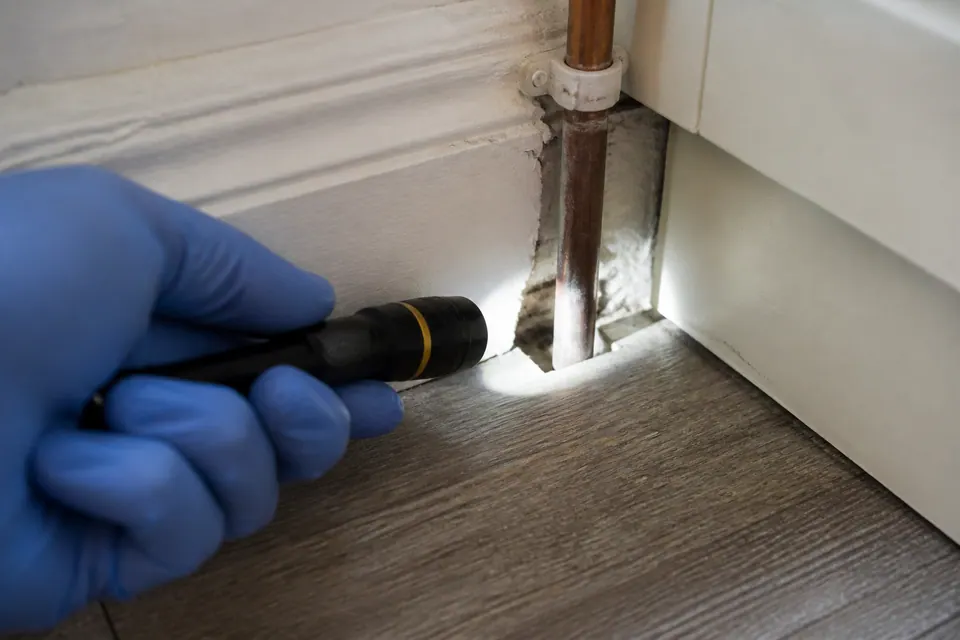

Generated scenes illustrate stages and do not show an Ealing household before or after treatment.
13 / CLEAR EXPECTATIONS
Discovery and estimated age should not be presented as the same information.
Occupancy and access help explain what can be examined, without assigning a pest risk to the room name.
Later observations should be comparable with the initial account rather than overwrite it.
EALING / QUESTIONS
Use the date you found the marks and say their age is unknown. An honest discovery date is better than a guessed start date.
It could reflect when the rooms were checked rather than when activity began. Describe the observations without assuming simultaneous spread.
Include the item movement and earlier location. The assessor can consider that context alongside fixed signs in either room.
State when it was last used or checked if known. Do not infer the absence of reports means it was unaffected.
Ask which zones the assessment covers and whether access restrictions leave any room outside the proposal.
Keep each person’s account attributed. Their recollection can be useful even where an exact date is unavailable.
Not from the starting figures alone. They are targeted treatment guides, not a tariff to multiply by room count.
Follow the preparation instructions rather than relocating contents throughout the property. Mention blocked access before the visit.
Give the new room and position, and say whether it was previously inspected or simply not checked before.
Keep the earlier history and report the change. A quiet period is information for review, not a guaranteed clearance finding.
15 / TAKE THE NEXT STEP
Call with the known chronology and the rooms needing access. Confirm the assessment scope without needing to guess when every sign first appeared.
