
Droppings or tracks
Droppings or tracks need their discovery location.
PEST CONTROL / ORPINGTON
First noticed is not always
the same as first appeared.
A rarely entered room can leave the start of a concern unclear. Describe when sounds were heard and marks discovered without converting an unknown history into a claim of fresh activity.
03 / OBSERVATION CHECKLIST
Separate what was heard from what was physically found.
Avoid disturbing suspected contamination or opening concealed spaces.
Droppings or tracks need their discovery location.
Scratching needs timing and position, not a certain animal label.
Damaged packets retain their storage reference.
Bed-frame spotting or shed material differs from irritation alone.
Repeated insects need dates and previous products.
An outside sighting has its own discovery date, even when the indoor room has rarely been entered. Unknown animals and nests should remain undisturbed pending suitability advice.
ORPINGTON / PROPERTY CONTEXT
Check postcode coverage first. State how regularly the room is entered and when the concern was first noticed.
A mark discovered after weeks without entry may have an unknown age. That uncertainty is useful information.
Locate the sound from where it was heard without claiming a hidden route or species.
Mention locked doors, stored items or other barriers before expecting the room to be fully examined.
04 / AT A GLANCE
08 / THE CONTROL PLAN
A limited history is a limitation to acknowledge.
Accessible findings are considered with the room’s use pattern.
The chosen method follows the supported problem and agreed scope.
Later observations can provide a clearer sequence for review.
10 / PROBLEM → TREATMENT → CONTROL
Absence of an observer and absence of activity are different things. Follow the agreed review rather than relying on infrequent room use.
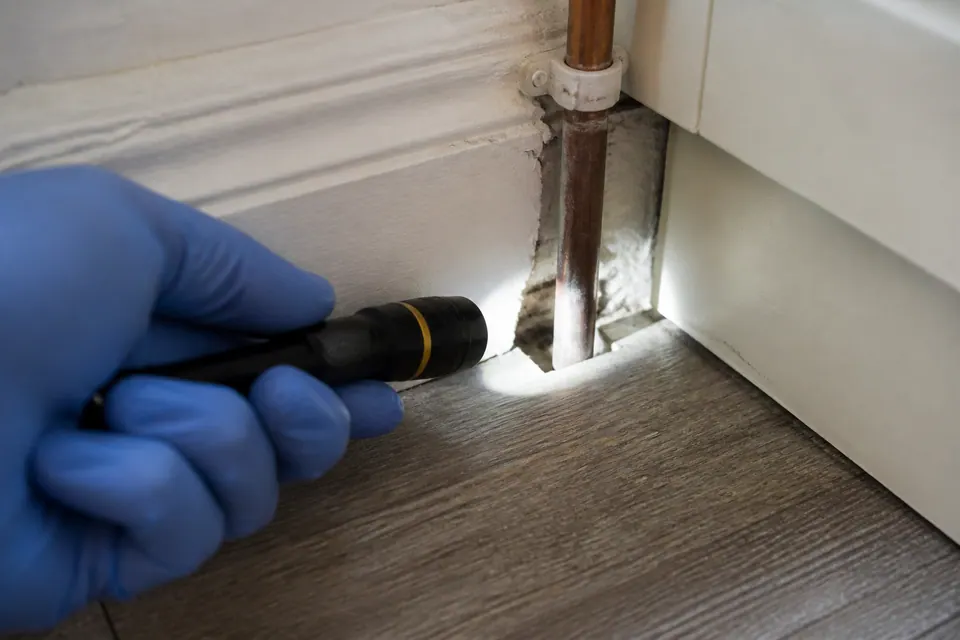

Illustrations are not an Orpington customer history or verified outcome.
07 / SCOPE BEFORE A QUOTE
An unknown start date does not establish the size of the programme. Confirm coverage and assessed scope before relying on a starting guide.
from £120
See published service pricingfrom £150
See published service pricing| Service | Pricing basis | Price |
|---|---|---|
| Mice control | Activity, access and programme | Quote after assessment |
| Rat control | Internal / external routes and visits | Quote after assessment |
| Proofing / repairs | Surveyed openings and separate work | Quoted separately |
Guides checked 27 August 2026. Clarify total, access and review arrangements directly.
01 / START WITH THE EVIDENCE
Room disuse does not identify the pest or date the activity.
Droppings or damaged stored packets.
Mice controlPossible rodent evidence at a specific location.
Rats controlPhysical traces around sleeping furniture.
Bed bug treatmentRepeated kitchen insects.
Cockroaches controlMouse enquiries need direct signs rather than an assumption that unused storage is affected.
Rat concerns should separate noise from physical or exterior observations.
Bed bug assessment needs physical bedroom evidence; an unused bed or skin reaction alone is insufficient.
Kitchen insect sightings require their own account rather than being merged with the quiet room’s sounds.
05 / PROPERTY BRIEF
Identify the room within the flat and entry limits.
Name the floor and normal use pattern.
Clarify who holds keys and approves work.
Shared unused areas need appropriate authority.
The residential brief should distinguish occupied and seldom-entered rooms.
Discuss your homeCommercial vacant spaces require separate suitability confirmation.
Check the premises requirements06 / SIGNS → LOCATION → NEXT STEP
| Pest problem | Signs to describe | Areas to mention | Next step |
|---|---|---|---|
| Mice | Discovered droppings | Exact room location | State age if unknown |
| Rats | Possible rodent sound | Wall or ceiling reference | Separate audible and physical evidence |
| Bed bugs | Spotting at a bed | Sleeping furniture | Describe physical findings |
| Cockroaches | Repeated insects | Actual room and equipment | Give dates and products |
MAKE THE ENQUIRY SPECIFIC
State the gap rather than guessing an activity start date.
Keep it as an audible report pending assessment.
Disclose the access limitation early.
Do not call it fresh unless that is supported.
09 / FROM FIRST CONTACT
Start with dates that are actually known.

Supply postcode and first discovery.
Describe how often the room is entered.
Clarify access and the proposed programme.
Follow the selected method’s preparation.
Record later signs with their own dates.
Arrange separate recommendations through the responsible contact.
13 / CLEAR EXPECTATIONS
Discovery dates should remain distinct from origin dates.
Sounds should not become confirmed identification.
The programme should acknowledge access limits.
ADDRESS AND AVAILABILITY
Give the full postcode and the room involved.
Coverage and attendance require confirmation, including any keyholder arrangement.
Open Orpington in Google Maps ↗ORPINGTON / QUESTIONS
No. Its age may remain unknown.
Yes; it explains gaps in observation.
No. Supporting assessment is needed.
No. Unused and assessed are different states.
Follow preparation rather than rearranging on assumption.
Scope depends on findings and the programme.
Disclose the uncertainty and any available details.
Access limitations must be acknowledged.
Accurately, without claiming clearance.
Give the separate date and location for review.
15 / TAKE THE NEXT STEP
Check coverage with the postcode, discovery dates and use pattern. Keep unknown history explicit.
