
The resident’s dwelling
Identify the areas the booking actually concerns and the person who can provide entry.
PEST CONTROL / POPLAR
Building management and treatment boundaries.
Start with a clear account.
A resident may be able to arrange access to the flat but not the surrounding building. Make the boundary explicit and identify the management contact if wider findings need discussion.
04 / AT A GLANCE
05 / PROPERTY BRIEF
Identify the areas the booking actually concerns and the person who can provide entry.
Clarify approval for any additional work instead of assuming the attending resident can accept it.
Name the appropriate contact and unresolved access; proximity does not create private authority.
Keep its reports and permission independent from the first resident’s enquiry.
Disclose the household circumstances relevant to the chosen method and instructions.
Discuss your homeAsk about suitability separately; domestic service information does not confirm commercial provision.
Check the premises requirements01 / START WITH THE EVIDENCE
The resident can report evidence without automatically controlling every area that might later be discussed.
Possible damage inside the occupied dwelling.
Mice controlAn observation involving a management-controlled space.
Rats controlPhysical signs around household sleeping furniture.
Bed bug treatmentRepeated insects at a private kitchen fitting.
Cockroaches controlKeep the cupboard finding specific while distinguishing any wider route question that needs management involvement.
Name the location and responsible contact without assuming a private quote includes communal work.
The bedroom assessment concerns its actual evidence and occupants, not a building-wide conclusion.
Describe the visible fitting first. Recommendations involving other areas should remain separate decisions rather than automatic treatment extensions.
POPLAR / PROPERTY CONTEXT
A resident may describe the concern and admit the technician while a different person approves work outside the home. Name those responsibilities so a recommendation does not become an assumed instruction.
Confirm the Poplar postcode and requested service directly. A residential enquiry does not establish a whole-building programme or guaranteed appointment.
Identify the rooms the customer can make available, then list any management-controlled area separately. Keep unresolved access visible rather than promising it.
Decide how a wider recommendation will reach the relevant contact. Evidence can be passed on without presenting additional work as already commissioned.
07 / SCOPE BEFORE A QUOTE
The Poplar proposal needs clear areas, approvals and inclusions. Separate management work should not be silently attached to a household figure.
from £120
See published service pricingfrom £150
See published service pricing| Service | Pricing basis | Price |
|---|---|---|
| Mice control | Activity, access and programme | Quote after assessment |
| Rat control | Internal / external routes and visits | Quote after assessment |
| Proofing / repairs | Surveyed openings and separate work | Quoted separately |
Confirm current terms directly. Guides checked 27 August 2026; communal tasks, repairs and additional attendance are not assumed included.
03 / OBSERVATION CHECKLIST
The record should make clear both where the sign was found and whose decision is needed for any next action.
Do not enter restricted building areas to complete a private report or bypass unresolved permission.
Name the room and actual position under the resident’s control.
Keep the observer and shared location identifiable instead of mixing it with household evidence.
State the limitation and contact responsible rather than marking it as inspected.
Preserve the original date and source when management relays information.
Distinguish a visible defect or recommendation from an authorised maintenance instruction.
Keep its new date and location so it can be routed to the appropriate part of the review.
06 / SIGNS → LOCATION → NEXT STEP
| Pest problem | Signs to describe | Areas to mention | Next step |
|---|---|---|---|
| Mice | Damage in the resident’s storage | Specific private cupboard | Discuss the household scope and any separate recommendation |
| Rats | Rodent signs reported in common parts | Actual shared location and observer | Identify management access before wider assessment |
| Bed bugs | Physical marks around a household bed | The resident’s sleeping area | Base the proposal on that evidence and occupants |
| Cockroaches | Insects at a private kitchen fitting | Visible room position | Distinguish treatment from building-wide follow-on questions |
MAKE THE ENQUIRY SPECIFIC
Clarify who can authorise the change before it is treated as accepted.
Confirm suitable access and scope instead of assuming it follows from the private appointment.
Keep the recommendation distinct until the responsible party agrees the task.
Ensure residents receive the method-specific instructions affecting their own room use and aftercare.
08 / THE CONTROL PLAN
The household and building decisions can be coordinated while remaining separate, understandable pieces of work.
The account identifies actual evidence and any relevant shared context.
Assessment and treatment stay within the suitable agreed areas, with limitations made explicit.
If findings suggest another area or repair should be considered, pass that question to the responsible contact for a separate decision.
09 / FROM FIRST CONTACT
These steps organise responsibility rather than promising a complete building programme from one enquiry.

Retain the direct account of the household evidence and access contact.
Clarify which rooms and tasks the customer is actually authorising.
Identify management-controlled facilities separately without presenting them as available or inspected.
Ensure additional proposals reach someone entitled to decide, not merely the person opening the door.
Occupants need the actual aftercare; management needs relevant wider recommendations without invented scope.
Separate fresh private-room evidence from shared-area observations so each can be considered appropriately.
10 / PROBLEM → TREATMENT → CONTROL
Review should reflect the areas and findings actually considered. A household appointment does not establish the condition of every management-controlled space.
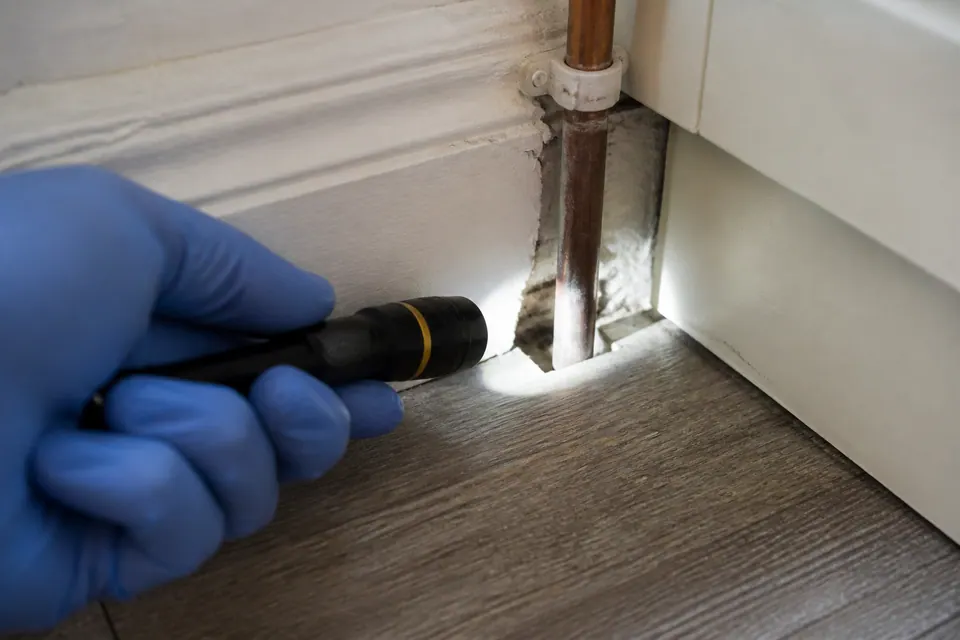

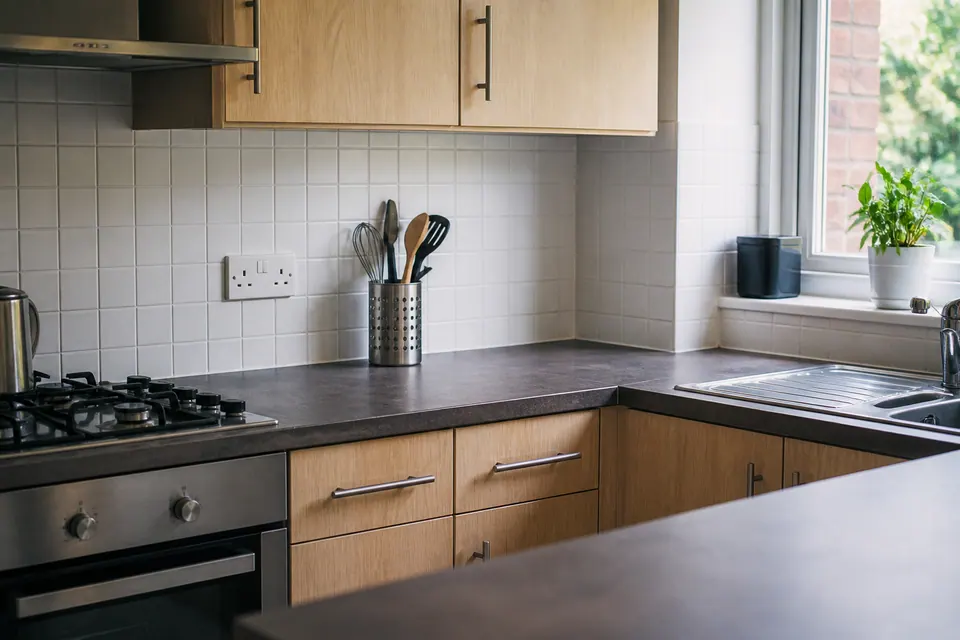
Illustrations are not Poplar building-management records or proof of a customer treatment outcome.
13 / CLEAR EXPECTATIONS
The customer can understand which tasks and rooms are being commissioned.
A management recommendation should not be represented as completed or automatically included work.
Occupants should receive the guidance relevant to their spaces, even where another person arranges the booking.
ADDRESS AND AVAILABILITY
Check the postcode and service, then identify the private entrance and who controls any separately mentioned area.
The map supplies area context only; authority and scope need direct agreement.
Open Poplar in Google Maps ↗POPLAR / QUESTIONS
A private enquiry can be discussed, with shared permissions and wider questions clearly unresolved.
Not automatically. Access and authority to approve a changed scope are different roles.
Include them separately with their location and source rather than merging them into household evidence.
The relevant authority, suitability and proposed arrangement need clarification rather than private assumption.
No. A recommendation requires a separate decision before it becomes commissioned work.
Relevant information can be shared, but occupants still need the actual instructions affecting them.
Do not assume that; each proposed area and authority must be explicit.
State the limitation rather than describing the space as available or inspected.
No. Conclusions should remain bounded by the findings and areas actually considered.
Keep its date and location clear so private and management-controlled concerns are not mixed.
15 / TAKE THE NEXT STEP
Start with the household evidence and authorised rooms, then identify wider questions for the appropriate contact rather than assuming a building-wide booking.
