
Mice
Possible rodent traces near stored belongings.
Mice controlPEST CONTROL / SLOUGH
Residential and business enquiries kept separate.
One address can contain more than one kind of premises.
A property enquiry should explain its actual use. A home-based concern and a business treatment requirement may need different decisions, permissions and documentation, so neither should be assumed to cover the other.
01 / START WITH THE EVIDENCE
The pest finding and the use of the space are separate parts of the enquiry.
Possible rodent traces near stored belongings.
Mice controlAn animal sighting or larger suspected traces.
Rats controlPhysical evidence around beds and furniture.
Bed bug treatmentRepeated insects around kitchen fittings.
Cockroaches controlGive the room and whether it is privately occupied or used for work.
Explain access responsibility without assuming the entire boundary is included.
State the actual occupancy arrangement; irritation alone is not identification.
Distinguish a domestic kitchen from a business-use area.
SLOUGH / PROPERTY CONTEXT
Start with the postcode and a plain description of how the affected space is used. Availability must be checked for that address and service.
A business run from part of a home may involve different access, responsibility or operating constraints. Disclose the arrangement rather than requesting an unspecified house visit.
Where a dwelling and workplace share an entrance, identify the rooms requested for consideration. A shared doorway does not make both included.
Ask separately about commercial suitability. Do not assume a residential guide includes a workplace programme, records or ongoing attendance.
03 / OBSERVATION CHECKLIST
The description should make clear which occupant or operation is affected.
Keep people away from suspect contamination and do not open equipment or concealed spaces.
Name the cupboard and its use.
Distinguish household possessions from business materials.
Record the location without assigning a hidden source.
Give physical details separately from skin symptoms.
State whether the equipment is domestic or business-related.
Identify the boundary and who controls access.
04 / AT A GLANCE
05 / PROPERTY BRIEF
Identify the household rooms containing evidence.
Explain work use and equipment that affects access.
Treat each occupancy and permission boundary explicitly.
Check suitability before relying on household price guides.
Ask what can be offered; do not assume a contract or documentation package.
Check the premises requirements06 / SIGNS → LOCATION → NEXT STEP
| Pest problem | Signs to describe | Areas to mention | Next step |
|---|---|---|---|
| Mice | Possible rodent traces | Private storage | Identify the household room |
| Rats | Larger animal or traces | Shared outside area | Clarify access responsibility |
| Bed bugs | Bedroom physical signs | Actual sleeping accommodation | Describe occupancy and findings |
| Cockroaches | Recurring kitchen insects | Domestic or workplace kitchen | Confirm suitability for that use |
07 / SCOPE BEFORE A QUOTE
A residential starting price does not define a combined dwelling-and-workplace service.
from £120
See published service pricingfrom £150
See published service pricing| Service | Pricing basis | Price |
|---|---|---|
| Mice control | Activity, access and programme | Quote after assessment |
| Rat control | Internal / external routes and visits | Quote after assessment |
| Proofing / repairs | Surveyed openings and separate work | Quoted separately |
Guides checked 27 August 2026. Confirm current prices and address coverage. Business programmes, reports, repairs and further visits are not assumed included.
08 / THE CONTROL PLAN
Work should be discussed against the real arrangement, not a convenient category chosen during booking.
Explain household and business occupation honestly.
Clarify the proposed rooms, method and responsible contact.
If findings extend into a differently used area, ask how the proposal changes.
09 / FROM FIRST CONTACT
A short factual brief reduces ambiguity about what is being requested.

Ask about availability for the exact address.
Separate residential rooms from work areas.
Tie each observation to one location.
Distinguish approval from day-to-day access.
Review inclusions, preparation and any commercial limitations.
Do not silently add another occupancy to the agreed work.
10 / PROBLEM → TREATMENT → CONTROL
The response should reflect both the evidence and the actual use of the space.
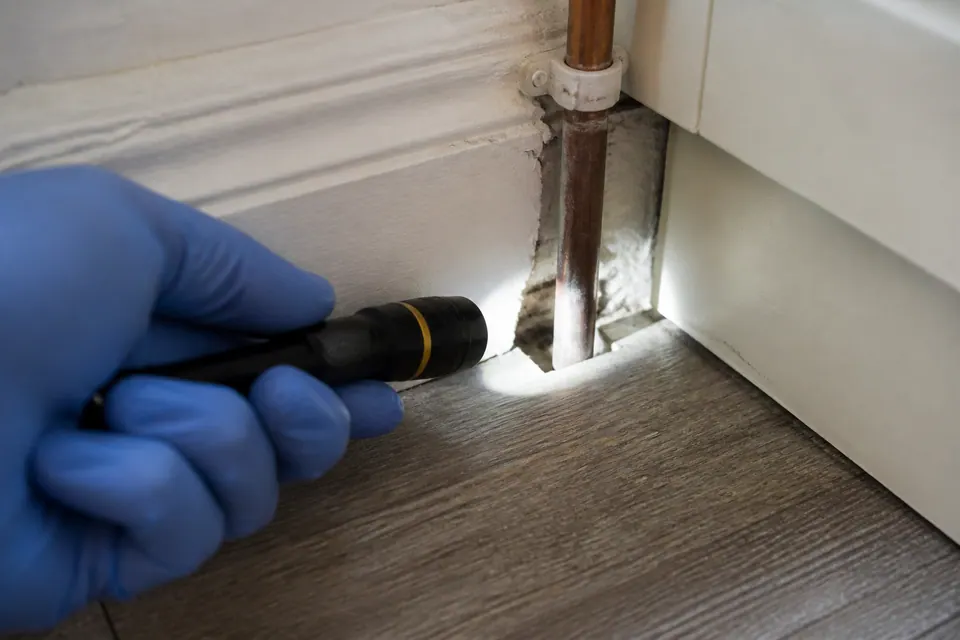
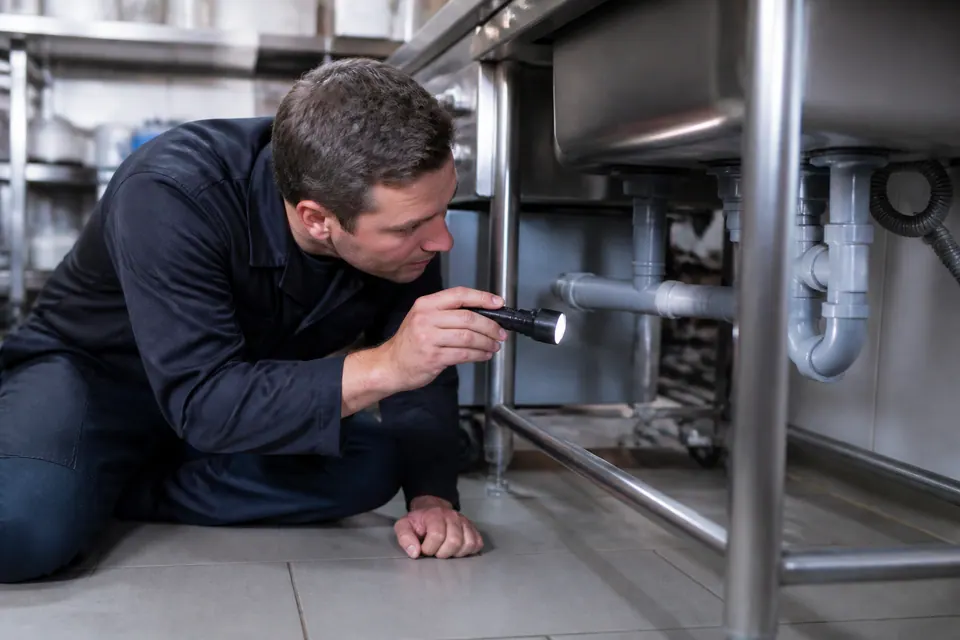
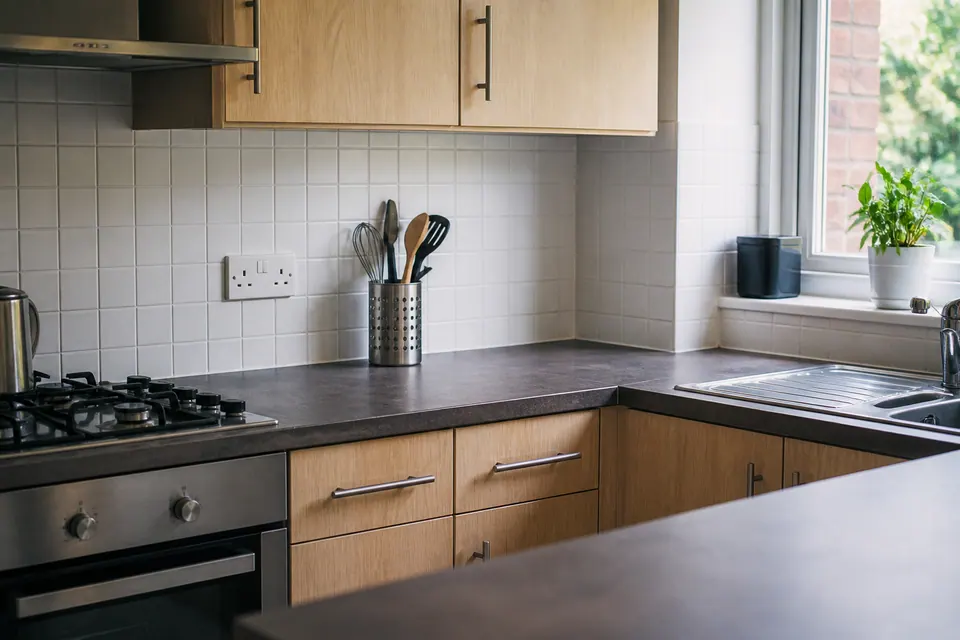
These are illustrative service stages, not proof of a completed Slough workplace treatment.
MAKE THE ENQUIRY SPECIFIC
Disclose equipment and use before preparation is agreed.
Name the separate areas and responsible people.
Check suitability and scope rather than adding it informally.
Ask explicitly what is offered; a visit enquiry is not a programme agreement.
ADDRESS AND AVAILABILITY
Availability must be confirmed for the exact postcode and requested service.
The location map cannot establish whether a combined residential and business arrangement is suitable.
Open Slough in Google Maps ↗13 / CLEAR EXPECTATIONS
Describe the premises as occupied, not as the cheapest category.
The proposal should identify what has actually been agreed.
Ongoing business arrangements require their own discussion.
SLOUGH / QUESTIONS
Explain its actual use and equipment so suitability can be assessed.
Discuss the arrangement; do not assume both are covered by one unspecified scope.
No such inclusion should be assumed. Ask about the relevant service.
The doorway does not remove separate occupancy and permission requirements.
Clarify the authorised person for each proposed area.
Ask explicitly. A residential service description is not a commercial reporting promise.
Yes, where they affect access or occupants.
Describe the arrangement accurately rather than merging different uses for convenience.
Report the additional location and request a scope review.
Confirm included areas, suitability, cost, restrictions and any further attendance terms.
15 / TAKE THE NEXT STEP
Tell us what was found and how the affected spaces are used before choosing a service or relying on a starting price.
