
Common kitchen
Identify shared storage findings and products applied by different users.
PEST CONTROL / CAMDEN
Reports from a shared household.
One contact, separately recorded observations.
Housemates may notice different signs and use different products before anyone compares notes. For a Camden shared-home enquiry, collect each person’s account with its room and date. A nominated contact can organise the discussion without changing uncertain reports into a single definite story.
05 / PROPERTY BRIEF
Identify shared storage findings and products applied by different users.
Agree which rooms are proposed and how their occupants provide consent and access.
Nominate a contact without assuming everyone will be available on the same day.
Clarify who approves the scope and who coordinates any owner-controlled spaces.
Disclose occupant circumstances relevant to the method, keeping observations tied to their rooms.
Discuss your homeConfirm suitability separately rather than assuming the residential service covers every form of shared accommodation.
Check the premises requirements01 / START WITH THE EVIDENCE
Select the likely service while retaining separate room accounts.
Chewing or droppings in shared or private storage.
Mice controlA larger rodent seen by an identified witness.
Rats controlPhysical evidence around a particular occupant’s bed.
Bed bug treatmentRecurring insects at a named kitchen fitting.
Cockroaches controlRecord who saw the sign and the shelf involved. A packet moved between rooms should not be counted as independent evidence in every location.
Keep the witness and actual position clear. Avoid turning an uncertain retelling into a confirmed whole-house report.
Identify the bed and physical evidence without circulating assumptions about another person’s belongings. Irritation alone does not confirm bed bugs.
Ask which products different occupants used and where. An incomplete intervention history should be marked incomplete rather than reconstructed.
07 / SCOPE BEFORE A QUOTE
A household coordinator should establish who approves the proposed scope. The published starting guides are not automatically a price for every private bedroom.
from £120
See published service pricingfrom £150
See published service pricing| Service | Pricing basis | Price |
|---|---|---|
| Mice control | Mouse evidence in included areas | Assessed quotation |
| Rat control | Rat concern and agreed programme | Scope-based cost |
| Proofing / repairs | Additional repairs or excluded rooms | Separate agreement |
Guides checked on 27 August 2026 provide starting figures. Confirm Camden coverage and the total scope before occupants rely on an assumed allocation of costs.
CAMDEN / PROPERTY CONTEXT
The aim is not to make every housemate agree on a species. It is to provide observations that an assessor can understand and locations that can be accessed with consent.
One person can pass on the room list and arrange availability while identifying who actually observed each sign. That protects the distinction between a direct finding and a recollection.
Make clear which private bedrooms are included and who can admit the assessor. Shared tenancy does not automatically provide permission to enter another person’s room.
Pass the agreed preparation and aftercare instructions to everyone affected. Separate improvised actions by different occupants can make the next account harder to interpret.
08 / THE CONTROL PLAN
Separate observations can support one organised enquiry.
The assessor can consider accessible evidence without treating every retelling as a separate event or all symptoms as one diagnosis.
The selected method and scope should be understood by affected occupants, with private-room consent and access kept explicit.
Fresh findings should retain their source, room and date so the household does not replace the evidence with a general impression.
09 / FROM FIRST CONTACT
Open the sequence to see where a nominated contact can help.

Ask each person for the location and date of their actual observation.
Identify which private rooms can be included and who will provide access.
Separate the booking coordinator from whoever authorises the work.
Make sure affected occupants receive the same method-specific guidance.
Keep each new observation attributed instead of combining it into a rumour of continued activity.
Clarify any additional scope, permission or review attendance before assuming all rooms are covered.
06 / SIGNS → LOCATION → NEXT STEP
| Pest problem | Signs to describe | Areas to mention | Next step |
|---|---|---|---|
| Mice | Damaged shared food storage | Named cupboard and reporting occupant | Ask for assessment without multiplying second-hand reports. |
| Rats | Larger rodent sighting | Witness and actual location | Retain uncertainty in any relayed description. |
| Bed bugs | Physical bed-area signs | Specific sleeping position and consent | Seek identification without inferring from another’s symptoms. |
| Cockroaches | Recurring kitchen insects | Fitting, dates and product users | Provide the combined intervention history accurately. |
03 / OBSERVATION CHECKLIST
Use a room, date and source for each report.
No occupant should handle suspect material or enter another person’s space merely to complete the list.
Name the shelf and the person who first noticed damage.
Keep the location specific while obtaining the occupant’s agreement for assessment.
Identify whose recollection it is and whether timing is approximate.
Record physical signs separately for each sleeping position rather than combining symptoms.
List products applied by any housemate, including unknown details.
Keep the original uncertainty when relaying it; a second-hand account should not become more definite.
04 / AT A GLANCE
10 / PROBLEM → TREATMENT → CONTROL
Everyone noticing less activity is useful information, but control decisions still depend on the evidence and agreed review. Unchecked rooms remain unexamined.
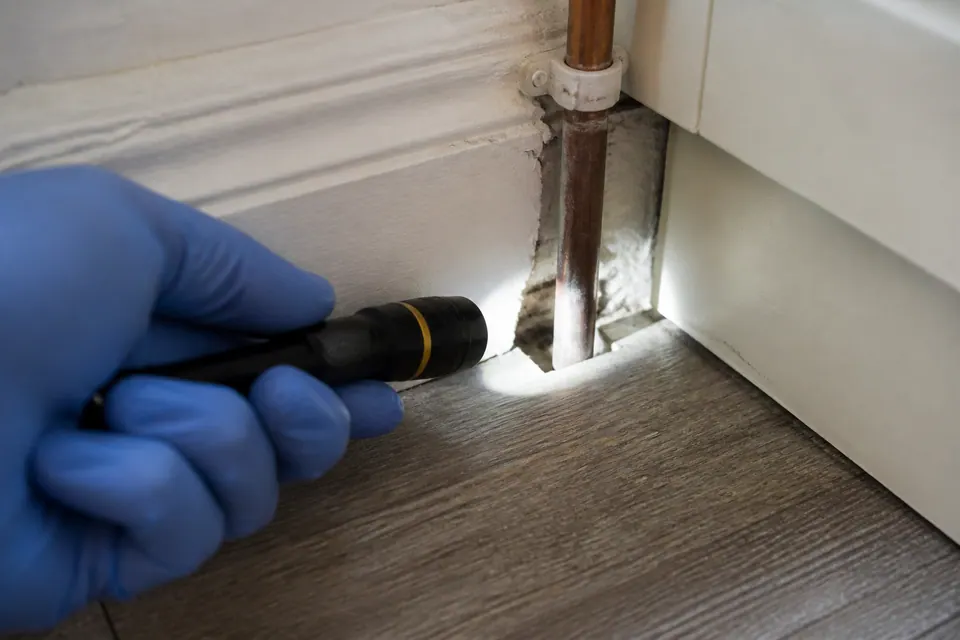

Generated scenes illustrate a process and are not a Camden shared-house treatment record.
MAKE THE ENQUIRY SPECIFIC
Collect what is known about each application and state where details are missing.
Tell the booking contact before scope is agreed. Do not assume a housemate’s permission can replace the occupant’s consent.
Keep its original uncertainty and identify who supplied the account.
Arrange for affected occupants to receive them accurately before the appointment.
ADDRESS AND AVAILABILITY
Give the postcode and the nominated person coordinating admission to the agreed areas.
Check availability before aligning housemates’ schedules. The area view does not indicate a local Alesta office or guaranteed slot.
Open Camden in Google Maps ↗13 / CLEAR EXPECTATIONS
One coordinator can relay facts without claiming to have witnessed them all.
Shared accommodation does not erase private-room access boundaries.
Affected occupants need the actual booking guidance rather than separate improvised advice.
CAMDEN / QUESTIONS
One contact can coordinate the enquiry, but should identify the source of each report and the person able to approve the scope.
Retain each account separately with its location and uncertainty. The assessor does not need the household to settle identification first.
Only with the relevant consent and scope. Do not assume tenancy membership provides authority over another occupant’s room.
Ask for product names and application locations where known. It is important to disclose that more than one person intervened.
Keep the finding attached to the cupboard and explain who noticed it. Avoid counting repeated retellings as multiple events.
Mention that history when known so the date it was noticed is not mistaken for proof of where it began.
Clarify the proposed total and approving contact first. A starting guide does not establish either household coverage or how occupants share costs.
Ensure affected people receive the actual instructions for the method and rooms, not a paraphrase that omits restrictions.
Tell the booking contact before attendance. The room should be described as inaccessible, not treated as assessed by default.
Record the other report’s source and location. A quiet room and a new event elsewhere may need different interpretation at review.
15 / TAKE THE NEXT STEP
Call with the separate findings, known interventions and room-access permissions. Confirm the scope before organising the household around an assumed plan.
