
A unit has two different references
Provide both where relevant so the household enquiry is not confused with another apartment.
PEST CONTROL / CANARY WHARF
Managed-apartment inspection.
Keep the apartment report and management action distinct.
A managed apartment can have a clear household concern but several people involved in access or follow-on decisions. For a Canary Wharf enquiry, give the unit reference and the findings inside the home. Explain management requirements without assuming a private treatment includes building services or other apartments.
MAKE THE ENQUIRY SPECIFIC
Provide both where relevant so the household enquiry is not confused with another apartment.
Identify the responsible contact and the limitation before adding it to the proposed scope.
Ask who should receive it and what approval is required; do not treat it as completed work.
Keep that information attributed without assuming the same finding exists in your home.
06 / SIGNS → LOCATION → NEXT STEP
| Pest problem | Signs to describe | Areas to mention | Next step |
|---|---|---|---|
| Mice | Mouse-like marks in storage | Unit and cabinet reference | Request assessment of the private finding. |
| Rats | Larger rodent observation | Witness and precise building or home position | Attribute wider reports separately. |
| Bed bugs | Physical bed-area evidence | Named sleeping position | Seek identification within the household. |
| Cockroaches | Recurring kitchen insects | Apartment fitting and intervention history | Clarify any additional service-access question. |
09 / FROM FIRST CONTACT
Expand the sequence to keep the household report central.

Give the recognised unit reference and address.
Keep the resident’s evidence separate from general communications.
Share the relevant management procedure before a visit is proposed.
Ask what the household treatment includes and what requires another decision.
Keep later observations tied to the apartment and original positions.
Ensure the responsible party receives any building-related question without assuming work is already authorised.
08 / THE CONTROL PLAN
Coordination should clarify scope rather than silently expand it.
Accessible household findings guide assessment, with building information retained as separately sourced context.
The chosen method and household requirements should be clear, while any common-service issue remains a separate authority question.
If wider maintenance or access is discussed, identify the responsible contact and the action requiring their decision.
05 / PROPERTY BRIEF
Provide the actual household findings and the rooms proposed for assessment.
Identify who decides about any relevant common infrastructure.
Explain applicable requirements without treating admission as approval for every area.
Clarify which proposals need the owner’s or agent’s decision.
Keep the included apartment and occupants identifiable in the proposed work.
Discuss your homeCheck suitability and requirements independently of the residential apartment service.
Check the premises requirementsADDRESS AND AVAILABILITY
Provide the postcode, apartment reference and contact needed for the agreed attendance route.
Check availability before arranging management coordination. The map is a geographical reference, not an Alesta building-management office.
Open Canary Wharf in Google Maps ↗07 / SCOPE BEFORE A QUOTE
A resident’s quote should identify the apartment areas covered. Any management-controlled extension or building repair needs explicit consideration rather than an assumed package.
from £120
See published service pricingfrom £150
See published service pricing| Service | Pricing basis | Price |
|---|---|---|
| Mice control | Mouse concern within the unit | Assessed private-scope quote |
| Rat control | Rat report and authorised areas | Programme quotation |
| Proofing / repairs | Building-service or repair proposals | Separate authorisation and cost |
Guides checked on 27 August 2026 provide starting prices. Confirm Canary Wharf availability and which parts of any proposal are private treatment versus separately agreed building action.
CANARY WHARF / PROPERTY CONTEXT
The resident can describe the home while management may control another part of the building. A workable brief explains those roles without merging their responsibilities.
Use the apartment number or reference that management recognises alongside the postal address. This helps distinguish the actual household enquiry from a general building report.
If a service-riser question arises, ask who can decide about authorised access or further work. Do not add shared infrastructure to the private treatment scope by implication.
Clarify who should receive any recommendation involving the building. Passing a finding to management is not the same as commissioning work or proving a building-wide problem.
03 / OBSERVATION CHECKLIST
Use unit, room and date for the direct household findings.
Do not open controlled services or disturb suspect material to extend the account.
Name the cupboard and position rather than reporting only a building concern.
Record recurring events and known previous products.
Describe physical evidence independently of any general notice.
Attribute the information and preserve its stated uncertainty.
Identify the unexamined area and responsible contact.
Keep the new room and date distinct from earlier building reports.
01 / START WITH THE EVIDENCE
Select the concern while keeping building-level information separately attributed.
Damage or marks in the apartment’s storage.
Mice controlA direct larger-rodent observation at a stated location.
Rats controlPhysical evidence around a household sleeping position.
Bed bug treatmentRecurring insects within the apartment kitchen.
Cockroaches controlName the cabinet and any visible opening. A shared service may be relevant to discuss but should not be declared the source without assessment.
Identify who observed it and where. Keep that account separate from evidence inside the apartment.
Describe the actual physical signs. A management notice or skin irritation does not confirm bed bugs in a particular bed.
Provide the fitting and product history. If further service access is considered, identify who controls it rather than assuming it belongs to the home visit.
04 / AT A GLANCE
10 / PROBLEM → TREATMENT → CONTROL
Acknowledging a report or arranging access does not establish treatment success. The apartment’s evidence and agreed review still matter.
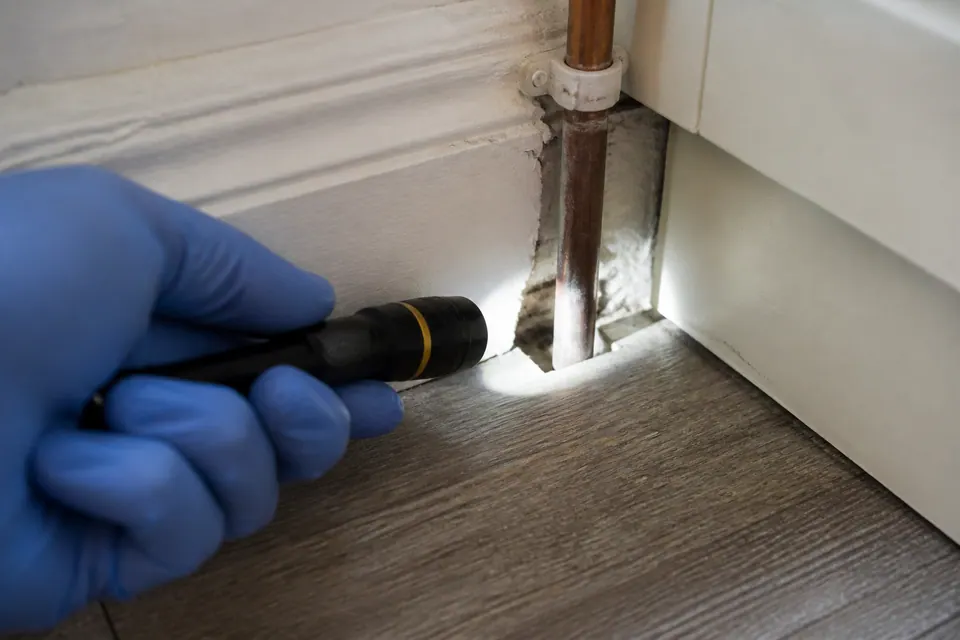

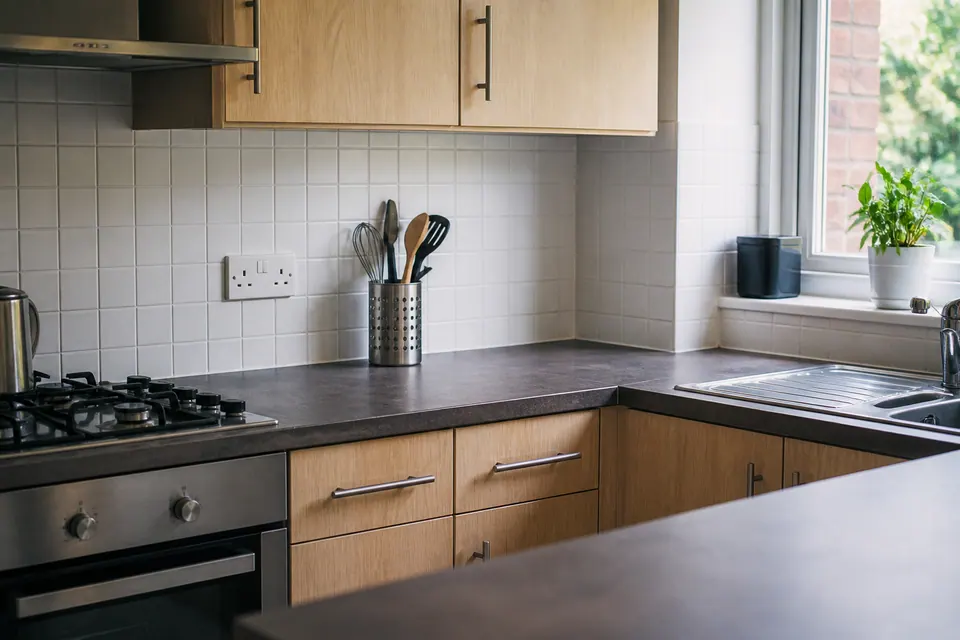
Generated inspection scenes are not a Canary Wharf management case or proof of building-wide results.
13 / CLEAR EXPECTATIONS
The household’s findings should remain distinct from general building information.
A resident’s appointment should identify its own areas and instructions.
A management recommendation needs its own authorisation rather than an assumed extension.
CANARY WHARF / QUESTIONS
Give the reference used by management alongside the postal details if they differ. This helps identify the correct unit.
Attribute it as building information and describe any direct evidence in your own apartment separately.
Identify the responsible party and ask how authorisation is arranged. Do not assume a private booking includes that space.
No. Treatment or assessment of another unit needs its own suitable scope and authority.
Share relevant attendance requirements when checking availability rather than leaving them until arrival.
Clarify the owner, agent or management contact responsible for deciding about that proposal.
Not by assumption. A recommendation identifies a question or action to consider; it is not confirmation that work is commissioned.
Follow the method-specific household instructions supplied for the booking, alongside relevant access procedures.
Use the apartment room and date rather than merging it with a general statement about continued building activity.
Explain the new authorised area and ask whether the assessment or proposal should be revised rather than treating it as automatically included.
15 / TAKE THE NEXT STEP
Call with the unit details, household evidence and management requirements. Confirm the private assessment and any wider decision separately.
