
Mice
Damage or signs within accessible household areas.
Mice controlPEST CONTROL / WANDSWORTH
Internal treatment and external repairs.
A control plan and a repair plan are different commitments.
A visible opening can raise a useful question without establishing how pests entered. For a Wandsworth enquiry, describe the evidence and the condition separately. Ask how any recommended proofing should be coordinated with treatment and who will authorise building work.
01 / START WITH THE EVIDENCE
An opening in the building does not identify the animal or insect.
Damage or signs within accessible household areas.
Mice controlA larger rodent observation or assessed evidence.
Rats controlPhysical signs around resting furniture.
Bed bug treatmentRecurring insects near fittings or equipment.
Cockroaches controlDescribe the actual finding and any accessible opening separately. Do not assume every gap needs immediate closure.
Give direct observations and known defects without treating a drainage theory as confirmed.
Describe physical bed-area findings. A fabric defect or irritation does not establish bed bugs.
Name the fitting, recurrence and prior products. Moisture or a visible gap can be context without proving the source.
WANDSWORTH / PROPERTY CONTEXT
Treatment, monitoring, proofing and repair may be related, but they are not interchangeable. Clarify what is proposed before assuming one visit includes all of them.
Give the visible opening’s location and condition without enlarging, sealing or dismantling it. Assessment should inform the significance of the observation.
Identify who owns or manages the relevant fabric. The person booking a household pest service may not authorise changes to a shared wall or drainage system.
Ask which trade or responsible party would handle any further task. A recommendation is not confirmation that the repair is included or already arranged.
03 / OBSERVATION CHECKLIST
Two nearby observations do not automatically establish cause and route.
Do not alter openings or lift covers to investigate a theory.
Name the actual mark, damage or sighting position.
Describe its location without claiming it is active.
Provide confirmed details and status, not an assumed pest explanation.
Record physical evidence independently of building defects.
Keep event and product history with the fitting.
Identify areas needing permission or specialist investigation.
04 / AT A GLANCE
05 / PROPERTY BRIEF
Clarify the distinct pest and building tasks before commissioning them.
Identify who may authorise fixed-fabric changes.
Find the responsible owner or manager for common structures.
Keep specialist investigation or repair outside assumed pest scope.
Check suitability independently rather than assuming home treatment includes business work.
Check the premises requirements06 / SIGNS → LOCATION → NEXT STEP
| Pest problem | Signs to describe | Areas to mention | Next step |
|---|---|---|---|
| Mice | Mouse-like signs | Actual household position | Ask what assessment supports before proofing. |
| Rats | Larger rodent observation | Direct evidence and known conditions | Do not assume drainage repairs are included. |
| Bed bugs | Physical bed marks | Sleeping position | Seek identification rather than a fabric-based explanation. |
| Cockroaches | Recurring insects | Fitting and intervention history | Report moisture or gaps as separate conditions. |
07 / SCOPE BEFORE A QUOTE
Ask for a clear description of the pest programme and any additional recommendation. A starting guide should not be read as a bundled joinery or drainage contract.
from £120
See published service pricingfrom £150
See published service pricing| Service | Pricing basis | Price |
|---|---|---|
| Mice control | Mouse evidence and programme | Assessment-led quote |
| Rat control | Rat findings and agreed areas | Scoped quotation |
| Proofing / repairs | Proofing, joinery or drainage work | Separate repair agreement |
Service guides checked on 27 August 2026 provide starting amounts. Confirm Wandsworth coverage and the complete scope, with repair responsibilities distinguished from treatment.
08 / THE CONTROL PLAN
A practical sequence needs clear responsibilities.
Accessible findings and reported defects can be considered without treating a gap as a proven route.
The method, areas and household instructions should be explicit, separate from any structural recommendation.
If proofing or maintenance is proposed, clarify its timing, authority and provider rather than assuming it happens automatically.
09 / FROM FIRST CONTACT
Expand the sequence before instructing a trade to close a suspected route.

Describe pest evidence before the maintenance theory.
Give a safe observation of the opening or defect.
Ask which tasks belong to assessment, control or separate work.
Do not alter routes merely because a gap is visible.
Keep new findings distinct from completion of a repair.
Identify who approves and performs each further recommendation.
10 / PROBLEM → TREATMENT → CONTROL
Building work can address a condition, but pest control still needs evidence and the agreed review. Keep the two records connected without treating them as equivalent.
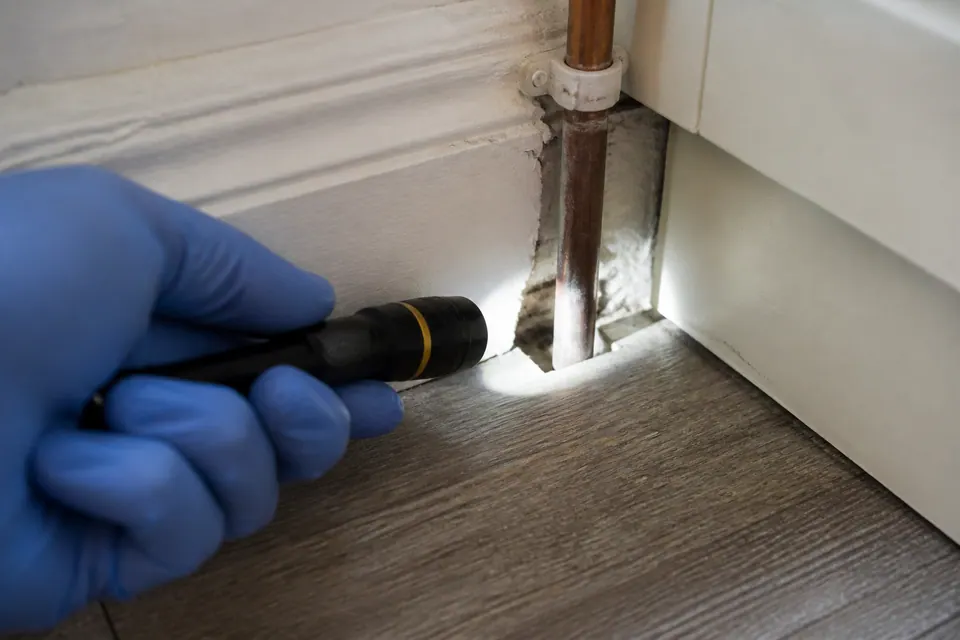
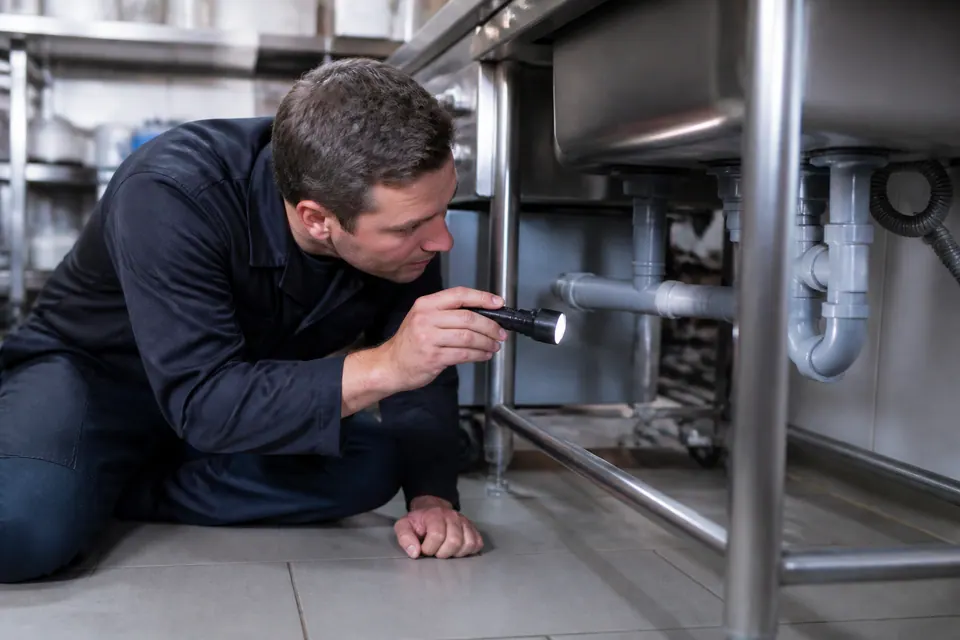
Generated scenes are not a Wandsworth repair completion record or proof of pest clearance.
MAKE THE ENQUIRY SPECIFIC
Describe it without assuming it must be closed immediately.
Identify the authority before commissioning alterations.
Ask what separate specialist task is proposed rather than assuming it is part of treatment.
Share the known timing so the relevant sequence can be discussed.
ADDRESS AND AVAILABILITY
Provide the postcode and any owner or manager involved in separate building decisions.
Check appointment availability before coordinating further trades. The area map does not represent an Alesta repair depot or guaranteed slot.
Open Wandsworth in Google Maps ↗13 / CLEAR EXPECTATIONS
What evidence and accessible conditions will be considered?
What pest work and instructions are included?
What additional action needs its own authority and arrangement?
WANDSWORTH / QUESTIONS
No. Describe the opening and pest evidence separately; assessment is needed before treating it as a route.
Do not make closure the default preparation. Ask how any proofing fits the proposed control plan.
Not automatically. The quotation should distinguish treatment from structural tasks.
Identify the relevant owner or manager and obtain the appropriate agreement.
Clarify the specialist requirement and cost separately from the pest programme.
It identifies an action to consider unless explicitly commissioned. Ask who will authorise and arrange it.
Share the planned work and timing so any assessment or control sequence can be discussed.
No universal guarantee follows. Later evidence and the agreed review still determine the next step.
Obtain method-specific household instructions rather than using the repair completion date as a rule.
Keep the dates of both the repair and finding, with the exact observation position.
15 / TAKE THE NEXT STEP
Call with findings, visible conditions and the relevant approval contacts. Agree the pest scope and any further repair sequence distinctly.
