
A side gate is controlled elsewhere
Arrange the responsible person’s permission and access before expecting exterior examination.
PEST CONTROL / WOODFORD
An outside view is not
an explanation for an indoor finding.
A room beside a garden can raise questions about thresholds, wall edges and access. Start with the signs actually found inside, then describe exterior observations and known defects without prematurely linking them.
MAKE THE ENQUIRY SPECIFIC
Arrange the responsible person’s permission and access before expecting exterior examination.
Include the defect without asserting it is an active route; any repair should be discussed separately.
Say so clearly and check the appropriate service rather than describing an indoor infestation.
The aspect does not identify a pest. Physical findings around sleeping furniture still need their own account.
06 / SIGNS → LOCATION → NEXT STEP
| Pest problem | Signs to describe | Areas to mention | Next step |
|---|---|---|---|
| Mice | Droppings in indoor storage | Named room and cupboard | Request assessment of the physical signs |
| Rats | Visible exterior movement | Accessible edge and date observed | Clarify suitability and permitted scope |
| Bed bugs | Spotting at sleeping furniture | The affected bedroom | Keep separate from garden observations |
| Cockroaches | Insects returning near warm equipment | Appliance and surrounding unit | Supply the recurrence and product history |
09 / FROM FIRST CONTACT
Carry the distinction between observation and theory through the appointment.

Supply the postcode and the exact indoor location where the concern began.
Add any outside observations with their own dates and positions.
Identify permission, gate access and known defects before agreeing the scope.
Follow the preparation for the selected method and keep the agreed areas accessible.
Report later signs independently rather than assuming the exterior explanation has been proved.
Arrange any separate maintenance recommendation with the responsible property contact.
08 / THE CONTROL PLAN
A maintenance defect and an active route are not interchangeable findings.
The accessible indoor and outdoor observations are assessed, with any limitations identified.
Control is chosen for the supported pest and agreed zones, not every visible opening around the room.
Review can inform prevention, while structural repairs or separate proofing require their own agreement and sequence.
05 / PROPERTY BRIEF
The threshold is a useful reference, not proof that it is the entry route.
Describe the accessible outside edge and any known maintenance issue without assuming drainage work is included.
Include the extension as a distinct room or zone when evidence is located there.
Access through communal land needs the appropriate permission and may not be covered by a private appointment.
The residential brief can record both kinds of observation while keeping the requested scope explicit.
Discuss your homeOutdoor business spaces and commercial treatment requirements need confirmation rather than inclusion under a home booking.
Check the premises requirementsADDRESS AND AVAILABILITY
Send the full postcode with the entrance and any side-gate arrangements.
Confirm coverage and availability for the property. A visible map area does not establish that all exterior checks are included.
Open Woodford in Google Maps ↗07 / SCOPE BEFORE A QUOTE
A residential price should identify whether it concerns the room alone or any accessible outside area. Defect repairs and proofing are not automatically part of treatment.
from £120
See published service pricingfrom £150
See published service pricing| Service | Pricing basis | Price |
|---|---|---|
| Mice control | Activity, access and programme | Quote after assessment |
| Rat control | Internal / external routes and visits | Quote after assessment |
| Proofing / repairs | Surveyed openings and separate work | Quoted separately |
Guides checked 27 August 2026. Confirm coverage, total price and permissions before expecting a combined internal and external assessment.
WOODFORD / PROPERTY CONTEXT
Confirm coverage for the address first. Then describe the affected room, its doorway and any accessible exterior location relevant to the report.
A visible crack, worn threshold or other known defect is useful maintenance information. Whether a pest uses it remains a separate assessment question.
A side gate may be locked or controlled by someone outside the household. Check how access could be arranged before expecting exterior examination.
Indoor evidence and a garden sighting can be recorded on the same enquiry without claiming they have a common cause. Dates and precise locations preserve that distinction.
03 / OBSERVATION CHECKLIST
The indoor report should remain clear even when the exterior concern is uncertain.
Photograph only from a safe position; do not disturb nests, wildlife or suspected contamination.
Droppings or tracks inside should be tied to the cupboard, floor edge or storage location.
Scratching near a wall should have a time and room reference, without an assumed species.
Gnawed material or damaged food packaging needs its actual storage position.
Bed-frame spotting or shed material is distinct from skin irritation and requires appropriate assessment.
Insects returning to an appliance area need a sighting history and any earlier product use.
Outside movement or nesting material should be described without intervention and checked for service suitability.
01 / START WITH THE EVIDENCE
The building’s orientation cannot identify the pest. These links give the confirmed specialist options.
Small droppings or gnawed storage packets.
Mice controlPossible larger-animal signs near accessible building edges.
Rats controlPhysical marks associated with a bed or headboard.
Bed bug treatmentRecurring kitchen insects beside equipment.
Cockroaches controlA possible mouse route should be considered alongside actual indoor evidence, not inferred from a garden-facing door.
Suspected rats may make exterior information relevant. Describe what is visible without opening drainage covers or disturbing concealed areas.
Bed bug enquiries concern appropriate physical bedroom evidence. A garden aspect is not a diagnosis or a substitute for those findings.
For suspected cockroaches, room conditions and repeated appliance-side sightings are more useful than a general description of the outside space.
04 / AT A GLANCE
10 / PROBLEM → TREATMENT → CONTROL
Appearance and activity are different measures. The review should consider relevant findings and the agreed monitoring rather than the tidiness of the room or outside space.
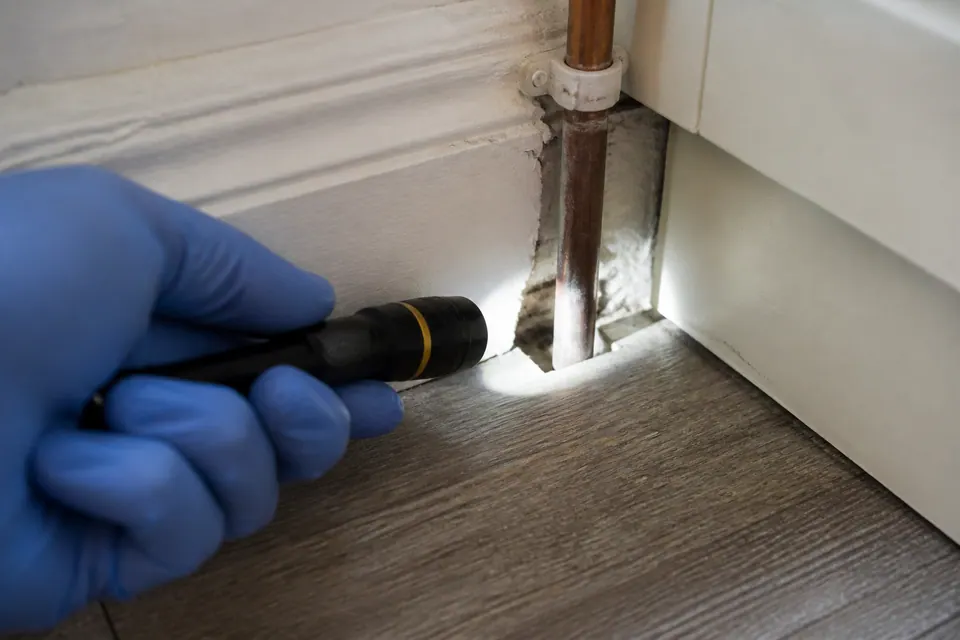
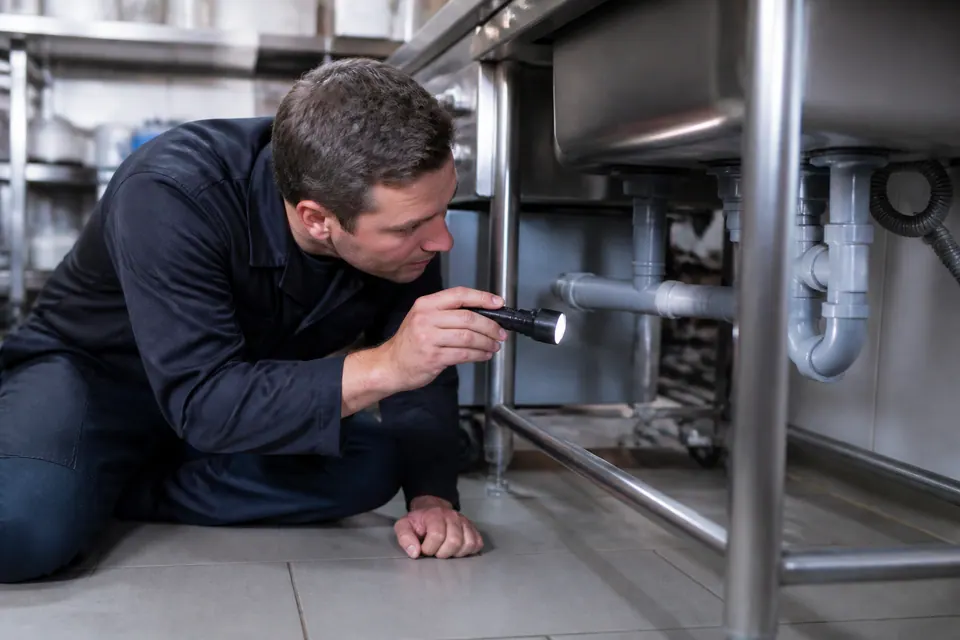
The illustrations explain stages and do not show a Woodford property or verified result.
13 / CLEAR EXPECTATIONS
The observation needs assessment before it becomes a claim about a pest route.
A reachable area may still require another person’s authorisation.
Separate work should be identified in the scope rather than silently assumed.
WOODFORD / QUESTIONS
Not by itself. Supply the actual indoor findings and any separate outside observations.
Relevant photographs may help when taken safely, but a visible defect is not proof of pest use.
Do not open covers to investigate. Describe visible concerns and any known drainage history instead.
Only if it is included and appropriately authorised. Clarify the access and scope first.
Report that accurately and check suitability; an outdoor sighting does not automatically establish a residential infestation.
Do not assume repairs are part of pest work. Agree any building task separately.
Avoid speculative sealing. The appropriate sequence should follow assessment of the supported problem.
No. Relevant physical evidence near sleeping furniture matters, not which direction the room faces.
Name the person who can approve access and explain how a key or opening arrangement can be provided.
Record the date, exact position and what was seen, without merging it into an unproved indoor route.
15 / TAKE THE NEXT STEP
Use the postcode to check coverage, then describe the room evidence, exterior observations and permissions separately. A clear account makes the scope easier to agree.
