
A sighting was beside another flat
Record the position without blaming that accommodation.
PEST CONTROL / STREATHAM
Long corridors and divided accommodation.
A corridor position is not a room of origin.
A sighting along a hallway can be difficult to attribute to any one room. For a Streatham enquiry, identify the exact position and explain which doors lead to private accommodation, shared facilities or controlled spaces. Keep findings inside individual rooms separate from the corridor event.
MAKE THE ENQUIRY SPECIFIC
Record the position without blaming that accommodation.
State the limitation and responsible contact.
Give each its own account rather than deriving them from the passage.
Record the new point without assuming a confirmed route.
06 / SIGNS → LOCATION → NEXT STEP
| Pest problem | Signs to describe | Areas to mention | Next step |
|---|---|---|---|
| Mice | Mouse-like room signs | Actual private position | Keep distinct from hallway context. |
| Rats | Larger rodent sighting | Fixed corridor reference | Do not infer origin from the nearest door. |
| Bed bugs | Physical bed marks | Specific sleeping room | Seek identification from that evidence. |
| Cockroaches | Recurring insects | Event point and fitting | Separate corridor and kitchen accounts. |
09 / FROM FIRST CONTACT
Expand the stages before extending access beyond the home.

Use a door, turn or another fixed feature.
Distinguish accommodation, facilities and controlled spaces.
Keep their dates and positions independent.
Agree any shared-area scope with the appropriate authority.
Do not use the passage as assumed storage.
Use the same references when discussing review or further assessment.
08 / THE CONTROL PLAN
The report should locate the finding before proposing an origin.
Accessible findings can be considered with the passage layout while unexamined rooms remain outside conclusions.
The method and instructions follow the established concern and authorised areas.
Fresh sightings can be compared by position rather than general claims about the whole passage.
05 / PROPERTY BRIEF
Explain which rooms belong to the home.
Identify the responsible contact for additional scope.
Do not assume another household’s door is available for inspection.
Describe its position and access limitation.
Check suitability if a corridor also serves business accommodation.
Check the premises requirementsADDRESS AND AVAILABILITY
Give the postcode and explain whether the observed corridor is private or shared.
Check availability and permission before arranging wider attendance. The map is an area reference, not a local Alesta corridor-service office.
Open Streatham in Google Maps ↗07 / SCOPE BEFORE A QUOTE
A corridor serving several doors is not automatically one treatment scope. Confirm private rooms, any agreed common areas and relevant permission.
from £120
See published service pricingfrom £150
See published service pricing| Service | Pricing basis | Price |
|---|---|---|
| Mice control | Mouse concern within defined areas | Assessed quotation |
| Rat control | Rat findings and authorised scope | Programme quote |
| Proofing / repairs | Additional common or repair work | Separate agreement |
Guides checked on 27 August 2026 provide starting amounts. Confirm Streatham availability and the area list without assuming every adjoining room is included.
STREATHAM / PROPERTY CONTEXT
A long passage may serve several separately controlled spaces. Describe the actual layout rather than allowing a general address to stand in for the observation point.
A door beside the sighting may lead to another home or a locked service space. Its proximity is context, not permission to enter or proof of origin.
If more than one room has findings, record them individually. A single corridor event should not be multiplied into evidence for every door along it.
Ask which areas can be assessed within your authority and which require another contact. Wider access should be agreed rather than assumed.
03 / OBSERVATION CHECKLIST
A cupboard door, turn or threshold can identify the point clearly.
Do not follow animals or enter controlled rooms to establish a theory.
State the exact observed position.
Describe its use without assigning origin.
Keep actual findings inside separately recorded.
Identify source and access authority.
Describe physical signs independently of hallway concerns.
Give each event its own date and position.
01 / START WITH THE EVIDENCE
The door nearest a sighting does not prove its source.
Possible rodent signs in accessible rooms.
Mice controlA larger rodent sighting at a stated point.
Rats controlPhysical signs around sleeping furniture.
Bed bug treatmentRecurring insects at a defined fitting.
Cockroaches controlDescribe room evidence independently of the hallway report. Do not assign the finding to the nearest household.
Give the actual position and direction if observed, without pursuing the animal into another area.
Describe physical findings at the bed. A hallway notice or symptom does not identify bed bugs in a room.
Keep the corridor event and kitchen recurrence separate, with earlier products where known.
04 / AT A GLANCE
10 / PROBLEM → TREATMENT → CONTROL
The scope and accessible findings determine what has been assessed. Absence of one visible event does not establish a building-wide result.
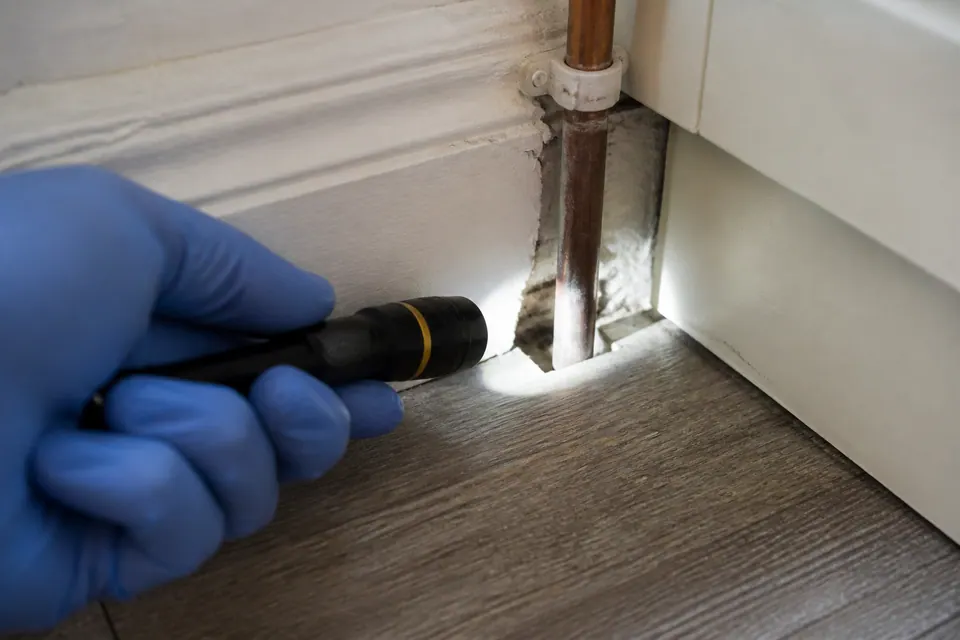
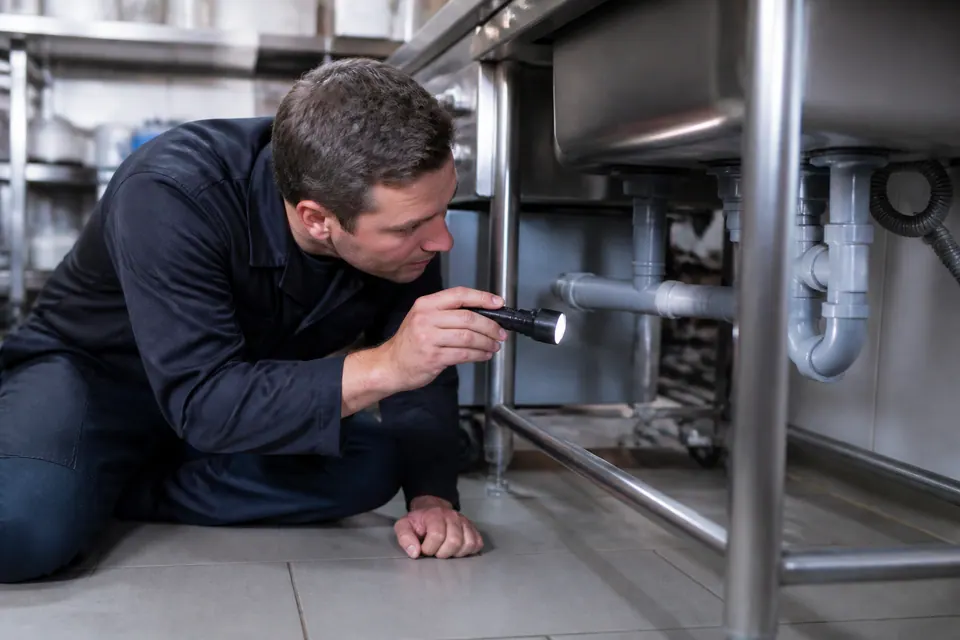
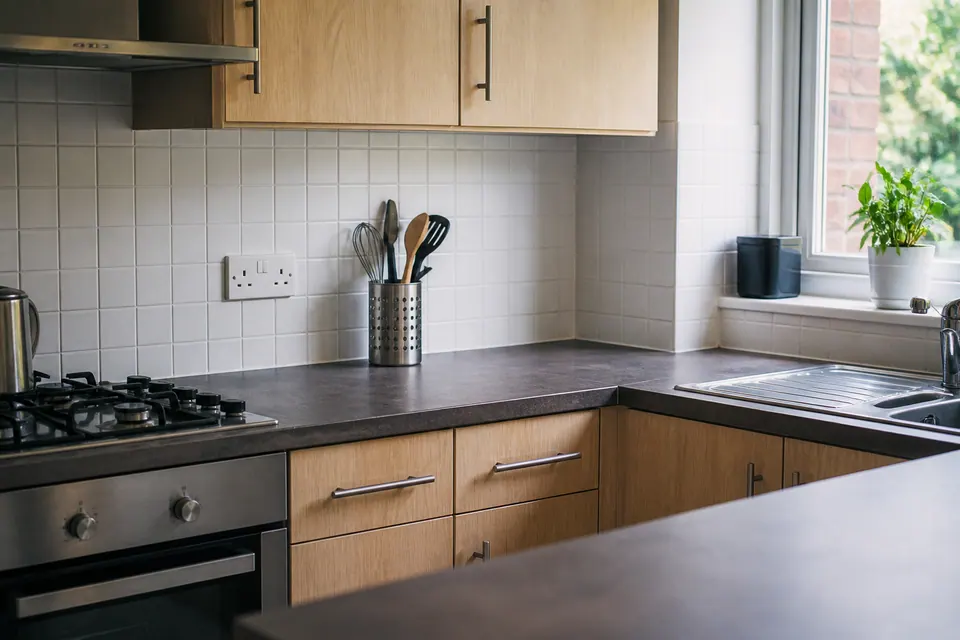
Generated scenes are not a Streatham corridor investigation or proof of room clearance.
13 / CLEAR EXPECTATIONS
Where the event was actually seen.
Which areas are privately or commonly controlled.
What was independently found inside a room.
STREATHAM / QUESTIONS
Use a fixed feature and describe the actual point rather than only naming the building.
No. Proximity to a door does not establish a source.
Explain which areas are private and which are shared or controlled.
Do not enter another accommodation to investigate; keep the position report factual.
Record it separately with its actual room and date.
Name the responsible contact and clarify any access or scope agreement.
Not automatically. The area list and authority need to be agreed.
Follow preparation advice and permissions rather than assuming the corridor is available storage.
Obtain instructions for the chosen method and actual areas, not a rule based on the passage alone.
Give the new position and retain the original reference for review.
15 / TAKE THE NEXT STEP
Call with the corridor reference, separate room evidence and access boundaries. Confirm scope before attributing the concern to adjoining accommodation.
