
An integral garage
Explain any internal door and separate findings on each side.
PEST CONTROL / RUISLIP
Garage storage and possible entry points.
Treat the garage as a distinct part of the report.
Evidence in garage storage needs assessment on its own terms. Describe the stored materials and connection to the house without assuming that every gap should immediately be sealed.
04 / AT A GLANCE
05 / PROPERTY BRIEF
Explain any internal door and separate findings on each side.
Describe the relationship to the home without treating the adjoining wall as a proven route.
Identify its entrance and evidence separately from the main dwelling.
Give the relevant item positions and whether materials have recently moved.
Discuss the actual use and scope so preparation fits the people and animals concerned.
Discuss your homeCheck commercial suitability directly. Residential service information does not confirm a business programme or its documentation.
Check the premises requirements01 / START WITH THE EVIDENCE
A garage observation and a household finding can be relevant together without being the same event.
Chewed material or possible traces at a storage edge.
Mice controlA direct sighting or larger traces requiring identification.
Rats controlPhysical signs associated with stored sleeping furniture.
Bed bug treatmentRecurring insects beside equipment or fittings.
Cockroaches controlDescribe the material and position without handling suspected contamination. Explain whether there are independent findings inside the house.
Give the exact location and whether the animal was seen clearly. Noise or an opening alone cannot establish rats.
State the item’s known history and physical signs. Its storage in a garage does not by itself identify bed bugs.
Describe sightings and any known moisture or products used. Check identification rather than assuming every insect in storage is a cockroach.
RUISLIP / PROPERTY CONTEXT
The description should say whether the garage connects directly to living accommodation or stands apart. That helps define the enquiry without proving a pest route.
Identify the doors and accessible edges, including any storage that blocks the view. Do not enter an unsafe or heavily obstructed space to collect evidence.
Keep house and garage findings in separate entries. A shared address does not automatically place both structures within a proposed treatment scope.
Confirm availability for the address and the areas being discussed. Any recommendation about openings, stored material or repairs should be distinguished from the pest service itself.
07 / SCOPE BEFORE A QUOTE
The number of buildings at an address is not enough to define a pest programme. Explain which areas contain evidence and which need consideration.
from £120
See published service pricingfrom £150
See published service pricing| Service | Pricing basis | Price |
|---|---|---|
| Mice control | Activity, access and programme | Quote after assessment |
| Rat control | Internal / external routes and visits | Quote after assessment |
| Proofing / repairs | Surveyed openings and separate work | Quoted separately |
Guides checked 27 August 2026. Confirm current coverage, prices and inclusions. Clearance, disposal, door repairs and other building work are not automatically part of treatment.
03 / OBSERVATION CHECKLIST
A specific observation is more informative than calling every stored item affected.
Keep away from suspected contamination and unknown animals; do not move unstable loads or enter hazardous voids.
Name the material and its visible position. Damage does not identify the species by itself.
Record the surface and nearby storage without collecting or handling the material.
Give the timing and position of sounds while keeping the source uncertain.
Describe the sighting and which side of the threshold it occurred on.
Explain the physical evidence and the item’s known previous location.
List the room and finding independently so a garage-to-house connection is not simply assumed.
06 / SIGNS → LOCATION → NEXT STEP
| Pest problem | Signs to describe | Areas to mention | Next step |
|---|---|---|---|
| Mice | Chewing or suspected traces near storage | The garage edge and separately reported household rooms | Ask what the available evidence supports |
| Rats | An animal sighting or larger external traces | Doorway, outside edge or interior as actually observed | Keep identification and any entry route uncertain |
| Bed bugs | Physical signs on sleeping furniture | The item and its known earlier use | Seek advice before transferring it back into living rooms |
| Cockroaches | Repeated insects beside equipment | Named fitting and relevant moisture information | Describe the insect rather than assuming the service |
MAKE THE ENQUIRY SPECIFIC
Keep findings on each side distinct and explain the arrangement without claiming a confirmed route.
Describe the limitation rather than moving potentially contaminated or unsafe loads for a photograph.
Give the known history and physical signs without assuming the item introduced a pest.
Mention the planned work and ask how it should be coordinated with assessment rather than treating closure as the treatment.
08 / THE CONTROL PLAN
The purpose is to understand activity, not simply to close the most visible gap.
Accessible findings and the structure’s relationship to the home inform assessment, with hazards and obstructions recorded as limits.
Any proposed method should match the pest, evidence and use of the areas included. Household and garage work are not automatically identical.
Later observations inform the next step. Advice about storage or openings needs coordination without a promise that one alteration establishes control.
09 / FROM FIRST CONTACT
The house and garage can be discussed together while retaining separate descriptions.

Say whether the garage is integral, attached or detached and how it is entered.
Give positions and dates without handling suspect material.
Mention obstructed edges, unstable storage or other known access problems.
Confirm whether the proposal includes the dwelling, garage or both.
Do not clear everything or close suspected openings merely because they appear relevant.
Record where later observations arise relative to the original areas and follow the review guidance.
10 / PROBLEM → TREATMENT → CONTROL
Removing clutter changes what can be seen. It does not alone establish the presence or absence of continuing pest activity.
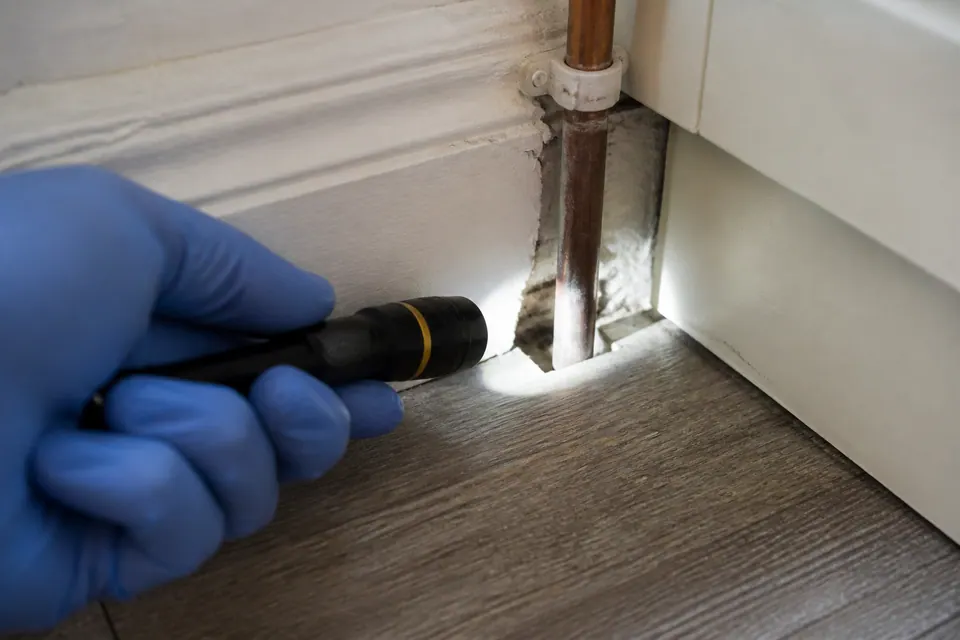
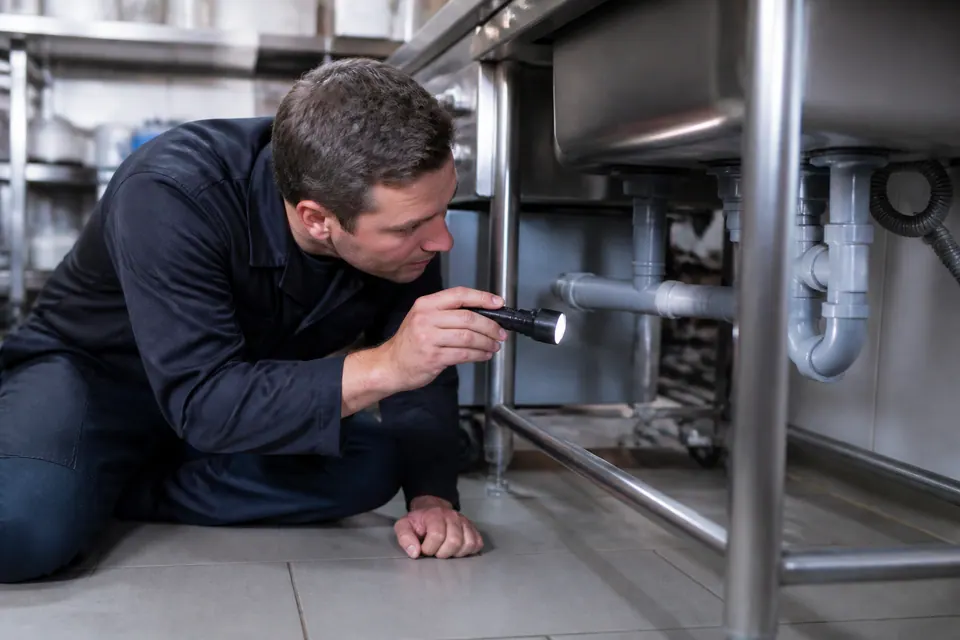
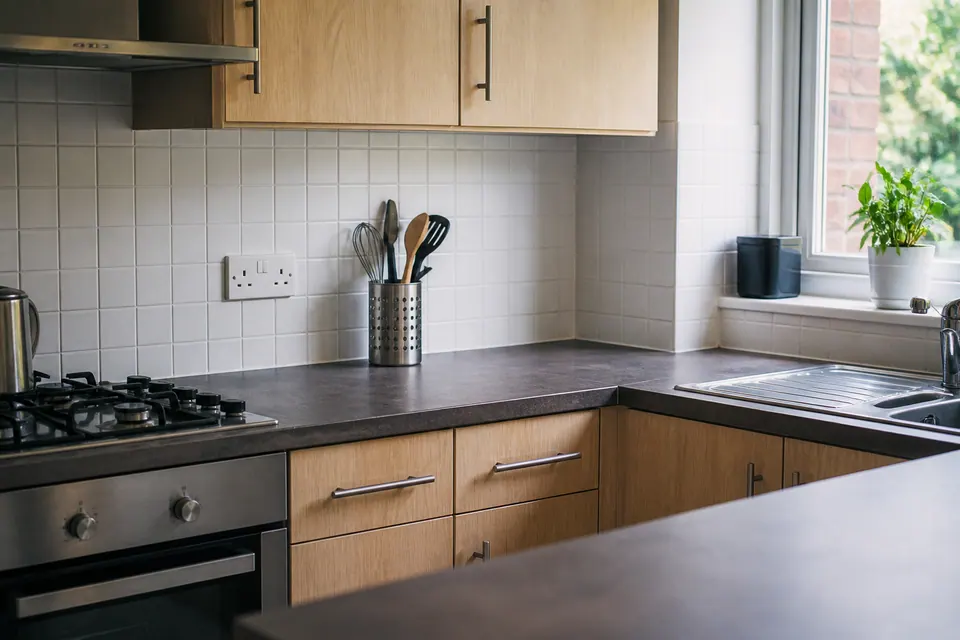
The images illustrate a general assessment sequence, not a result achieved in a Ruislip garage.
13 / CLEAR EXPECTATIONS
Storage findings should not automatically become evidence in every living room.
The proposal should state which structures and tasks are included.
A recommendation about an opening does not mean building work has been commissioned.
ADDRESS AND AVAILABILITY
Provide the postcode and explain any separate entrance needed for the structure.
Confirm coverage and the specific areas under discussion before arranging access or preparation. The map does not define the service scope.
Open Ruislip in Google Maps ↗RUISLIP / QUESTIONS
No. Keep any household evidence separate and explain the relationship between the structures.
Explain the internal connection and the actual findings on each side without assuming a route.
Disclose them as access limitations. Unexamined space should not be described as clear.
Its history can be relevant, but its presence does not establish how activity began.
Describe the openings and signs first. Closure needs appropriate coordination rather than an unassessed blanket approach.
Do not assume so. Ask about separate requirements without handling suspect material to prepare the space.
No. Record its timing and position and keep the species uncertain pending assessment.
Identify its access and evidence separately. Sharing an address does not automatically include it in a home quote.
That can be discussed, but the areas and work need explicit agreement and availability confirmation.
Give the changes and dates alongside any new findings, so newly visible marks are not automatically treated as fresh activity.
15 / TAKE THE NEXT STEP
Call with the garage arrangement, visible observations and any separate signs inside the home. Confirm the available scope before clearing or repairing the area.
