
Family-used annex
Explain actual occupancy rather than relying on the label annex.
PEST CONTROL / GUILDFORD
Separate reports from an annex.
A shared postal address does not make every living space one scope.
An annex may share an address without sharing the same occupancy or access arrangements. Describe its evidence separately and check whether the enquiry includes the main dwelling, the annex or both.
05 / PROPERTY BRIEF
Explain actual occupancy rather than relying on the label annex.
Identify approval and access contacts.
Confirm whether the separate structure is requested for inclusion.
Distinguish the door from the included living areas.
Check commercial suitability instead of assuming a residential guide applies.
Check the premises requirements01 / START WITH THE EVIDENCE
Specify main home or annex before describing the room.
Possible small-rodent traces in stored belongings.
Mice controlA sighting or suspected larger rodent signs.
Rats controlPhysical evidence around sleeping furniture.
Bed bug treatmentRepeated insects near kitchen fittings.
Cockroaches controlName the dwelling and cupboard; avoid vague references to “the kitchen”.
Keep outside sightings distinct from evidence in either living space.
Report the particular bed or furniture and separate symptoms from physical signs.
Identify which kitchen and disclose previous products.
07 / SCOPE BEFORE A QUOTE
The address alone does not specify whether the proposal covers one dwelling, both or a particular external area.
from £120
See published service pricingfrom £150
See published service pricing| Service | Pricing basis | Price |
|---|---|---|
| Mice control | Activity, access and programme | Quote after assessment |
| Rat control | Internal / external routes and visits | Quote after assessment |
| Proofing / repairs | Surveyed openings and separate work | Quoted separately |
Guides checked 27 August 2026. Confirm current coverage, prices and attendance terms. Separate dwellings, repairs and business arrangements are not automatically included.
GUILDFORD / PROPERTY CONTEXT
Confirm the postcode and service availability, then explain how the annex relates to the main home.
Separate occupation can mean different access contacts, preparation needs and approval arrangements. Do not assume instructions passed to one person reach everybody affected.
A shared garden or utility connection does not prove movement between dwellings. Keep evidence from each space separate unless a route was observed.
Ask which dwelling, rooms and external areas the proposal includes. Adding another living space later can change the assessment brief and scope.
08 / THE CONTROL PLAN
Coordination should reduce ambiguity rather than merge two households into one assumption.
Use main-home and annex labels consistently.
Clarify permissions and preparation for the agreed areas.
If another space develops signs, report it as a new location.
09 / FROM FIRST CONTACT
A short description of occupation and access helps define the proposal.

Establish service availability first.
State whether occupation and entrances are separate.
Use dwelling and room names together.
Distinguish who approves work from who opens the door.
Avoid assuming every structure at the address is covered.
Ensure relevant occupants receive preparation and return instructions.
06 / SIGNS → LOCATION → NEXT STEP
| Pest problem | Signs to describe | Areas to mention | Next step |
|---|---|---|---|
| Mice | Possible small-rodent traces | Main home or annex cupboard | Give the precise room reference |
| Rats | Larger animal or traces | Named interior or exterior point | Avoid inferring movement between units |
| Bed bugs | Physical bedroom signs | Specific bed and dwelling | Describe furniture evidence |
| Cockroaches | Recurring kitchen insects | Correct kitchen fitting | State prior products and access contact |
03 / OBSERVATION CHECKLIST
Use consistent dwelling names to avoid attributing one occupant’s finding to another room.
Do not disturb suspect material or open shared utilities to investigate a possible connection.
Record the dwelling and exact cupboard.
Name where the item was kept.
Describe the audible location without claiming a route.
Identify the specific furniture and physical marks.
Specify which kitchen contains the fitting.
Give the observed position independently of either interior.
04 / AT A GLANCE
10 / PROBLEM → TREATMENT → CONTROL
Shared property features do not remove the need to identify where evidence was found.
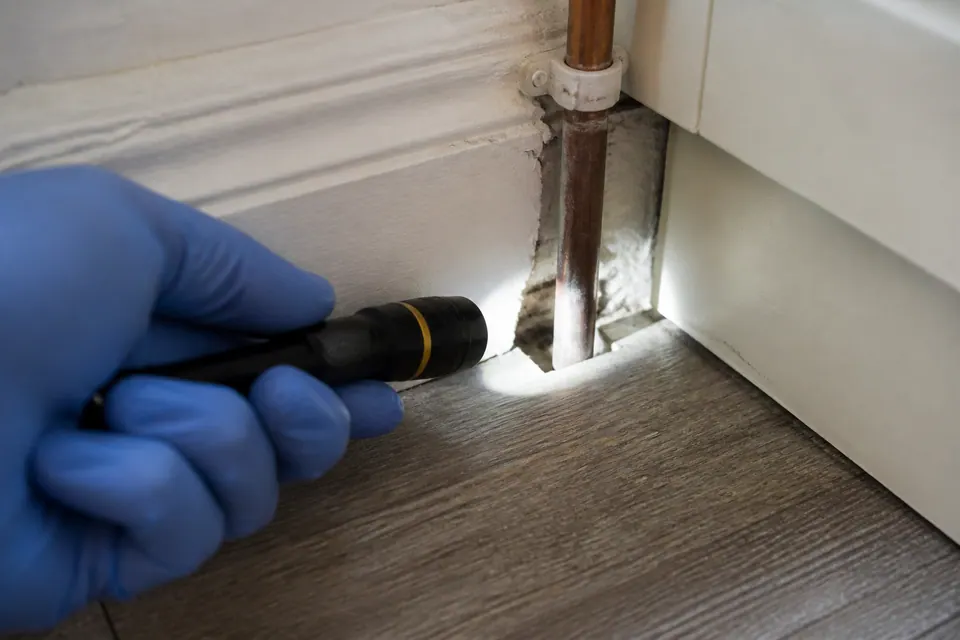
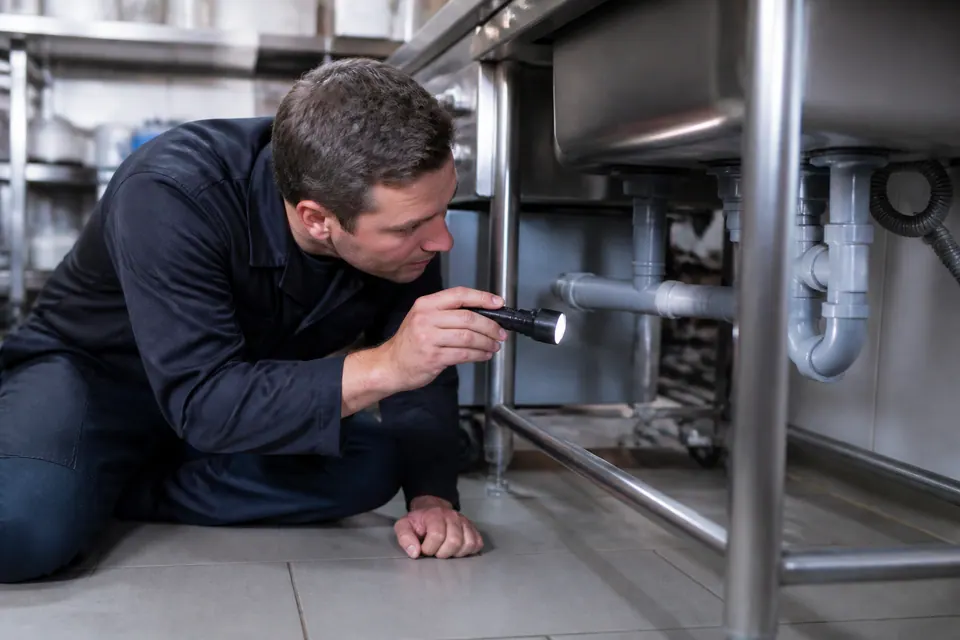
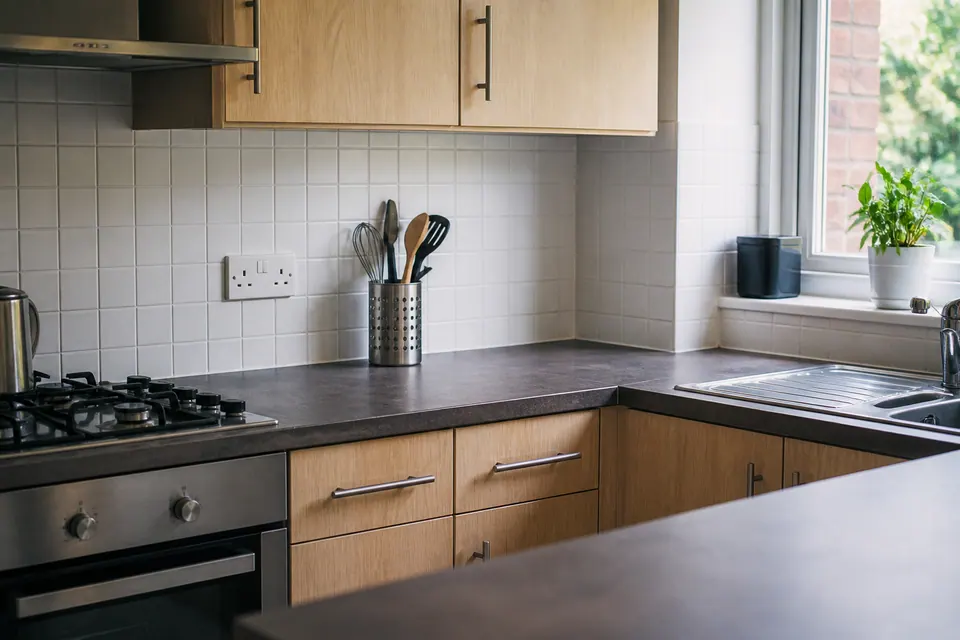
Illustrations are general service scenes, not documented results from a Guildford annex.
MAKE THE ENQUIRY SPECIFIC
Report the other as a separate space, not automatically affected.
Keep the findings and previous products distinct.
Clarify how instructions will reach the person using the rooms.
Describe the suspicion without claiming a connection was proved.
ADDRESS AND AVAILABILITY
Check coverage for the complete postcode and explain the annex arrangement.
The map does not establish which accommodation or external areas are included in a proposal.
Open Guildford in Google Maps ↗13 / CLEAR EXPECTATIONS
Precise room references prevent confusion.
Access and preparation need accountable communication.
A second unit should not become an unspoken extension.
GUILDFORD / QUESTIONS
No. Confirm the dwellings and areas actually included.
Yes, identify the dwelling with every finding.
Clarify the relevant authority rather than assuming it.
No. Keep the connection and observed evidence distinct.
All relevant occupants and access contacts for the agreed work.
No. Unexamined and assessed are different descriptions.
Explain the entrance and key arrangements before attendance.
Commercial suitability needs separate confirmation.
Provide the new details and request a scope review.
Included dwellings, rooms, tasks, limitations and attendance arrangements.
15 / TAKE THE NEXT STEP
Identify the reported dwelling, evidence and contacts before arranging a combined appointment.
