
Lift to the front-door floor
Mention any remaining passage or steps after leaving the lift, not just its presence.
PEST CONTROL / SWISS COTTAGE
Lift access and room-by-room evidence.
Start with a clear account.
Building access and pest observations are separate parts of the same brief. Explain how the affected floor is reached, then give a precise description of the rooms and signs involved.
05 / PROPERTY BRIEF
Mention any remaining passage or steps after leaving the lift, not just its presence.
Identify the level of the affected bedroom or kitchen when it differs from the entrance.
Identify the relevant contact; one key may not admit the technician to every listed room.
Provide current information and discuss an alternative rather than assuming the usual route remains possible.
Disclose the residents and animals using the rooms. Arrival access and treatment-related restrictions are different questions.
Discuss your homeExplain that use separately. Residential provision does not confirm commercial work or documentation.
Check the premises requirements01 / START WITH THE EVIDENCE
Give the physical observation alongside the practical route needed to reach it. Building height is not a diagnosis.
Possible damage to stored material inside the dwelling.
Mice controlA sound or sighting whose cause remains uncertain.
Rats controlMarks at a named bed or resting place.
Bed bug treatmentInsects repeatedly noticed beside a particular appliance.
Cockroaches controlName the storage position without ruling a rodent concern in or out from the floor number.
Describe where the noise is audible. The lift or stairwell is not automatically a pest route.
State which furniture detail is visible; access to the floor says nothing about hidden bedroom surfaces.
Identify the fitting and accessible edge. Fixed connections may remain a restriction after the room is reached.
07 / SCOPE BEFORE A QUOTE
A Swiss Cottage proposal should account for the actual work and available route. These starting figures are not prices assigned by building level.
from £120
See published service pricingfrom £150
See published service pricing| Service | Pricing basis | Price |
|---|---|---|
| Mice control | Activity, access and programme | Quote after assessment |
| Rat control | Internal / external routes and visits | Quote after assessment |
| Proofing / repairs | Surveyed openings and separate work | Quoted separately |
Confirm inclusions and review arrangements directly. Guides checked 27 August 2026; separate repairs or building work are not assumed included.
SWISS COTTAGE / PROPERTY CONTEXT
A lift can leave another staircase between its doors and the affected room. Explain that remaining route instead of relying on “lift available”.
Confirm the Swiss Cottage postcode and requested service directly before organising access around an assumed appointment.
If the dwelling itself has more than one level, name the room reached by each staircase. Arrival instructions should match the actual layout.
Tell the booking contact about temporary lift restrictions or a changed entrance. Normal access and access on the proposed day may differ.
08 / THE CONTROL PLAN
Useful access information supports an appointment without becoming a speculative explanation of the pest problem.
The dwelling designation, level and remaining obstacles should be clear before the visit is arranged.
A reachable room can still contain blocked or fixed fittings. Such limits should remain in the assessment discussion.
Preparation and review follow the appropriate proposal, not an assumption that straightforward arrival means straightforward treatment.
09 / FROM FIRST CONTACT
These are planning decisions, not guaranteed attendance or a fixed treatment timetable.

Give the designation recognised at the entrance and explain any difference from postal labels.
State what remains after the lift stop, including stairs inside the dwelling.
Use a room name and fixed reference so access instructions do not replace the pest account.
Mention fitted equipment, locked rooms or separate permission before accepting the scope.
Raise preparation steps that cannot be followed rather than substituting an improvised arrangement.
Retain room and level references in fresh reports instead of an ambiguous description such as “upstairs again”.
06 / SIGNS → LOCATION → NEXT STEP
| Pest problem | Signs to describe | Areas to mention | Next step |
|---|---|---|---|
| Mice | Suspected damage inside a cupboard | Named room and affected storage edge | Discuss evidence without inferring a cause from height |
| Rats | Noise perceived above an occupied room | Listening point and qualified direction | Ask about accessible assessment without opening the structure |
| Bed bugs | Physical marks near sleeping furniture | Actual room level and visible fitting | Provide both furniture restrictions and arrival details |
| Cockroaches | Repeated insects beside equipment | Particular appliance and accessible side | Explain fixed connections before preparation is proposed |
03 / OBSERVATION CHECKLIST
One part of the account explains the concern; another explains how the proposed visit can reach it.
Do not enter restricted service spaces or pursue a sound into unsafe areas to improve the description.
Record where evidence was actually noticed, without extending it to floors passed on the way there.
A stable room name and fixed landmark are clearer descriptions than “somewhere upstairs”.
Mention concealed edges even when the doorway is accessible. Room entry does not guarantee complete visibility.
Qualify a suspected direction rather than treating it as a confirmed source above or below the ceiling.
Lift stops and stairs help plan attendance, but do not prove how an animal entered.
Update the team if an entrance or lift becomes unavailable after the original conversation.
04 / AT A GLANCE
10 / PROBLEM → TREATMENT → CONTROL
Review actual findings without inferring movement from the presence of shared lifts or stairs. Practical arrival information serves a different purpose.
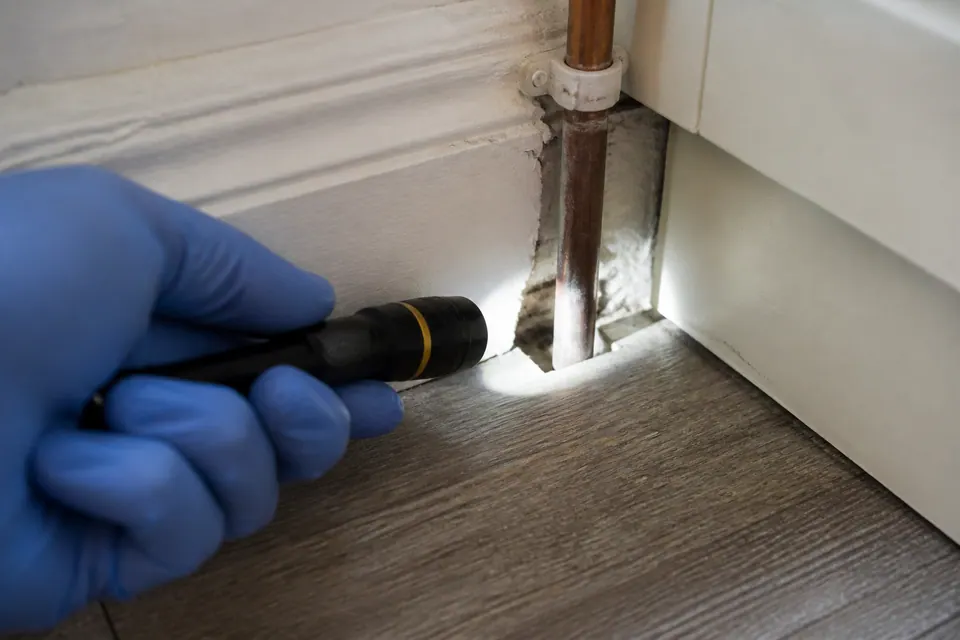
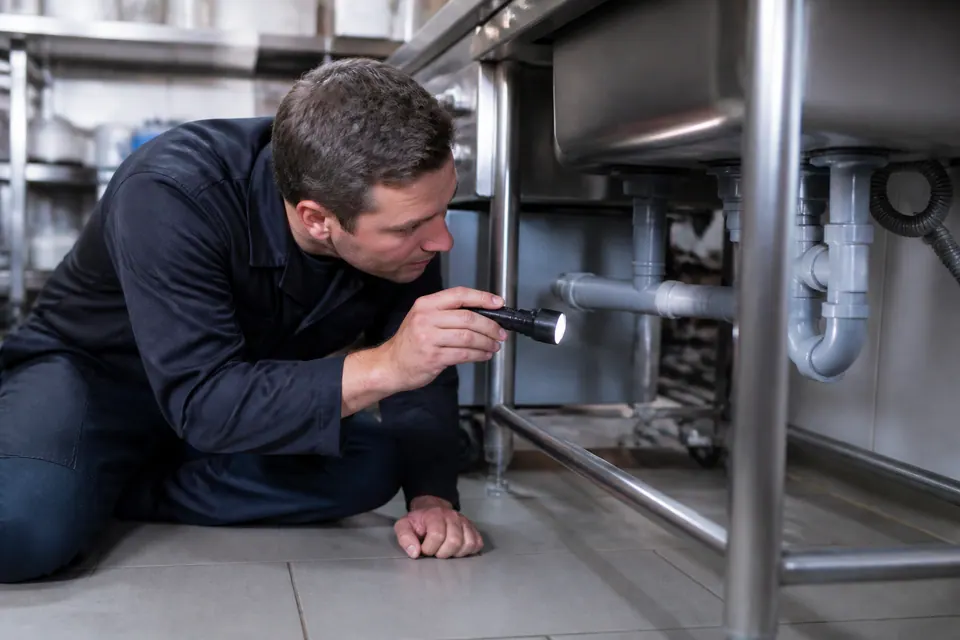
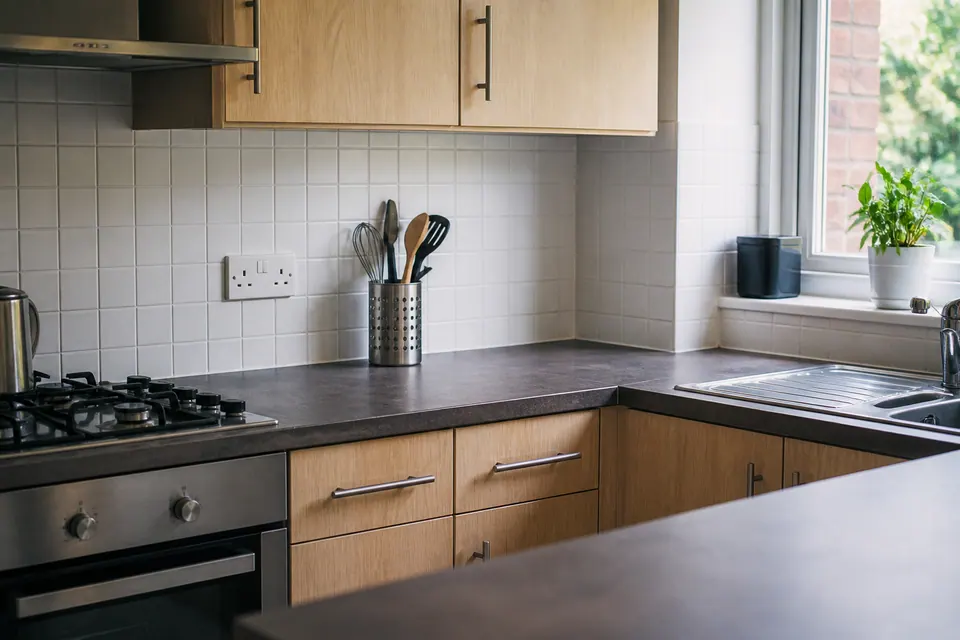
Illustrations do not document Swiss Cottage premises or demonstrate movement between floors or customer outcomes.
MAKE THE ENQUIRY SPECIFIC
Mention the remaining stairs explicitly rather than describing the journey as lift access throughout.
Explain the split layout; the dwelling’s stated floor may not be the affected room’s level.
Provide the current alternative for discussion before expecting the original arrangement to work.
Clarify who can provide entry. Reaching the flat door does not settle permission for every space.
ADDRESS AND AVAILABILITY
Check the postcode directly and add the dwelling level when discussing an appointment.
The area map cannot show internal stairs or lift restrictions; explain those separately.
Open Swiss Cottage in Google Maps ↗13 / CLEAR EXPECTATIONS
A description of stairs helps organise arrival without claiming it explains infestation.
The conversation should distinguish reaching a room from examining hidden fittings within it.
Occupancy requirements come from the agreed method, not from assumptions about the building floor.
SWISS COTTAGE / QUESTIONS
Add its stopping level and what remains afterwards. Lift doors and the affected room may not share a level.
Yes, where they affect the route to relevant spaces. A front-door floor description can conceal a split-level interior.
Do not use height as identification. Describe physical findings so their significance can be assessed.
No. A practical route through the building is not proof an animal used it.
Update the team with the current restriction and discuss alternatives before relying on one.
Include the level where it removes ambiguity, alongside a consistent room name and landmark.
Not necessarily. Fixed furniture may still block relevant surfaces and needs to be mentioned.
Wait for appropriate guidance rather than relocating possessions as a general preparation step.
Describe the route and permission separately; a front-door key need not provide that access.
No. It gives geographical context, while lifts, stairs and dwelling labels need direct explanation.
15 / TAKE THE NEXT STEP
Give the affected room and complete route to it alongside the evidence, so both the concern and practical arrangement can be considered.
