
The particular shelf
Identify height and position so the finding can be distinguished from another storage compartment.
PEST CONTROL / CROUCH END
Built-in cupboards beside shared walls.
Start with a clear account.
A cupboard finding can be difficult to interpret when the rear wall is shared or inaccessible. Describe the visible evidence and cupboard construction without assuming a neighbouring property is responsible.
CROUCH END / PROPERTY CONTEXT
The visible interior may reveal a finding without showing the space behind the cupboard. Keep the backing, adjoining wall and observed evidence distinct in the account.
Check the exact Crouch End address and requested service before relying on availability. A proposed assessment must consider what can safely be reached.
Explain whether the cupboard is built in and which side adjoins another dwelling, if known. Do not name the neighbouring home as responsible merely because the wall is shared.
Mention ownership and restrictions before discussing removal or opening. Pest assessment does not automatically include dismantling fixed joinery.
03 / OBSERVATION CHECKLIST
Use the cupboard’s accessible features as references, rather than treating its hidden surroundings as inspected space.
Do not pull out suspect material or remove panels to obtain better evidence.
Identify height and position so the finding can be distinguished from another storage compartment.
Describe what shows damage or marks; avoid handling suspected contamination to prove the description.
State where sight stops. A dark or blocked edge should remain an observation limit.
Give its own location and date instead of forcing both observations into one route theory.
Record when it is heard and the listening position without naming an unseen species.
Explain what changed in the cupboard and any product used before the current report.
06 / SIGNS → LOCATION → NEXT STEP
| Pest problem | Signs to describe | Areas to mention | Next step |
|---|---|---|---|
| Mice | Damage to an item on one shelf | Named cupboard compartment | Discuss the observed material without inventing a hidden route |
| Rats | Scratching perceived beyond a fixed panel | Listening position and inaccessible backing | Ask what assessment can establish without dismantling |
| Bed bugs | Marks on stored bedding | Storage location and earlier resting place if relevant | Describe movements before seeking preparation advice |
| Cockroaches | Repeated insects at kitchen joinery | Visible fitting edge and known restrictions | Give sighting dates and previous product details |
08 / THE CONTROL PLAN
A useful proposal does not need the household to invent what lies behind a fitted unit.
The account identifies the visible mark, damage or insect and its storage position.
Unseen backing or adjoining spaces remain uncertain unless appropriately assessed. Proximity alone cannot establish origin.
If further access or repairs are recommended, clarify authority and responsibility before treating them as agreed work.
09 / FROM FIRST CONTACT
The sequence is a decision guide, not a promise to open fitted furniture or finish control in one attendance.

Use a room and shelf reference that remains recognisable after the enquiry.
Explain fixed backing, adjoining walls and the limits of what is visible.
Give findings elsewhere their own locations instead of assuming a single route.
Ask what can be checked under the proposed service and what would need another arrangement.
Raise any action that cannot be safely followed rather than substituting panel removal or extensive clearing.
Date fresh observations and mention changes to storage so old marks are not mistaken for new activity.
01 / START WITH THE EVIDENCE
Describe the item and accessible position before selecting a pest label or identifying a hidden route.
Damaged packets or material at a cupboard edge.
Mice controlSounds apparently beyond a fitted backing panel.
Rats controlMarks discovered on bedding kept in storage.
Bed bug treatmentRepeated insects beside an identifiable kitchen unit.
Cockroaches controlName the shelf and affected item. Damage on its own should not become a claim about every concealed gap.
Qualify where the sound seems to originate. A fitted panel prevents observation; it does not confirm the animal behind it.
Explain where the bedding was kept and any recent movements. Skin reactions alone do not identify bed bugs.
Record the visible insect position and any known moisture issue. Shared joinery does not prove a route from another dwelling.
07 / SCOPE BEFORE A QUOTE
A Crouch End quotation should distinguish pest work from opening, removing or repairing fitted furniture.
from £120
See published service pricingfrom £150
See published service pricing| Service | Pricing basis | Price |
|---|---|---|
| Mice control | Activity, access and programme | Quote after assessment |
| Rat control | Internal / external routes and visits | Quote after assessment |
| Proofing / repairs | Surveyed openings and separate work | Quoted separately |
Confirm the actual inclusions and review arrangements directly. Guides checked 27 August 2026; rodents and inspection need assessment-based proposals.
05 / PROPERTY BRIEF
Explain whether it can be accessed as it stands. Do not promise movement without considering its contents and practical limits.
Name the edges that can be seen and any fixed backing. Concealed surfaces should remain qualified.
Describe the boundary without assuming neighbouring activity. Another premises needs its own permission for assessment.
Raise any alteration question with the responsible owner before treating removal as part of preparation.
Mention the items normally stored and the people using the room, where relevant to the proposed method.
Discuss your homeCheck suitability separately; a residential cupboard enquiry does not establish commercial pest-control provision.
Check the premises requirements04 / AT A GLANCE
MAKE THE ENQUIRY SPECIFIC
Describe the boundary while leaving origin open. Another dwelling has not been assessed merely because it adjoins the unit.
Explain the restriction instead; alteration needs appropriate permission and should not be assumed preparation.
Record the discovery and clearing dates. Newly visible does not necessarily mean newly created.
Keep the sound and listening position factual. A concealed noise alone cannot identify the animal.
10 / PROBLEM → TREATMENT → CONTROL
Clearing changes visibility. Review should consider the evidence and the agreed guidance rather than the appearance of bare shelves.
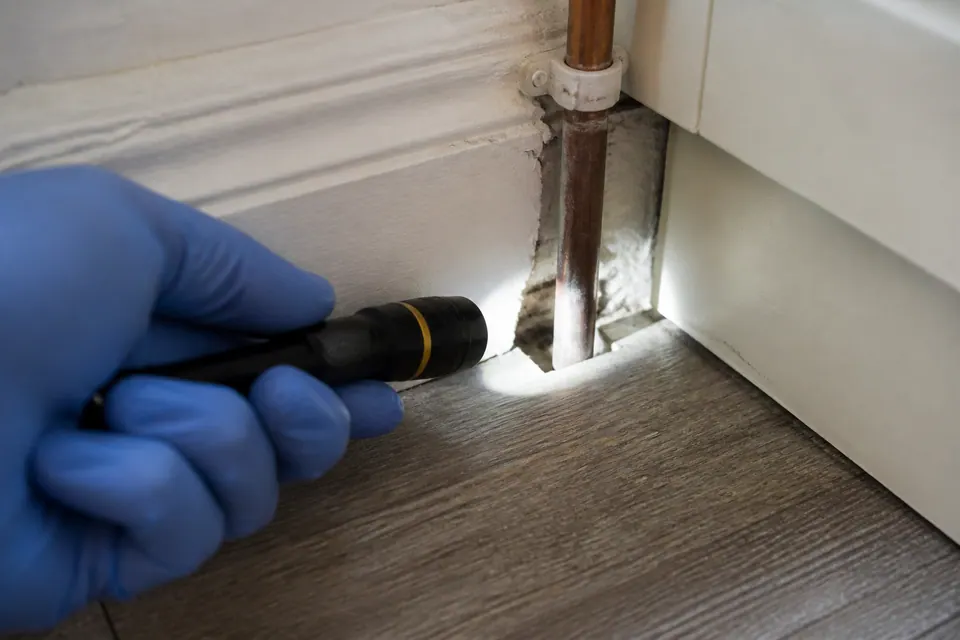
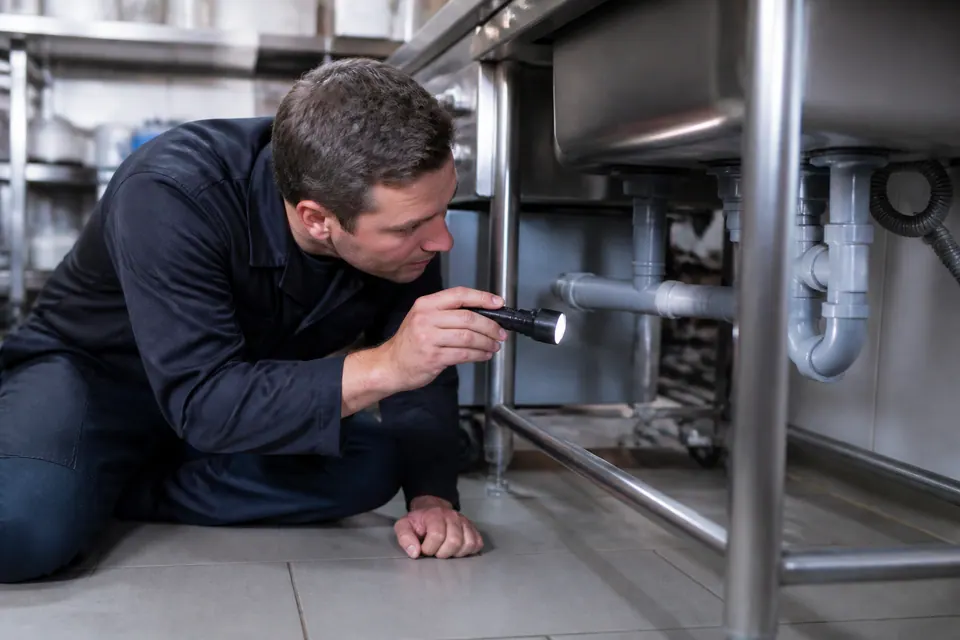
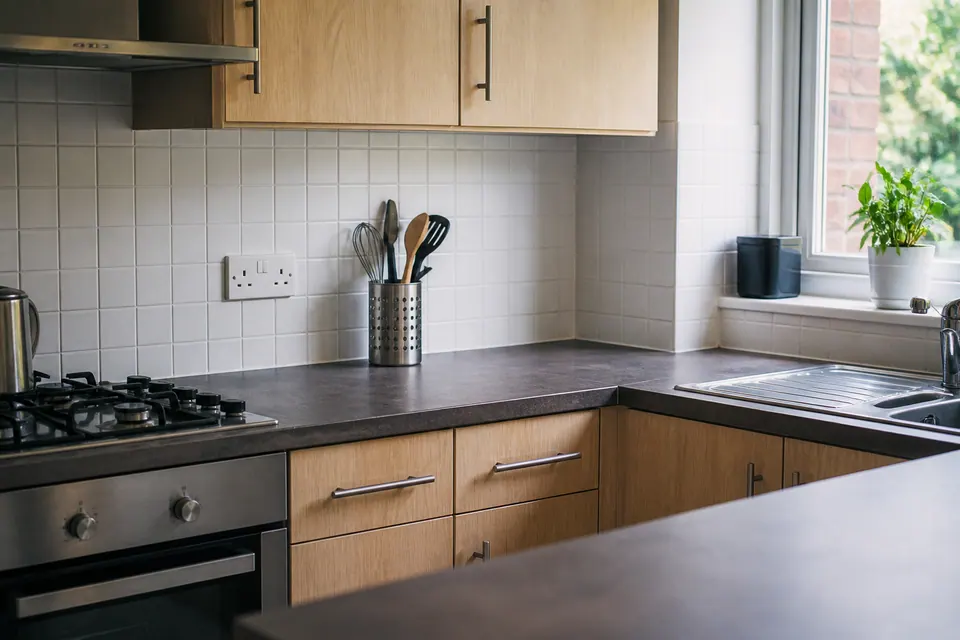
The illustrations are not Crouch End cupboard records or proof of customer treatment results.
ADDRESS AND AVAILABILITY
Check the postcode and service, then identify the room and cupboard involved in the enquiry.
The area map cannot establish a route through adjoining walls or authority to inspect neighbouring premises.
Open Crouch End in Google Maps ↗13 / CLEAR EXPECTATIONS
A shelf or item reference makes the observation useful without enlarging it into a property-wide claim.
The proposal should acknowledge fixed backing and unexamined space rather than presenting it as checked.
Joinery removal or repair belongs in a separate explicit discussion if it becomes relevant.
CROUCH END / QUESTIONS
Do not remove it simply to support an enquiry. Explain what is fixed and ask about appropriate accessible assessment.
No. It is layout context rather than proof of origin or responsibility.
Name the shelf, material and discovery date without disturbing suspected contamination.
Explain the timing because uncovered marks may predate their discovery.
Yes, with a separate position and date. Their connection should not be assumed.
No. Describe when and where it is heard without treating the species as confirmed.
Identify the responsible owner or manager before assuming any authorised alteration to the fitting.
Obtain preparation guidance before transferring belongings through the home.
Do not assume that; alterations and repairs need separate identification and agreement.
Keep the same shelf reference and add dates, noting any clearing or rearrangement in between.
15 / TAKE THE NEXT STEP
Describe the visible finding and the cupboard’s access limits. Leave unseen routes open for assessment rather than deciding the source in advance.
