
Accessible private surfaces
Identify the room and finish that can be reviewed without alteration. Permission for this area should not be treated as permission to open a wall or remove a building component.
Aylesbury / PROPERTY CONDITION
Describe the surface you can see and the question you cannot.
A covered area can create uncertainty without providing evidence of its condition. For an Aylesbury mould-removal enquiry, show the accessible finish and explain why a hidden concern has been raised. Ask about postcode availability and keep opening or investigating building fabric outside an assumed surface visit.
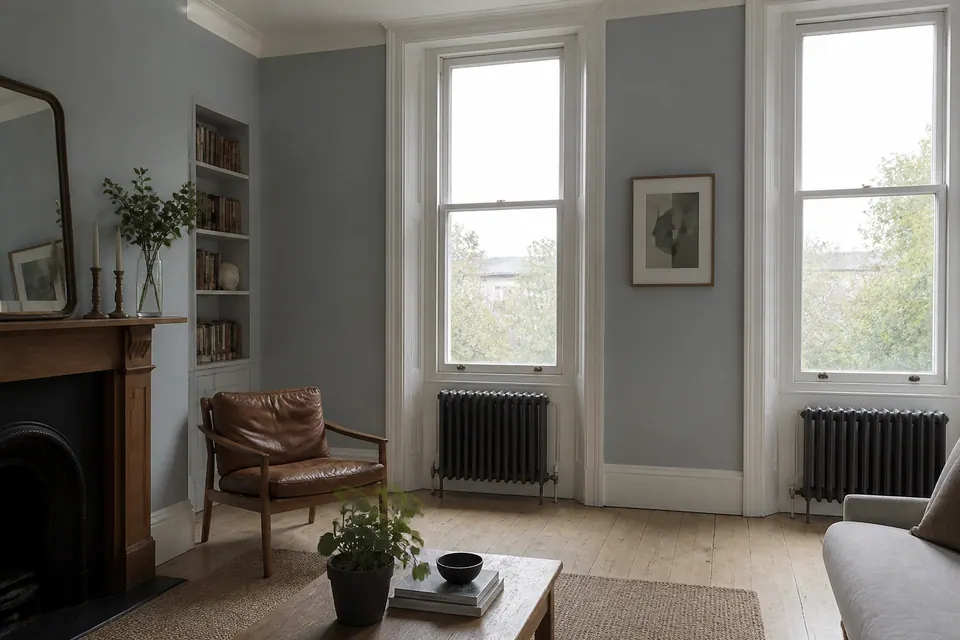
Accessible finish · covered area · unresolved question
01 / WHEN IT COMES BACK
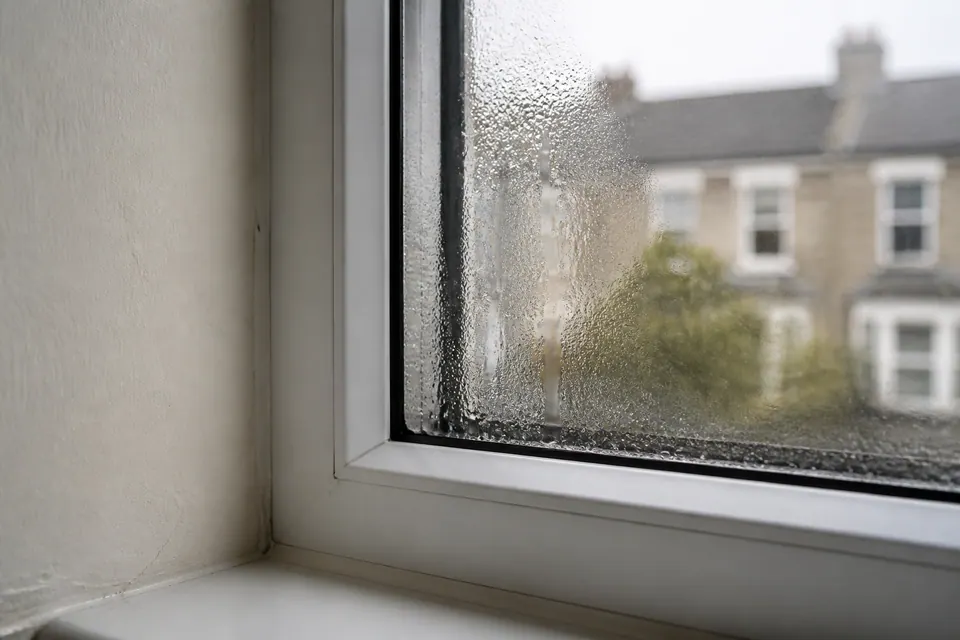
A repeated mark beside a covered area can be recorded using the same visible reference. It remains evidence about that accessible finish, not a direct observation of the material inside or behind the cover.
An ongoing moisture condition may contribute to recurrence, but the explanation cannot be confirmed by the position of the cover or an odour alone. Further investigation may need its own scope before conclusions are drawn.
Record dates and known work affecting the area without opening it to reproduce an earlier view. If a previous report contains findings, share that report rather than expanding its conclusions beyond what it describes.
Aylesbury / ACCESS & PEOPLE
Identify the room and finish that can be reviewed without alteration. Permission for this area should not be treated as permission to open a wall or remove a building component.
Explain what is known about the cover and any previous work involving it. Leave the construction unspecified if it has not been confirmed rather than guessing what material lies behind.
A concealed concern may relate to an area outside the dwelling. Identify the relevant contact without assuming that access to another property or common element comes with the treatment booking.
A tenant can document what is accessible and request appropriate permission for proposed work. The enquiry does not require opening a panel to prove the concern or establish legal responsibility.
A landlord should distinguish permission for surface work from any investigation involving building fabric. Share confirmed maintenance records and identify decisions that remain with another contact.
A homeowner can ask what further assessment may be appropriate without treating it as part of a removal quote. Agree who would perform it and what question it is intended to answer.
03 / DIRECT ANSWERS
A suitable accessible area may be considered on that basis, with its limits explicit. The quote should not imply that the unseen portion has been assessed or included.
A cosmetic layer is not a substitute for considering the visible growth and moisture context. Ask about the existing finish before covering evidence or planning decoration.
No. It may prompt further questions, but a returning outer mark is not a direct observation of concealed material. Keep any need for investigation separate.
Do not assume so. The purpose, permission and responsibility for any opening need explicit agreement, and may require a different specialist assessment from surface treatment.
Ask for the instructions relevant to the selected method and room conditions. A question about concealed material does not create a universal answer about use, and appearance alone is not guidance.
Show both in the wider view and provide any confirmed maintenance history. Its position can be useful context without establishing a fault behind it.
No removal should be assumed necessary for the initial enquiry. Photograph the accessible frame and reveal, describing the limit rather than opening the edge to enlarge the view.
Not automatically. Assessment of a visible finish and investigation of a moisture source are different scopes; ask which questions remain beyond the proposed work.
04 / A CONTROLLED APPROACH
Review the accessible evidence and distinguish it from suspected concealed conditions. Decide whether suitable surface work can be considered without implying a complete internal investigation.
Agree preparation that does not depend on unapproved opening or dismantling. Explain the location of covers and fixed features that may limit the working area.
Carry out the confirmed treatment on appropriate accessible finishes. Work should not be described as addressing concealed material that was outside the agreed view and scope.
Explain remaining uncertainties and whether another assessment is needed. The result on the visible finish should not be presented as certification of an unseen space.
The schematic shows stages of a defined surface enquiry; it does not illustrate opening a cavity or prove the condition behind a wall.
Record the exposed finish without enlarging an opening.
Stay within the authorised accessible area.
Identify what remains unexamined after surface work.
These are illustrative stages, not customer evidence. A treated outer finish does not establish that concealed moisture or material concerns have been resolved.
Aylesbury / THE PROPERTY BRIEF
A separate investigation may be a separate decision.
Give the full postcode to check whether attendance can be offered. Provide photographs of the accessible surface and describe the covered area in words or a simple sketch. Ask which questions can be considered as surface treatment and which would require another agreed assessment before any opening is contemplated.
Aylesbury / PLAN THE APPOINTMENT
Send the complete Aylesbury postcode to check availability. Explain that part of the concern is concealed and ask which assessment is appropriate before making arrangements that depend on opening the area.
Identify who can authorise any proposed work and keep the initial accessible evidence separate from decisions not yet agreed.
View the Aylesbury area map.
07 / QUOTATION, NOT GUESSWORK
Alesta’s quotation-based approach needs a defined proposed area. Photographs may support a small accessible-surface enquiry, while a concealed or complex concern can require a different assessment. For Aylesbury, availability and the boundary of the proposed work both need confirmation.
See the main mould-removal service ↗| Scope | Quotation basis | Boundary to establish |
|---|---|---|
| Suitable finish available for review | A photograph-led quote may be possible | Use the exposed dimensions, not an inferred internal area |
| Recurrence beside a covered feature | Assessment may be needed before pricing | Separate observations from any proposed further investigation |
| Concealed material or complex damp concern | Specialist quotation may be required | Clarify opening, permissions and the purpose of investigation |
Ask what the price covers and what remains unknown. Opening building fabric, reinstating a panel and treating concealed material should never be inferred from a quotation for a visible finish.
08 / SEPARATE THE QUESTIONS
Keep the observation, possible contributor and next question separate. A surface mark may justify further enquiry without identifying the condition behind a cover or the source of moisture.
| Visible issue | Possible contributing factor | What may need checking |
|---|---|---|
| A marked reveal beside trim | Moisture near the window may be relevant | Review the exposed material before assuming a hidden frame condition |
| Bathroom spotting near an access panel | Repeated moisture could contribute | Describe known use and maintenance without opening the panel |
| A stain beside boxed-in pipework | A water issue may need consideration | Provide confirmed plumbing history separately from the surface image |
| A returning mark at a covered edge | An ongoing condition may remain | Determine whether a separate investigation is appropriate |
Opening, leak investigation, material replacement and reinstatement require explicit agreement where needed. Removing visible growth should not be described as resolving an internal or structural condition that was never assessed.
Mould is growth; damp is an excess-moisture condition. Neither term confirms an unseen finding merely because the accessible side of a cover looks marked.
| Question | Mould | Damp |
|---|---|---|
| The type of condition | Growth on an assessed surface | Moisture affecting material or its setting |
| Evidence available without opening | Visible outline and finish condition | Known wetness or reliable water history |
| Their possible relationship | Growth can develop where moisture persists | Moisture may contribute to conditions supporting growth |
| The outstanding decision | Is suitable treatment of the visible area appropriate? | Does the moisture question need another investigation? |
09 / LOCATE THE ISSUE
Select the setting closest to the visible mark. A room label can help organise the enquiry, but it does not confirm what lies behind its finish or inside an adjoining void.
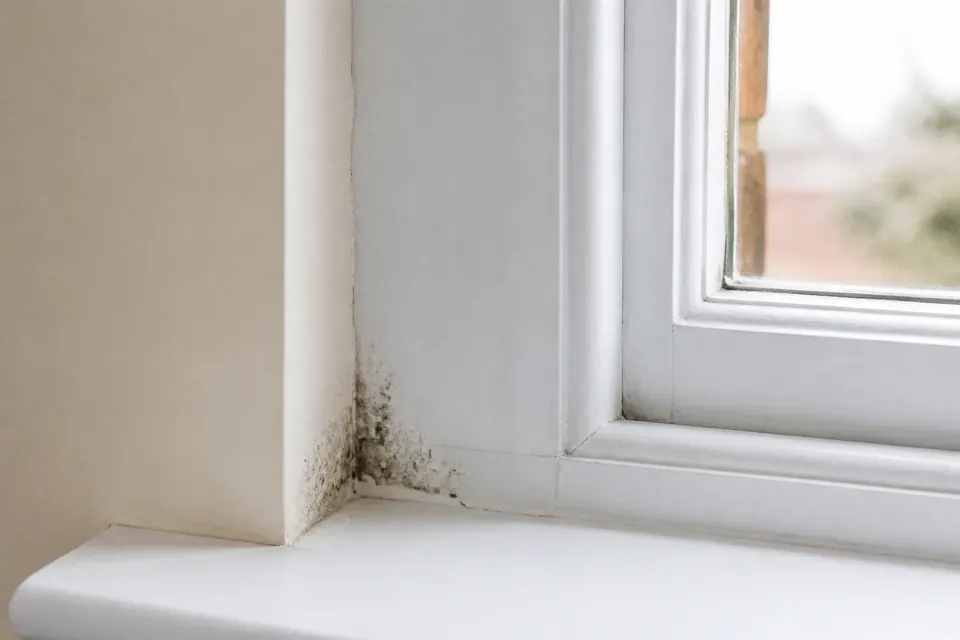
Photograph the frame and exposed reveal without removing trim. A mark near an edge may prompt questions about moisture, but it does not establish the condition behind the frame or authorise opening it.
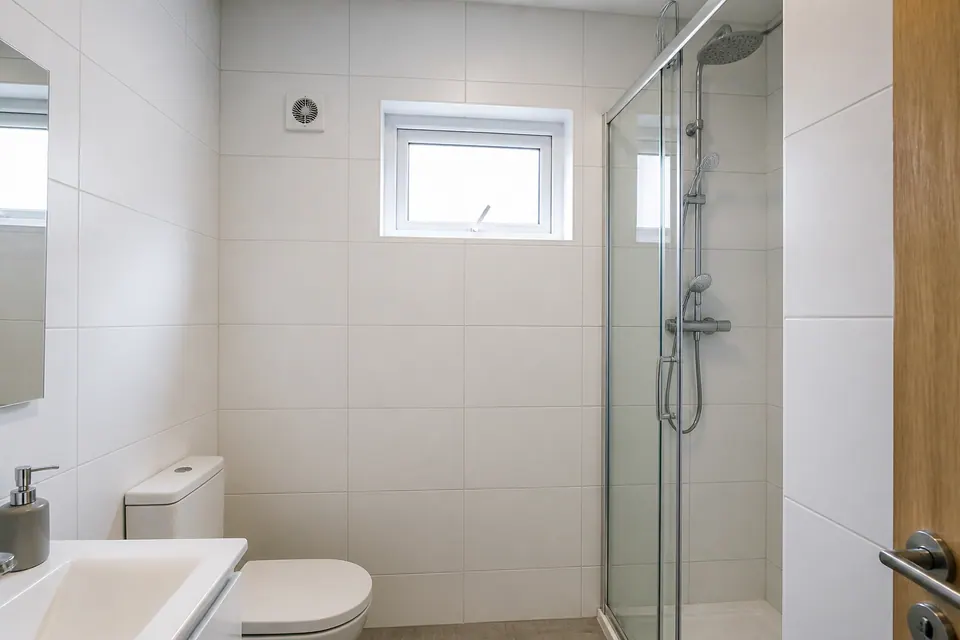
Show the affected coating and identify any access panel in the wider view. Do not open the panel simply because the nearby surface is marked; explain any known maintenance history separately.
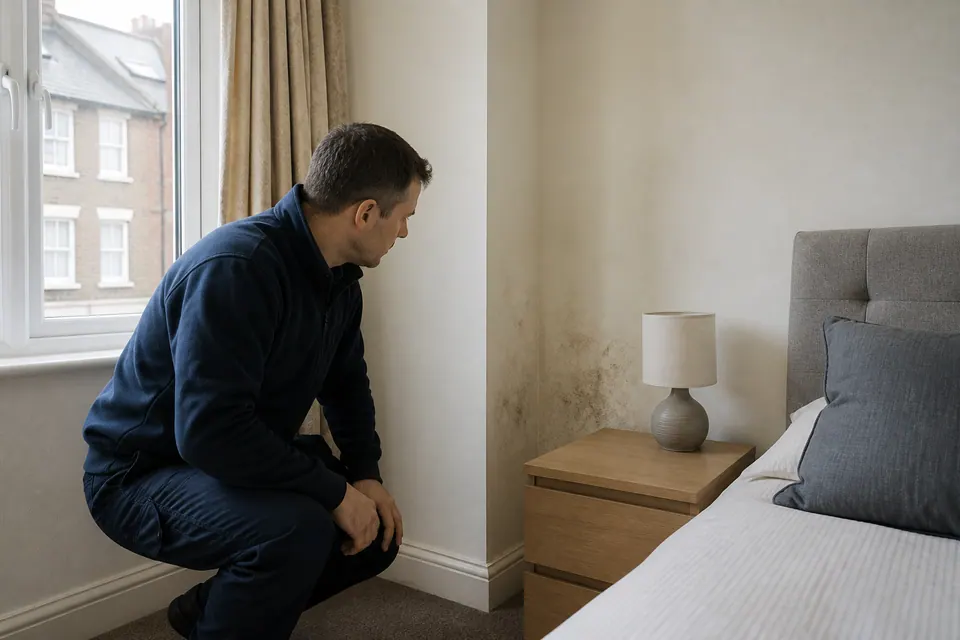
Describe the visible covering and any edge already exposed. Peeling paper or removing fitted panels to establish what is behind them is not a necessary step for the initial enquiry.
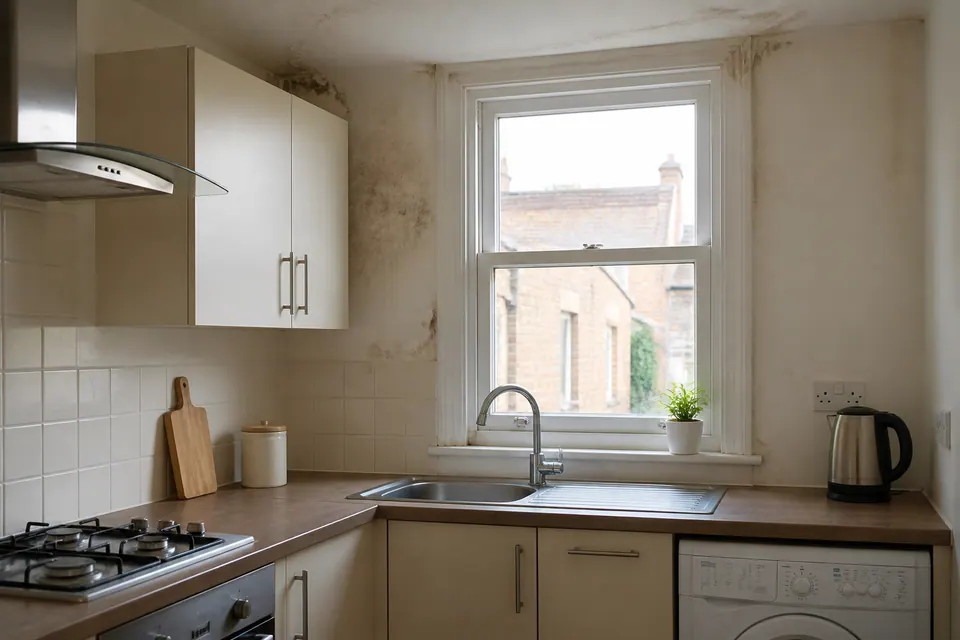
Identify the surface seen from the room and pass on confirmed plumbing information where available. A suspicion involving pipework behind cabinetry should remain distinct from the accessible treatment area.
Include the box or panel in the room photograph and explain why it is relevant. Its presence does not establish an internal defect, and the surface shown should not stand in for the unseen space.
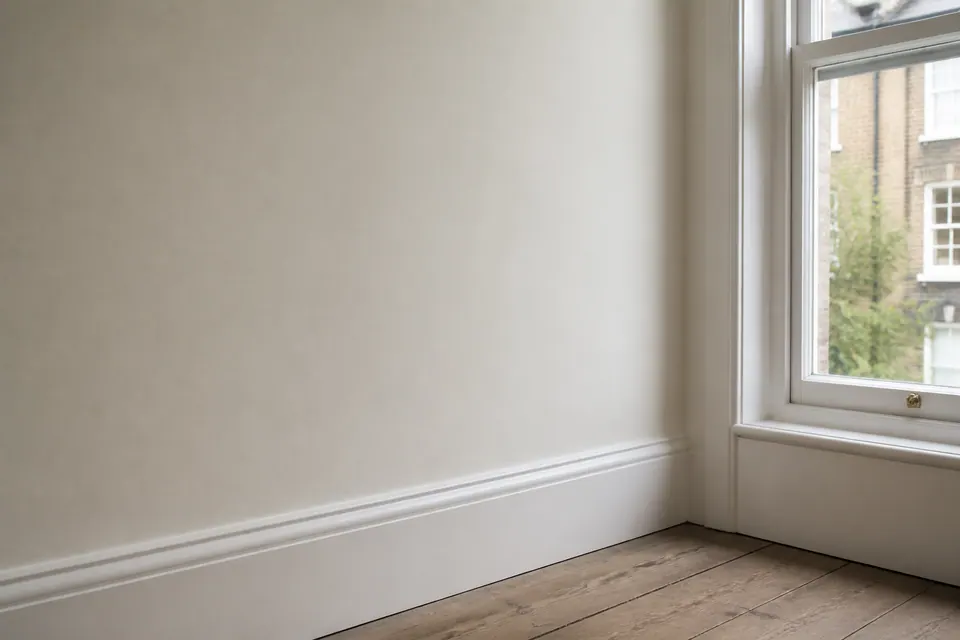
Report lifting or softened material without probing it. The condition of an accessible finish can affect suitability even while the material behind it remains uncertain and may require another specialist decision.
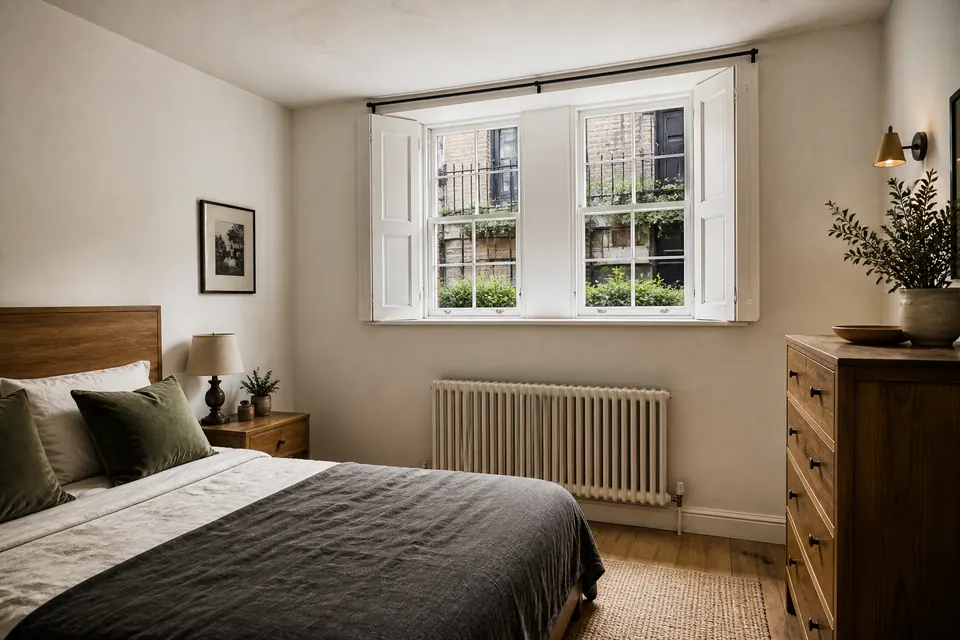
State where and when the smell is noticed without calling it confirmed concealed growth. Keep the cupboard or covered space in its present arrangement until appropriate guidance has been obtained.
The absence of a view is a limitation, not a finding. Make that limitation explicit so the enquiry does not convert a suspected concealed issue into a confirmed surface measurement.
10 / ROOM-BY-ROOM CONTEXT
A bathroom access panel should be identified in the layout, not opened automatically. Keep the visible coating and any question about plumbing behind it separate in the brief.
A bedroom covering can obscure the substrate. Describe existing edges and damage without peeling it back to establish a larger area for treatment.
Kitchen cabinets and boxed pipework can conceal material, but a suspected issue behind them is not part of a normal visible-wall measurement. Explain what has actually been observed.
A living-room feature wall or boxed section should remain identified as a separate construction question if its internal condition is unknown. The surface photograph cannot answer it.
Covered common elements may require another person’s permission or information. Do not assume access from within the home authorises work on a shared system.
For a lower-ground room, report known water history and the accessible finish. Persistent wetness or suspected concealed damage can require a scope beyond surface treatment.
Aylesbury / BEFORE BOOKING
Agree the limits of evidence, permission and work before a suspected hidden problem becomes an assumed part of the booking.
Describe it and show the accessible area first. Opening or dismantling should not be undertaken merely to expand the initial photograph set; ask which assessment is appropriate.
An odour can be reported as context, but it is not a confirmed finding about an unseen space. State where it is noticed without converting it into a measured treatment area.
Give the visible dimensions where they can be estimated safely. Keep the size of any suspected concealed area separate and clearly unconfirmed.
It can locate the cover and the marked surface without opening either. Label what is visible and avoid adding a guessed internal layout as though it were established.
Not by assumption. Clarify the specific permission and purpose of any proposed opening, particularly where a fitting or shared building element may be involved.
Share the report with its date and scope. Do not expand its finding beyond the area it describes, and explain what has changed or remains unknown since then.
That needs assessment and a clearly limited proposal. Do not assume either that treatment is appropriate or that it resolves the separate concealed concern.
No. It records the appearance of the photographed surface, not the condition behind it. The limits of what was inspected and treated should remain explicit.
Ask what kind of additional assessment the unresolved question may require and agree responsibility separately. A surface-treatment booking should not silently assign opening, repair or reinstatement to an unspecified person.
A PROPERTY-SPECIFIC NEXT STEP
Send the postcode, the undisturbed visible evidence and a description of the covered area. Ask which questions belong to surface treatment and which need another agreed assessment.
The illustrations show property contexts, not inspected cavities or evidence of a customer’s concealed building condition.
