
Repair cost?
Parts compatibility and panel condition determine the repair scope.
CAMDEN · FURNITURE HARDWARE REPAIRS
Make mismatched furniture usable again.
A drawer that jams, a loose furniture joint and a cupboard without its handle may need different parts. Record the symptom for each piece rather than assuming one repair fits everything.
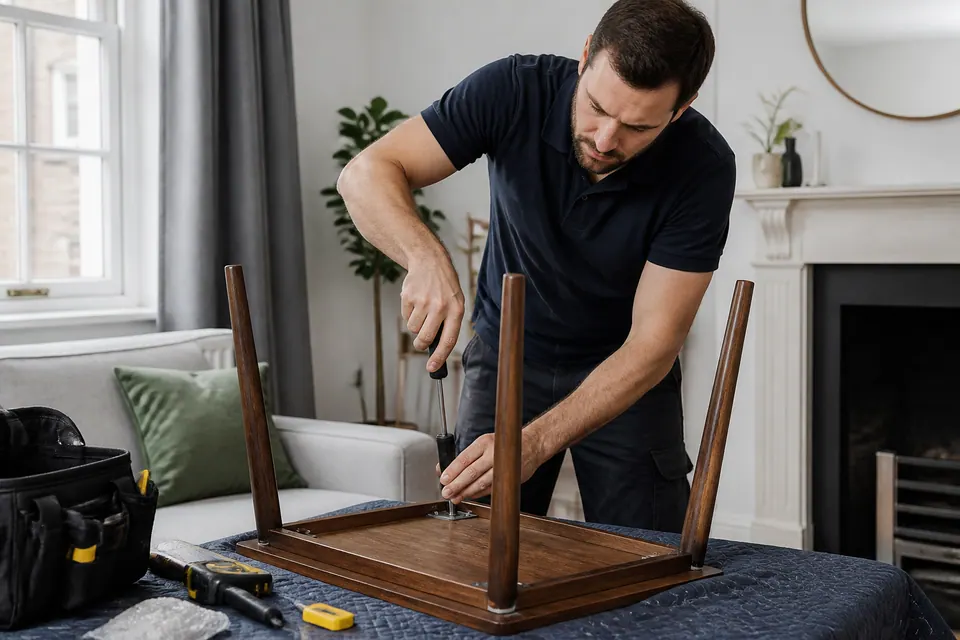
CAMDEN IN PRACTICE
Make mismatched furniture usable again.
For a Camden shared home, label the furniture that belongs to the property and identify any items that should not be moved. Photos of joints and runners help distinguish an adjustment from a broken component requiring replacement.
A jammed drawer, a loose chair joint and a cupboard without a handle do not share one repair method. Label the pieces so photographs cannot be mistaken for different views of the same problem.
In shared accommodation, identify which furniture belongs to the property. Personal pieces should not join an owner-approved repair list without their own consent and specification.
Label the items included in the brief · Show drawer runners with the drawer open · Describe movement at the loose joint · Set aside furniture outside the agreed scope
START WITH THE TASK
Send product information for furniture still requiring assembly.
02 ↗Describe storage use before requesting additional shelves.
03 ↗Record ordinary internal-door faults separately from furniture doors.
04 ↗Identify the owner and model of a communal television.
05 ↗Check permission for wall accessories in shared rooms.
06 ↗Show the whole unit alongside its faulty mechanism.
QUICK JOB FINDER
Send product information for furniture still requiring assembly.
Explore this service ↗QUICK ANSWERS
Parts compatibility and panel condition determine the repair scope.
Named furniture faults and fitting tasks can be assessed individually.
Consolidate occupants’ jobs with clear ownership and priorities.
Agree who supplies materials. Keep detached hardware until compatible options are reviewed.
Multiple mechanisms require an agreed list rather than an unlimited session.
Furniture assembly is available. Assembly needs its own complete product details.
Shared ownership does not remove wall and load checks.
Distinguish property furniture from occupants’ personal items.
DIFFERENT ROOMS, DIFFERENT BRIEFS
Show the route to furniture inside the flat.
Photograph timber around older joints.
Label inventory items and personal pieces distinctly.
Group faults by room rather than furniture colour.
Describe equipment resting on affected desks.
Choose one contact to approve scope changes.
Homeowner? Prioritise everyday faults.
Landlord or manager? Authorise the repair scope.
Tenant? Obtain permission for alterations.
CLEAR BEFORE YOU BOOK
Describe each furniture fault and keep detached parts identifiable.
Replacing a unit with a small new product is a separate assembly request.
An additional screen installation needs screen-specific details, not furniture measurements.
| Task | Pricing basis | Guide |
|---|---|---|
| Repair or fitting | Runner, joint or handle condition | Quotation |
| Small furniture assembly | Replacement small-unit model | From £30 |
| Several small jobs | Distinct defects with their own compatible parts | Combined scope quotation |
| Complex mounting | Bracket type and supporting wall | Assessment quotation |
Small-item assembly source: Alesta’s furniture assembly page . Other work: individually quoted.
A damaged cabinet side can make a runner replacement insufficient. Ask for each item to be assessed on its condition; a shared repair enquiry is not a fixed-price overhaul of all furniture.
BUILD A REALISTIC LIST
Choose the approved pieces, then match each checkbox to labelled photographs. This organiser neither authorises work on personal belongings nor guarantees compatible replacement hardware.
| Situation | A practical next step |
|---|---|
| Familiar task | Keep a loose handle and its screws together without forcing a damaged drawer. |
| Multiple or awkward jobs | Label faults by furniture item so similar-looking parts are not confused. |
| Uncertain mounting | Repeated loosening may involve damaged material beneath the fitting. |
| Regulated or specialist work | Security-lock problems should not be treated as ordinary cabinet hardware. |
WALK THROUGH THE PROPERTY
ROOM NOTES
A shared living-room TV needs screen, bracket and wall details before mounting.
Service details ↗| Job type | Example | Property area | Service |
|---|---|---|---|
| Assembly | Build a replacement drawer chest | Cleared furniture position | Furniture assembly |
| Mounting | Fit a suitable accessory shelf | Wall clear of the cupboard | Fittings |
| Adjustment | Review a sticking internal latch | Room doorway | Door repair |
| Timber work | Assess a split timber component | Existing fitted cabinet | Carpentry |
FROM SMALL FIX TO FINISHED JOB
Label every furniture piece and its owner.
Separate the mechanism fault from visible panel damage.
Keep detached parts with the correct item.
Approve revised work if further damage appears.
Review repaired pieces individually with the agreed contact.
A JOB, MADE VISIBLE
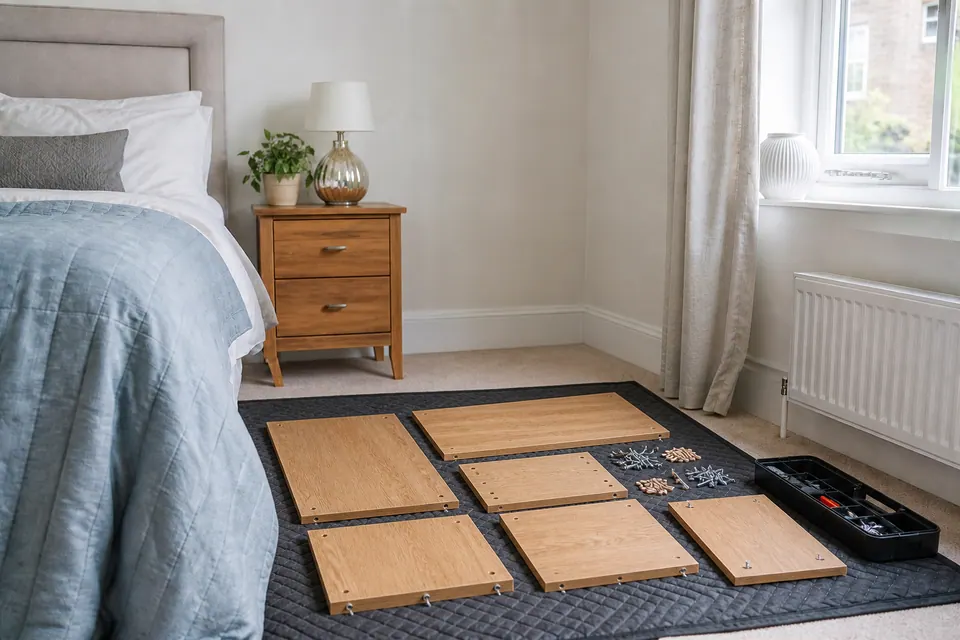
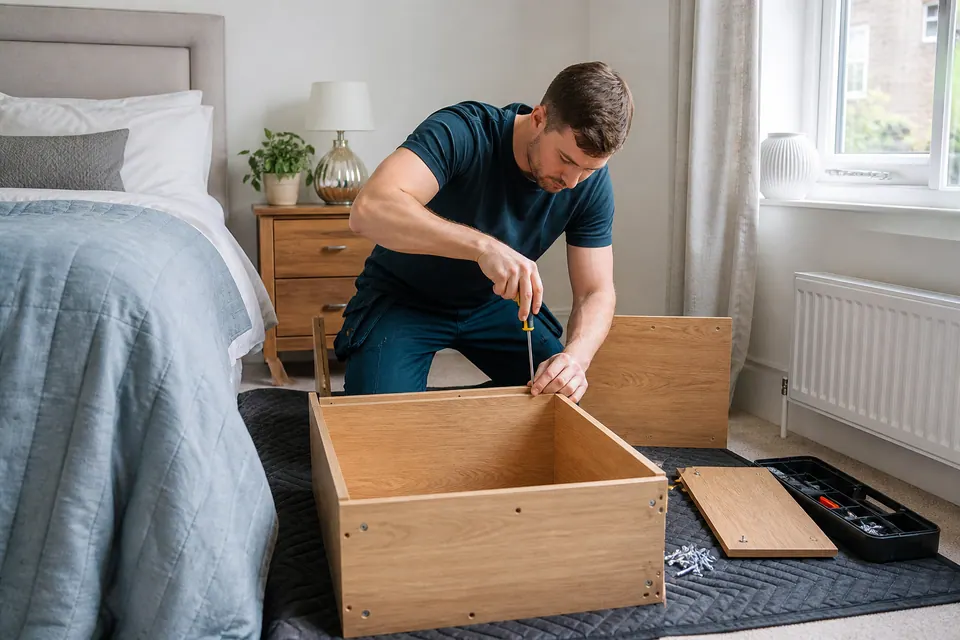
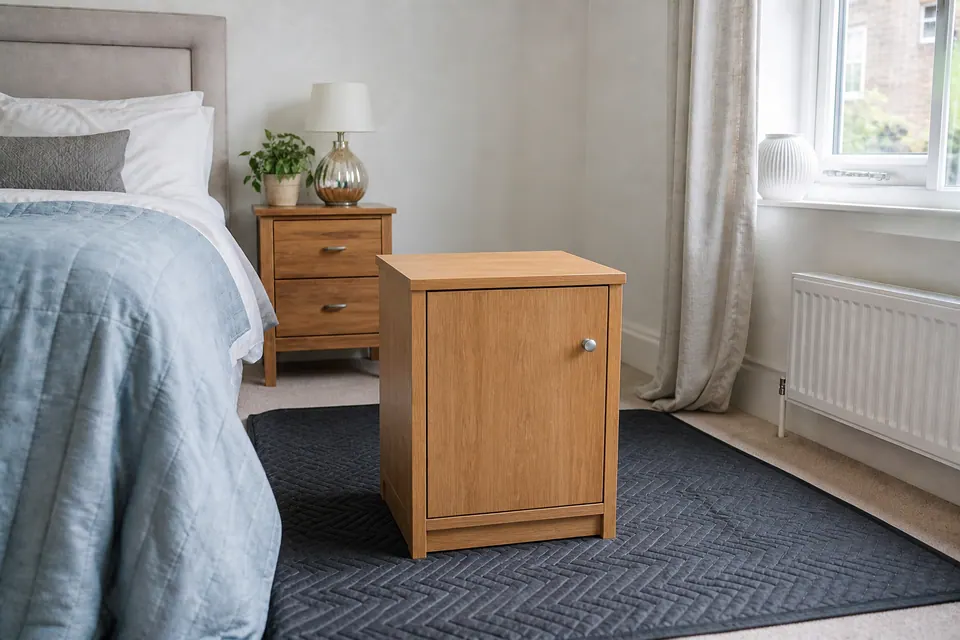
Illustration only; not customer evidence.
PLAN THE ARRIVAL
Send the Camden address, room labels and the contact consolidating occupants’ requests. Make sure private rooms included in the brief can be accessed.
Interactive area map
THE DETAILS OF YOUR VISIT
Yes, but identify owners, consent and priorities so an owner-approved task is not confused with a personal request.
Not necessarily. Show its movement and the whole cabinet before assuming a replacement mechanism.
The joint and supporting material need assessment; damaged timber may require a different approach.
Provide accessible hardware photographs and measurements, without dismantling an unstable piece.
Keep them labelled where safe; they may help identify the original fixing arrangement.
Clarify ownership and authority rather than assuming permission extends to every piece in the room.
Give dimensions and finish preferences; availability and compatibility still need confirmation.
Avoid using a visibly unstable piece while awaiting assessment.
Only the reviewed items, parts and work explicitly agreed, not every furniture defect found later.
TURN THE LIST INTO A PLAN
Photograph each whole piece and its mechanism, then label the owner and intended repair beside the image.
Images illustrate typical handyman tasks.
