
Kitchen
Describe the fitted items and the care notes available for them. The kitchen’s overall size does not establish its cleaning workload.
Archway · Follow the bathroom installation route
Follow the bathroom installation route
A clear brief for reopening the renovated bathroom.
A bathroom clean should not stop at the door if installation dust has reached the corridor. Set out the affected approach and new tile surfaces for your Archway enquiry, with the correct entrance and floor clearly identified.
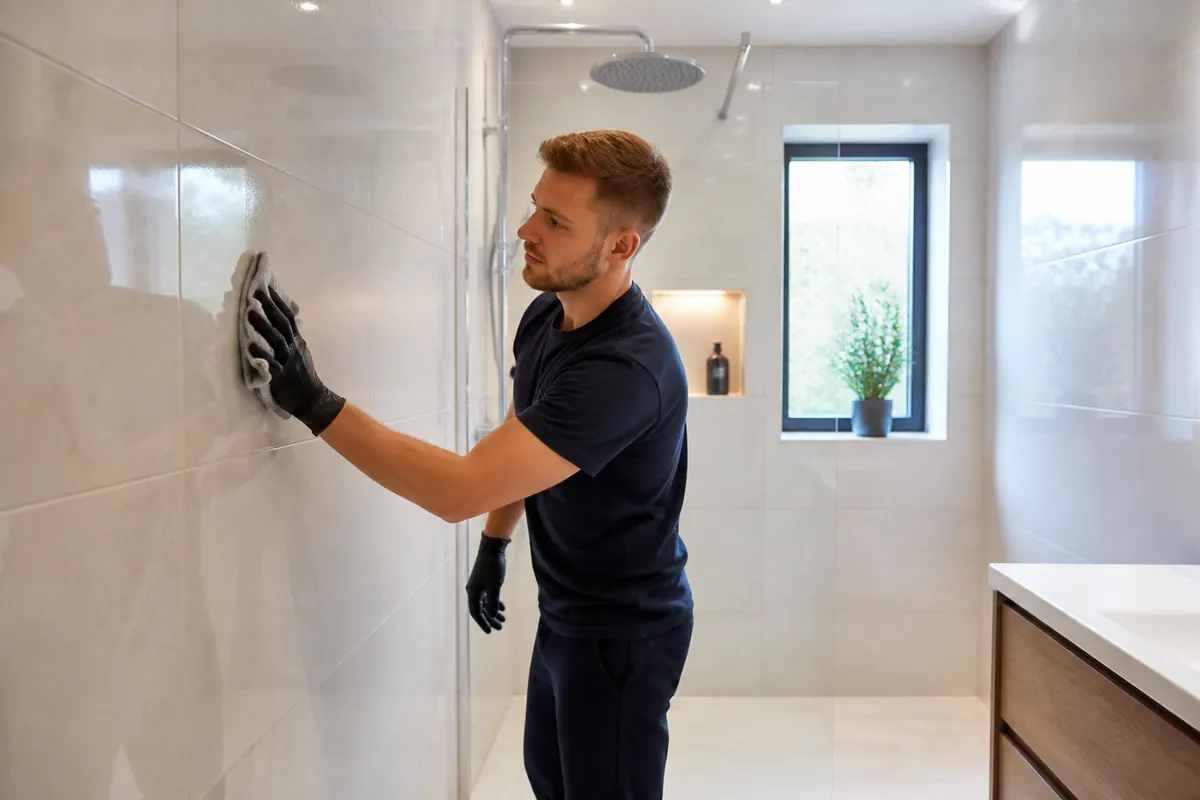
This project image is not a live customer photograph.
Prepare a conversation, not a booking
Describe the work without assuming a fixed package.
Use the selections to describe the bathroom work, then identify the affected approach directly. The summary does not assess tiles, send an enquiry or produce a booking or price.
Tile condition and the approach route need additional explanation. The bathroom choice alone does not define them.
Talk through the room list: 020 3608 3976At your Archway property
The bathroom approach deserves its own line in the room list.
Give the entrance, floor and route to the bathroom rather than only the building address. Mention steps or obstructions that affect bringing equipment to the work area.
Ask whether grouting, sealing or adjustments are still outstanding. Those tasks can change both readiness and the type of residue that needs to be assessed.
Review the bathroom and approach floor together, noting any specialist tile residue. Full removal should not be expected where treatment would risk the finish.
Name rooms, not an unlimited checklist
Describe the fitted items and the care notes available for them. The kitchen’s overall size does not establish its cleaning workload.
List sanitaryware, tile surfaces and suitable flooring where wanted. Fresh sealing or unusual residue needs a readiness question before cleaning.
Name the bedroom finishes recently changed and any dust beyond those areas. This gives a clearer brief than an identical checklist for every room.
Check the room boundary where trades passed through. Name any living-area deposits that should be priced beyond the main renovation zone.
A sequence, not a completion guarantee
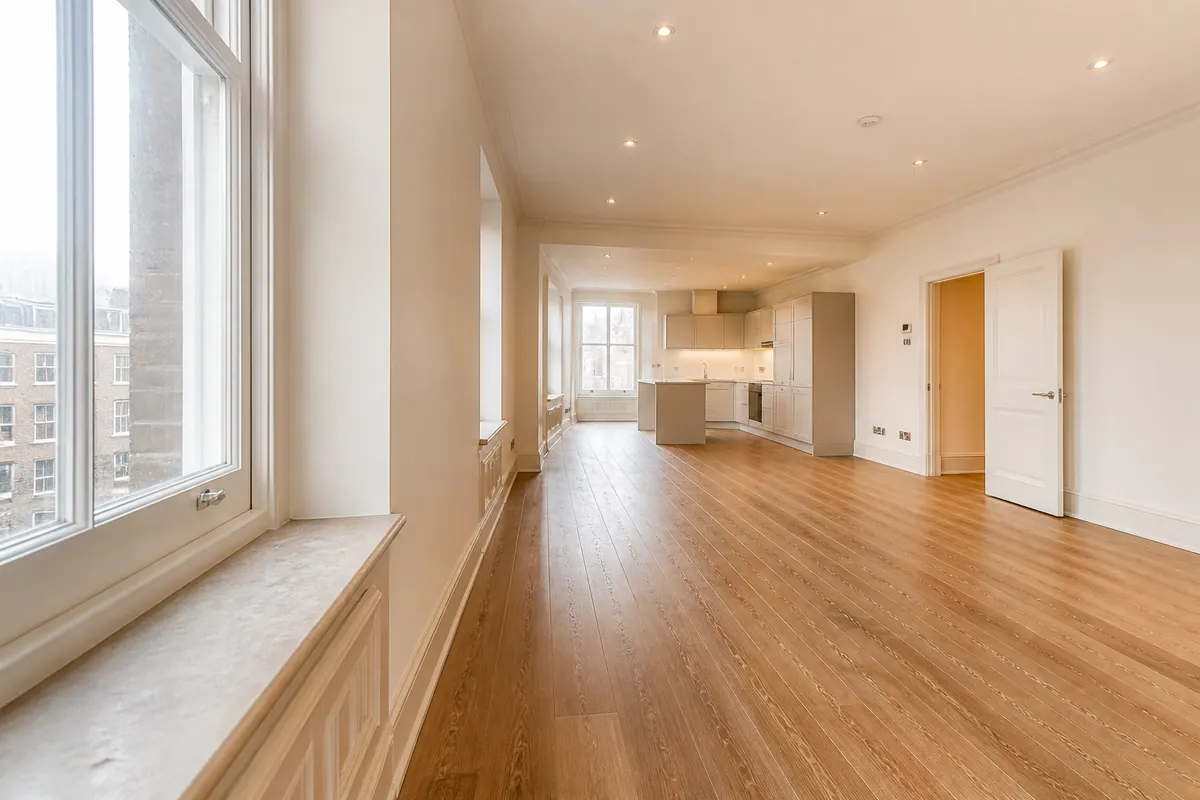
Describe the actual completion state of the rooms.
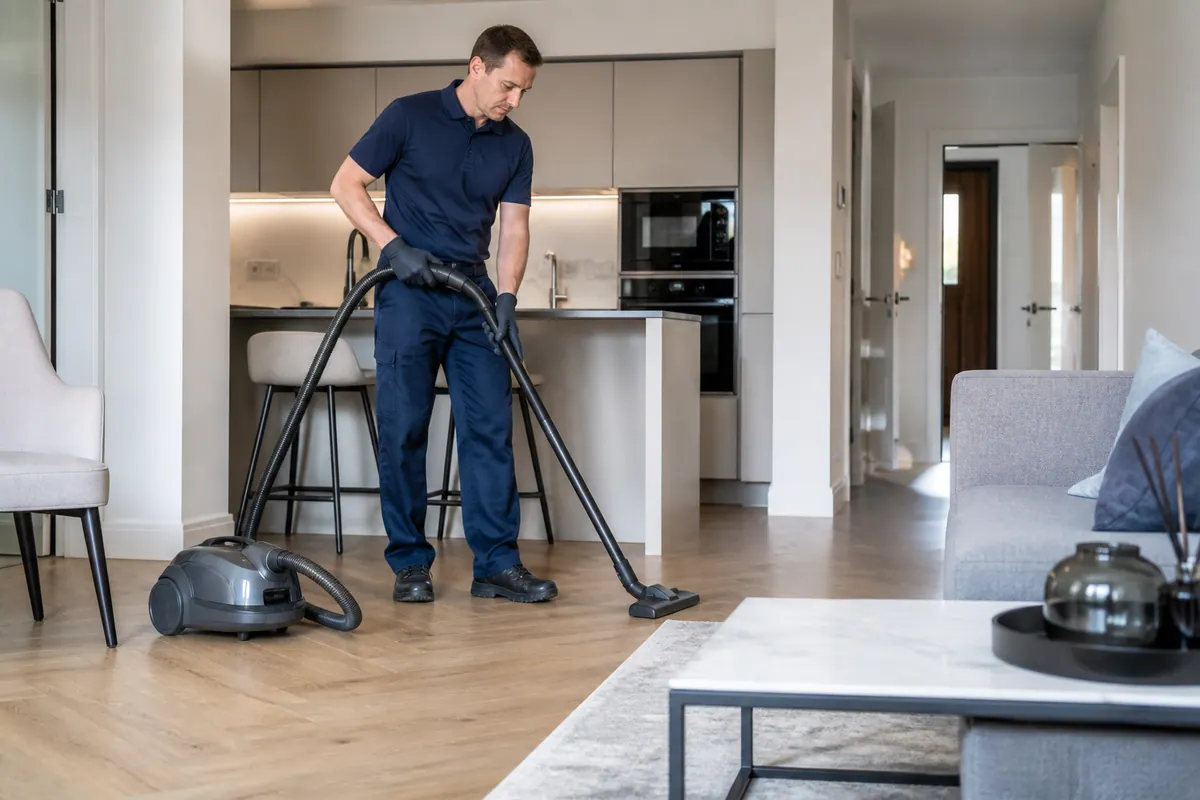
Match the surface approach to its material and condition.
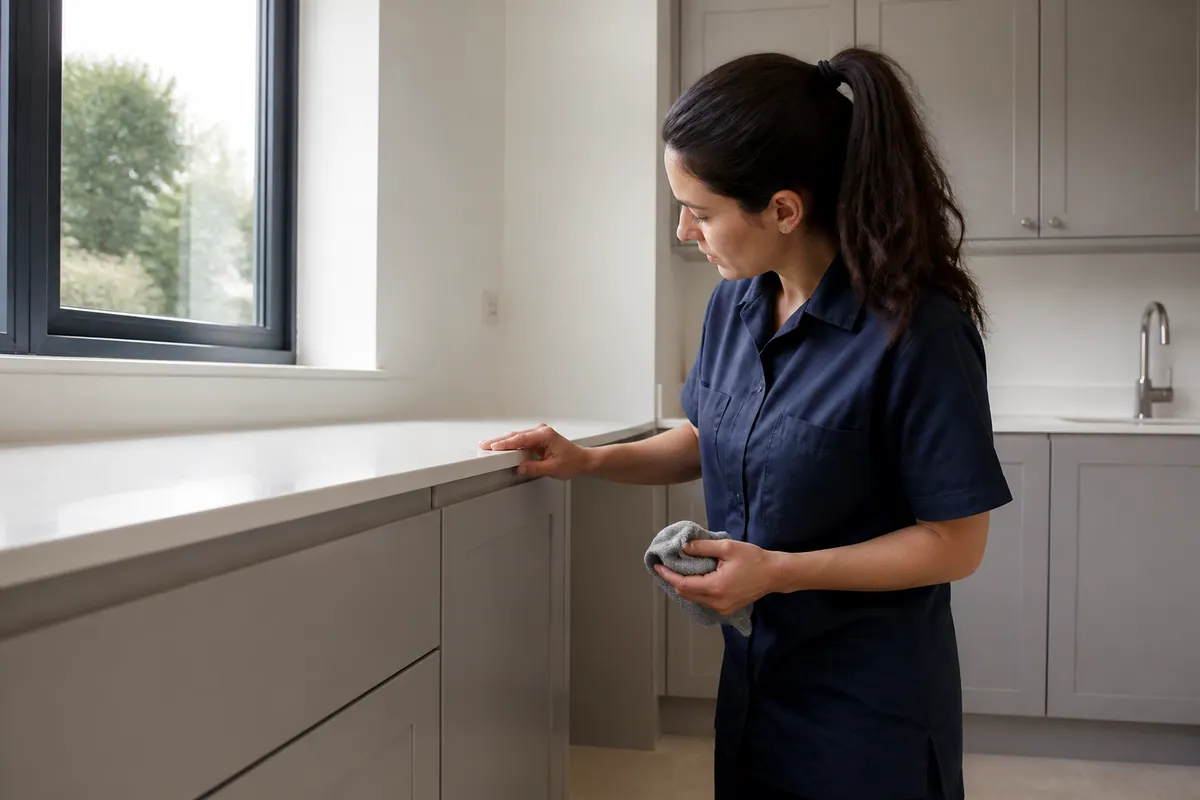
Explain limitations where treatment could risk a finish.
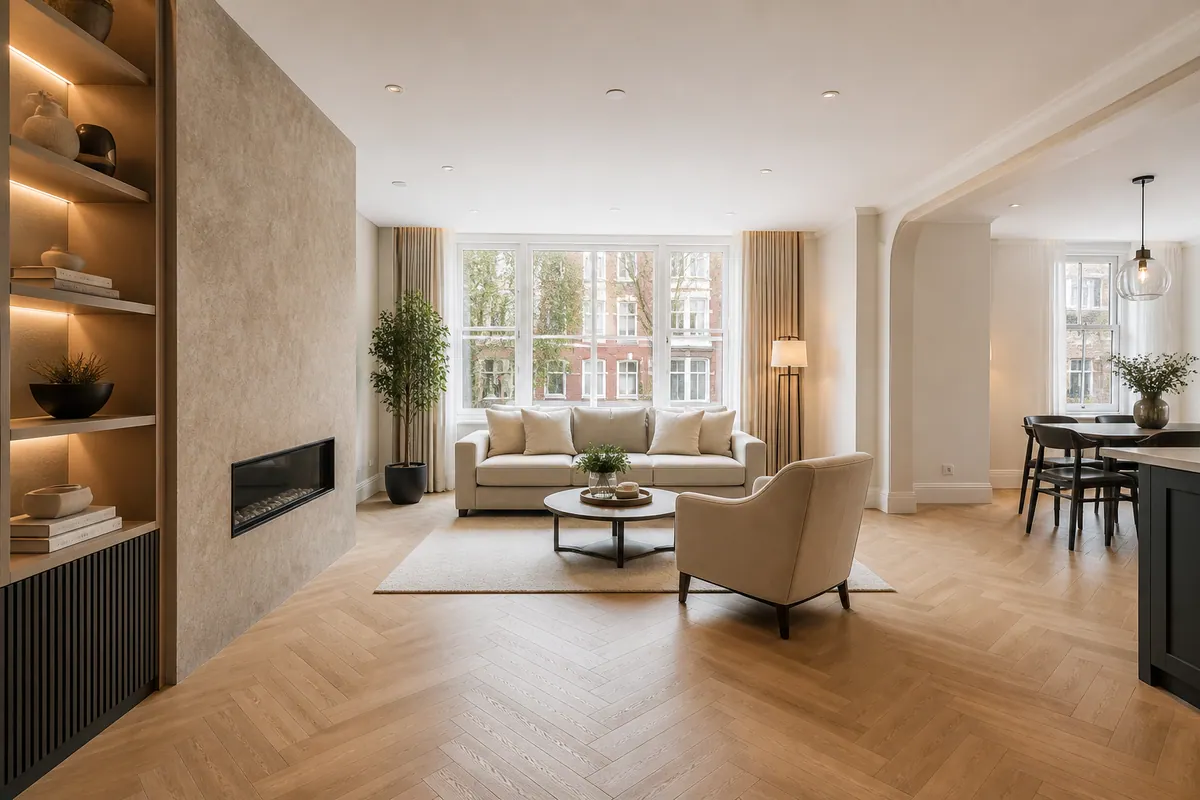
Confirm any remaining specialist follow-up before relying on the space.
Illustrative images show the planning stages, not evidence of one job.
Quoting the Archway work
From £29/ hour
Materials and equipment are included for the cleaning service. The hourly starting figure does not replace an individual quotation.
The final figure needs the actual property condition. Do not read the starting rate as an all-inclusive project price.
| Work described | How quoted | Explain these points |
|---|---|---|
| Restricted refurbishment | £29/hour starting guide only | Condition of the bathroom corridor corners |
| Fitted-room finishing | Starting at £29/hour | Readiness of new tile surfaces |
| Several released rooms | Quote the actual cleaning requirement | Room access before reopening the renovated bathroom |
| Proposed commercial work | Enquiry reviewed before pricing | Release arrangements and access |
Based on Alesta’s published after builders cleaning rate. Building waste is a separate service enquiry.
Describe the Archway work
Use the closest category, then explain the differences in your property. Suitability and the actual scope still need agreement.
A wider renovation needs a released-room list with material information. Show the connecting routes and distinguish any area still holding tools or supplies.
Inspect the affected route
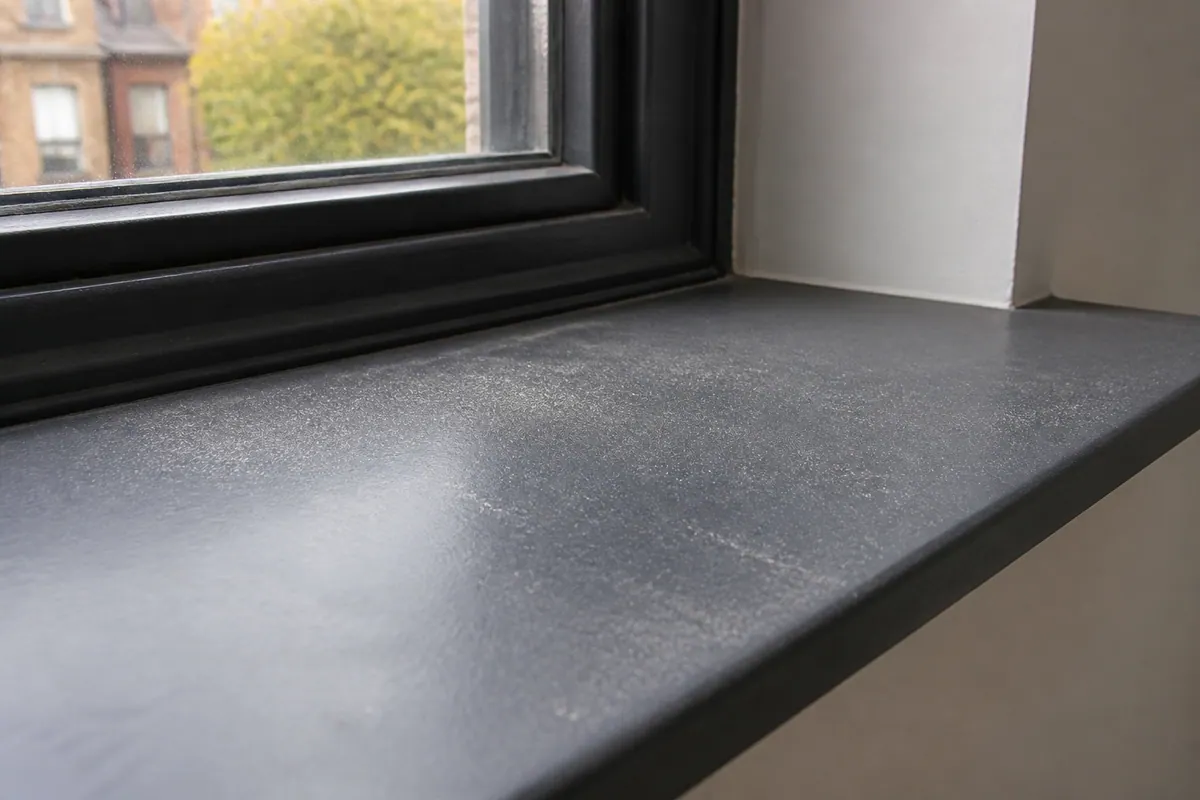
Inspect the route before ruling areas out.
Compare the corridor corners with the bathroom itself. Dust outside the work zone can be included by agreement, while rooms beyond that route may have remained protected.
Suitable vacuuming and surface-aware materials address agreed deposits. They do not establish that every hardened mark is part of the same task.
The final clean should not be expected to anticipate future work.
Draw the cleaning boundary
These categories organise the conversation. They do not promise that every pictured detail is included.
Horizontal details should be described with their material, especially where new and retained items meet.
Door surrounds and low corners can need attention separately from the open floor.
Fittings should be named where they require particular care; a general dust description may not be enough.
A short corridor can be important to the final scope even when no fitting occurred within it.
Identify before treating
| Issue described | Description | Before treatment |
|---|---|---|
| Fine deposits | bathroom corridor corners | List the exposed detail for the quotation. |
| Small cleaning deposits | Non-bulky cleaning residue | Separate ordinary remnants from construction supplies. |
| Adhesive traces | Labels or marks beside new tile surfaces | Do not assume label treatment from the general cleaning request. |
| Plaster and paint spots | Isolated spots near the bathroom corridor corners | Assess bonded deposits before selecting products. |
| Unremoved covering film | Film over an installed face | Agree handling with suitable care information available. |
Keep clearance outside the dust brief
A finishing visit addresses the named room detail rather than taking over the contractor’s removal list.
Provide the type and approximate amount of leftover boards, rubble or packaging for a separate collection discussion. Explain the route out as well.
Ask about separate building waste collection ↗Different work leaves different detail
An unfurnished flat offers access to edges that may later be hidden. Tell Alesta whether it will still be empty when the proposed visit takes place.
Give the fitter’s readiness guidance for recently applied finishes. A kitchen that looks complete may still have surfaces that should not be cleaned yet.
The fitting date does not determine sealant readiness on its own. Obtain the relevant product advice before requesting contact cleaning.
A larger refurbishment can be divided into room priorities without inventing a fixed package. Describe both the dust distribution and the next intended use.
A handover deadline is worth discussing early, but timing still depends on condition and readiness. Do not assume a fixed-duration visit from the date alone.
For business premises, describe what remains after the fit-out and which areas are released. Availability should be established before relying on a date.
Check the conditions for arrival
Before the clean
For the appointment
A finish is not just a colour
Illustrated material assessment.
Cleaning does not correct installation damage.
New tile faces, joints and hardened spots need separate descriptions. Confirm the tile material and installer guidance before requesting treatment of anything that will not lift as ordinary dust.
Check the newest application before planning the method.
Name the finish beneath any bonded residue.
Check coating information on newly installed hardware.
Brief answers, clear limits
Make the responsible contact clear
Check the approach to the bathroom before deciding how far the cleaning request extends. Naming the exact corridor section is more useful than adding every room on that floor without inspection.
Give the keyholder a clear refurbishment brief. A tenancy inventory and the finishing-clean agreement are separate documents.
Share the actual premises and task requirements for review. Do not assume specialist site attendance from the general service description.
Glazing is an explicit request
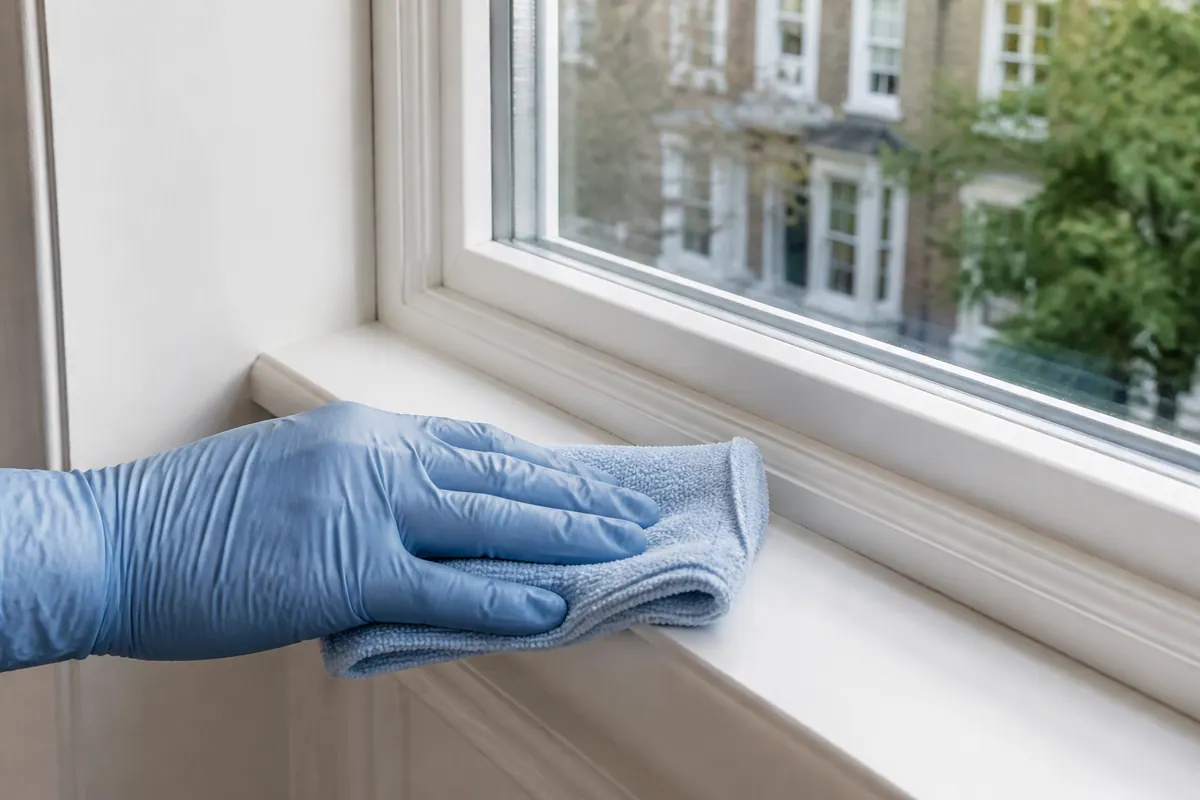
Name bathroom glass if it forms part of the request, especially where tile work left local deposits. Its treatment is distinct from the corridor floor and should not be assumed from the bathroom label.
Hard paint or cement deposits need assessment against the glazing. An ordinary window service is not a guarantee that all construction material will disappear.
Ask about the window scope ↗Address and access
The map indicates the Archway service area, not an office address. Provide the actual property and access details when asking about availability.
If the address differs, visit the main after builders page before assuming attendance.
Questions for this project
The enquiry should distinguish the work zone from its dust route. Name bathroom corridor corners and any other surfaces you want considered.
Confirm the entrance and internal route for the team. Let Alesta know if possessions or building supplies affect bathroom corridor corners.
Any uncertainty about new tile surfaces belongs in the enquiry. More aggressive removal is not a substitute for understanding the finish.
Add adjoining areas if deposits are visible and you want them assessed. Their connection to bathroom corridor corners does not automatically include them.
£29 per hour is the published starting figure rather than a complete-property charge. Confirm the actual work, with materials and equipment included for cleaning.
The released areas and remaining work need to be distinguished. A single clean should not be expected to anticipate later cutting or sanding.
Ask about construction material independently of surface dust. Its volume and route out require information beyond the room-cleaning brief.
Explain those requirements in advance so the separate tasks can be considered. A builders-clean request alone does not include them.
The proposed return or delivery date is useful context, not a guarantee. Alesta needs to consider the real scope and any drying restrictions.
The material sets a limit on treatment. If a mark remains on new tile surfaces, discuss its nature and any separately quoted next step.
Archway / next conversation
Tell Alesta which spaces are released and how they can be reached. The final cleaning plan should match those facts.
