
Hot Water but No Heating: What to Check Before Booking a Repair
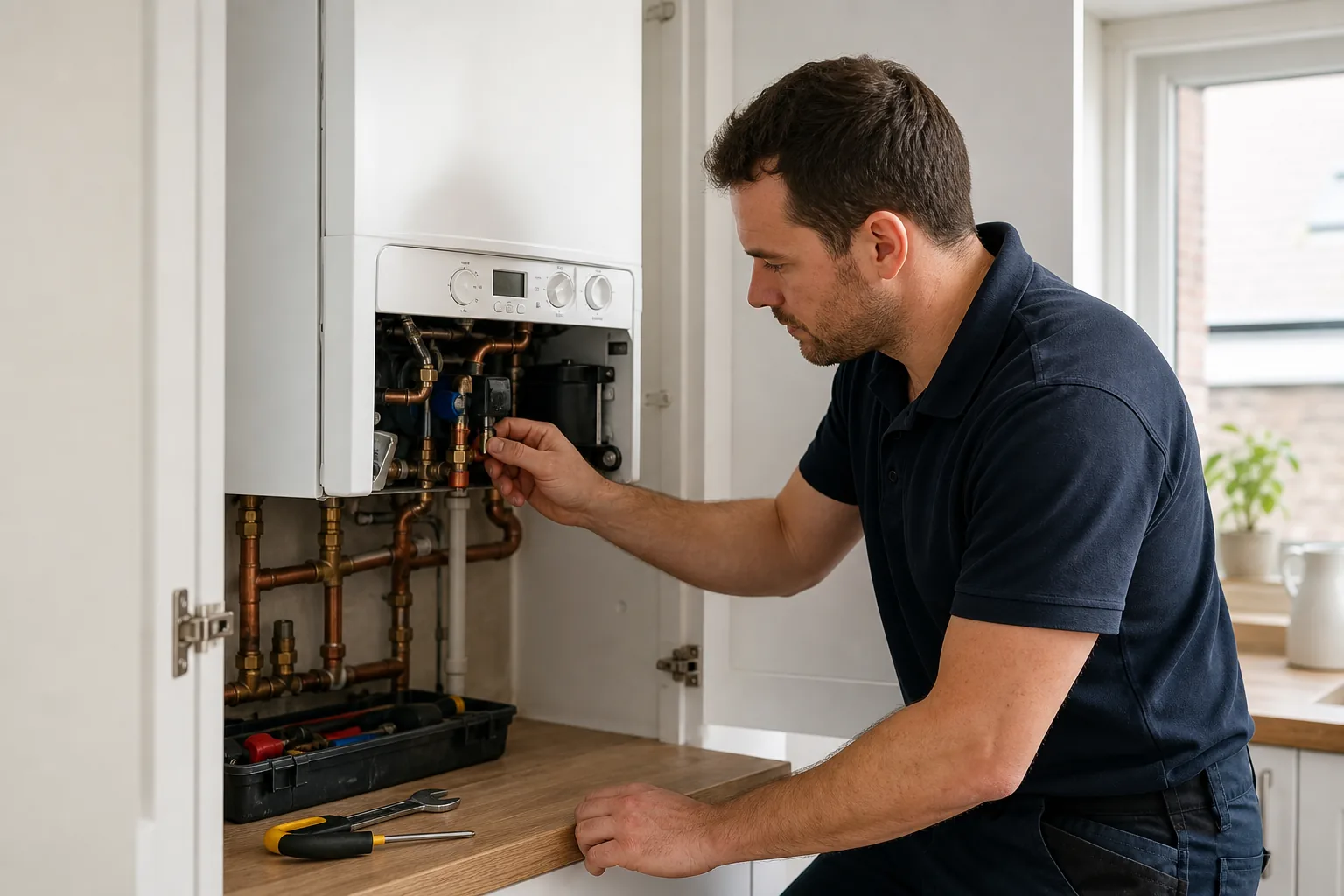
If you have hot water but no central heating, the boiler can produce heat; the fault is often in the heating controls, demand signal, circulation or a motorised/diverter valve rather than the burner itself. Check the programmer, room thermostat, boiler pressure display and radiator valves without opening the boiler. Stop and seek urgent help for a gas smell, carbon-monoxide alarm, water near electrics or severe banging.
First establish what “hot water works” means
Run a hot tap long enough to confirm sustained hot water, not a few litres stored in the pipe. Note whether you have a combi boiler that heats water on demand, a cylinder, or a communal system. The distinction changes which valves and controls are involved.
Check every heating zone. Upstairs radiators working while downstairs remain cold suggests a different problem from every radiator being cold. One cold radiator is a local branch; an entire silent system points back towards demand and circulation.
Make the thermostat create a clear demand
Set the programmer to heating on and raise the room thermostat several degrees above the displayed room temperature. On a wireless control, replace batteries if the low-battery symbol appears and follow its normal connection instructions. Do not repeatedly pair devices or access mains receiver wiring.
Listen for a click at the thermostat or receiver and watch the boiler display. A flame or radiator symbol may indicate demand, but icons differ by model. Photograph the screen and consult the manual. If the thermostat sits beside a heat source, in direct sun or behind furniture, it may read an unrepresentative temperature.
Check schedules and seasonal settings
After a clock change, power cut or holiday, the programme may be in summer, away or hot-water-only mode. Verify current time, day and heating periods. Smart controls can lose internet access while local operation still works; use the manufacturer’s manual override rather than deleting the system from the app.
Zone schedules can conflict. A warm upstairs thermostat may satisfy its zone while another receiver has failed to call. Record which control governs which radiators instead of changing all schedules at once.
Read pressure; do not chase a universal number
On a sealed system, compare the pressure display with the boiler manufacturer’s normal cold range. If it is below that guidance, heating may lock out. Repressurise only if the manual identifies the filling method and there is no visible leak. Close the filling arrangement fully afterwards.
Pressure that falls again is not solved by weekly topping up. It may indicate a leak, expansion-vessel issue or discharge. Water escaping from a pipe outside, damp around radiators or repeated pressure loss needs a professional boiler repair.
Are the radiator valves actually open?
Check manual valves and thermostatic radiator valves without force. A TRV set to frost protection will not heat a normal room on demand. If a pin is suspected of sticking, do not remove valve bodies or loosen water connections; ask for repair.
One radiator cold at the top may contain air. One cold at the bottom can indicate restricted flow, but neither pattern alone proves the whole system needs treatment. Use the dedicated radiator repair service where the fault stays with one emitter.
Boiler fires, but pipes and radiators stay cold
When the display shows heating demand and the burner operates, lack of circulation becomes important. A pump may be stuck or failed, a zone valve may not open, air may restrict flow, or system balancing may be poor. These components require safe testing; tapping a pump or forcing a valve lever can cause damage.
Note whether the boiler heats briefly and shuts down, whether one nearby pipe becomes hot, and whether there is gurgling. Those observations help a heating engineer distinguish no demand from heat that cannot move away.
Combi boiler: diverter-valve clues
A combi switches heat between domestic hot water and radiators. A diverter valve that remains in hot-water position can leave taps hot while heating receives little or nothing. Another clue is radiators warming only when a hot tap runs, though controls and sensors can create related symptoms.
Do not open the case or attempt to lubricate internal valves. Work on gas appliances and combustion-related components must be carried out by a Gas Safe registered engineer with the appropriate competence.
System boiler: zone valves and cylinder controls
Homes with a hot-water cylinder may have motorised valves directing boiler water to the cylinder coil, heating zones or both. A hot-water valve can work while the heating valve or its actuator fails. The programmer can also send one demand but not the other.
Tell the engineer whether the cylinder thermostat works, which pipes become warm and whether any actuator makes noise. Do not remove actuator covers where mains terminals may be present.
When is sludge relevant?
Sludge is more plausible when radiators are patchy, slow, cold at the bottom or produce dirty water during professional sampling. It is less convincing when every radiator stopped at the same moment after a thermostat battery failed. Diagnosis should precede a system-wide treatment.
A central-heating power flush is appropriate only where testing supports restricted or contaminated circulation. It will not repair a dead receiver, failed valve actuator or broken pump.
Fault codes and resets
Write down the full code before doing anything. Consult the boiler manual for the user action. One reset may be permitted for certain lockouts; repeated resetting erases timing evidence and can operate a failing component again. If the code returns, leave the appliance in a safe state and book service.
Never bypass a safety device, remove the case or cover a carbon-monoxide alarm. If you smell gas, follow the national gas emergency procedure, avoid switches and leave the area.
A repair brief that saves diagnostic time
- Boiler make, model and displayed pressure.
- Combi, cylinder or communal system.
- Hot-water behaviour at taps.
- Heating symbols, flame behaviour and fault code.
- Thermostat/receiver response.
- All, one zone or one radiator affected.
- Recent power cut, plumbing work or pressure loss.
Ask the engineer to demonstrate both hot water and heating after repair. Radiators should begin warming in the expected zones, controls should stop demand correctly, and leaks or abnormal pressure change should be absent.
The safe decision path
Confirm sustained hot water, create a clear heating demand, check schedule and user-visible pressure, then establish how much of the radiator system is affected. If the boiler receives no demand, controls lead the investigation. If it fires without circulation, pumps and valves become more likely. If only one radiator is affected, stay local. That disciplined sequence is faster—and safer—than resetting the boiler until something happens.
