
Private lockout
Authority, door state and key event guide an explained opening approach at the apartment.
Visitor record · floor access · apartment key
A managed tower can require three separate proofs of access: reception admits the contractor, a credential or escort reaches the correct floor, and the customer authorises work at the private apartment door.
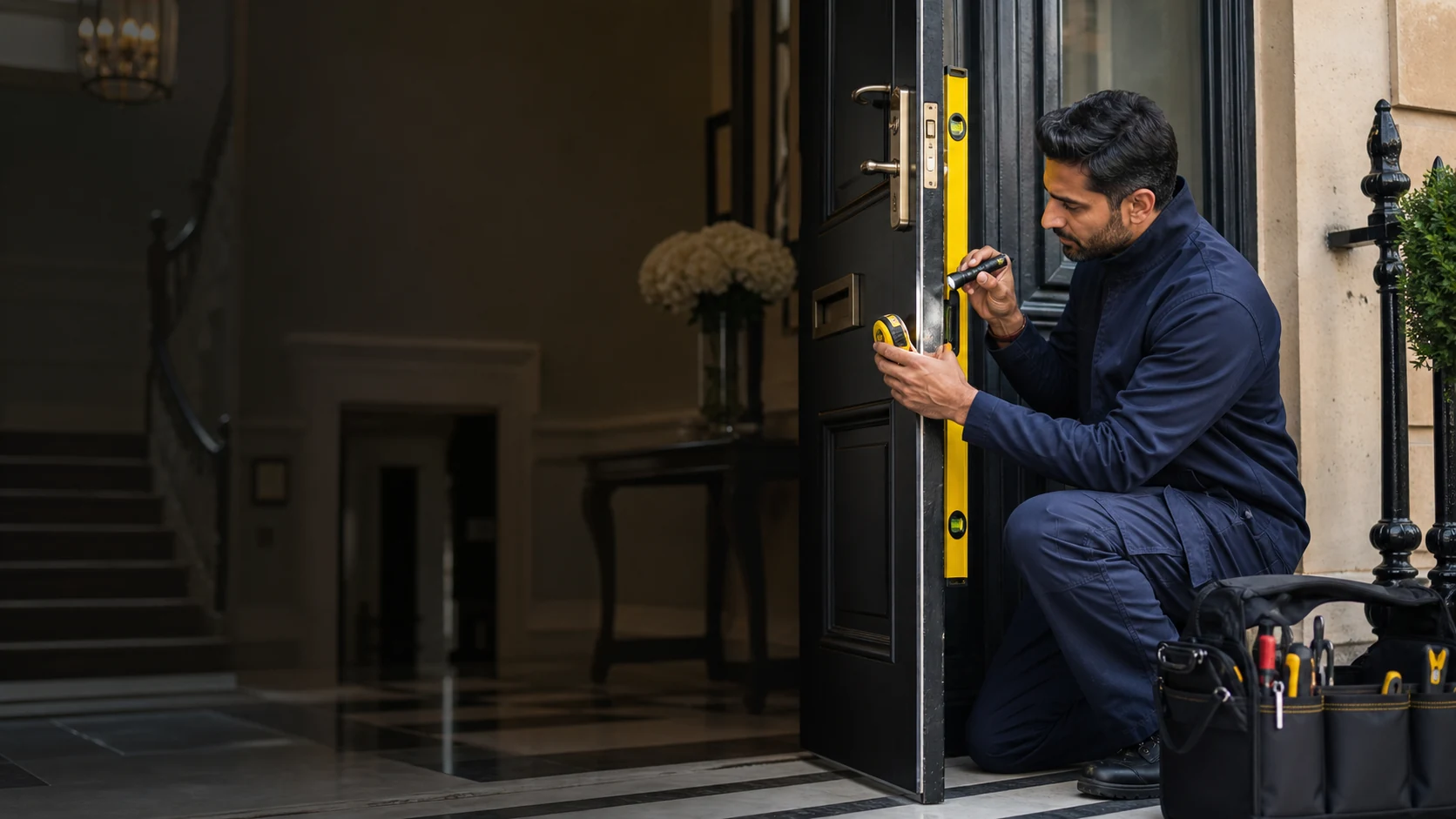
Three-stage access
A visitor registration permits entry under the building’s current process. It does not prove ownership of a flat or approve a replacement lock. A resident fob may reach a floor but remain part of the building access system rather than the private key set. The apartment customer must still show reasonable occupancy, ownership or management authority for opening or alteration.
Write each stage into the booking. Name the reception contact or registration route, the method approved for reaching the floor and the person meeting the locksmith at the apartment. Where a service lift or escort is required, obtain it from management rather than assuming a resident credential can be shared.
| Access stage | Credential or confirmation | Decision it does not replace |
|---|---|---|
| Building registration | Expected contractor, resident, timing and reception procedure | Private-door opening or hardware approval |
| Lift and floor circulation | Resident escort, authorised fob or building staff route | Permission to alter common electronic access |
| Private apartment entry | Occupancy, ownership or authorised management evidence | Management approval for shared doors |
| Additional work decision | Reachable owner, landlord or empowered customer | Building-level compliance or access-control decisions |
| Private key handover | Named resident or owner and agreed quantity | Issue of common credentials by building administration |
| Common-system finding | Stable door label and managing-agent contact | Automatic extension of the apartment locksmith scope |
Reception-ready booking
Provide the resident’s name, flat, expected arrival and reason described at a practical level. Ask which entrance and route contractors should use and whether tools need a service lift. Reception may need its own identification and visitor process; use the current building instruction rather than a generic assumption.
The front desk can confirm that a visit is expected and help the locksmith reach the floor. Product choice, destructive opening, extra keys and private costs belong to the authorised apartment customer unless the property manager has explicitly taken that role. Keep the decision-maker reachable so staff are not asked to mediate an unfamiliar lock proposal.
If identification is inside the locked apartment, discuss the resident and management contacts available for a reasonable verification route. A tower address and reception entry alone do not establish authority over the private door.

Credential or lock fault?
A fob can fail because of credential administration or another electronic element. A reader can respond while a powered release or mechanical latch does not complete the sequence. A private apartment key can be stiff even when every common credential works. Describe each layer without opening panels or transferring a building fob to an unauthorised person.
| Observed event | First question | Responsible route |
|---|---|---|
| Reception record is missing | Was the visitor process completed by the resident? | Resident and reception resolve registration, not lock hardware |
| Resident fob does not call the lift or floor | Do other authorised credentials work? | Building access administrator reviews the credential or system |
| Reader responds but common door stays closed | What do release, latch, closer and leaf do? | Management allocates electrical access and mechanical assessment |
| Private key will not turn | Is the door open or closed, and does pressure change operation? | Resident-authorised locksmith assesses the apartment door |
| Apartment handle is loose | Does the latch and lock still function without force? | Private mechanical hardware assessment within the door scope |
| Common door will not close after release | Are closer, hinges, frame or latch preventing secure return? | Managing agent coordinates the relevant door and lock services |
Private apartment locksmith work
Authority, door state and key event guide an explained opening approach at the apartment.
Key, lock, handle, latch, frame and alignment are considered before a component is chosen.
Lost or unreturned private keys prompt an owner-led user and quantity decision.
Door records, dimensions and any actual management requirement inform compatibility.
Temporary securing and lock work remain separate from leaf, frame and decorative repairs.
Credential and shared-door findings are returned to building management rather than folded into private work.
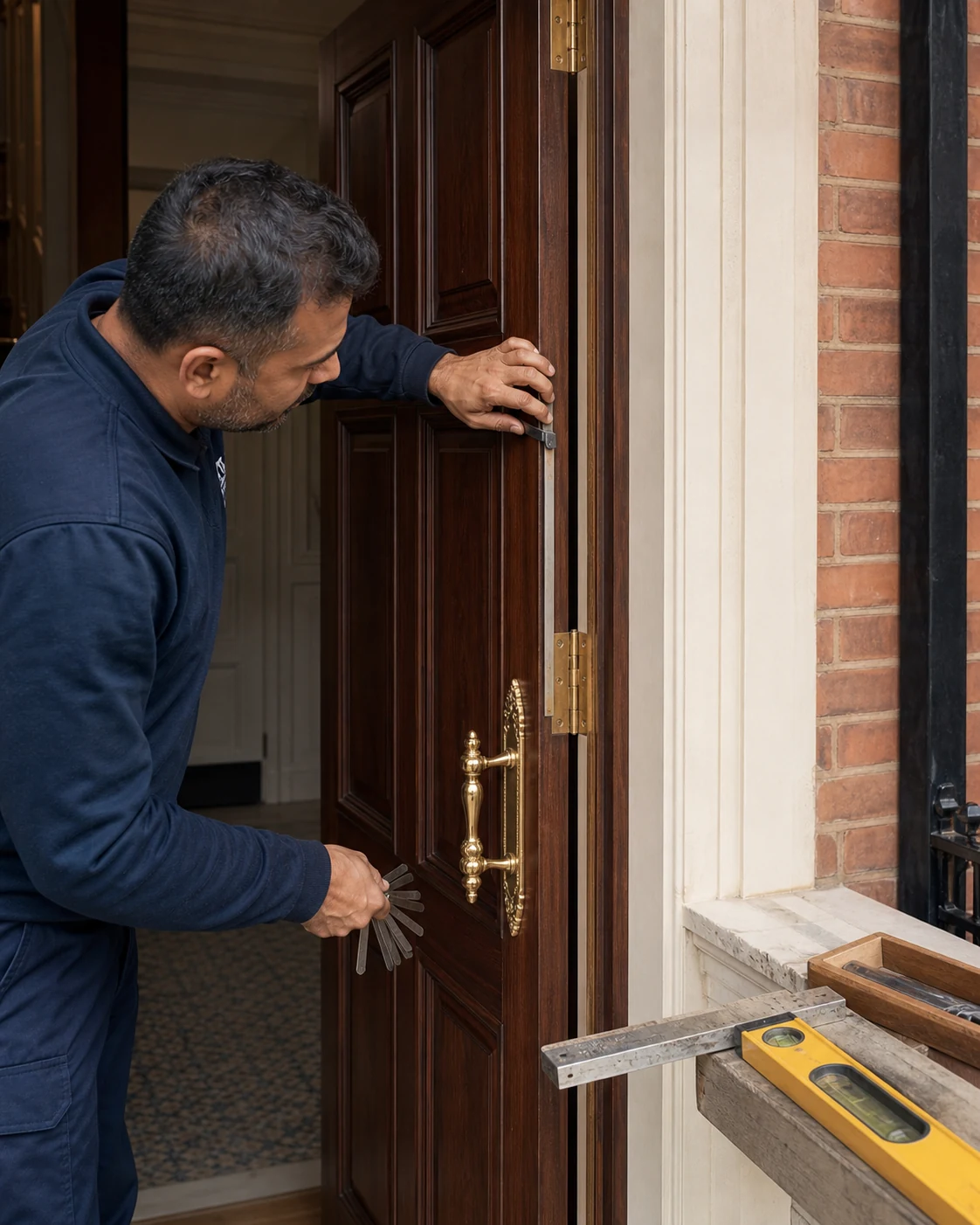
Canary Wharf property context
Canary Wharf enquiries can involve managed towers, reception registration, electronic access and private apartment doors. The tower context makes the three-stage plan useful. It does not establish the fitted lock, a building response time or the resident’s authority at a particular address.
Management controls reception, lifts, floor credentials and common systems. The resident or owner controls private work within the real property agreement. A mechanical apartment lock may still have building records or appearance requirements, so provide the current document where one exists instead of claiming a universal tower specification.
Where a private door is part of a documented fire-door arrangement, management or the owner should supply the relevant record. The locksmith can report mechanical findings but should not infer compliance from appearance alone.
| Area or function | Prepare | Boundary |
|---|---|---|
| Reception registration | Resident, contractor, arrival and approved entry route | Visitor admission versus lock authority |
| Lift or floor credential | Escort or authorised building credential | Circulation access versus credential administration |
| Private apartment door | Customer authority, door state, hardware and desired outcome | Residential locksmith work versus common systems |
| Electronic common entrance | Reader, fob, release, closer and latch observations | Access-control or electrical work versus mechanical lock work |
| Managed door record | Current specification or requirement supplied by the responsible party | Documented instruction versus assumptions from building type |
Quote and dual handover
Price depends on registration, route, verification, door condition, method, labour and compatible parts. Canary Wharf alone does not determine it. The quote should name the private door and state any building access assumption.
Reception and floor access are available under the approved process.
Opening, parts, keys and changed findings stay with the authorised customer.
Closing, latching, locking and unlocking are checked within the scope.
Private key handover reaches the resident; common-system findings reach management.
Ask whether attendance, successful opening, hardware, supplied keys and making good are included. A reception delay or inaccessible floor should be recorded as an access limitation rather than represented as completed door assessment.
Canary Wharf locksmith FAQ
No. It admits a visitor under building procedure. The occupier, owner or authorised manager must still provide the instruction for private-door work.
Follow the current building process. An escort, service route or authorised credential should be arranged without informal transfer that breaches management rules.
Mention this when booking. Discuss the available resident, owner and management contacts that can support a reasonable verification route.
No. Building credential access and the private mechanical lock are separate layers. Report each symptom to its responsible party.
The authorised private-door customer should receive the method explanation and approve it, including any replacement part required afterwards.
Only if the authorised customer and building genuinely approve that handover. Otherwise keys should go directly to the named resident, owner or manager.
Building management should route credential, controller, power, release and mechanical latch findings to the appropriate access-control, electrical or locksmith service.
Include access assumptions, verification, door, opening or repair scope, method, hardware, key count, tests, exclusions and changed-finding approval.
The resident keeps private hardware and key information. Management receives only the relevant common-access finding and contractor completion details.
Nearby coverage
Use the service pages for the task and current area pages for connected management contexts.
Three access stages, one accountable private decision
Send the reception registration, floor-access plan, apartment authority and private-door symptom for a correctly bounded visit.
