
Homeowners
Explain which parts of the home are ready to be released and what you plan to do with them after the cleaning review.
Chiswick · A ground-floor project connects several living areas
A ground-floor project connects several living areas.
Decide which rooms need to return to ordinary household use first.
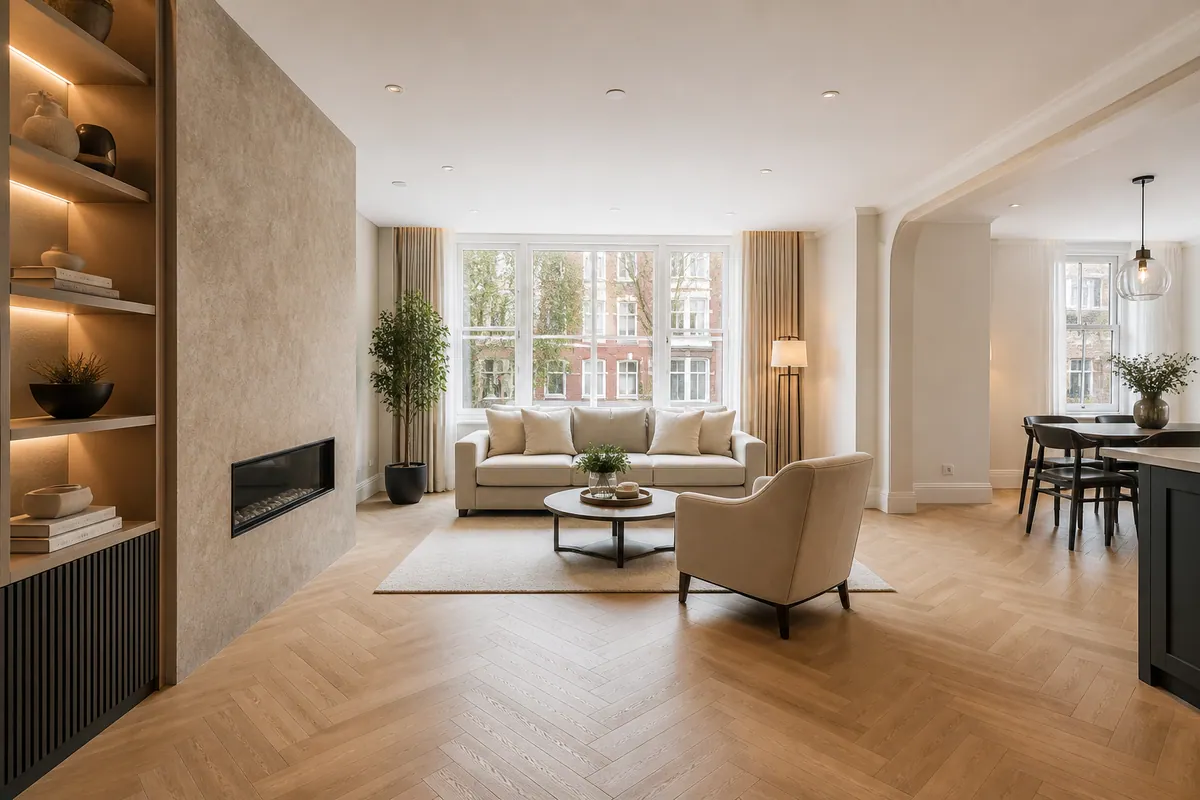
Kitchen dust may reach the family seating space even when no fitting took place there. For your Chiswick enquiry, describe the ground-floor kitchen and living spaces. Include visible deposits beside retained furnishings without assuming their treatment is included.
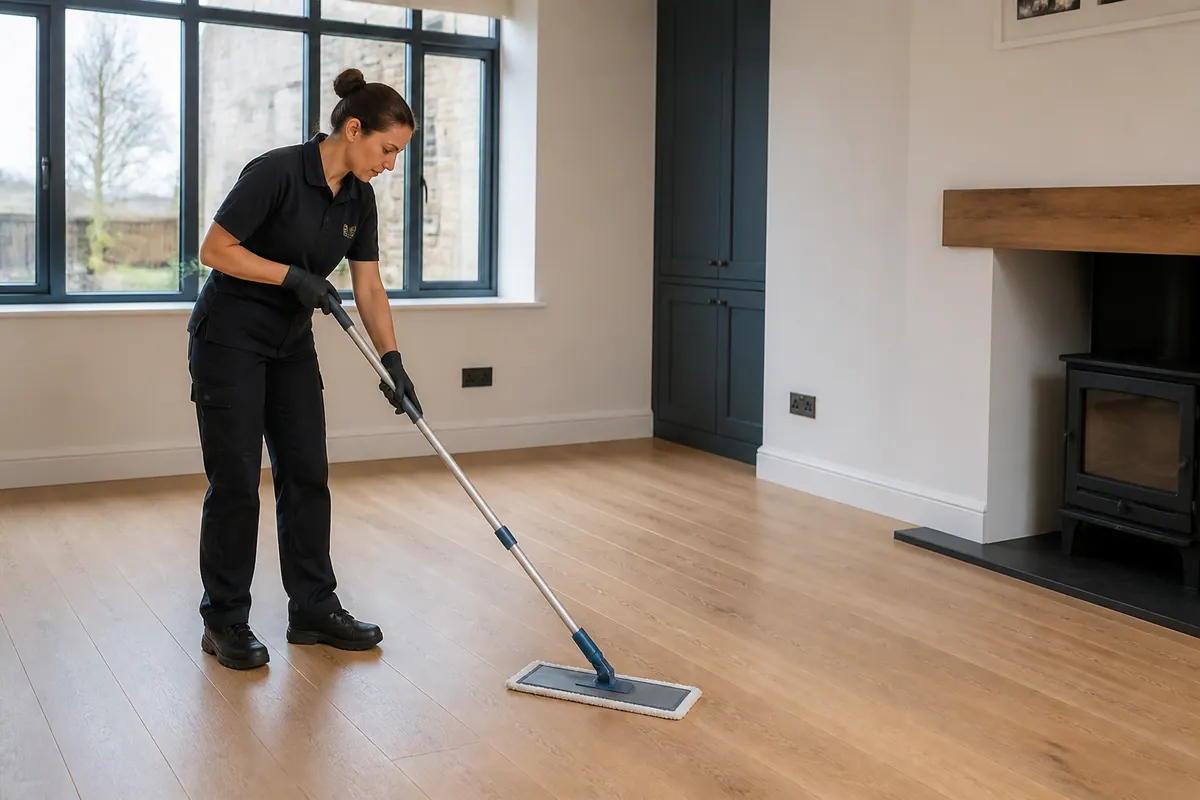
Illustrative renovation scene; no customer job or measured result is represented.
Who is planning the handover?
Explain which parts of the home are ready to be released and what you plan to do with them after the cleaning review.
A managed-property enquiry should specify access, completed works and the intended handover, not assume a tenancy package.
Set out the work release dates and access needs before relying on cleaning as part of a contractor schedule.
Chiswick / the specific room brief
Kitchen dust may reach the family seating space even when no fitting took place there.
This Chiswick planning example centres on family-home ground-floor renovation. Kitchen dust may reach the family seating space even when no fitting took place there. The useful inspection route follows the ground-floor kitchen and living spaces, with attention to timber trim and connected-room ledges.
Include visible deposits beside retained furnishings without assuming their treatment is included. Keep any care notes for new timber trim available when discussing the visible marks.
Identify a clear route on the ground floor before the visit. Decide which rooms need to return to ordinary household use first.
Room-by-room brief
Tell Alesta which external kitchen surfaces are affected and where additional residue needs assessment; avoid an undefined appliance checklist.
The bathroom list should identify grout residue rather than treating every pale deposit as loose dust.
Wardrobe interiors require discussion if the work affected them; the room label alone does not include everything.
Explain the dust boundary across connected living areas, including any special surface-care notes.
A scoped quote
From £29/ hour
The cleaning service includes its materials and equipment; confirm the applicable rate before the appointment proceeds.
The final figure needs the material, access and detail information. Additional services such as waste or specialist treatment are not assumed.
| Project | Pricing basis | What to describe |
|---|---|---|
| Smaller refurbishment | From £29/hour; scope confirmed | Room condition beyond the floor area |
| Kitchen or bathroom work | From £29/hour; scope confirmed | Installed surfaces and any fitting marks |
| Whole-property renovation | Quote after the room scope is reviewed | Condition across the complete room list |
| Commercial refurbishment enquiry | Confirm suitability before pricing | Premises condition and suitability questions |
Based on Alesta’s published after builders cleaning rate. Building waste removal is quoted separately.
Planning beyond the trades
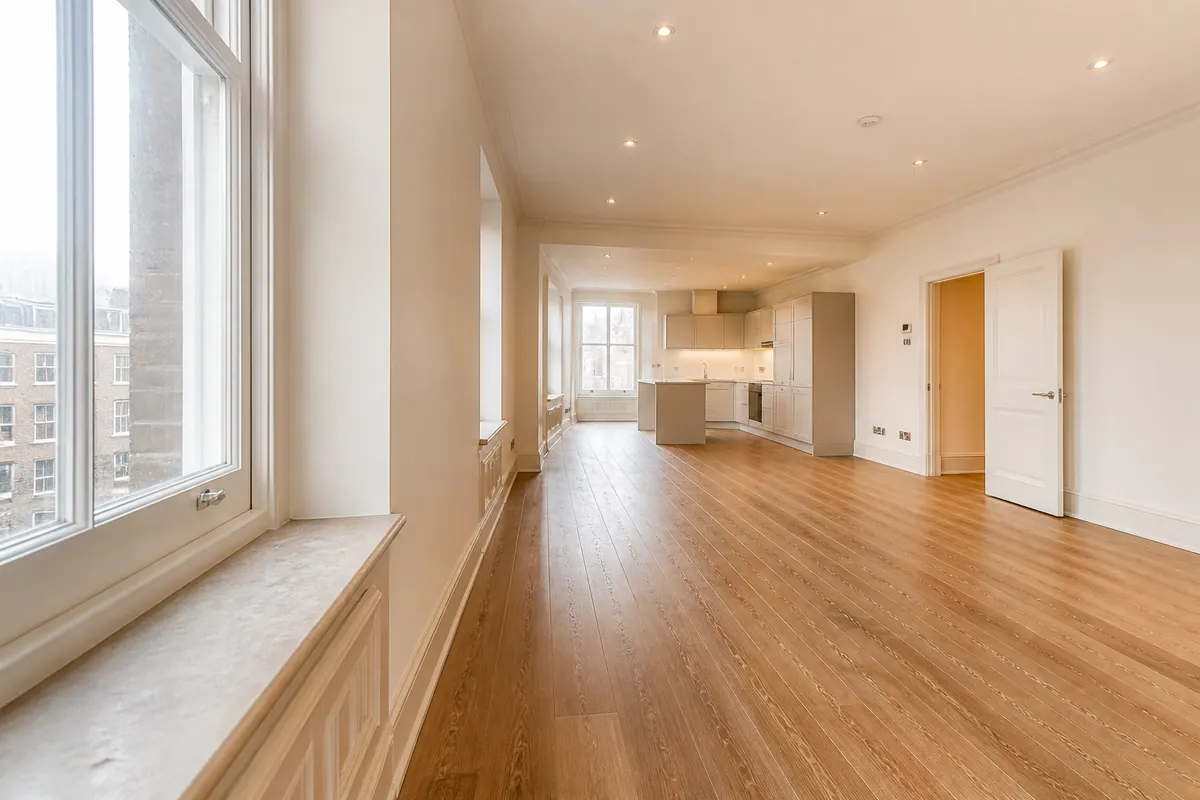
Make remaining deposits and obstructions clear.
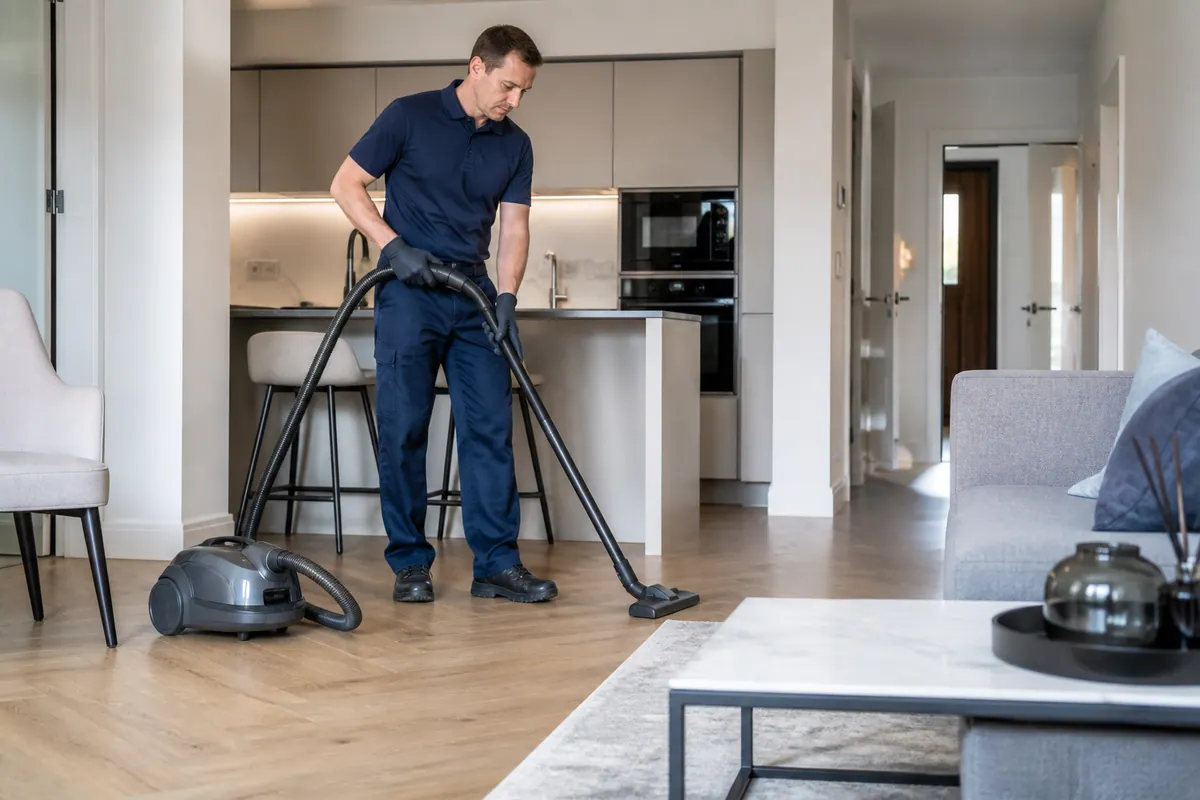
Follow the material-aware room priorities.
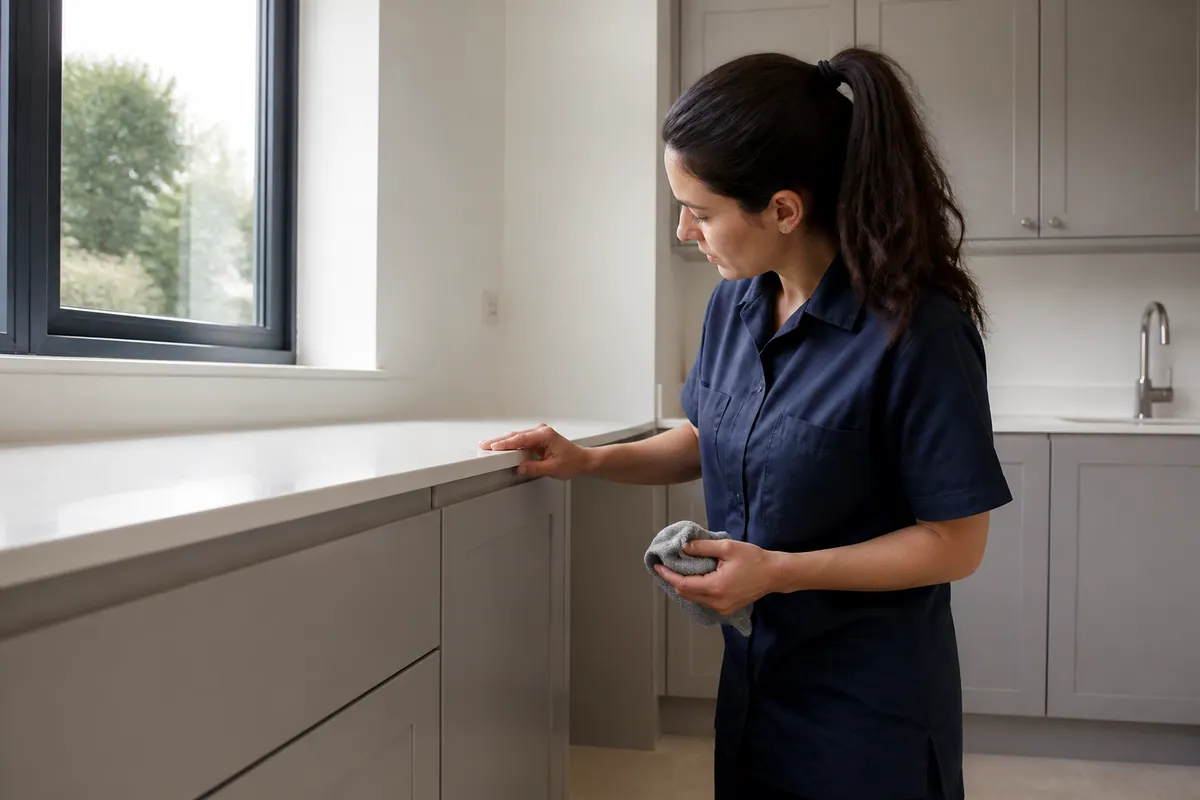
Compare completed detail with the agreed priorities.
Arrange the next stage around the reviewed areas.
Pictures represent planning stages and should not be read as customer evidence.
Start with the work
Select the work closest to yours to organise the enquiry. A selection does not confirm the full scope or availability.
For extensive works, note the sequence in which areas become available. Match cleaning priorities to released surfaces and their care requirements.
Beyond the work zone
Include the quiet corners in the discussion.
The final removal of tools can leave a different trail from the installation itself. Check the exit route as part of the enquiry.
Give concrete examples of the detail you want included; this makes the discussion more useful than asking for everything to be spotless.
Tell Alesta about unfinished tasks instead of assuming the clean covers deposits created afterwards.
The dust route
A property inspection may reveal different priorities from those pictured here.
Include the exposed tops and lips you want considered in the surface list.
Room edges often need a deliberate check after the larger surfaces look clear.
Radiator edges and accessible fittings should be part of the agreed room discussion.
The exit route may need attention even where no building work occurred.
Different issues / different scope
| Post-build issue | Example | How it is approached |
|---|---|---|
| Fine dust | Settled deposits on exposed horizontal detail | Method and reach follow the surface list. |
| Loose cleaning remnants | Unbonded residue in accessible cleaning areas | It can belong to cleaning, unlike construction waste. |
| Adhesive or labels | A label mark on an installed fitting | Installer information may be needed before treatment is agreed. |
| Paint, plaster or cement spots | Bonded spots beside completed work | No promise is made that every bonded mark will lift. |
| Protective film | A covered face on a new component | Identify the product and discuss appropriate handling first. |
Two separate jobs
The relevant task is cleaning reachable room features, not collecting the materials left beside them.
Timber offcuts and building materials are different from dust. Ask about a separate clearance scope.
Discuss building waste disposal ↗Different project briefs
A flat’s room count does not show the detail around its fitted surfaces.
Name the worktop material and coating before discussing fitting residue on cabinetry.
Identify glass, fittings and tile residue individually in the bathroom request.
Use a room schedule to distinguish dust removal from specialist residue questions.
Explain what was refurbished and who can approve the relevant room priorities.
Commercial suitability must be checked; describe premises and coordination needs before assuming availability.
A useful distinction
Builder stage
Cleaning stage
Protect the new finish
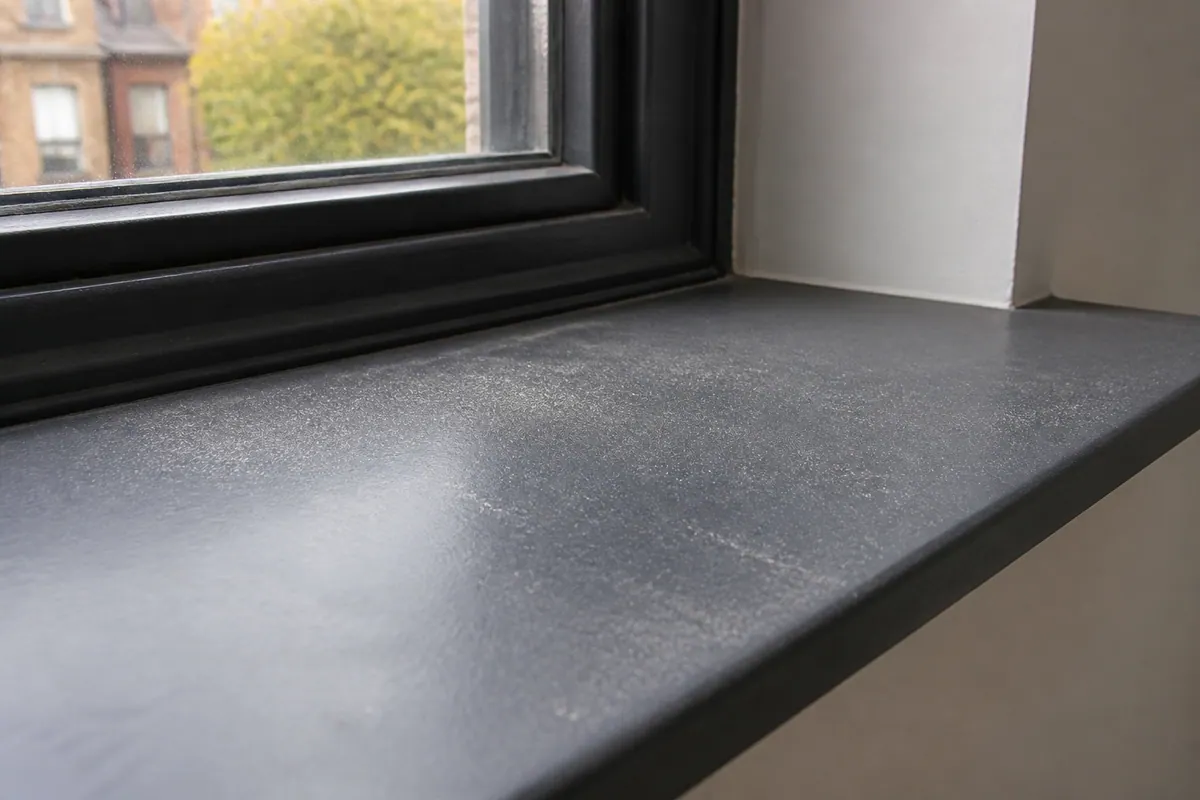
Illustrative surface review.
A cleaning brief should name what lies beneath the residue.
Point out delicate details during the scope discussion. Preserving a new coating matters more than attempting an aggressive removal method.
Different products can reach cleaning readiness at different times.
Name the actual material; a stone-effect surface is not necessarily stone.
Glass and coated metal require their own residue assessment.
At a glance
Build your brief
A few specifics make the scope easier to discuss.
Entering details here only organises your brief. Contact Alesta separately to discuss suitability and a quote.
The proposed clean still needs confirmation against the property, especially where difficult residue or separate collection is involved.
Discuss the brief: 020 3608 3976Glass after renovation
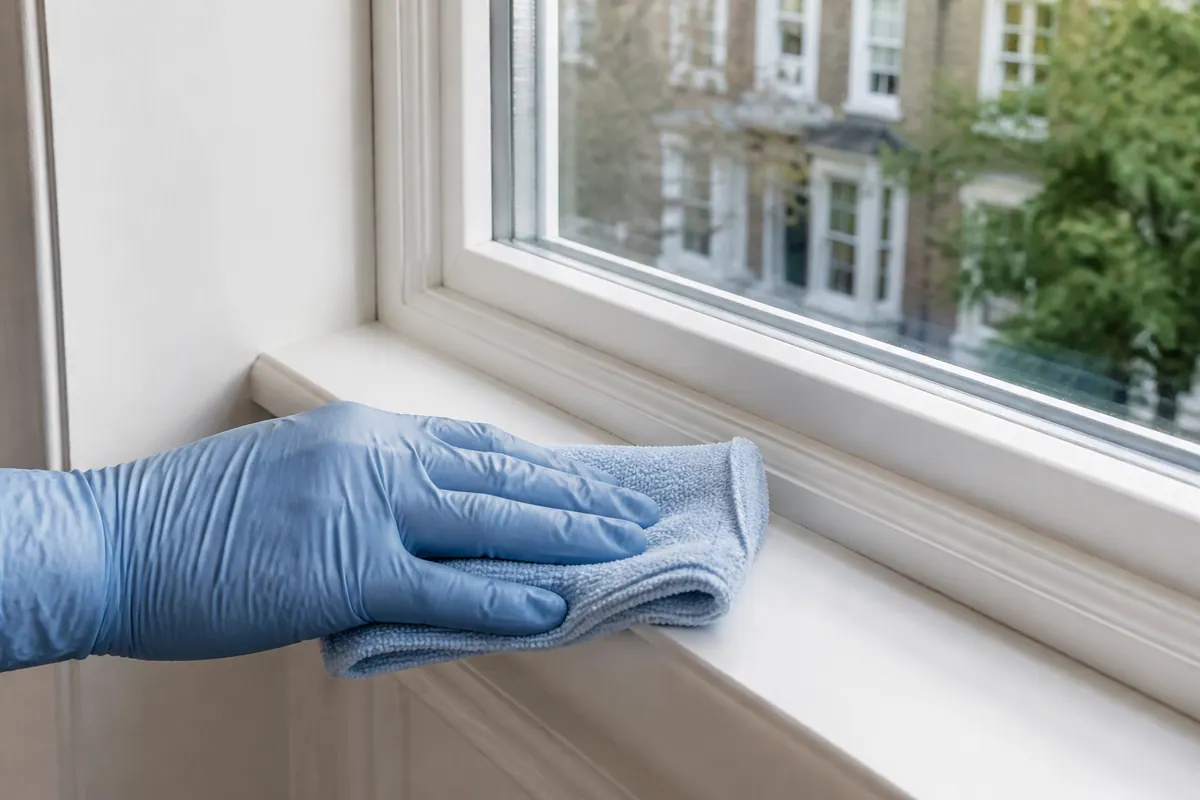
A window list needs height and face information, not simply the number of windows in the room.
Construction marks need a separate assessment of suitable treatment; a glazing clean is not an unlimited removal guarantee.
Plan separate window cleaning ↗Service-area planning
Use the map to locate the Chiswick service area, not an Alesta branch. Provide the actual address when asking about access and appointment availability.
For another nearby area, contact Alesta through the main after builders service to confirm coverage and availability.
Before the appointment
A useful first account separates the completed installation from the deposits now visible. List the rooms being offered for cleaning and note any work that will happen later. Kitchen dust may reach the family seating space even when no fitting took place there.
Include the part of the journey between the entrance and the work area. Internal obstacles can matter even in an otherwise empty property. Identify a clear route on the ground floor before the visit.
The material needs to be identified before selecting a method. Share any installer instructions and distinguish bonded marks from loose dust; some treatments may be unsuitable or separately quoted. Include visible deposits beside retained furnishings without assuming their treatment is included.
Follow the evidence across thresholds and ledges. The additional room should be named in the enquiry so time and access can be considered. Here, inspect the ground-floor kitchen and living spaces.
The published guide begins at £29/hour, with cleaning equipment and materials included. The figure is not a total for the property: condition, access and required detail still need review.
A separate room can be complete while trades still use its doorway. Discuss the full route before deciding whether the sequence is workable.
First distinguish surfaces requiring cleaning from items requiring removal. The latter need an independent waste enquiry.
Yes, ask about carpet cleaning as a separate requirement. Identify the carpeted rooms and what affected them, so availability and suitable treatment can be discussed. The general renovation clean does not automatically include this additional work.
The time depends on more than room count. Allow the discussion to cover fittings and access as well as any product-specific drying requirements. Decide which rooms need to return to ordinary household use first.
A mark can be an installation issue rather than removable residue. Cleaning should not be used to disguise that distinction.
Your project / the final clean
Use the project details to start a quotation discussion, keeping difficult surfaces and separate services visible from the outset.
