
Paint & sealants
Follow the product-specific drying instructions before arranging contact cleaning.
Fulham · Bring the rear kitchen into the same plan as the hall
Bring the rear kitchen into the same plan as the hall.
Keep the clean focused on renovation effects rather than unrelated household tasks.
The route through an occupied home matters when work has finished at the back of the property. For your Fulham enquiry, describe the rear kitchen and entrance route. Identify the new worktop finish and any marks left by fitting.
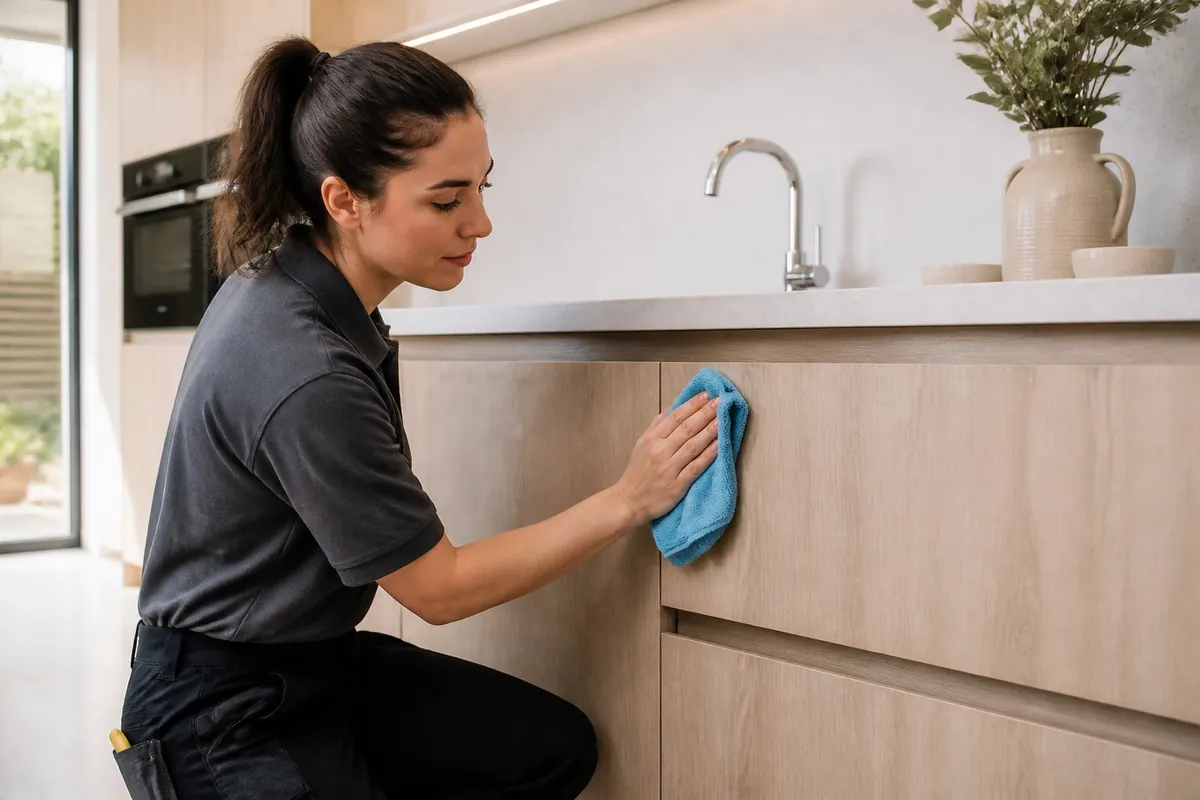
Illustrative renovation scene; no customer job or measured result is represented.
Protect the new finish
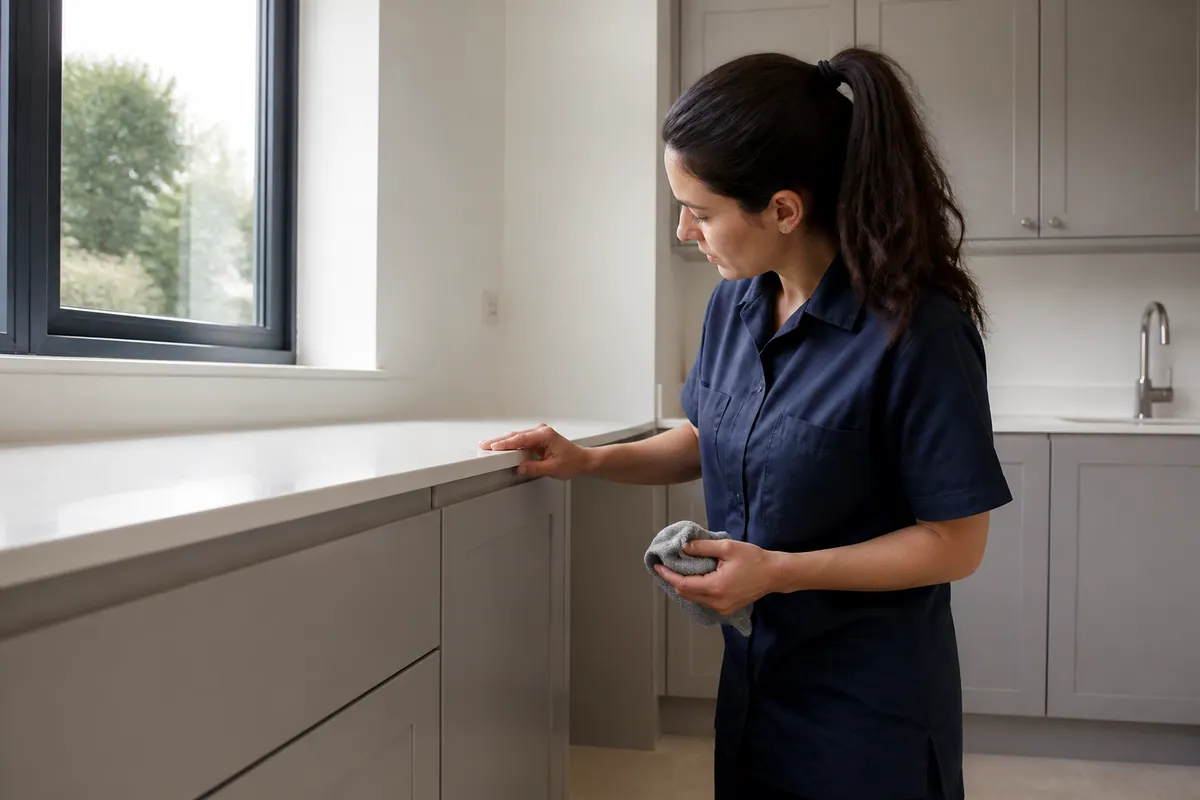
Illustrative surface review.
Newly installed does not always mean ready to clean.
Separate loose dust from bonded material. Safe treatment depends on both the deposit and the finish, and specialist work may need another quote.
Follow the product-specific drying instructions before arranging contact cleaning.
Describe the coating as well as the material wherever possible.
Record installation marks on new fittings before discussing their removal.
Fulham / the specific room brief
The route through an occupied home matters when work has finished at the back of the property.
This Fulham planning example centres on rear-room kitchen refurbishment. The route through an occupied home matters when work has finished at the back of the property. The useful inspection route follows the rear kitchen and entrance route, with attention to worktop edges and kitchen thresholds.
Identify the new worktop finish and any marks left by fitting. Keep any care notes for new worktop finish available when discussing the visible marks.
Agree access past rooms the household is still using. Keep the clean focused on renovation effects rather than unrelated household tasks.
Two separate jobs
Cleaning tackles the post-work condition of specified surfaces, rather than emptying the room of building supplies.
Describe rubble, boards and bulky packaging separately, including their amount and the route for collection.
Discuss building waste disposal ↗An ordered room release
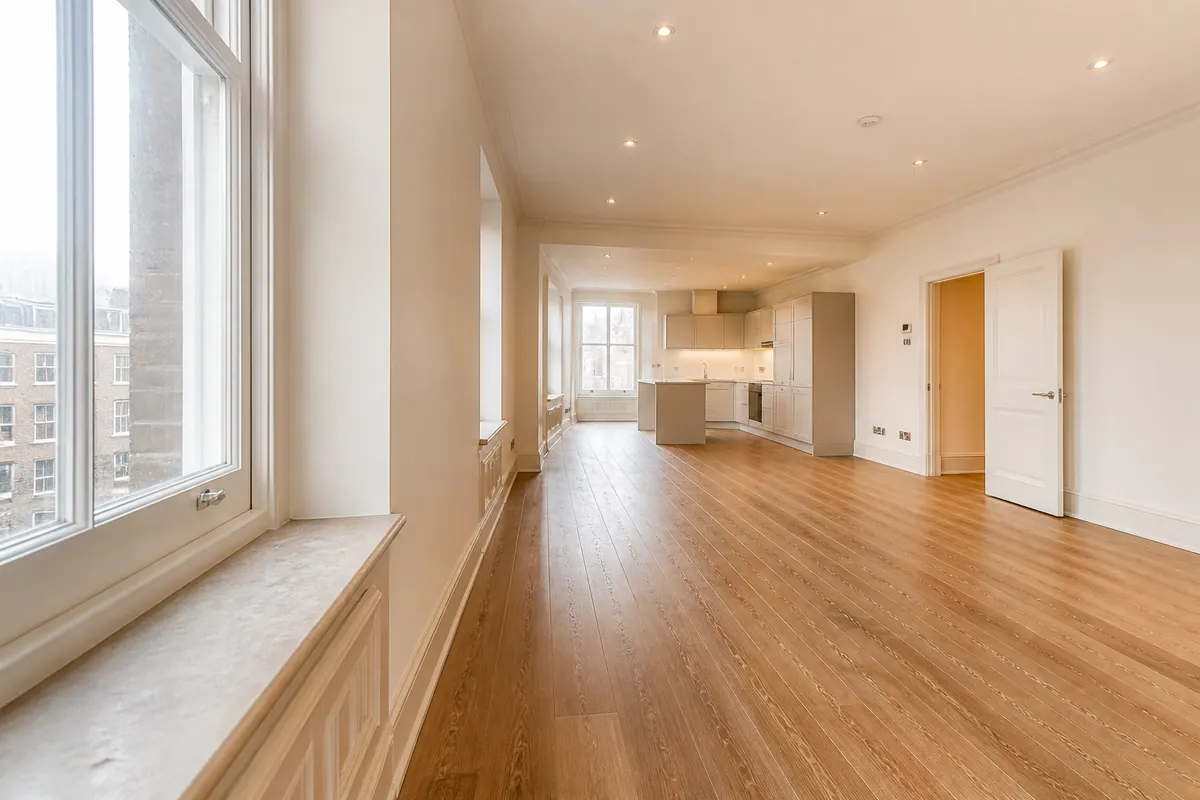
Identify rooms released after the last dusty task.
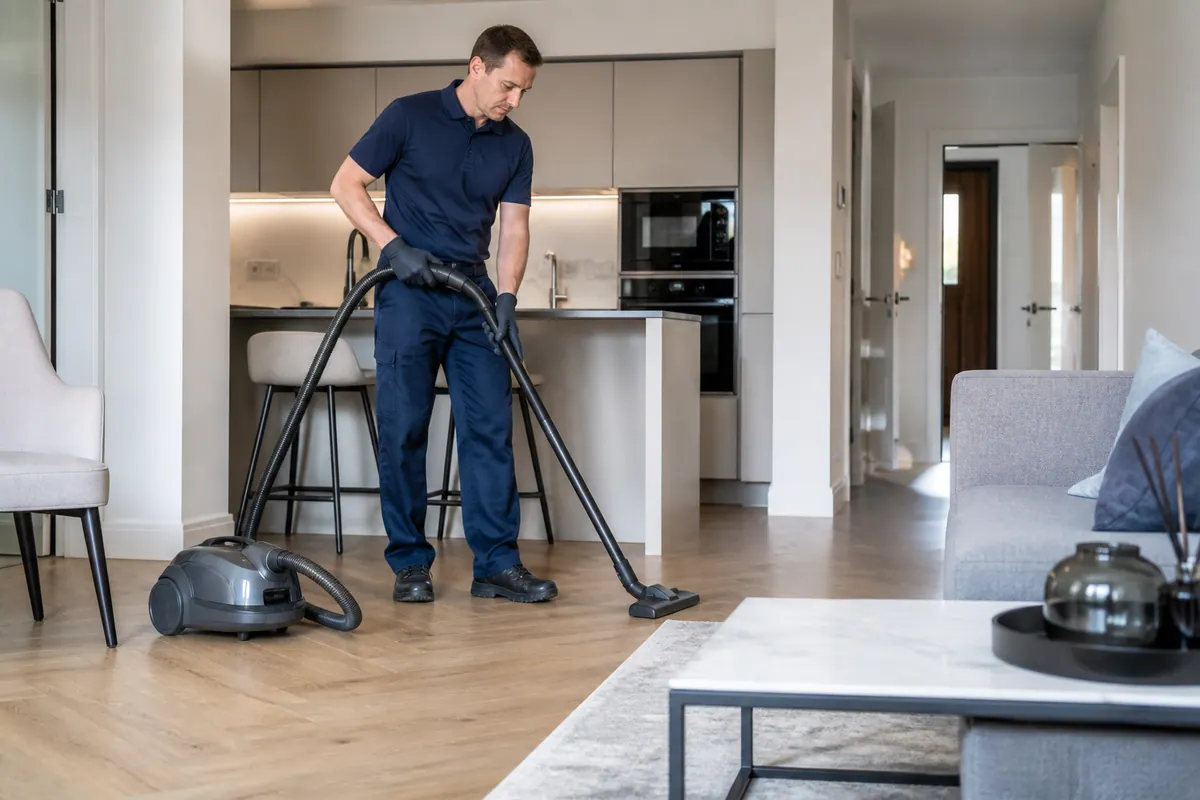
Use suitable methods across the released areas.
Keep specialist residue questions separate.

Use the review to inform the handover.
The sequence is illustrative, not a before-and-after record of the same home.
A scoped quote
From £29/ hour
Alesta includes materials and equipment for the cleaning; the current price still needs confirmation.
Accessible detail, dust and condition influence time. Window tasks, waste collection and specialist treatment are separate considerations.
| Project | Pricing basis | What to describe |
|---|---|---|
| Smaller refurbishment | From £29/hour; scope confirmed | Rooms released and cleaning priorities |
| Kitchen or bathroom work | From £29/hour; scope confirmed | New materials and safe access |
| Whole-property renovation | Assessment-led project quotation | Floor materials and accessible detail |
| Commercial refurbishment enquiry | Project suitability to be established | Site requirements and the enquiry contact |
Based on Alesta’s published after builders cleaning rate. Building waste removal is quoted separately.
Service-area planning
Use the map to locate the Fulham service area, not an Alesta branch. Provide the actual address when asking about access and appointment availability.
For another nearby area, contact Alesta through the main after builders service to confirm coverage and availability.
Start with the work
These project types prompt useful questions; choosing one does not book a service or include every possible task.
A full refurbishment brief should identify finished areas, remaining obstructions and materials that cannot share one cleaning method.
Beyond the work zone
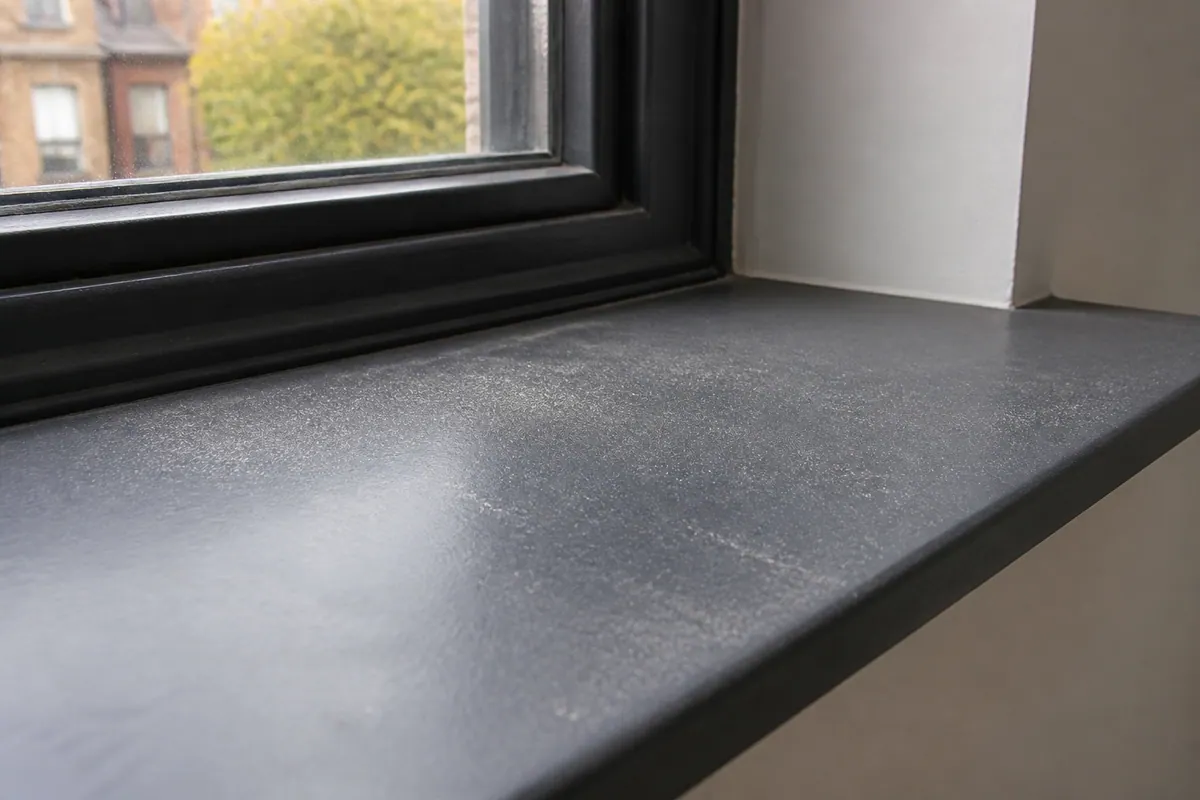
A clean-looking centre can hide dusty edges.
Where rooms open into each other, explain which surfaces carry deposits rather than relying solely on the name of the renovated room.
The brief should describe reach and material as well as dust level, allowing suitable removal methods to be discussed.
Keep the proposed visit aligned with actual work completion, not simply the original renovation date.
The dust route
This diagram suggests inspection points; it does not document a particular property.
External shelves and sill tops can reveal deposits missed from the doorway.
Perimeter detail includes low junctions as well as the frame above a door.
A bathroom fitting needs a different surface description from a painted radiator.
Track deposits into connecting spaces and ask for those areas to be priced explicitly.
Different issues / different scope
| Post-build issue | Example | How it is approached |
|---|---|---|
| Fine dust | Dust resting on frame tops or sills | Plan this around reachable areas and their finish. |
| Loose cleaning remnants | Small surface deposits after the work | Coverage depends on the agreed cleaning tasks. |
| Adhesive or labels | An unidentified mark beneath a label | Installer information may be needed before treatment is agreed. |
| Paint, plaster or cement spots | Visible spotting after wet trades | Flag these individually; some need specialist attention. |
| Protective film | A fitting still wearing its protective layer | This is not automatically part of a cleaning visit. |
Different project briefs
Keep the entrance and room connections on the inspection list.
Check the connection to the adjoining room when describing kitchen dust.
A newly fitted bathroom needs coating and sealant information with its room list.
Separate the released rooms from areas still occupied by tools or materials.
Specify the renovation effects before adding any separate letting requirements.
Set out commercial requirements for discussion, including access and work still outstanding.
A useful distinction
Builder stage
Cleaning stage
Room-by-room brief
List external units, worktop material and floor edges. Appliance exteriors or additional internal detail need explicit discussion.
List the sanitary areas being included and mention installation marks before expecting treatment.
Check reachable frames and floors, and mention any dust inside storage rather than assuming it is included.
Include the living-space edges affected by nearby work and identify unusual finishes before methods are discussed.
At a glance
Build your brief
Prepare the facts before asking about timing.
The planner is private and local to this page. A completed summary is not a reservation or a priced service.
The planner cannot assess a finish or access route; these details still need review before the quotation.
Discuss the brief: 020 3608 3976Who is planning the handover?
Explain which rooms you want back in use and keep the renovation tasks distinct from everyday household cleaning.
Explain what was changed and who can approve the scope before promising a cleaning outcome to an incoming occupant.
Describe the proposed coordination without presuming it is offered under a standard contract; project suitability requires direct confirmation.
Glass after renovation
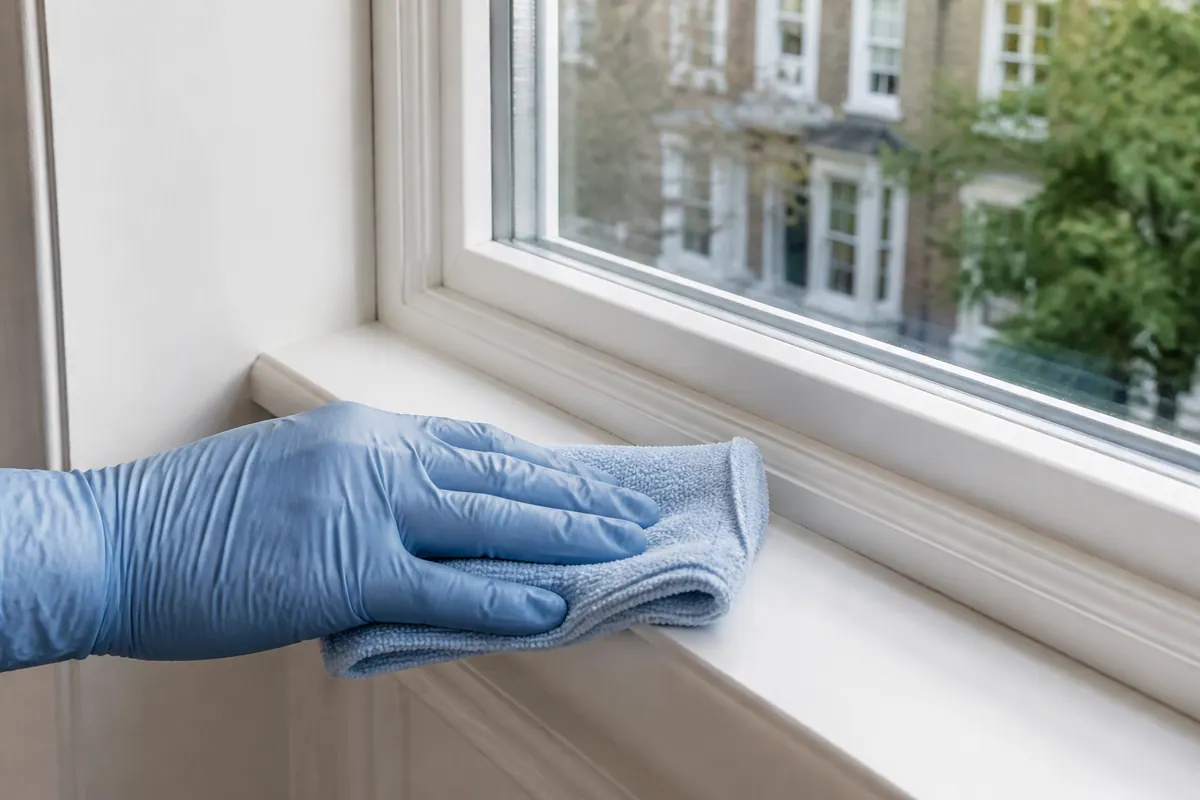
Tell Alesta where the glass is and how it can be reached; additional window work requires confirmation.
Bonded marks are not equivalent to surface dust. Safe treatment must be considered rather than promised.
Plan separate window cleaning ↗Before the appointment
Start with what is still present: loose dust, fitting marks or materials awaiting collection. These are different questions and should not be combined into an assumed package. The route through an occupied home matters when work has finished at the back of the property.
The appointment needs a usable entry arrangement, not simply an address. Mention keys, room release and any restrictions on carrying equipment. Agree access past rooms the household is still using.
No, cleaning does not correct installation damage. Identify chips or scratches on the new worktop separately from deposits that may be removable. The material and supplier guidance determine how the cleaning request can be approached.
Look at the threshold as a review point. Deposits beyond it may justify extending the proposed area after discussion. Here, inspect the rear kitchen and entrance route.
A final figure needs a scope review even though the starting rate is published: from £29/hour, with cleaning materials and equipment included.
The clean follows the agreed state of the project. New work afterwards is not automatically part of that same finishing scope.
Do not leave bulky packaging inside an undefined cleaning request. Describe the amount and access for removal, then agree the surface work independently.
Explain what is required beyond the room surfaces. Availability and suitability must be confirmed for additional window or carpet work.
Do not infer a completion time from the starting rate. The condition and released areas need to be understood before arranging the visit. Keep the clean focused on renovation effects rather than unrelated household tasks.
Some residue cannot be removed safely through the agreed clean. Ask whether installer guidance or a separately assessed specialist treatment is appropriate; cleaning does not restore damaged coatings.
Your project / the final clean
Bring the work history and material notes rather than an assumed package. Confirm the tasks and arrangements before proceeding.
