
Kitchen
Include fittings and reachable edges in the kitchen brief instead of assuming an all-inclusive appliance clean.
Isleworth · Review the boundary between old rooms and new work
Review the boundary between old rooms and new work.
Use the threshold as a review point when returning rooms to use.
A downstairs refurbishment can leave a dusty threshold beside an otherwise unchanged room. For your Isleworth enquiry, describe the refurbished downstairs rooms. Identify which marks sit on new tiles and which pre-date the project.
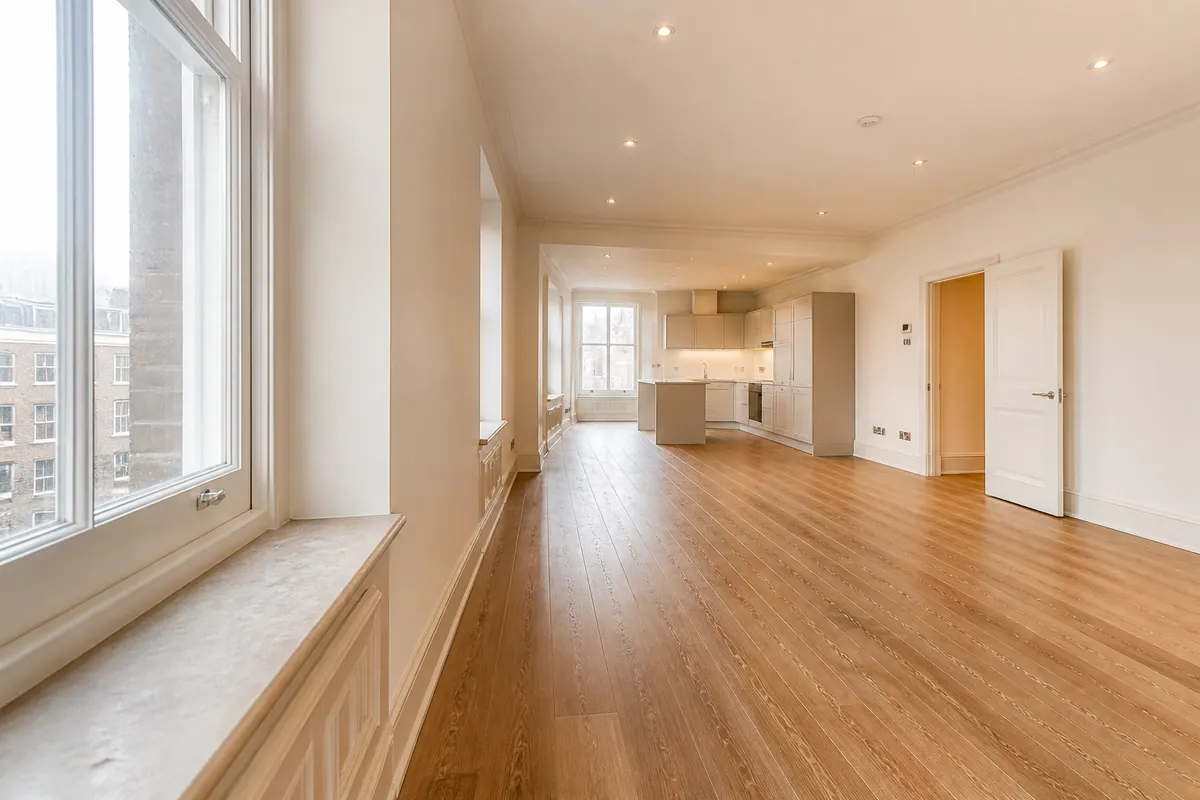
Illustrative renovation scene; no customer job or measured result is represented.
Build your brief
Use the questions to collect the essentials.
A scope summary is a starting note, not a booking. The tool does not transmit the answers to Alesta.
Use the output alongside material notes and access information; it cannot replace an assessment of the cleaning scope.
Discuss the brief: 020 3608 3976Isleworth / the specific room brief
A downstairs refurbishment can leave a dusty threshold beside an otherwise unchanged room.
This Isleworth planning example centres on downstairs refurbishment. A downstairs refurbishment can leave a dusty threshold beside an otherwise unchanged room. The useful inspection route follows the refurbished downstairs rooms, with attention to new tile joints and transition strips.
Identify which marks sit on new tiles and which pre-date the project. Keep any care notes for new floor tiles available when discussing the visible marks.
Describe access through the occupied part of the home. Use the threshold as a review point when returning rooms to use.
Room-by-room brief
Include fittings and reachable edges in the kitchen brief instead of assuming an all-inclusive appliance clean.
Describe sanitaryware, tiles and fittings, with fresh sealant and any glass work flagged separately.
Check reachable frames and floors, and mention any dust inside storage rather than assuming it is included.
Name exposed ledges and frame detail before furniture makes them harder to reach.
Planning beyond the trades
Record the surfaces affected by the completed works.
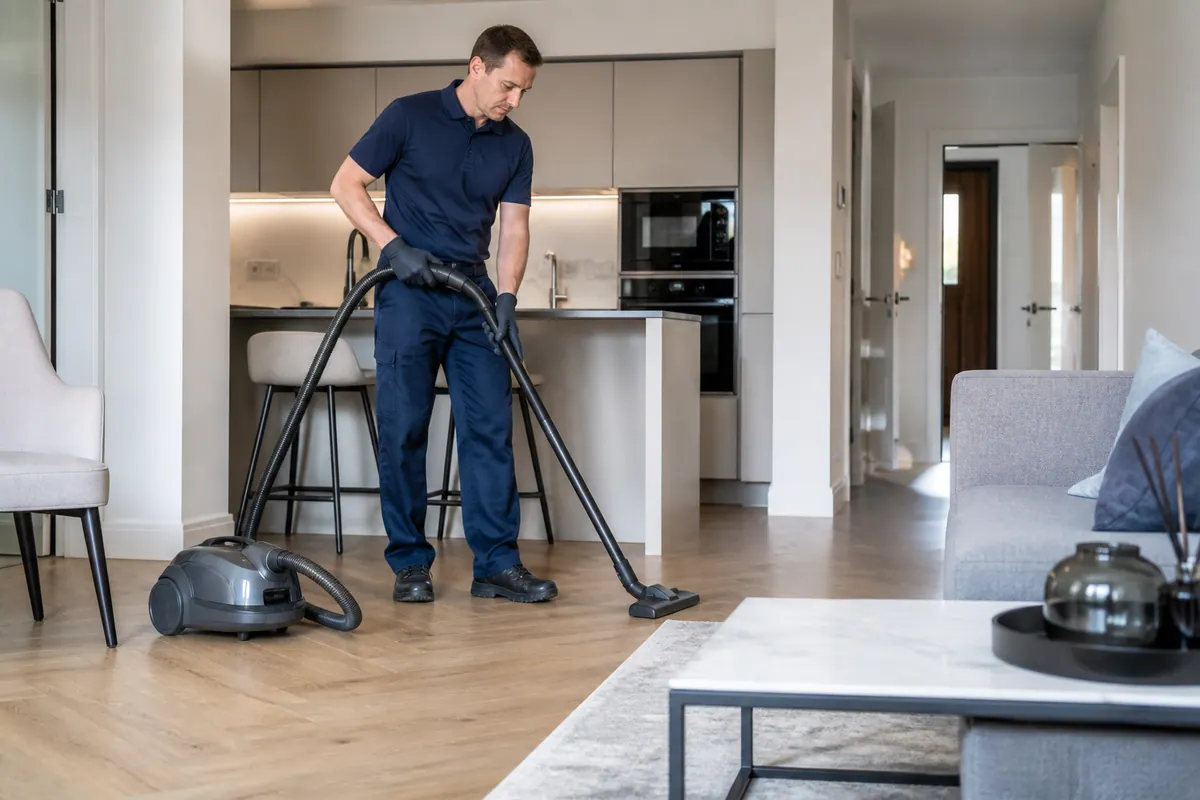
Follow the material-aware room priorities.
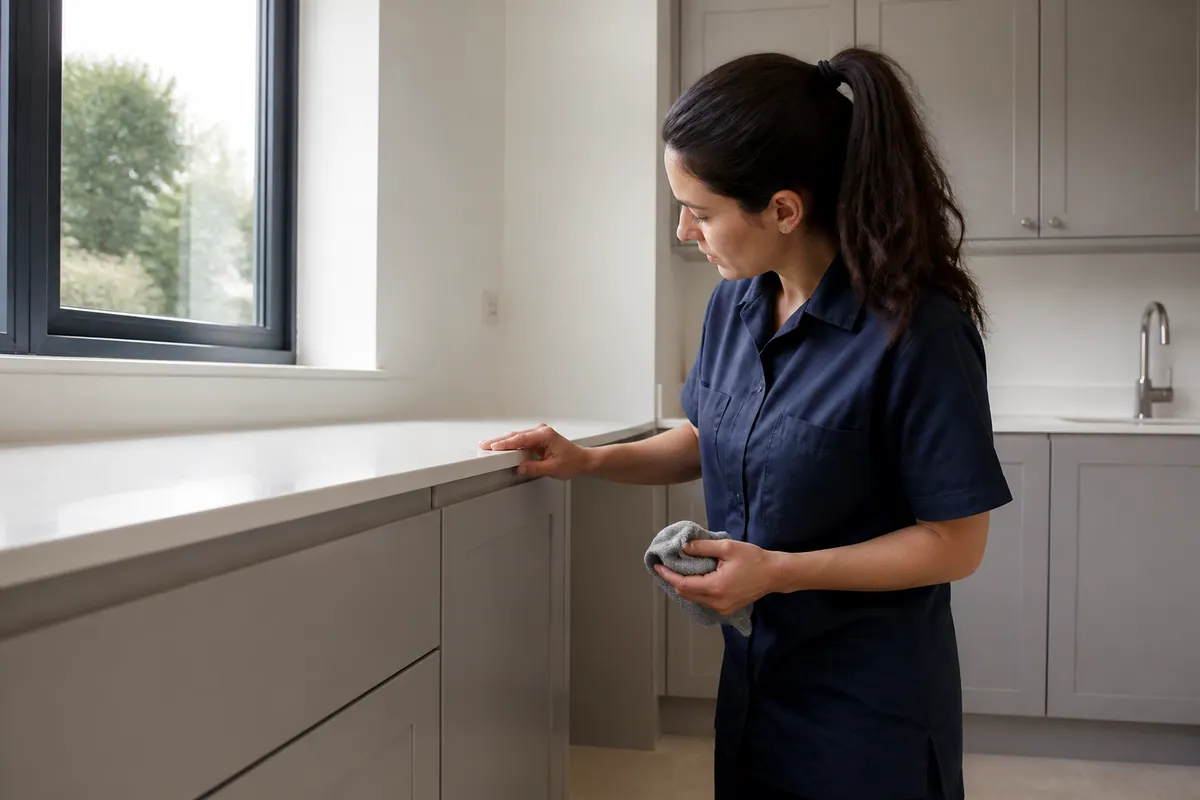
Explain where further advice may be necessary.

Prepare for occupation without assuming a guarantee.
This is a visual explanation of stages, not photographic proof of one completed job.
A scoped quote
From £29/ hour
Confirm the rate applicable to the enquiry; cleaning equipment and materials form part of the service.
Time can change with fittings, dust and access restrictions. Do not read the starting guide as including every additional service.
| Project | Pricing basis | What to describe |
|---|---|---|
| Smaller refurbishment | From £29/hour; scope confirmed | Finish readiness and access to details |
| Kitchen or bathroom work | From £29/hour; scope confirmed | New materials and safe access |
| Whole-property renovation | Quote after the room scope is reviewed | Room schedule and surface-care needs |
| Commercial refurbishment enquiry | Confirm suitability before pricing | Building restrictions and release dates |
Based on Alesta’s published after builders cleaning rate. Building waste removal is quoted separately.
Start with the work
Choose the relevant work type, then provide its actual condition when enquiring; the interactive options are planning prompts only.
Explain where the work stopped and where deposits remain; the two boundaries may not be identical.
Beyond the work zone
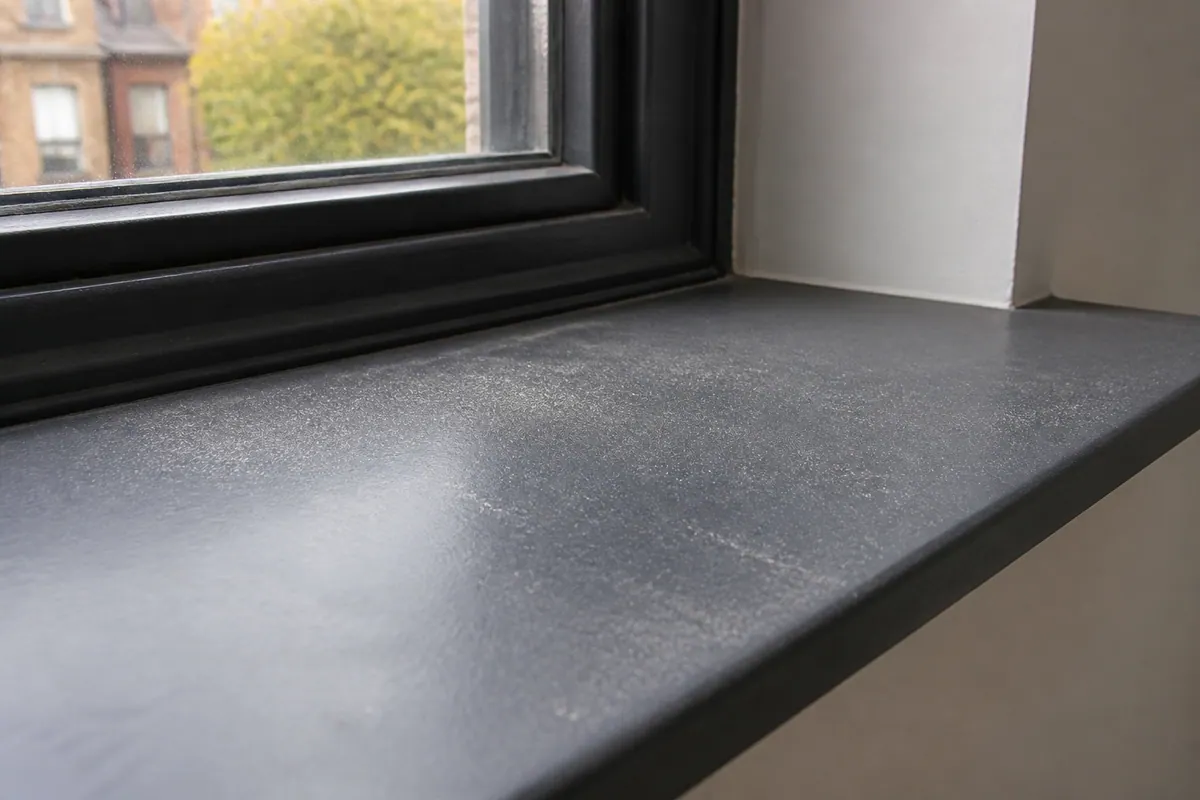
Do not let the room name decide the dust boundary.
Protected furniture does not mean every nearby surface stayed untouched. Examine exposed ledges and passages before ruling a room out.
The brief should describe reach and material as well as dust level, allowing suitable removal methods to be discussed.
If more dusty work is planned, discuss a different order before fixing the appointment.
The dust route
A property inspection may reveal different priorities from those pictured here.
List reachable horizontal details individually where fitted furniture creates extra ledges.
Inspect the line where floors meet skirting and where door frames meet the wall.
Include external detail on agreed fixtures without assuming specialist treatment.
The exit route may need attention even where no building work occurred.
Different issues / different scope
| Post-build issue | Example | How it is approached |
|---|---|---|
| Fine dust | Loose surface dust beside fitted units | Plan this around reachable areas and their finish. |
| Loose cleaning remnants | Unbonded residue in accessible cleaning areas | Confirm inclusion instead of assuming site clearance. |
| Adhesive or labels | A bonded patch on new trim | Identify both coating and deposit; treatment needs confirmation. |
| Paint, plaster or cement spots | Hardened material at an installation edge | No promise is made that every bonded mark will lift. |
| Protective film | A manufacturer’s film on new cabinetry | Ask the installer and Alesta before treating this as waste. |
Two separate jobs
A practical cleaning scope describes what can be reached and treated, not what must be carried away.
Construction offcuts or large packaging can block the work route; ask about collection before treating the room as accessible.
Discuss building waste disposal ↗Different project briefs
Note deposits beyond the renovated room before calling the property ready for occupation.
External units and surrounding floor edges can need attention after installation.
Explain which new materials permit cleaning and which still need time.
Group the agreed rooms by readiness, not only by floor level.
Tenant turnover does not automatically turn this into an end-of-tenancy checklist.
Ask whether the particular fit-out can be accommodated rather than assuming a contractor agreement.
A useful distinction
Builder stage
Cleaning stage
Protect the new finish
Illustrative surface review.
Protecting the finish can mean leaving a difficult mark for assessment.
Tell Alesta what the installer used and provide the available care notes. Scraping or strong products may be unsuitable even when a deposit is obvious.
Wet or uncured finishes need time under the relevant manufacturer guidance.
Name the actual material; a stone-effect surface is not necessarily stone.
External cabinet finishes need identification before adhesive is treated.
At a glance
Who is planning the handover?
List the rooms being returned to use and who can explain the newly installed surfaces.
Provide a clear point of contact for the post-work scope and keep any unrelated inspection duties separate.
Share the practical site details so availability and coordination can be discussed for that particular enquiry.
Glass after renovation
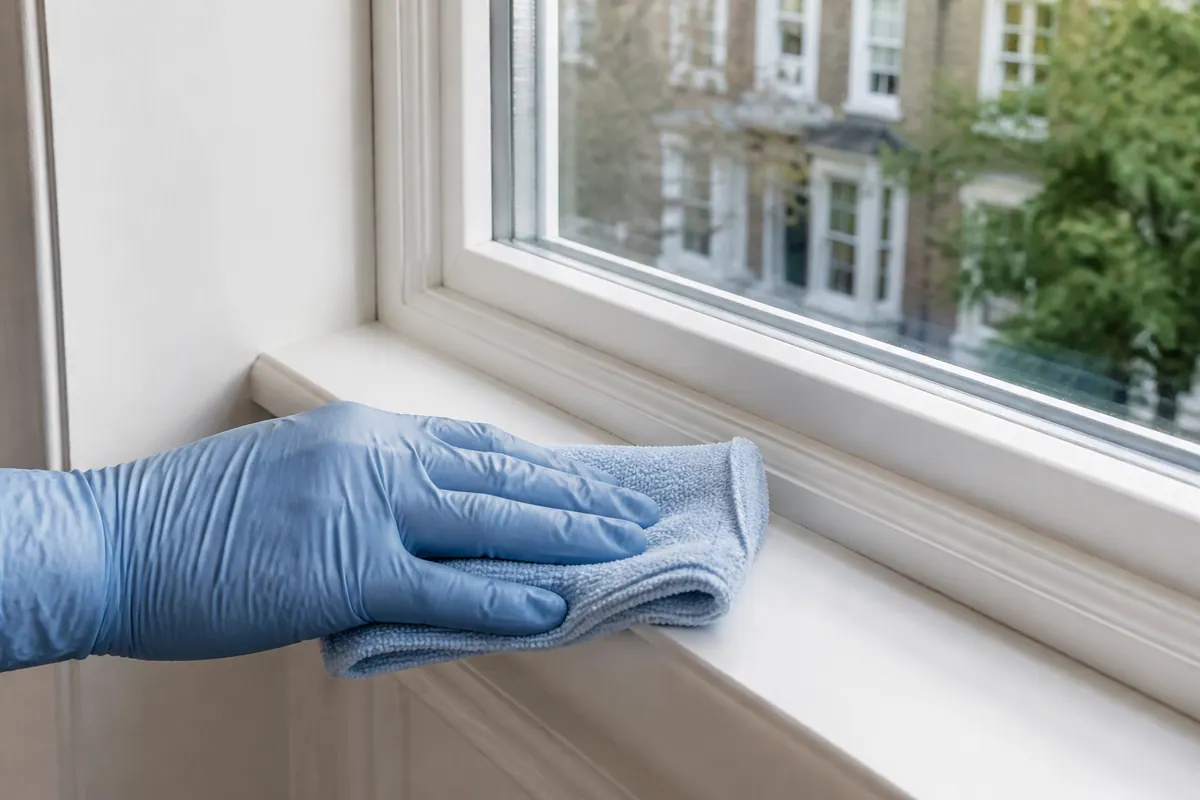
Tell Alesta where the glass is and how it can be reached; additional window work requires confirmation.
Explain any plaster or paint spots so the scope reflects their condition, not just the glass area.
Plan separate window cleaning ↗Service-area planning
Use the map to locate the Isleworth service area, not an Alesta branch. Provide the actual address when asking about access and appointment availability.
For another nearby area, contact Alesta through the main after builders service to confirm coverage and availability.
Before the appointment
Start with what is still present: loose dust, fitting marks or materials awaiting collection. These are different questions and should not be combined into an assumed package. A downstairs refurbishment can leave a dusty threshold beside an otherwise unchanged room.
Explain any shared access requirements directly. A neighbourhood name cannot establish the practical route inside an individual building. Describe access through the occupied part of the home.
Cleaning is not a repair for damaged tiles or other finishes. Point out existing chips and scratches before discussing loose dust or bonded residue. The appropriate cleaning method depends on the actual material and cannot promise to remove a defect.
Ask about adjoining areas where the condition warrants it. Avoid extending the brief to unrelated household tasks without identifying them separately. Here, inspect the refurbished downstairs rooms.
Published pricing begins from £29 per hour. Cleaning supplies and equipment are included, but the property scope and any extras still require agreement.
Tell Alesta which trades are returning and what they will do. Dust-producing work after a clean may change the sensible sequence; do not assume later deposits are included in the visit.
Ask specifically about building-waste removal where boards or rubble remain. The finishing service addresses the agreed cleaning detail.
Extra work must be named before the visit. A general room brief does not automatically include carpet treatment or every internal and external glass surface.
Allow the scope to be confirmed before relying on a handover time. New finishes must also meet their own care requirements. Use the threshold as a review point when returning rooms to use.
Not every fitting mark is a cleaning task. If removal risks the coating, explain the limitation and consider the appropriate separate advice.
Your project / the final clean
A practical enquiry joins room condition with access and readiness. Share those details before settling the next step.
