
Apartment detail after works
Keep the entrance and room connections on the inspection list.
Knightsbridge · New fittings need a material-by-material check
New fittings need a material-by-material check.
Review installation marks without assuming every mark can be polished away.
A kitchen and bathroom can both look ready while stone, coatings and sealants need different care. For your Knightsbridge enquiry, describe the newly installed wet-room fittings. Avoid treating a coated tap like bare metal when describing cleaning needs.
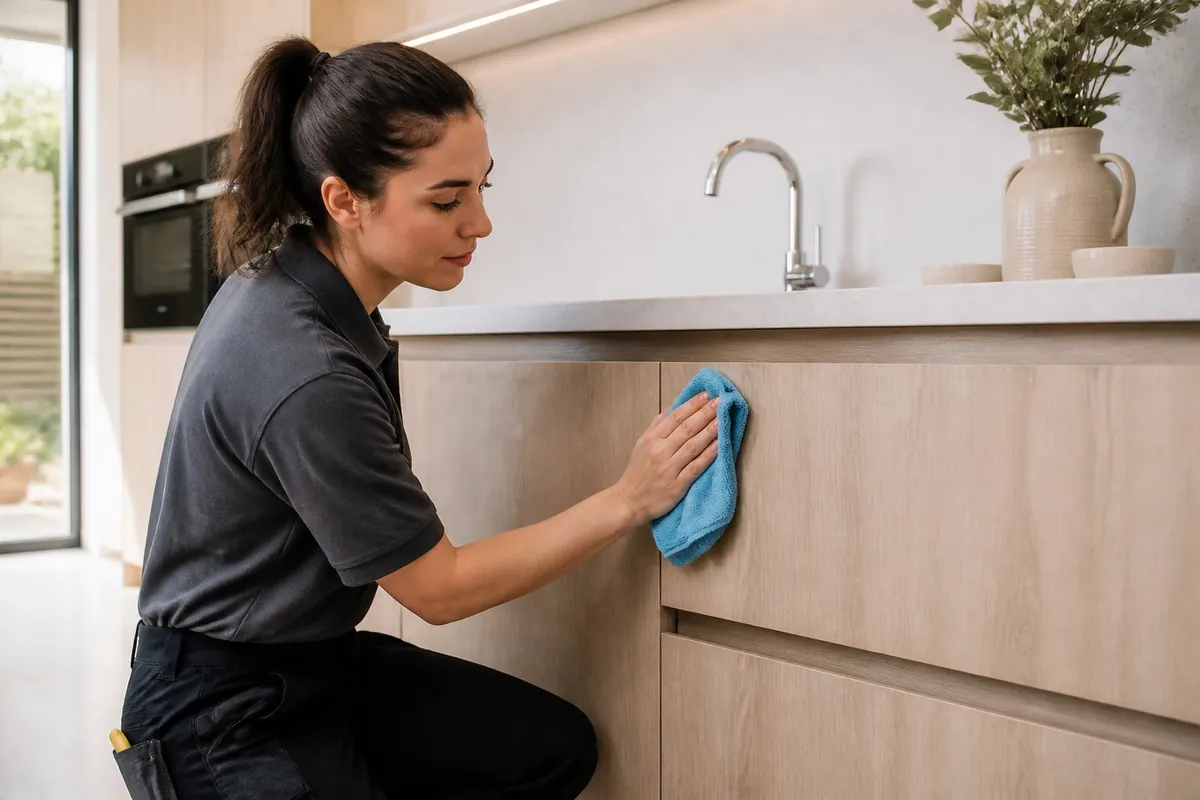
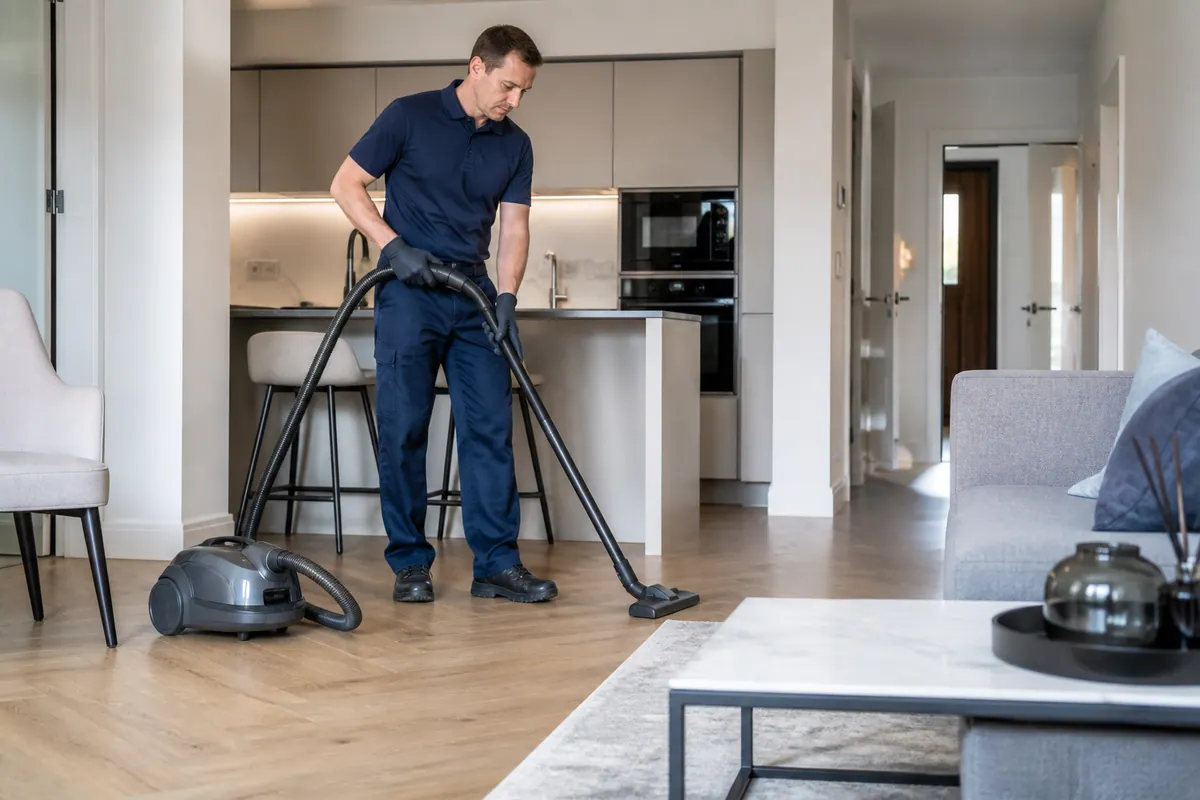
Illustrative renovation scene; no customer job or measured result is represented.
Different project briefs
Keep the entrance and room connections on the inspection list.
List new fittings alongside their care notes, not under one generic surface label.
Check the readiness of sealants before discussing tiles and sanitaryware detail.
Separate the released rooms from areas still occupied by tools or materials.
Specify the renovation effects before adding any separate letting requirements.
Ask whether the particular fit-out can be accommodated rather than assuming a contractor agreement.
A useful distinction
Builder stage
Cleaning stage
Knightsbridge / the specific room brief
A kitchen and bathroom can both look ready while stone, coatings and sealants need different care.
This Knightsbridge planning example centres on kitchen and bathroom installation. A kitchen and bathroom can both look ready while stone, coatings and sealants need different care. The useful inspection route follows the newly installed wet-room fittings, with attention to stone edges and coated tap surfaces.
Avoid treating a coated tap like bare metal when describing cleaning needs. Keep any care notes for stone and coated taps available when discussing the visible marks.
Share the building’s entry process and the contact available on arrival. Review installation marks without assuming every mark can be polished away.
A scoped quote
From £29/ hour
Confirm the rate applicable to the enquiry; cleaning equipment and materials form part of the service.
The amount of reachable detail matters alongside room count. Separate requests such as windows or waste can alter the overall plan.
| Project | Pricing basis | What to describe |
|---|---|---|
| Smaller refurbishment | From £29/hour; scope confirmed | Room condition beyond the floor area |
| Kitchen or bathroom work | From £29/hour; scope confirmed | Sanitaryware or cupboard exterior detail |
| Whole-property renovation | Work-specific price to be agreed | Floor materials and accessible detail |
| Commercial refurbishment enquiry | Availability and scope need review | Proposed tasks and handover arrangements |
Based on Alesta’s published after builders cleaning rate. Building waste removal is quoted separately.
Start with the work
Use a category as a starting point, not a promise that all listed work applies to the property.
Keep the renovation schedule beside the cleaning list so unfinished work is not mistaken for a released area.
Beyond the work zone
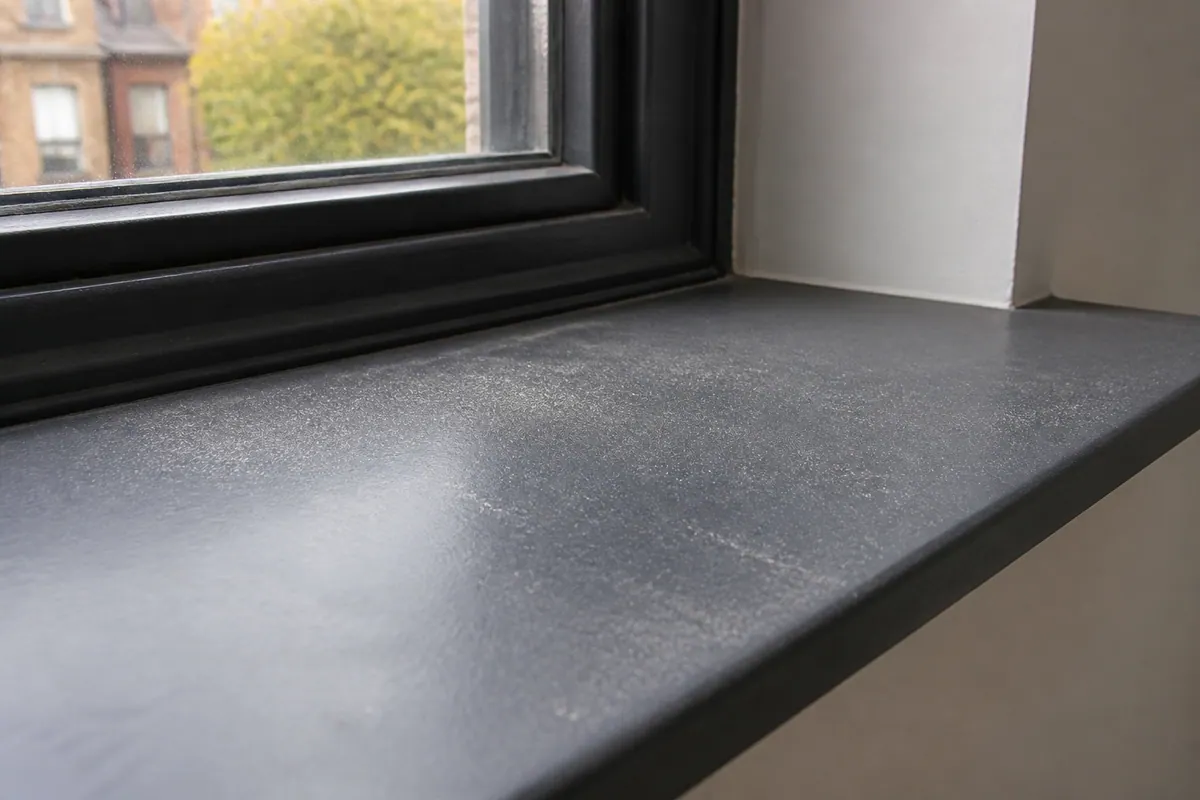
Check where the last tools were carried out.
Doorways, exposed shelves and floor junctions offer different clues about where the work left deposits. Include the affected ones in the enquiry.
The surface list should make clear what can be reached. Appropriate cleaning methods follow those conditions, not a blanket treatment.
Tell Alesta about unfinished tasks instead of assuming the clean covers deposits created afterwards.
The dust route
Use the illustration to organise questions, not as an inclusive service checklist.
Point out high and low resting surfaces that remain accessible after the project.
Inspect the line where floors meet skirting and where door frames meet the wall.
Point out visible deposits on the fixtures, rather than adding an undefined deep-clean request.
Floor cleaning needs an accessible route and a known surface, not just a room count.
Different issues / different scope
| Post-build issue | Example | How it is approached |
|---|---|---|
| Fine dust | Loose surface dust beside fitted units | Discuss removal on the accessible surfaces being included. |
| Loose cleaning remnants | Ordinary dust rather than bulky materials | Confirm inclusion instead of assuming site clearance. |
| Adhesive or labels | A bonded patch on new trim | A cleaning method cannot be chosen from appearance alone. |
| Paint, plaster or cement spots | Visible spotting after wet trades | Assess first; complete removal may damage the finish. |
| Protective film | A manufacturer’s film on new cabinetry | Do not remove by assumption; agree the responsibility. |
Two separate jobs
Focus the cleaning request on fittings, edges and floors that are available for the visit.
A waste enquiry should explain both what remains and how it can leave the property. Keep that separate from surface cleaning.
Discuss building waste disposal ↗Room-by-room brief
Explain where fitting dust remains around the units. Internal storage and specialist marks should not be silently added.
Bathroom floor care follows the material, while new coatings and seals need their own instructions.
Wardrobe interiors require discussion if the work affected them; the room label alone does not include everything.
List doors, ledges and suitable floors, with internal glass or unusual materials explicitly identified.
Protect the new finish
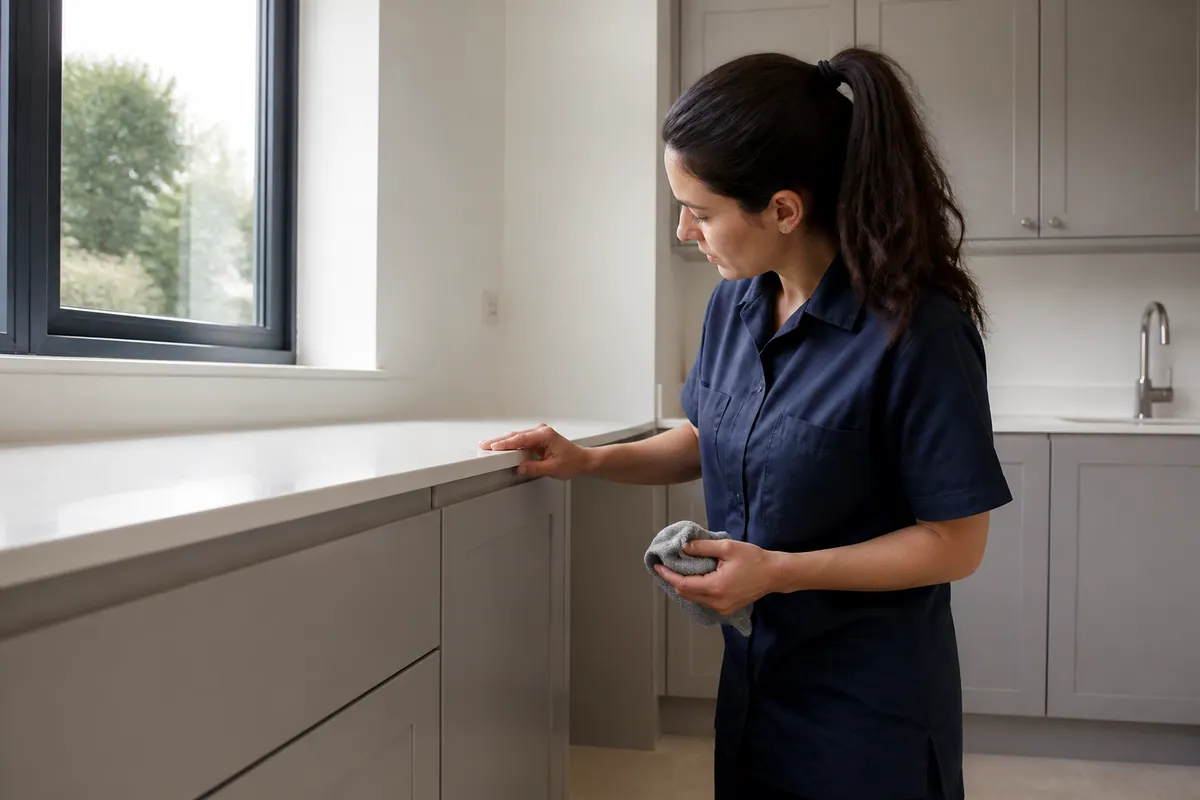
Illustrative surface review.
A stubborn spot does not justify a harsher method.
Separate loose dust from bonded material. Safe treatment depends on both the deposit and the finish, and specialist work may need another quote.
Ask the decorator when the coating can be cleaned, not only when it feels dry.
Describe the coating as well as the material wherever possible.
External cabinet finishes need identification before adhesive is treated.
Before the next property stage
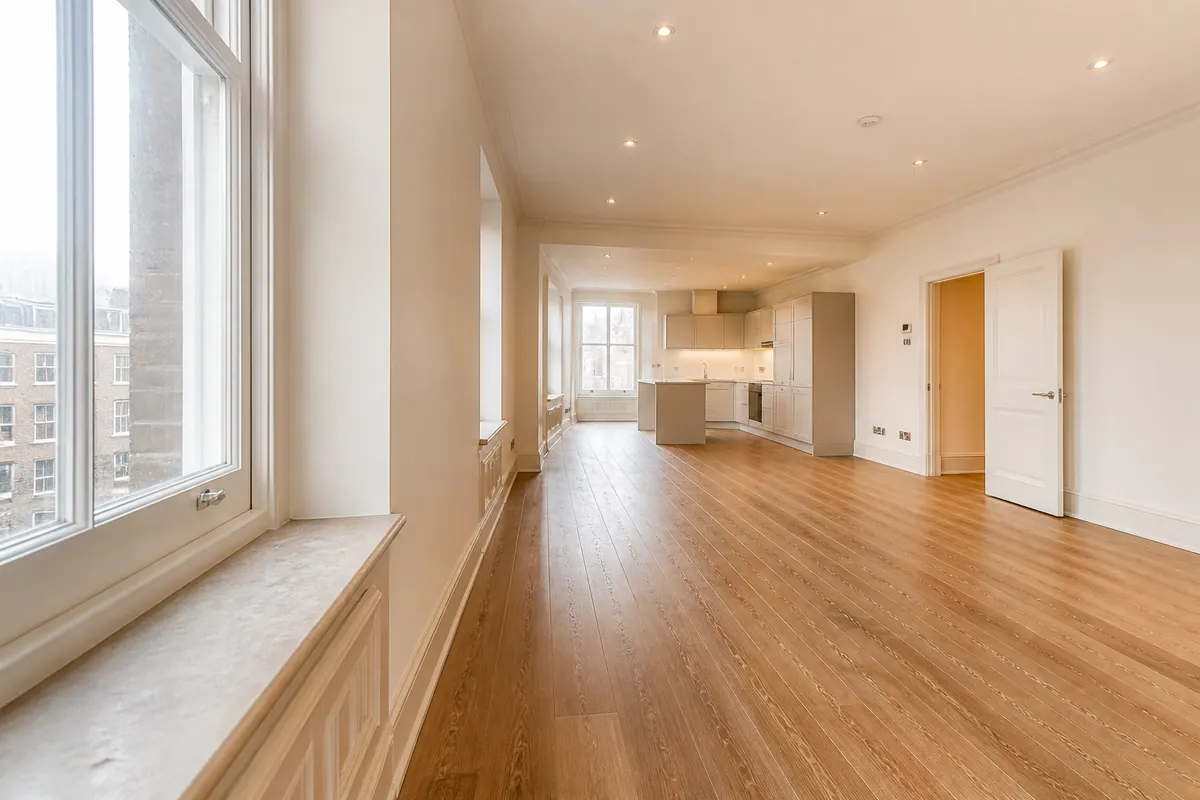
Set out what has finished and what remains.
Work through scoped surface and floor tasks.
Review the task list and identify unresolved marks.

Plan furnishing once the scoped review is complete.
This is a visual explanation of stages, not photographic proof of one completed job.
At a glance
Build your brief
Prepare the facts before asking about timing.
Entering details here only organises your brief. Contact Alesta separately to discuss suitability and a quote.
Mention additional glass, waste or unusual residue during the conversation. Alesta confirms the actual work, time and cost.
Discuss the brief: 020 3608 3976Who is planning the handover?
List the rooms being returned to use and who can explain the newly installed surfaces.
Identify the person releasing the property and separate renovation priorities from other letting requirements.
Describe remaining trades and site access, then ask about project coordination; contractor arrangements require confirmation.
Glass after renovation
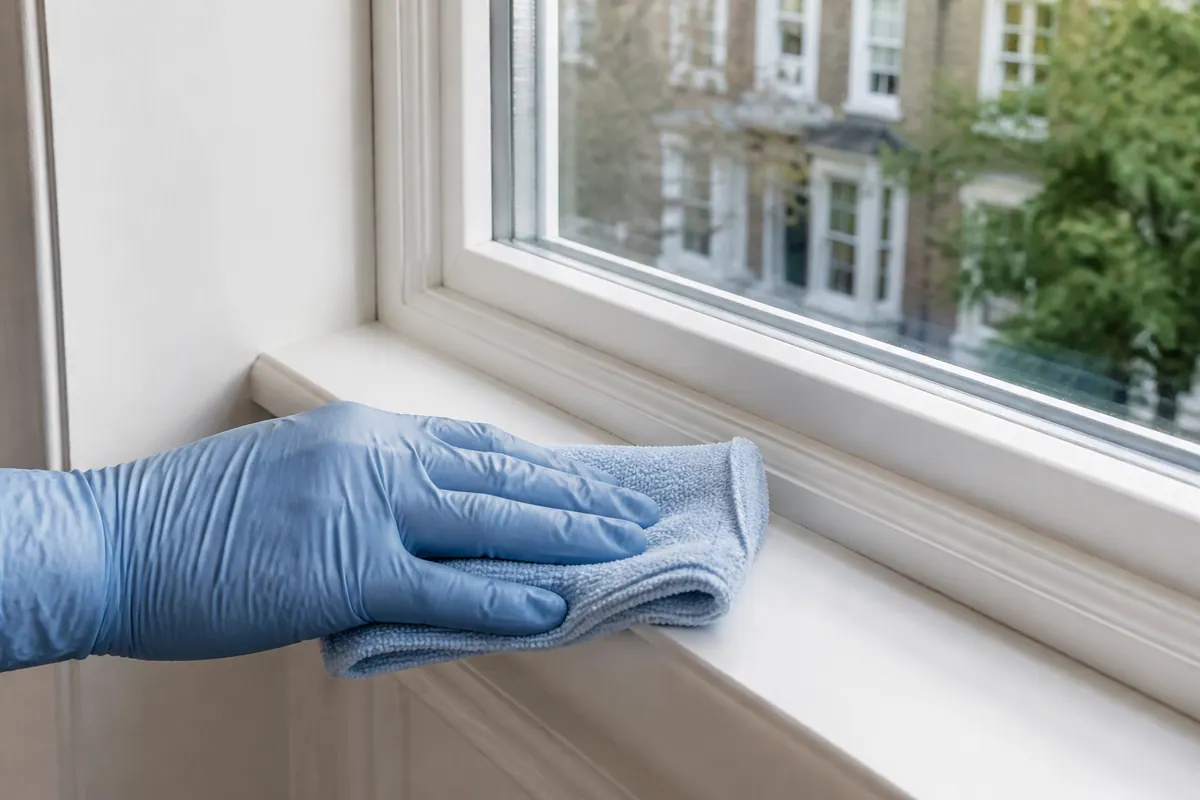
A window list needs height and face information, not simply the number of windows in the room.
Bonded marks are not equivalent to surface dust. Safe treatment must be considered rather than promised.
Plan separate window cleaning ↗Service-area planning
Use the map to locate the Knightsbridge service area, not an Alesta branch. Provide the actual address when asking about access and appointment availability.
For another nearby area, contact Alesta through the main after builders service to confirm coverage and availability.
Before the appointment
Identify the released area first. Then separate removable deposits from unfinished work and any requirements outside ordinary cleaning. A kitchen and bathroom can both look ready while stone, coatings and sealants need different care.
Give a contact who understands both building entry and the rooms being cleaned. That person should know what remains inaccessible. Share the building’s entry process and the contact available on arrival.
The installer’s instructions can rule out an otherwise familiar product. Mention uncertainty before the appointment rather than trying an aggressive approach. Avoid treating a coated tap like bare metal when describing cleaning needs.
Check the approach to the renovated room before deciding the boundary. Visible dust in another room is relevant, but its inclusion still needs agreement. Here, inspect the newly installed wet-room fittings.
There is no single flat price for all renovations. The service starts from £29 per hour with equipment and materials, while the proposed tasks and current rate need confirmation.
A separate room can be complete while trades still use its doorway. Discuss the full route before deciding whether the sequence is workable.
First distinguish surfaces requiring cleaning from items requiring removal. The latter need an independent waste enquiry.
Safe removal cannot be promised for every glass deposit. Describe paint, adhesive or other bonded marks before agreeing window work. Assessment may show that a different treatment is needed or that removal would risk the finish.
A furniture arrival date may influence the preferred sequence. The actual cleaning time still depends on the agreed room condition. Review installation marks without assuming every mark can be polished away.
The limit may be the surface itself. Discuss what remains and whether another trade or specialist needs to assess it, without assuming repair is included.
Your project / the final clean
Describe the rooms being released and the work still outstanding. Keep extra requirements visible so the quotation can address them.
