
Homeowners
Focus the request on the effect of the renovation rather than an undefined whole-house reset.
Victoria · Plan the clean before moving back in
Plan the clean before moving back in.
Allow the cleaning review to happen before belongings are carried back.
Returning home involves more than an empty room: the entrance, floor edges and living space need a coherent brief. For your Victoria enquiry, describe the entrance-to-living-room route. Mention any trade visit scheduled after the proposed cleaning date.
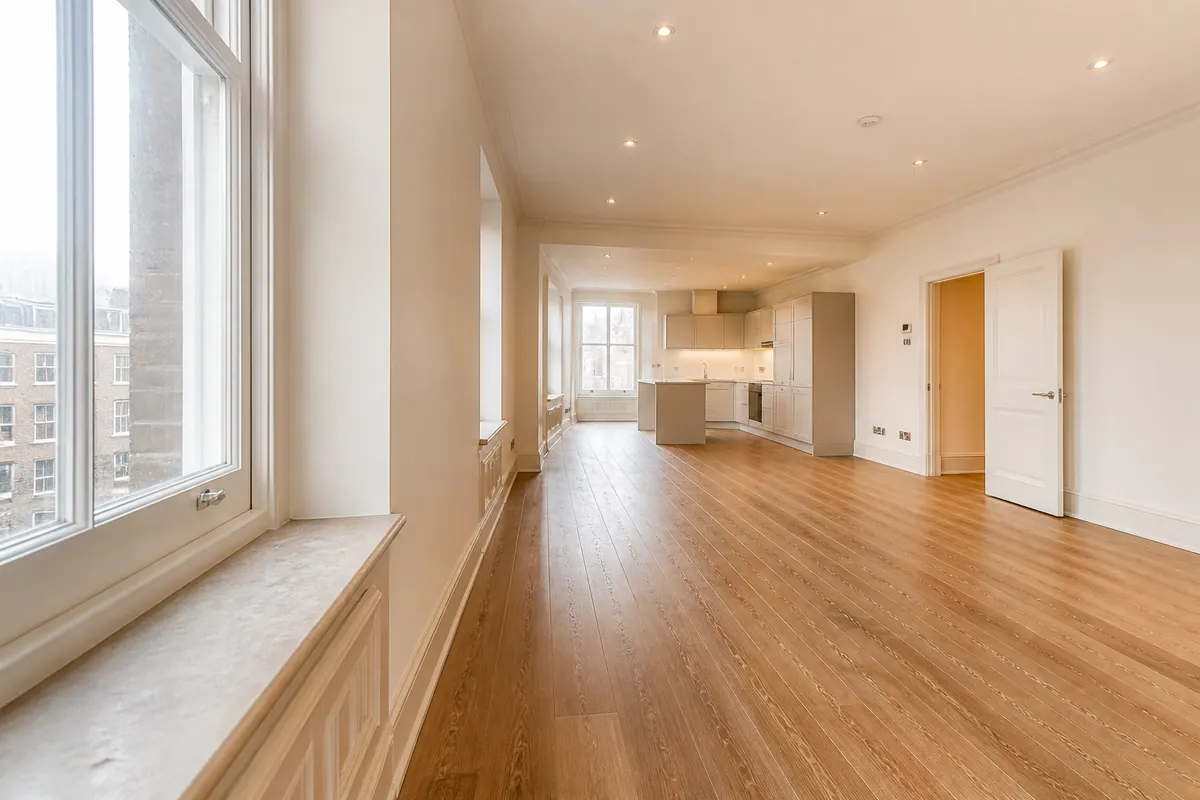
Illustrative renovation scene; no customer job or measured result is represented.
Who is planning the handover?
Focus the request on the effect of the renovation rather than an undefined whole-house reset.
Provide a clear point of contact for the post-work scope and keep any unrelated inspection duties separate.
Contractor enquiries need the site details and outstanding-work list so Alesta can confirm whether the arrangements are suitable.
Victoria / the specific room brief
Returning home involves more than an empty room: the entrance, floor edges and living space need a coherent brief.
This Victoria planning example centres on refurbishment before returning home. Returning home involves more than an empty room: the entrance, floor edges and living space need a coherent brief. The useful inspection route follows the entrance-to-living-room route, with attention to new floor edges and door thresholds.
Mention any trade visit scheduled after the proposed cleaning date. Keep any care notes for new flooring available when discussing the visible marks.
Coordinate the release of keys with the final contractor attendance. Allow the cleaning review to happen before belongings are carried back.
Room-by-room brief
A kitchen request should name the accessible cabinetry and fittings, plus any new surfaces with particular care instructions.
List the sanitary areas being included and mention installation marks before expecting treatment.
Explain whether belongings leave enough access to the surfaces you want cleaned.
A clear living-area brief distinguishes construction deposits from unrelated household cleaning.
A scoped quote
From £29/ hour
Confirm the rate applicable to the enquiry; cleaning equipment and materials form part of the service.
Explain the practical workload before accepting a total. Separate window requirements and unusual residue need their own consideration.
| Project | Pricing basis | What to describe |
|---|---|---|
| Smaller refurbishment | From £29/hour; scope confirmed | Rooms released and cleaning priorities |
| Kitchen or bathroom work | From £29/hour; scope confirmed | Deposits around fixtures and thresholds |
| Whole-property renovation | Work-specific price to be agreed | Floor materials and accessible detail |
| Commercial refurbishment enquiry | Availability and scope need review | Proposed tasks and handover arrangements |
Based on Alesta’s published after builders cleaning rate. Building waste removal is quoted separately.
Finishing-work coordination
Identify rooms released after the last dusty task.
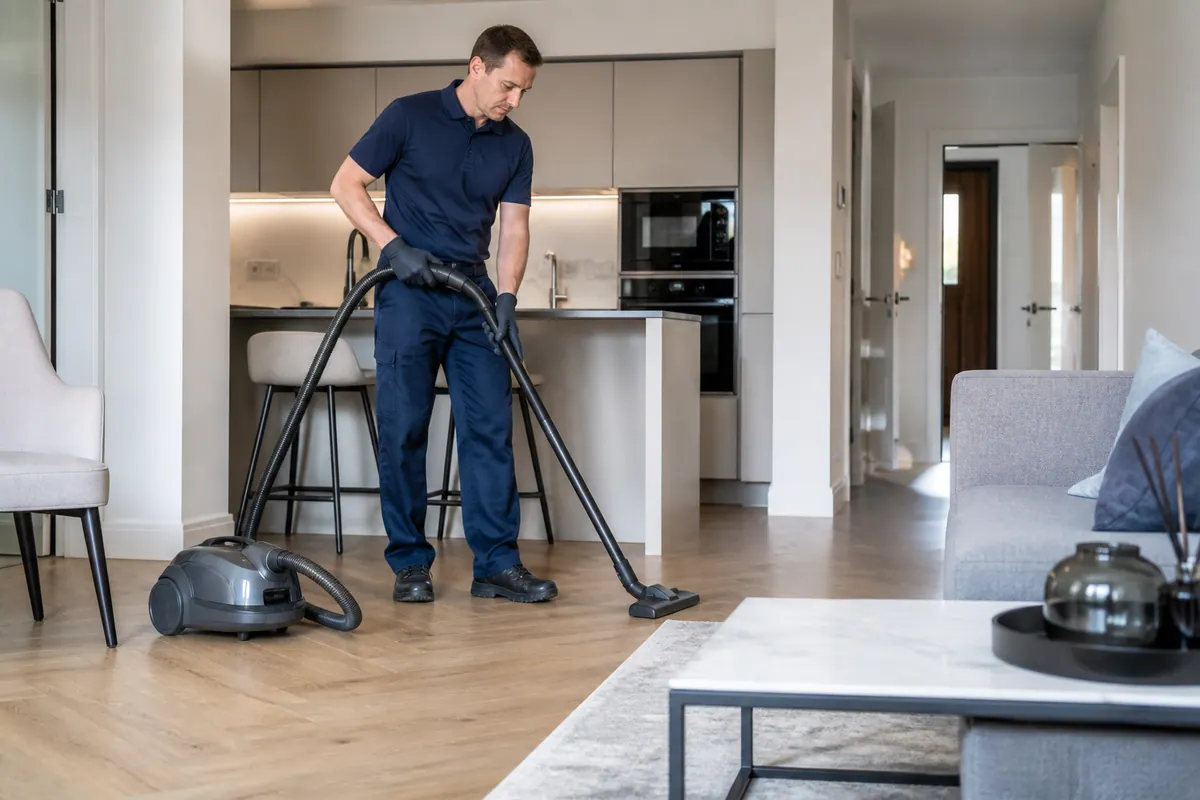
Clean the accessible details included in the agreed brief.
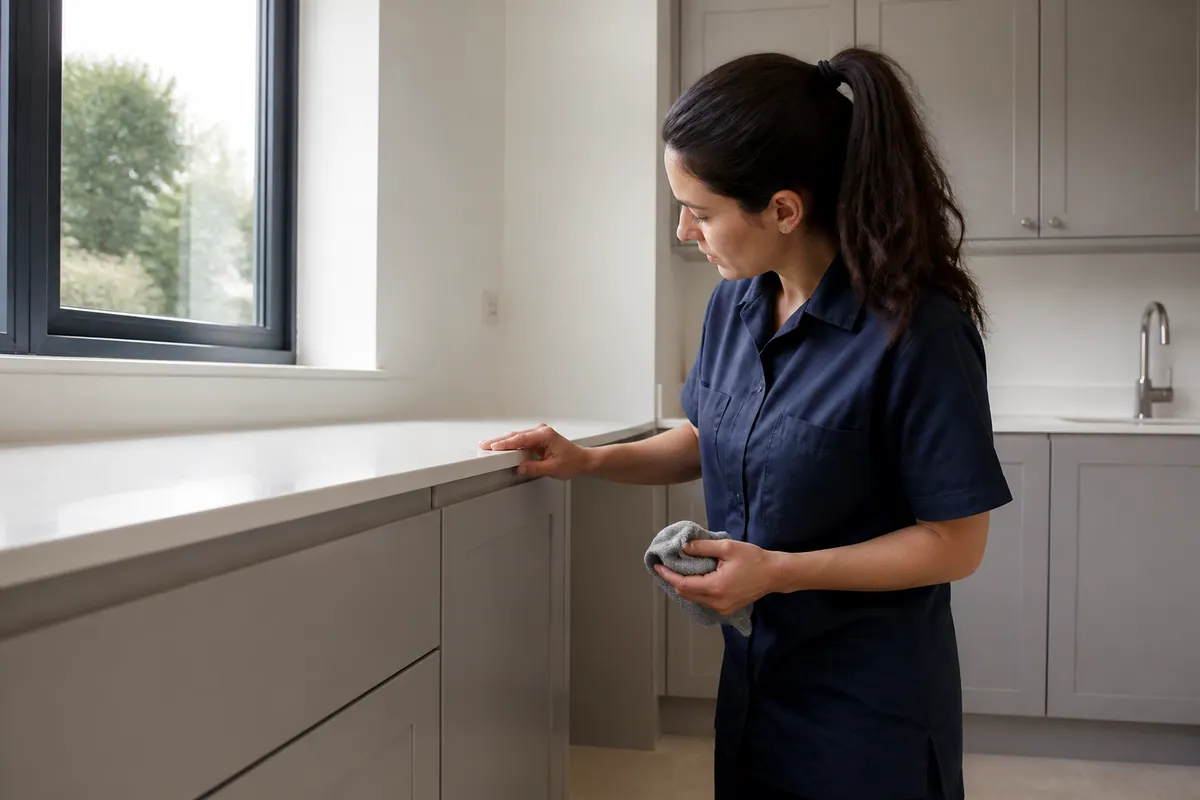
Explain where further advice may be necessary.
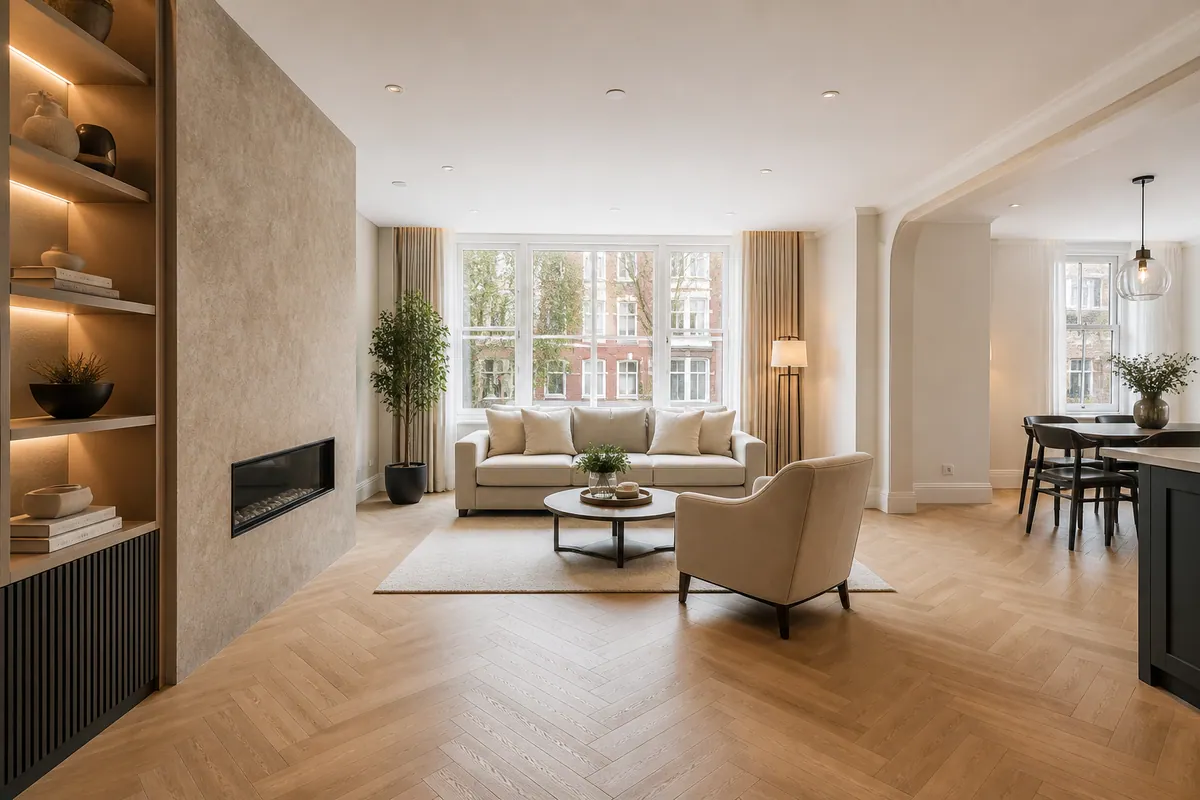
Plan furnishing once the scoped review is complete.
Different interiors illustrate the process rather than a guaranteed transformation.
Start with the work
The project choice helps separate cleaning considerations. Alesta still needs the room condition and access details.
For extensive works, note the sequence in which areas become available. Match cleaning priorities to released surfaces and their care requirements.
Beyond the work zone
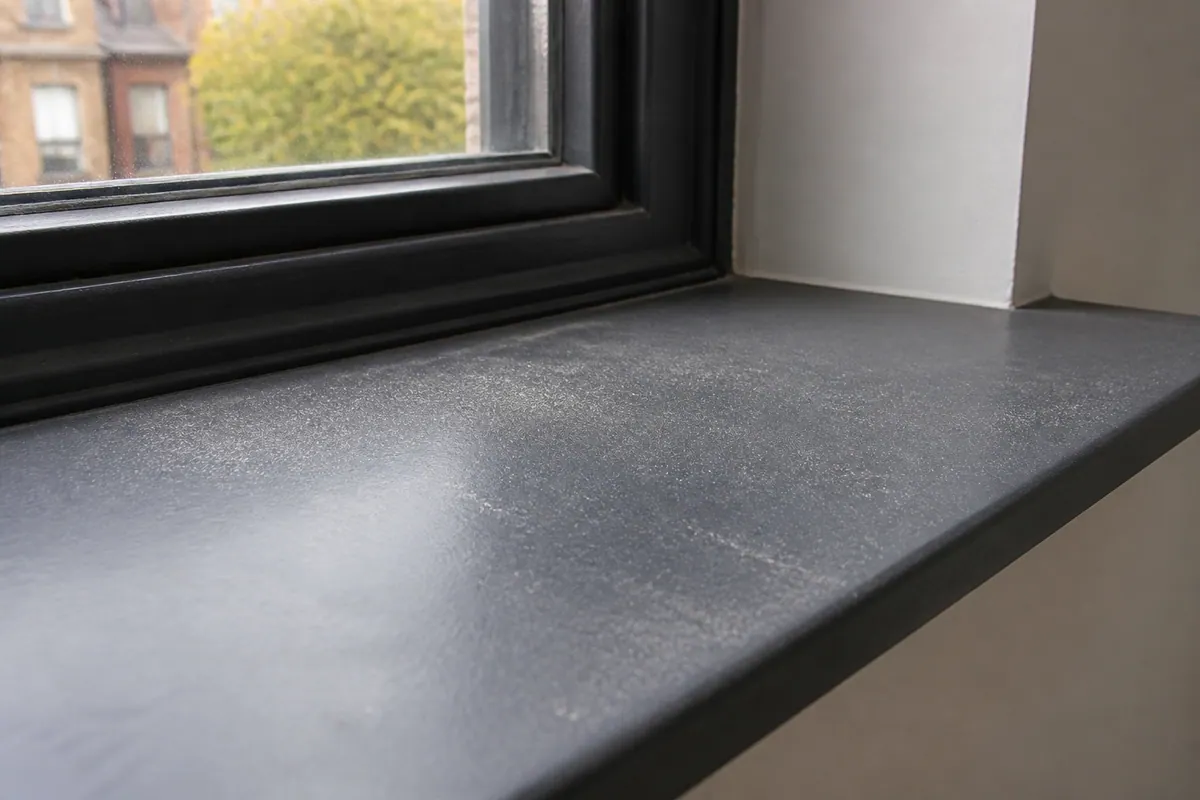
The work area is only the starting point.
Look at the door frame and floor just outside the renovated room. Repeated movement during fitting can leave deposits beyond the obvious work area.
Surface-aware cleaning means lifting deposits with appropriate equipment rather than treating every room as an identical wipe-down.
A room released for cleaning should not also be scheduled for another dusty installation.
The dust route
The drawing is schematic. Only accessible areas agreed for the visit form the cleaning brief.
External shelves and sill tops can reveal deposits missed from the doorway.
The doorway joins two cleaning zones; describe dust on both sides.
Flag new coatings on fittings before residue is approached with cleaning products.
Check thresholds before deciding that a protected room is outside the affected area.
Different issues / different scope
| Post-build issue | Example | How it is approached |
|---|---|---|
| Fine dust | Dust resting on frame tops or sills | Method and reach follow the surface list. |
| Loose cleaning remnants | Ordinary dust rather than bulky materials | Coverage depends on the agreed cleaning tasks. |
| Adhesive or labels | A bonded patch on new trim | Ask about inclusion after the material has been assessed. |
| Paint, plaster or cement spots | Bonded spots beside completed work | Explain the marks before agreeing any treatment scope. |
| Protective film | A manufacturer’s film on new cabinetry | Check installer instructions and confirm whether removal is included. |
Two separate jobs
A practical cleaning scope describes what can be reached and treated, not what must be carried away.
Timber offcuts and building materials are different from dust. Ask about a separate clearance scope.
Discuss building waste disposal ↗Different project briefs
Keep the entrance and room connections on the inspection list.
Check the connection to the adjoining room when describing kitchen dust.
Check the readiness of sealants before discussing tiles and sanitaryware detail.
A larger renovation benefits from material notes for each affected space.
A rental handover needs an agreed post-build list, not an assumed tenancy package.
Set out commercial requirements for discussion, including access and work still outstanding.
A useful distinction
Builder stage
Cleaning stage
Protect the new finish
Illustrative surface review.
A cleaning brief should name what lies beneath the residue.
Point out delicate details during the scope discussion. Preserving a new coating matters more than attempting an aggressive removal method.
Wet or uncured finishes need time under the relevant manufacturer guidance.
Provide floor or tile care notes alongside the room list.
Tell the team about coated taps, polished trim and existing fitting marks.
At a glance
Build your brief
Start with five practical details about the property.
No information is sent by the planner. It helps describe the work without offering an automatic price.
The proposed clean still needs confirmation against the property, especially where difficult residue or separate collection is involved.
Discuss the brief: 020 3608 3976Glass after renovation
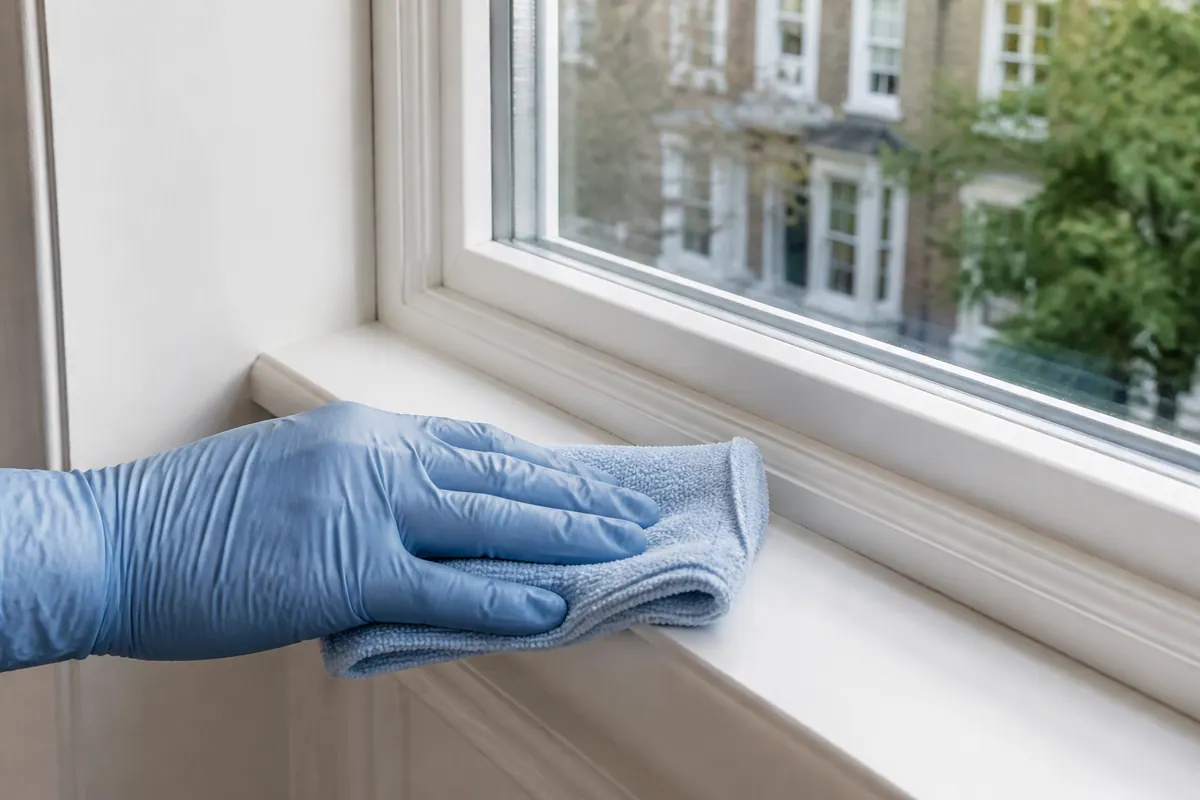
State whether you mean reachable internal glass, exterior faces or frames. Different access needs should be discussed before the visit.
Bonded marks are not equivalent to surface dust. Safe treatment must be considered rather than promised.
Plan separate window cleaning ↗Service-area planning
Use the map to locate the Victoria service area, not an Alesta branch. Provide the actual address when asking about access and appointment availability.
For another nearby area, contact Alesta through the main after builders service to confirm coverage and availability.
Before the appointment
Tell Alesta which part of the property changed and how the neighbouring areas look now. The cleaning boundary should reflect visible effects, not just the contractor’s work order. Returning home involves more than an empty room: the entrance, floor edges and living space need a coherent brief.
State how entry will be provided and whether the agreed surfaces can be reached without crossing stored construction items. Coordinate the release of keys with the final contractor attendance.
Explain the surface history and any existing damage. The clean should not be expected to change its original colour, wear or texture. Mention any trade visit scheduled after the proposed cleaning date.
Ask about adjoining areas where the condition warrants it. Avoid extending the brief to unrelated household tasks without identifying them separately. Here, inspect the entrance-to-living-room route.
Published pricing begins from £29 per hour. Cleaning supplies and equipment are included, but the property scope and any extras still require agreement.
A staged project needs clear room release dates. Discuss completed areas separately from active work so the proposed visit is not planned against an inaccurate completion date.
Do not leave bulky packaging inside an undefined cleaning request. Describe the amount and access for removal, then agree the surface work independently.
These services can be discussed, but inclusion is not automatic. Give the glass faces or carpet areas and explain any building residue requiring assessment.
Give Alesta the proposed schedule and the condition of the released rooms. The answer is property-specific, not a universal number of hours. Allow the cleaning review to happen before belongings are carried back.
Safe cleaning can leave a bonded mark unresolved. Separate that issue from completed dust removal and obtain relevant material advice before further treatment.
Your project / the final clean
Tell Alesta where the project stands and which surfaces need attention. Timing and price follow an agreed brief.
