
The apartment finishing list
Explain how the apartment will return to use and which routes carried tools.
Pimlico · A finished bathroom in a home still in use
A finished bathroom in a home still in use.
Restore the bathroom’s agreed cleaning scope while keeping household arrangements clear.
A replacement bathroom does not turn the rest of an occupied flat into a building site. For your Pimlico enquiry, describe the bathroom and adjoining corridor. Sealant needs its product-specific drying period, even if the installation looks complete.
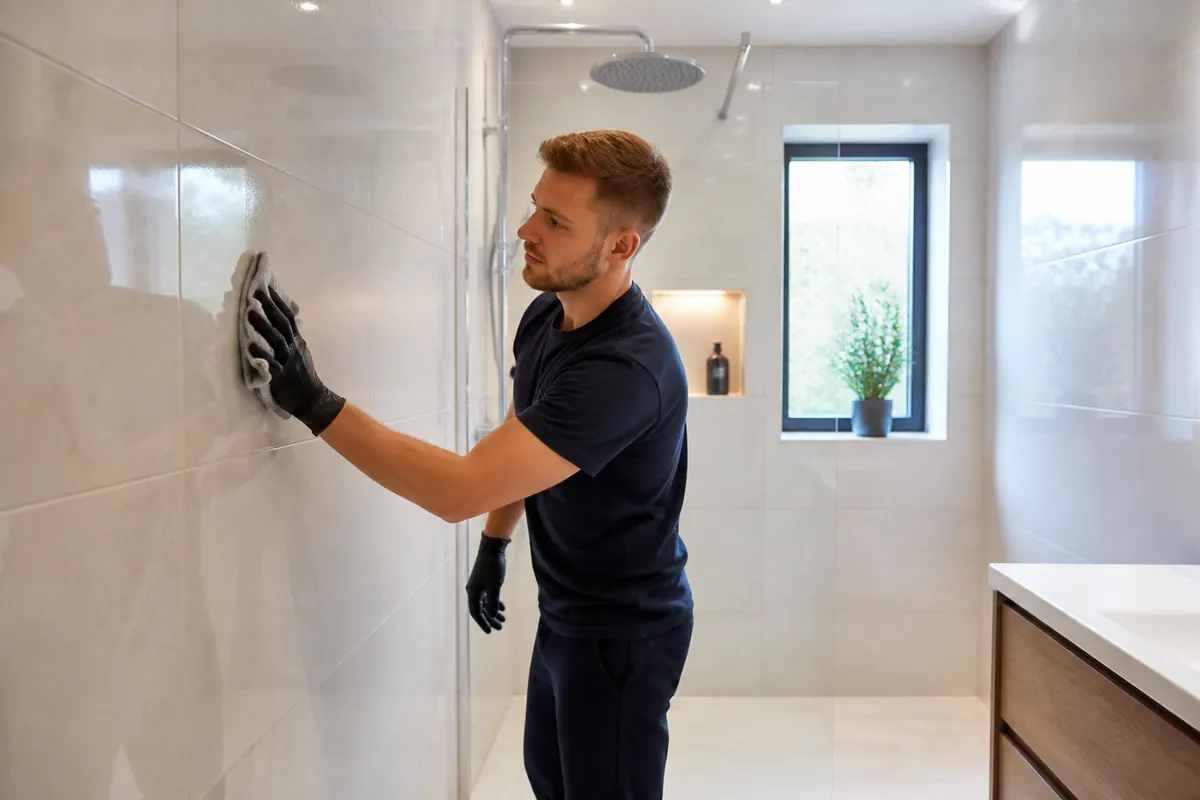
Illustrative renovation scene; no customer job or measured result is represented.
At a glance
Different project briefs
Explain how the apartment will return to use and which routes carried tools.
Include the kitchen surfaces that remain accessible before storage is filled.
Explain which new materials permit cleaning and which still need time.
Separate the released rooms from areas still occupied by tools or materials.
Specify the renovation effects before adding any separate letting requirements.
Set out commercial requirements for discussion, including access and work still outstanding.
Beyond the work zone
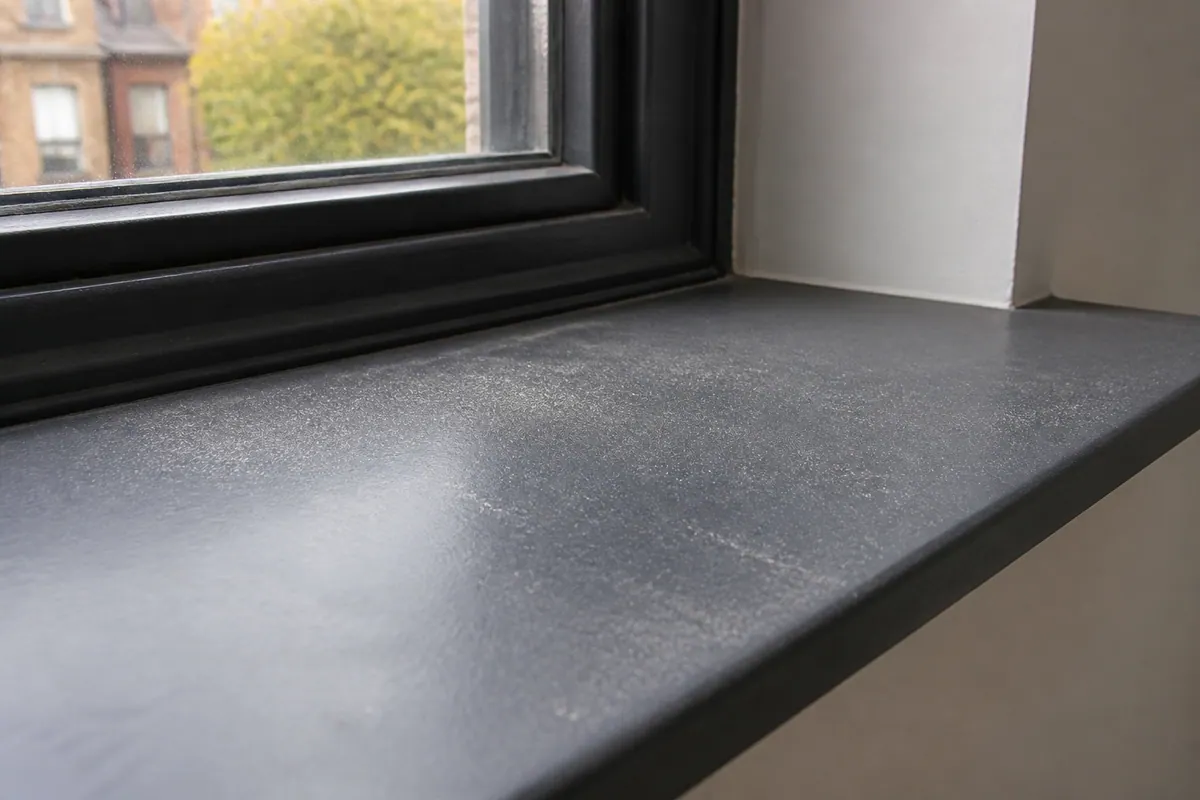
A clean-looking centre can hide dusty edges.
The final removal of tools can leave a different trail from the installation itself. Check the exit route as part of the enquiry.
Explain which coverings remained in place and which surfaces are exposed now. Accessible tasks can then be agreed realistically.
Keep the proposed visit aligned with actual work completion, not simply the original renovation date.
A scoped quote
From £29/ hour
Equipment and materials for the cleaning are included. Check the current rate against your agreed property brief.
The amount of reachable detail matters alongside room count. Separate requests such as windows or waste can alter the overall plan.
| Project | Pricing basis | What to describe |
|---|---|---|
| Smaller refurbishment | From £29/hour; scope confirmed | Finish readiness and access to details |
| Kitchen or bathroom work | From £29/hour; scope confirmed | Sanitaryware or cupboard exterior detail |
| Whole-property renovation | Quote based on the released areas | Room schedule and surface-care needs |
| Commercial refurbishment enquiry | Enquiry subject to suitability | Proposed tasks and handover arrangements |
Based on Alesta’s published after builders cleaning rate. Building waste removal is quoted separately.
Glass after renovation
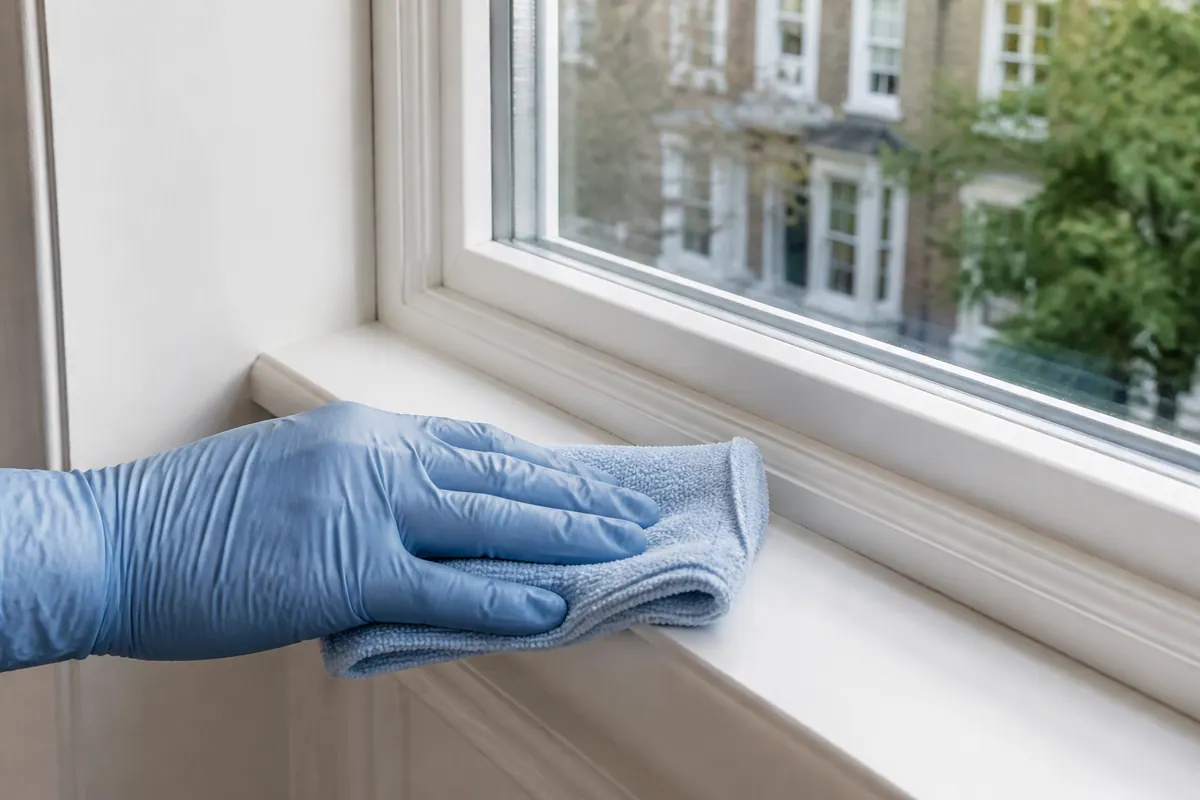
A window list needs height and face information, not simply the number of windows in the room.
The deposit and glass finish both matter. Some construction marks may need separately assessed treatment.
Plan separate window cleaning ↗Start with the work
Choose the relevant work type, then provide its actual condition when enquiring; the interactive options are planning prompts only.
For a larger project, give each released room its own surface notes and include the connecting route used by trades.
Pimlico / the specific room brief
A replacement bathroom does not turn the rest of an occupied flat into a building site.
This Pimlico planning example centres on bathroom replacement in an occupied flat. A replacement bathroom does not turn the rest of an occupied flat into a building site. The useful inspection route follows the bathroom and adjoining corridor, with attention to sanitaryware edges and fresh seals.
Sealant needs its product-specific drying period, even if the installation looks complete. Keep any care notes for new sealant available when discussing the visible marks.
Agree access without occupying the household’s other working rooms. Restore the bathroom’s agreed cleaning scope while keeping household arrangements clear.
The dust route
A property inspection may reveal different priorities from those pictured here.
List reachable horizontal details individually where fitted furniture creates extra ledges.
Room edges often need a deliberate check after the larger surfaces look clear.
Radiator edges and accessible fittings should be part of the agreed room discussion.
Check thresholds before deciding that a protected room is outside the affected area.
Different issues / different scope
| Post-build issue | Example | How it is approached |
|---|---|---|
| Fine dust | Deposits on reachable ledges and external faces | Plan this around reachable areas and their finish. |
| Loose cleaning remnants | Small surface deposits after the work | It can belong to cleaning, unlike construction waste. |
| Adhesive or labels | Transfer left on a cabinet coating | Do not assume removal is suitable for the new finish. |
| Paint, plaster or cement spots | A mark needing material identification | Explain the marks before agreeing any treatment scope. |
| Protective film | Protective material on an installed panel | Check installer instructions and confirm whether removal is included. |
Two separate jobs
The finishing work concerns the agreed reachable detail: surface deposits, fittings and appropriate floor care.
If materials still occupy the room, discuss clearance independently and establish what will be accessible.
Discuss building waste disposal ↗A useful distinction
Builder stage
Cleaning stage
Room-by-room brief
Include fittings and reachable edges in the kitchen brief instead of assuming an all-inclusive appliance clean.
List the sanitary areas being included and mention installation marks before expecting treatment.
Look at door frames and floor edges before returning bedroom furniture to its position.
The seating space can receive dust from adjoining work; describe the accessible surfaces around retained furniture.
Protect the new finish
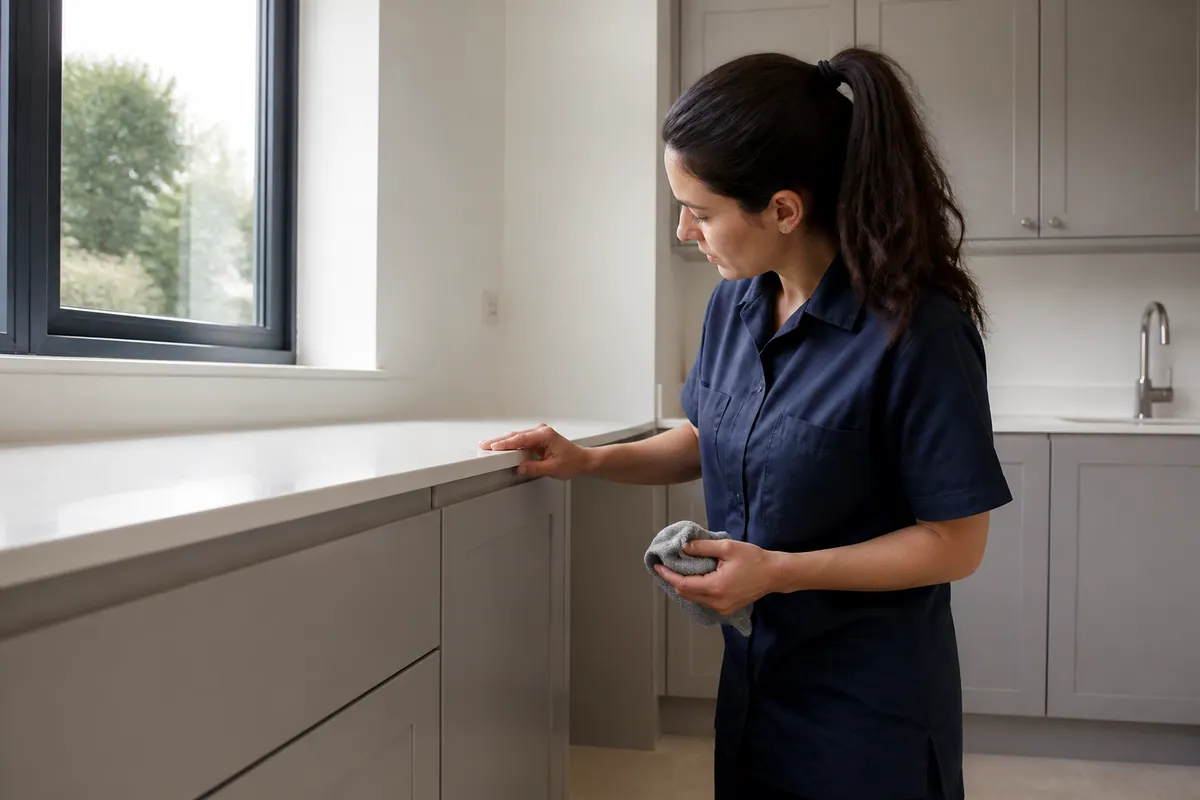
Illustrative surface review.
Manufacturer guidance matters more than a finish looking dry.
Point out delicate details during the scope discussion. Preserving a new coating matters more than attempting an aggressive removal method.
Follow the product-specific drying instructions before arranging contact cleaning.
Flag transitions between finishes before suitable floor care is agreed.
Point out delicate hardware rather than grouping it under general dust.
Finishing-work coordination
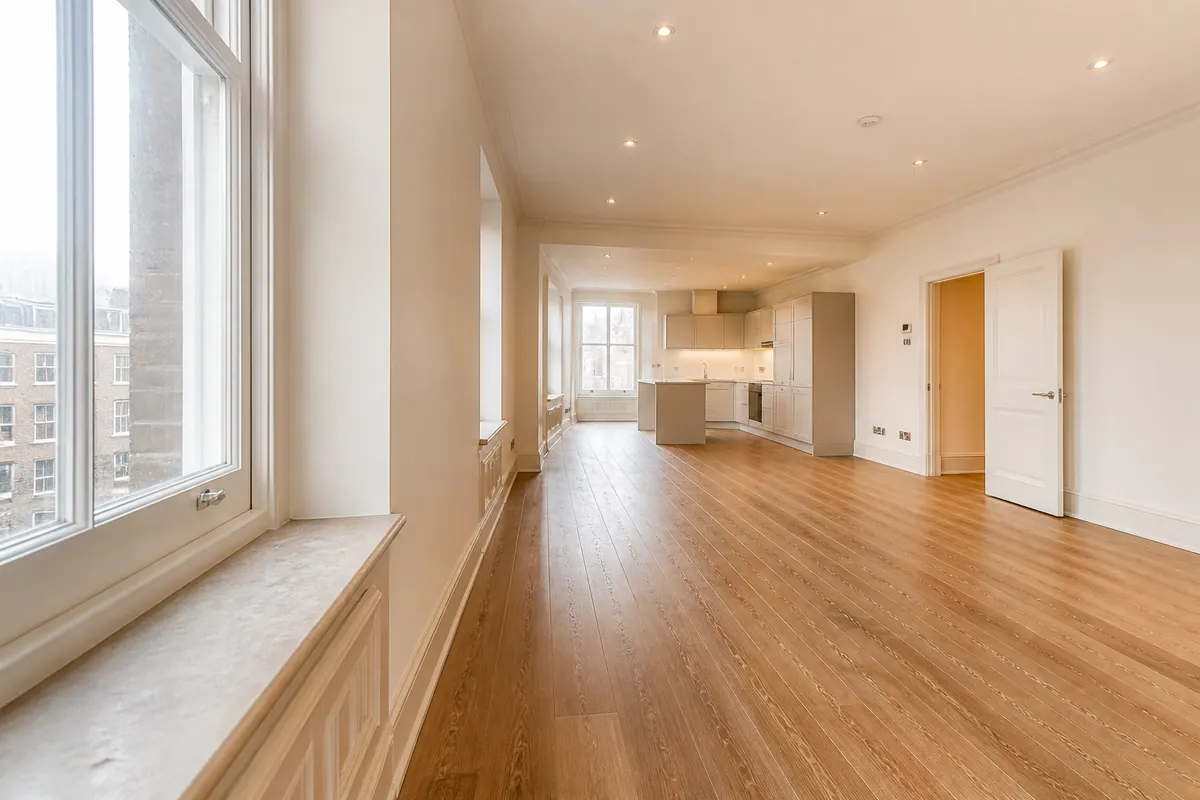
Confirm work completion before agreeing the cleaning date.
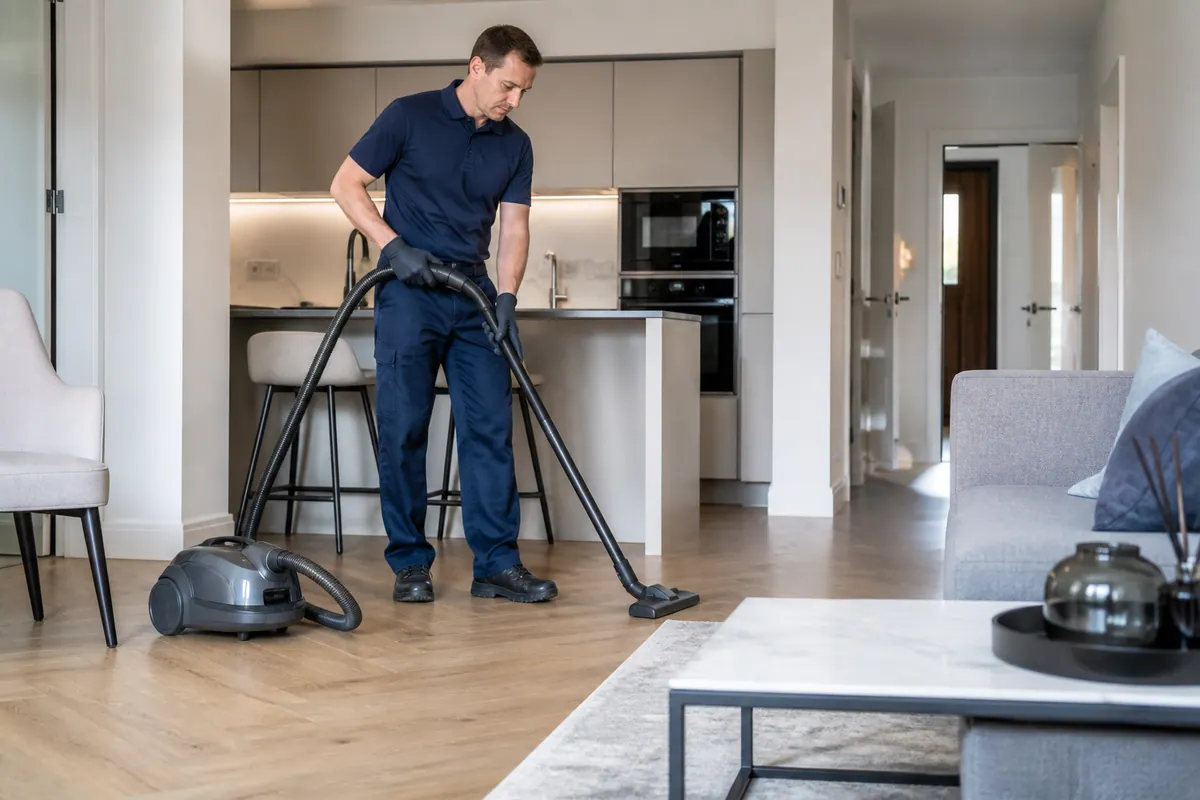
Clean the accessible details included in the agreed brief.
Discuss any limits encountered on delicate surfaces.
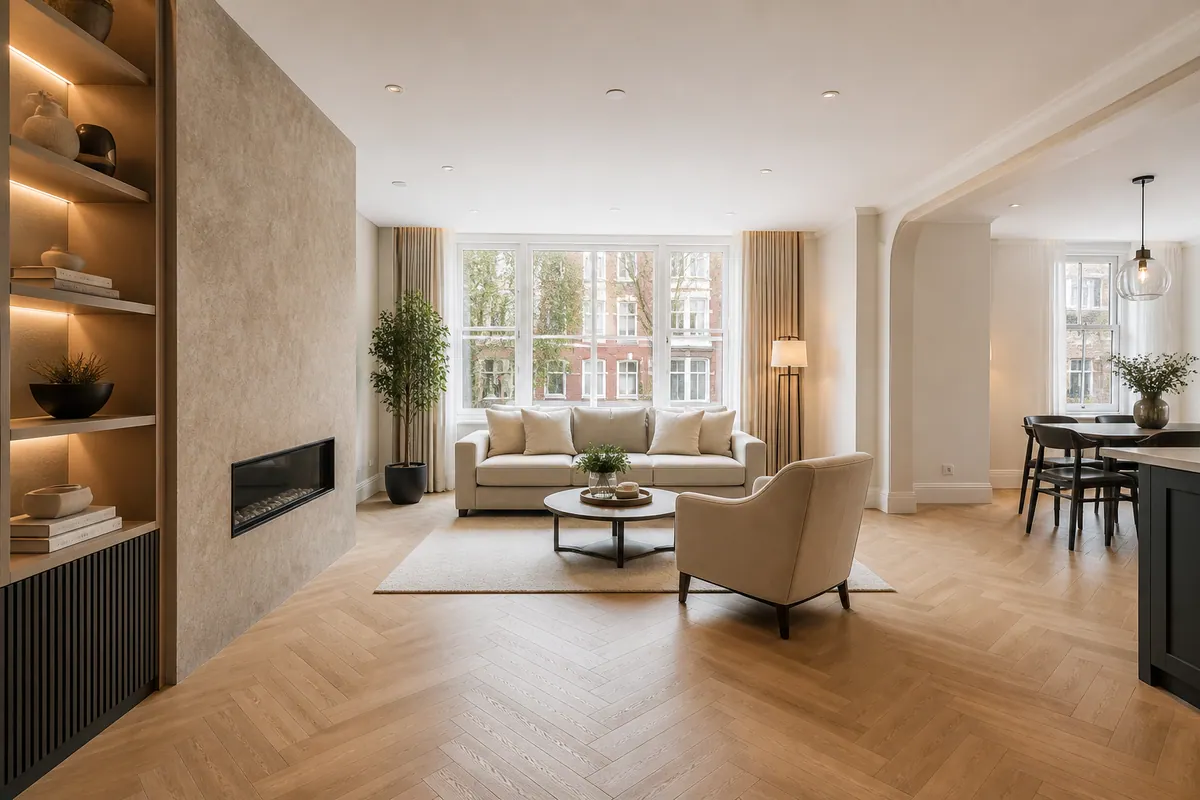
Plan furnishing once the scoped review is complete.
Pictures represent planning stages and should not be read as customer evidence.
Build your brief
Outline the work and the rooms it affected.
This tool keeps the plan on your device. It neither sends an enquiry nor calculates a price or books a visit.
Separate requests can change the visit. Explain window work, specialist surfaces and waste rather than assuming inclusion.
Discuss the brief: 020 3608 3976Who is planning the handover?
Bring your material notes and next-use priorities to the enquiry, especially where new finishes need care.
Explain what was changed and who can approve the scope before promising a cleaning outcome to an incoming occupant.
Set out the work release dates and access needs before relying on cleaning as part of a contractor schedule.
Service-area planning
Use the map to locate the Pimlico service area, not an Alesta branch. Provide the actual address when asking about access and appointment availability.
For another nearby area, contact Alesta through the main after builders service to confirm coverage and availability.
Before the appointment
Use the renovation as the starting point, then describe the detail it left behind. A room name alone does not explain whether the work affected exposed ledges, fittings or nearby circulation. A replacement bathroom does not turn the rest of an occupied flat into a building site.
The key question is whether the surfaces proposed for cleaning can actually be reached. Identify the person responsible for releasing rooms and clarifying any building entry rules. Agree access without occupying the household’s other working rooms.
A material-specific decision comes before treatment. Describe the coating and provide relevant guidance; cleaning is not a promise to erase installation defects. Sealant needs its product-specific drying period, even if the installation looks complete.
The work area and cleaning area need not match. Describe dust beyond the renovation and let the scope discussion establish which adjacent spaces are included. Here, inspect the bathroom and adjoining corridor.
Use the hourly figure to open the price discussion, not close it. Alesta lists from £29/hour with cleaning materials and equipment; the work remains property-specific.
Keep unfinished tasks visible in the enquiry. The agreed clean concerns the condition and areas discussed, not a promise to cover every later contractor attendance.
Building materials are a separate service question. Explain whether timber, rubble or boards remain before assuming the room is accessible for its finishing clean.
No universal removal guarantee applies to building residue on glass. Its condition and any coating need assessment first; aggressive removal can be unsuitable. Identify the affected glass separately when asking about window cleaning availability.
A furniture arrival date may influence the preferred sequence. The actual cleaning time still depends on the agreed room condition. Restore the bathroom’s agreed cleaning scope while keeping household arrangements clear.
Any unresolved surface issue should be identified at review. Further treatment is not automatically part of the original scope.
Your project / the final clean
Tell Alesta where the project stands and which surfaces need attention. Timing and price follow an agreed brief.
