
Flats & apartments
show clear space below fittings.
PUTNEY · ACCESSORIES BY POSITION
Give each wall accessory its own fitting brief.
A Putney mirror, picture and shelf should not be reduced to ‘three things on the wall’. Each has a different load, attachment and relationship to the room around it.
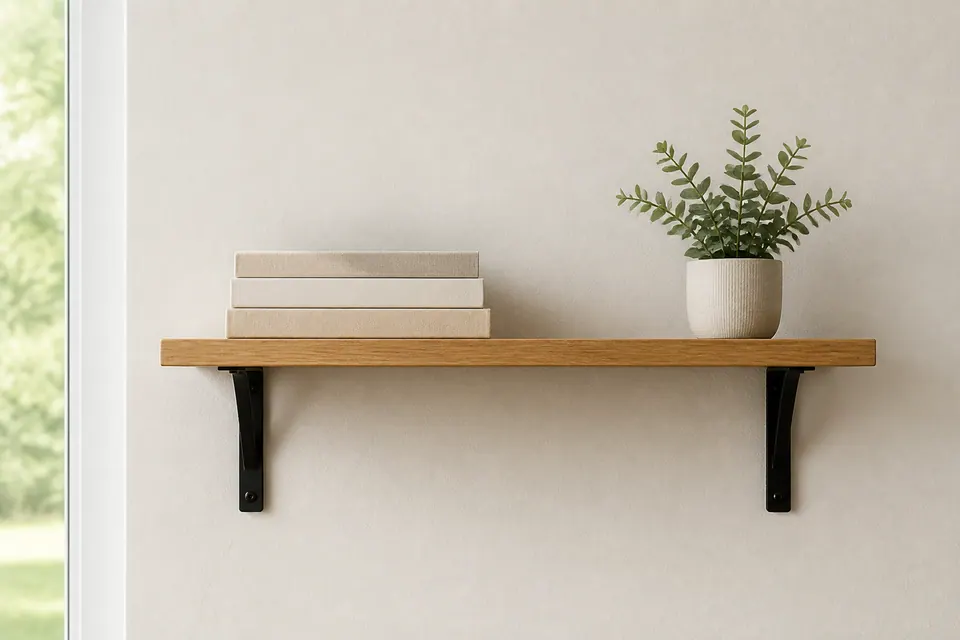
DIFFERENT ROOMS, DIFFERENT BRIEFS
show clear space below fittings.
describe decorative wall surfaces.
secure consent for each position.
identify accessories by room.
keep equipment clear of mounting access.
check alteration approval requirements.
Homeowner? Number the accessories and their proposed positions. Photograph rear hanging arrangements where safely accessible, keeping supplied parts with the correct item rather than mixing them together.
Landlord or manager? Identify who can approve positions and any extra surface repairs.
Tenant? Secure consent for each position.
BUILD A REALISTIC LIST
Number each accessory and its position. Include removal and finish expectations so the mounting request represents the whole intended change.
| Situation | A practical next step |
|---|---|
| Simple familiar task | Annotate the preferred arrangement without prescribing plug types. |
| Several jobs or awkward fitting | Ask for help where a heavy mirror complicates handling. |
| Uncertain wall, load or fixing | Have failed fixing positions assessed before attempting reuse. |
| Gas, structure or fixed electrics | Allocate specialist service changes outside the accessory installation. |
PUTNEY IN PRACTICE
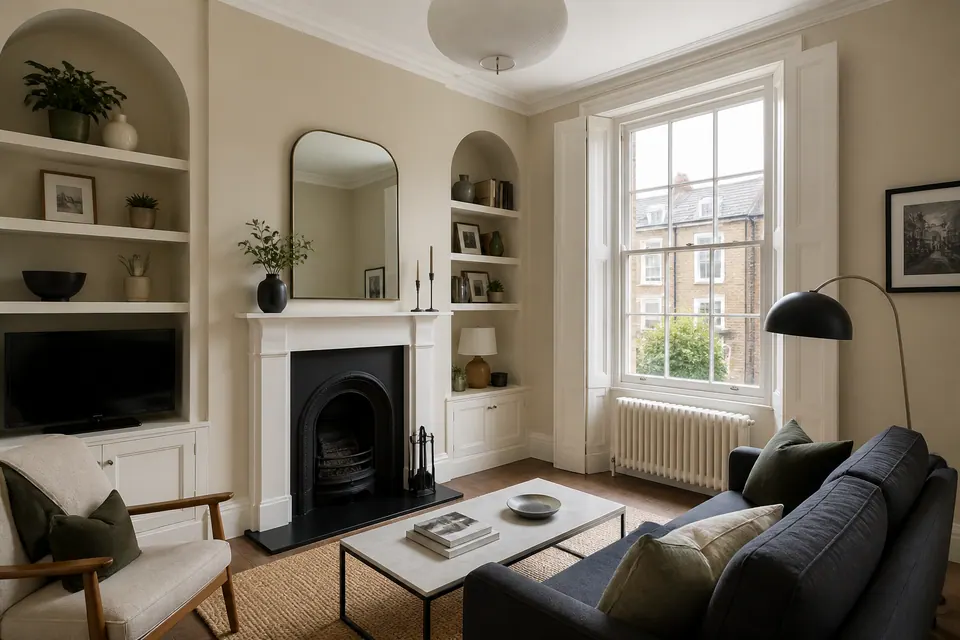
Give each wall accessory its own fitting brief.
Number the accessories and their proposed positions. Photograph rear hanging arrangements where safely accessible, keeping supplied parts with the correct item rather than mixing them together.
Show furniture under the work area and any nearby switches or openings. The preferred height needs to work with use of the room as well as the accessory’s dimensions.
If an earlier fitting pulled away, include that history and the surrounding surface. Installing a replacement into a damaged position requires assessment, not automatic reuse of the old holes.
Assemble furniture below the planned accessories first; Treat the screen bracket as a distinct installation; Report damage around previously detached fixings.
CLEAR BEFORE YOU BOOK
Request a quote against numbered items rather than an undifferentiated accessory count.
Yes, furniture below the accessories can be assembled under an agreed product brief; include it separately for review.
Previous holes do not establish support for a heavier replacement.
| Task | Pricing basis | Guide |
|---|---|---|
| Repair or fitting | Report damage around previously detached fixings | Reviewed quote |
| Small furniture assembly | Assemble furniture below the planned accessories first | From £30 |
| Several small jobs | Several accessories can share an enquiry without sharing identical fixing requirements. | Agreed combined work |
| Complex mounting | Treat the screen bracket as a distinct installation | Mounting assessment |
For the published small-item guide, see Alesta’s furniture assembly page . Other fitting and repair requests are quoted individually.
Item weights, hanging arrangements and access drive the reviewed mounting scope. Repairing a previous fixing failure and making good old holes should be priced explicitly alongside new installation.
START WITH THE TASK
Assemble furniture below the planned accessories first.
02 ↗Describe what each shelf will actually hold.
03 ↗Keep hanging items outside door-handle reach.
04 ↗Treat the screen bracket as a distinct installation.
05 ↗Match mirror weight with its rear hanging arrangement.
06 ↗Report damage around previously detached fixings.
QUICK JOB FINDER
Assemble furniture below the planned accessories first.
Explore this service ↗WALK THROUGH THE PROPERTY
ROOM NOTES
Treat the screen bracket as a distinct installation. Label the wall positions beside the sofa.
View the relevant service ↗| Job type | Example | Property area | Service |
|---|---|---|---|
| Assembly | Assemble furniture below the planned accessories first | Furniture position | Furniture assembly |
| Mounting | Match mirror weight with its rear hanging arrangement | Fitting wall | Fittings |
| Adjustment | Keep hanging items outside door-handle reach | Opening clearance | Door repair |
| Timber work | Describe what each shelf will actually hold | Storage space | Carpentry |
FROM SMALL FIX TO FINISHED JOB
Number the accessories and match them with proposed wall positions.
Agree removal and surface-finishing requests beside the new fittings.
Keep the correct hardware with each item and arrange clear wall access.
Review unsuitable surfaces or loads before choosing another position.
Check the numbered installations and any separately agreed making good.
A JOB, MADE VISIBLE
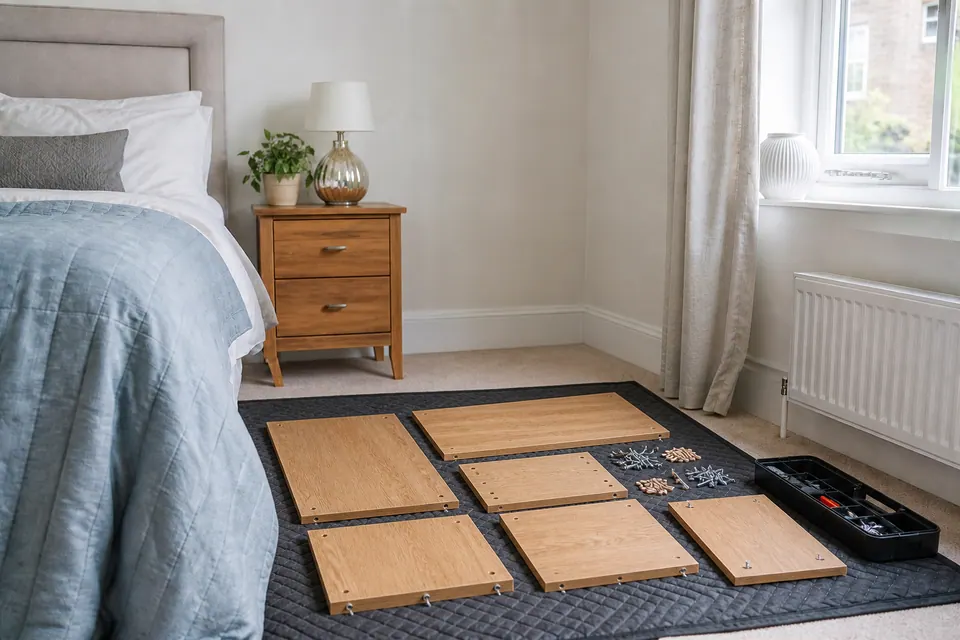
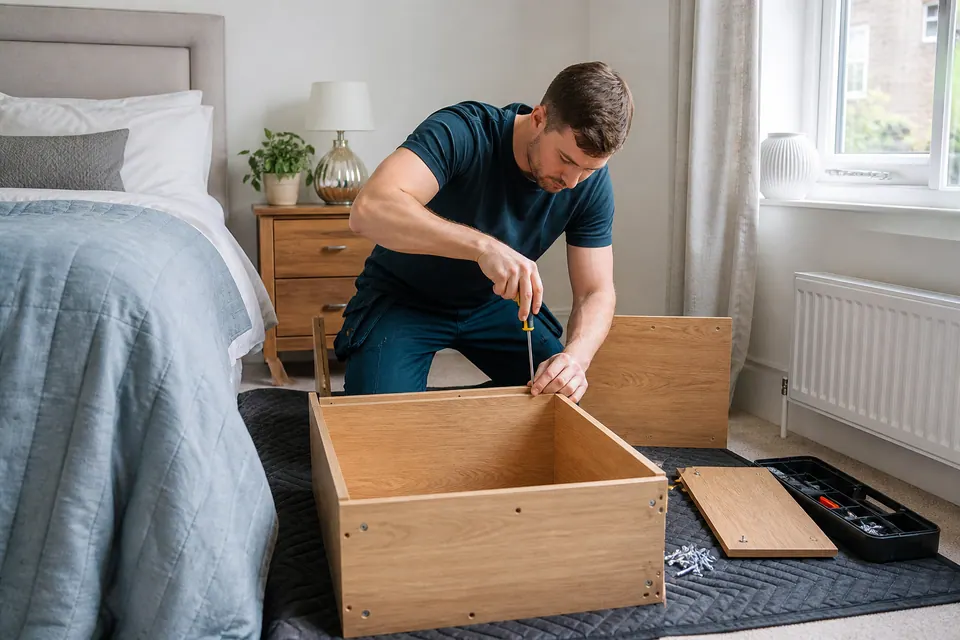
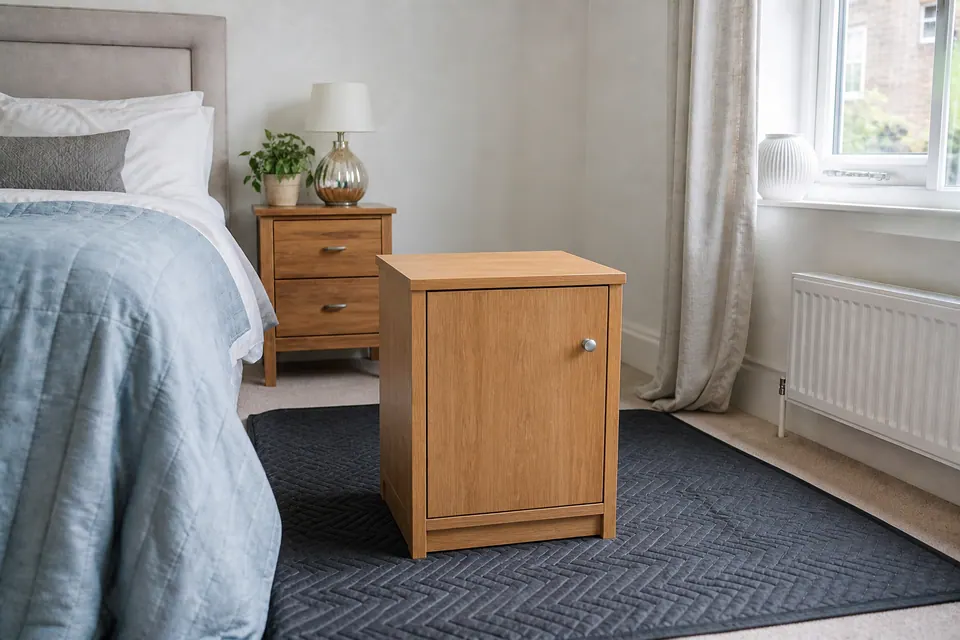
Illustrations explain assembly stages; they do not document a customer project.
QUICK ANSWERS
Request a quote against numbered items rather than an undifferentiated accessory count.
Suitable pictures, mirrors and shelves need their own item-and-wall review.
Several accessories can share an enquiry without sharing identical fixing requirements.
Keep supplied hardware with its item and confirm wall compatibility.
Mixed loads, removal and restricted access affect planned fitting time.
Yes, furniture below the accessories can be assembled under an agreed product brief; include it separately for review.
Previous holes do not establish support for a heavier replacement.
Identify who can approve positions and any extra surface repairs.
PLAN THE ARRIVAL
Send the Putney postcode and describe access below the proposed fittings. Ask about appointments before moving furniture or unpacking a heavy mirror for handling.
Area orientation
THE DETAILS OF YOUR VISIT
A room view is useful, but add individual specifications and hanging details. The accessories should remain identifiable rather than treated as equivalent loads.
No. Their suitability depends on the wall and item. Keep them with the product information without assuming that supplied hardware establishes compatibility.
Provide its product reference and available specification. Do not guess from size or attempt unsafe weighing of a heavy fragile item.
A picture’s fixing arrangement does not establish shelf support. The proposed load, position and existing surface condition need their own review.
Describe that finish separately. Taking down a fitting can expose holes or outlines that are not covered by its replacement.
Show the switch and full proposed position. Hidden-service considerations and suitable fixing locations require assessment before drilling is agreed.
Explain what obstructs access and what can be cleared safely. Handling a heavy piece should not be assumed within the accessory count.
Report the failure and show the surrounding damage. Reusing the position without assessing its condition would overlook the reason for the new request.
Check that each numbered accessory, removal request and finishing task appears clearly. A general mounting description should not obscure excluded work.
TURN THE LIST INTO A PLAN
Share the item specifications and numbered wall photographs. Include any previous fixing failure so it remains part of the assessment rather than hidden behind a replacement.
Task images are illustrative.
