
Quote to scope
Compare repair and replacement assembly as separately defined options.
WANDSWORTH · FURNITURE FAULT REVIEW
Review loose furniture before ordering replacements.
A Wandsworth repair list may begin with a drawer that drags and a cabinet door sitting low. Describe those movements separately before deciding that both units need replacing.

BUILD A REALISTIC LIST
Describe the furniture’s movement before choosing replacement parts. Keep faults affecting the whole unit distinct from a single hinge or runner.
| Situation | A practical next step |
|---|---|
| Simple familiar task | Observe movement without forcing a jammed drawer. |
| Several jobs or awkward fitting | Request assessment where several fronts show misalignment. |
| Uncertain wall, load or fixing | Do not treat another screw as a remedy for failed board. |
| Gas, structure or fixed electrics | Keep building services and specialist mechanisms outside furniture repair. |
START WITH THE TASK
Distinguish assembling a replacement from repairing the original.
02 ↗Check storage loads against existing panel condition.
03 ↗Separate furniture hinges from internal door hardware.
04 ↗Keep TV loads off an unassessed unstable unit.
05 ↗Identify accessory fittings pulled from damaged board.
06 ↗Show runner faults alongside the whole cabinet.
QUICK JOB FINDER
Distinguish assembling a replacement from repairing the original.
Explore this service ↗WANDSWORTH IN PRACTICE
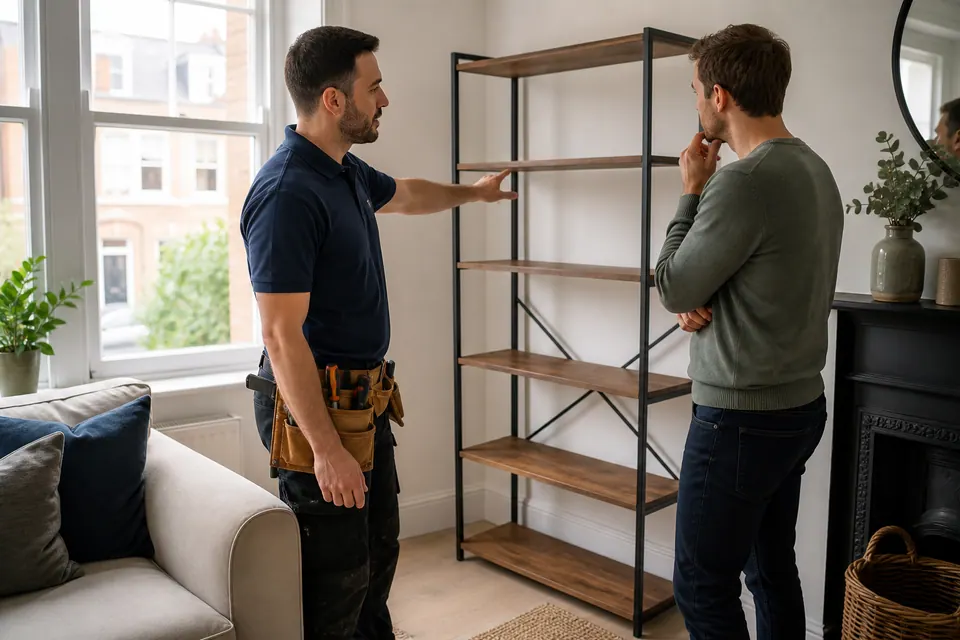
Review loose furniture before ordering replacements.
Photograph the complete piece standing normally, then the accessible hardware. A close-up of a runner cannot show whether the cabinet itself has become misaligned.
Keep detached parts labelled by item. Similar screws and brackets from different pieces can be incompatible even when they look alike in a small bag.
Stop using visibly unstable furniture while its condition is uncertain. Do not turn a heavy cabinet upside down to obtain an underside photograph for the enquiry.
Distinguish assembling a replacement from repairing the original; Keep TV loads off an unassessed unstable unit; Show runner faults alongside the whole cabinet.
FROM SMALL FIX TO FINISHED JOB
Describe the movement and photograph the whole furniture item.
Decide whether repair assessment or replacement assembly is wanted.
Keep unstable pieces unused and detached hardware identified.
Discuss failed panels or incompatible mechanisms before extending the repair.
Test the agreed furniture operation and list any components still pending.
CLEAR BEFORE YOU BOOK
Compare repair and replacement assembly as separately defined options.
Assembly of replacement furniture is available as an alternative scope; send the new model for review rather than assuming repair pricing applies.
Do not place added screen or shelf loads on unassessed unstable furniture.
| Task | Pricing basis | Guide |
|---|---|---|
| Repair or fitting | Show runner faults alongside the whole cabinet | Reviewed quote |
| Small furniture assembly | Distinguish assembling a replacement from repairing the original | From £30 |
| Several small jobs | Several furniture faults can be reviewed when each has its own symptom. | Agreed combined work |
| Complex mounting | Keep TV loads off an unassessed unstable unit | Mounting assessment |
For the published small-item guide, see Alesta’s furniture assembly page . Other fitting and repair requests are quoted individually.
Price the existing-unit repair independently from assembly of a replacement. Failed supporting panels or unavailable mechanisms can change what is practical and what the quote needs to include.
DIFFERENT ROOMS, DIFFERENT BRIEFS
explain access around the furniture.
show previous repair additions.
identify ownership of each unit.
label similar furniture by room.
state the normal storage load.
confirm authority for replacements.
Homeowner? Photograph the complete piece standing normally, then the accessible hardware. A close-up of a runner cannot show whether the cabinet itself has become misaligned.
Landlord or manager? Confirm whether the landlord or occupant owns and approves the affected item.
Tenant? Identify ownership of each unit.
WALK THROUGH THE PROPERTY
ROOM NOTES
Keep TV loads off an unassessed unstable unit. Describe the movement in the sideboard drawer.
View the relevant service ↗| Job type | Example | Property area | Service |
|---|---|---|---|
| Assembly | Distinguish assembling a replacement from repairing the original | Furniture position | Furniture assembly |
| Mounting | Identify accessory fittings pulled from damaged board | Fitting wall | Fittings |
| Adjustment | Separate furniture hinges from internal door hardware | Opening clearance | Door repair |
| Timber work | Check storage loads against existing panel condition | Storage space | Carpentry |
QUICK ANSWERS
Compare repair and replacement assembly as separately defined options.
Suitable hardware adjustment depends on the furniture’s supporting condition.
Several furniture faults can be reviewed when each has its own symptom.
Keep detached parts labelled and verify compatibility before substitution.
Damaged panels and replacement availability affect the work required.
Assembly of replacement furniture is available as an alternative scope; send the new model for review rather than assuming repair pricing applies.
Do not place added screen or shelf loads on unassessed unstable furniture.
Confirm whether the landlord or occupant owns and approves the affected item.
A JOB, MADE VISIBLE
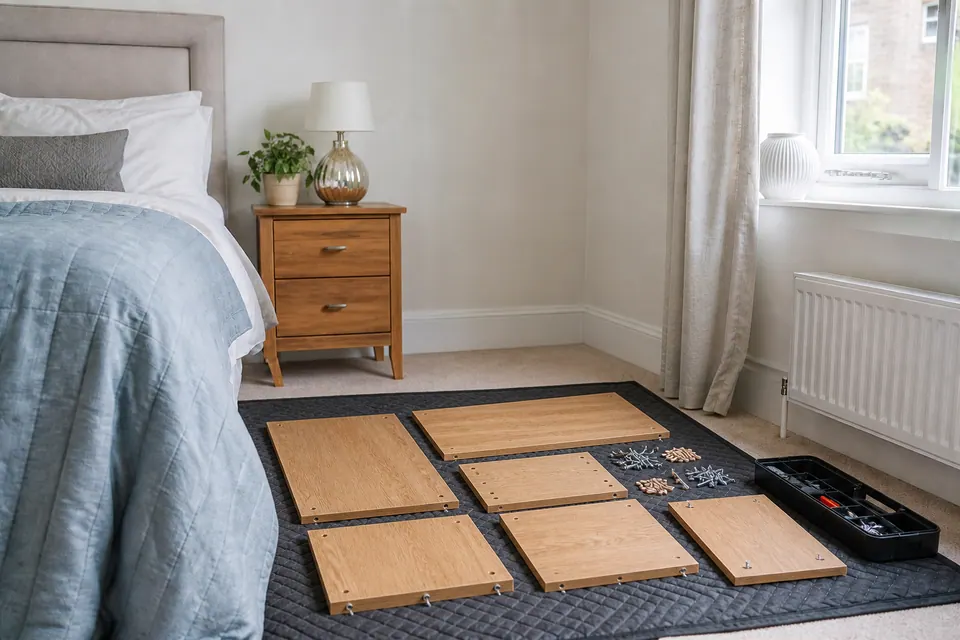
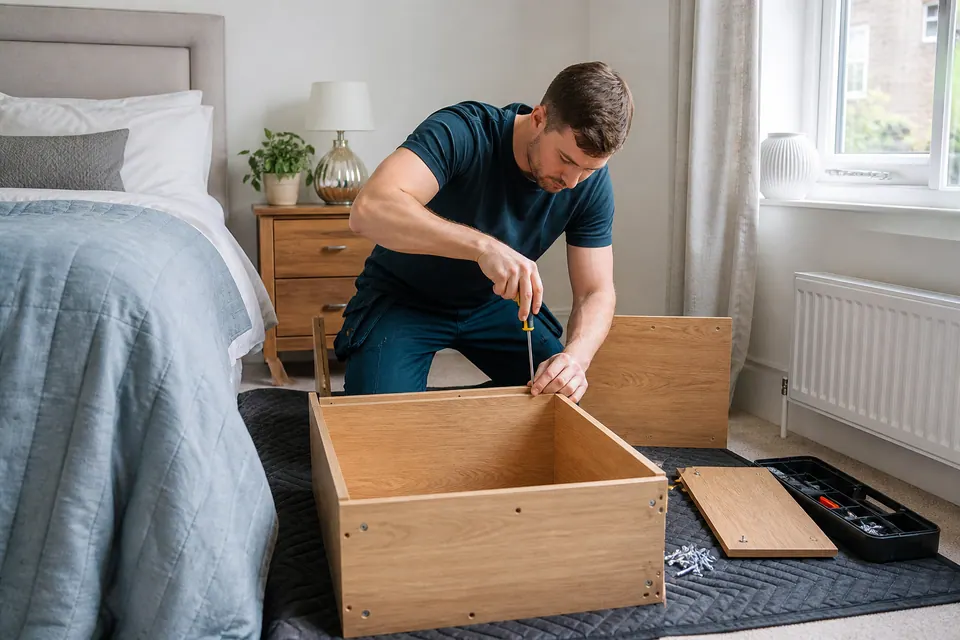
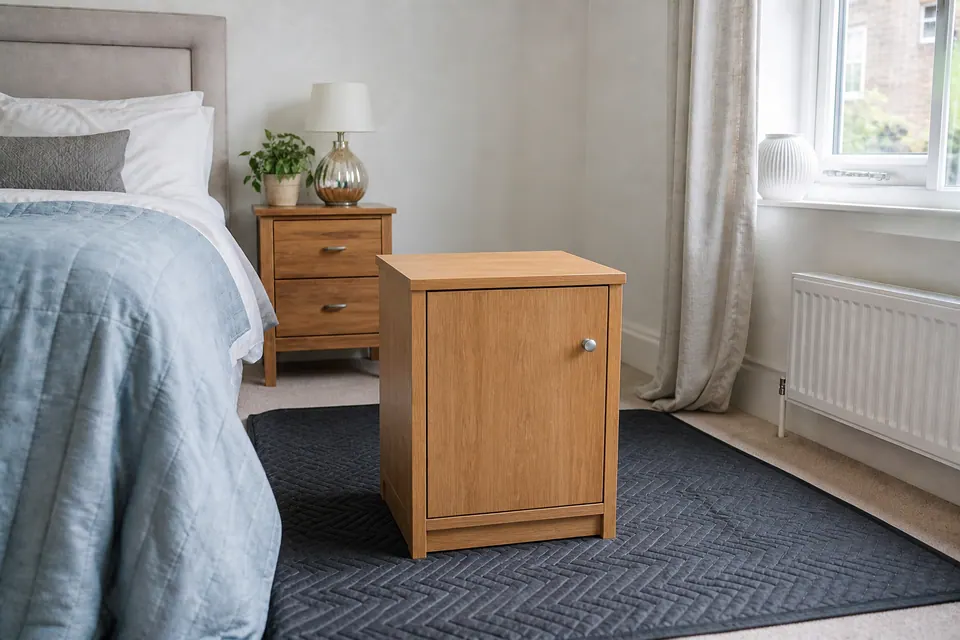
Illustrations explain assembly stages; they do not document a customer project.
PLAN THE ARRIVAL
Provide the Wandsworth postcode and explain access around the affected furniture. Confirm availability before moving a heavy or unstable unit to create a work area.
Area orientation
THE DETAILS OF YOUR VISIT
No. The cabinet’s position and surrounding parts can also matter. Describe where resistance occurs and show the complete unit before buying hardware.
Only if their specification and application are suitable. Similar appearance is not enough to establish compatibility or a sound repair.
Show the damaged material, not just the hinge. Replacing the mechanism may not restore a fixing point that has failed.
Explain its contents and condition when arranging work. Do not attempt unsafe handling of an unstable piece; preparation requirements should be agreed.
Photos and accessible measurements may help identify the request. Availability of compatible parts and the furniture’s condition still affect what is feasible.
Not necessarily. The visible handle and the front’s movement may be unrelated. Report both observations rather than assuming a single replacement solves them.
Yes, it is a different scope from assessing or repairing the existing unit. Identify which option you want considered in the enquiry.
Keep an obviously unstable item out of use pending assessment. A cosmetic-looking fault can involve the material carrying the load.
Check the agreed drawer or door operation and note any damaged components still awaiting replacement. Do not treat deferred repair as completed assembly.
TURN THE LIST INTO A PLAN
Show the drawer or hinge fault together with the complete cabinet. That gives the repair enquiry context without assuming new hardware will resolve every misalignment.
Task images are illustrative.
