
Current-operation review
Key, latch, bolt, handles, door position and frame contact establish the starting condition.
Audit first · define outcome · alter carefully
A planned lock upgrade should begin with the complete timber door, not a catalogue image. Record existing cut-outs, sound material, key needs and the outcome you want before deciding what can be retained or changed.
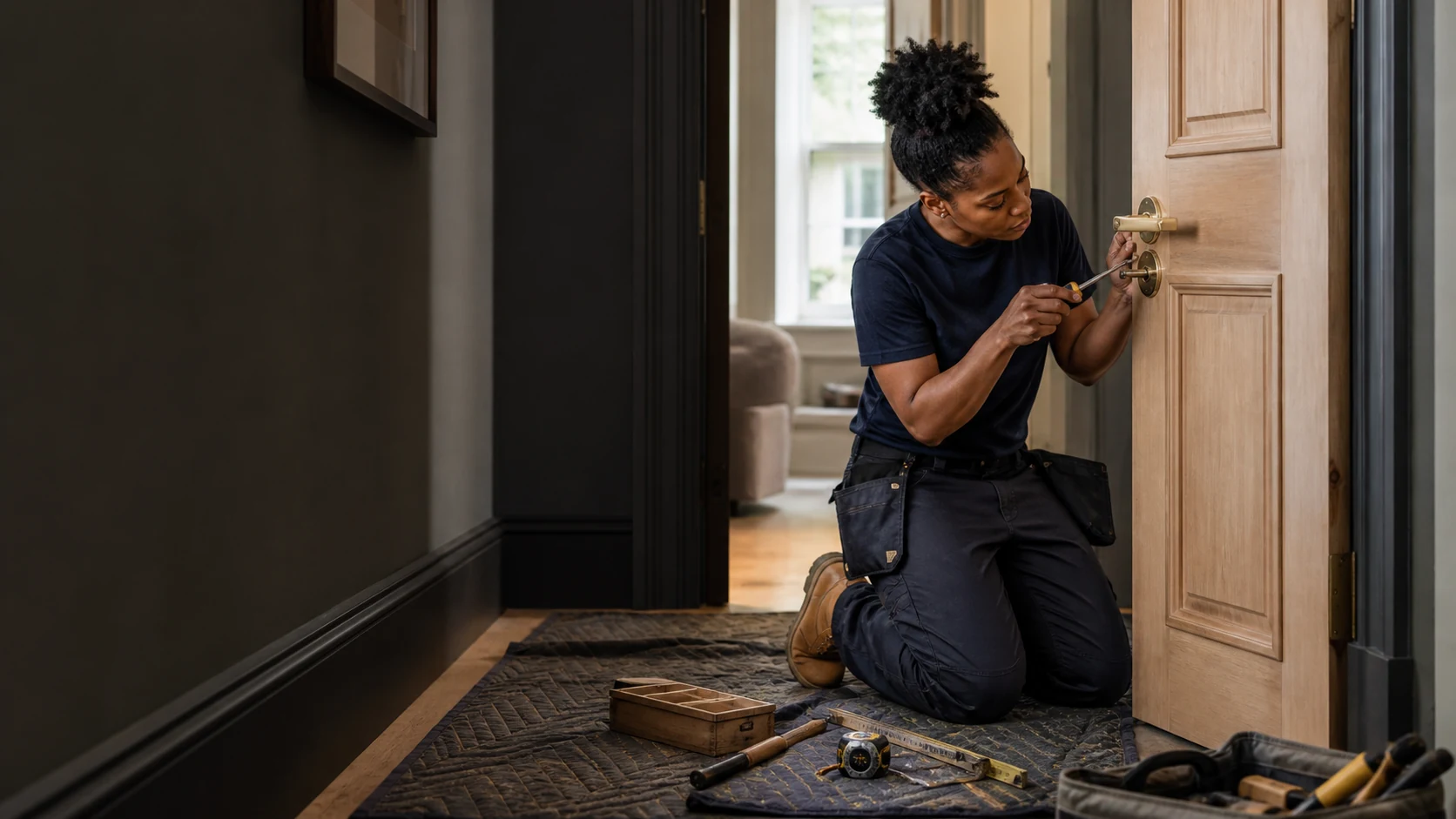
Measured current-state audit
Photograph the entrance straight on, both faces, the edge, hinges and frame. Note every operating item rather than only the lock you expect to replace. A nightlatch, mortice lock, letter plate, pull, handle and previous repair can compete for limited sound material. Their positions matter when new preparation is considered.
Do not remove a cover plate or historic item to inspect hidden cut-outs before the visit. Record visible filled holes, splits, loose timber and mismatched keeps. A locksmith can measure backset, case size, door thickness and available edge material in context. A joiner may need to assess weakened or extensively altered fabric.
| Audit area | What to record | Why it affects planning |
|---|---|---|
| Door leaf | Material, thickness, edge condition, panels and visible repairs | Shows the sound area available for hardware preparation |
| Frame and keeps | Existing recesses, cracks, fixings and alignment | Replacement must operate with secure matching preparation |
| Current locks | Position, operation, key access and known documentation | Identifies functions worth retaining or replacing |
| Other fittings | Handles, pulls, plates, letter openings, closer or door furniture | Prevents clashes and incomplete finish decisions |
| Earlier alterations | Filled holes, cover plates and known past work | Highlights investigation and making-good needs |
| Daily use | Users, entry sequence, internal escape and locking routine | Tests whether the proposed outcome is practical |
Outcome before product
“Upgrade the lock” can mean several things. One household may want controlled keys after a move. Another may need a handle that is easier for authorised users to operate. A landlord may need a documented replacement after keys were not returned. The objective should be written before products are compared.
Separate security intent from convenience. State how the door should lock from outside, how legitimate occupants leave from inside, how many keys are needed and who receives them. Supply any current insurer, lease, freeholder or property-management requirement that actually applies. Avoid assuming a product is required because a neighbouring house uses it.
If existing hardware is serviceable and meets the confirmed outcome, retention may avoid unnecessary cutting. If a change is needed, ask what old preparation will remain visible and how it will be made sound. “Like for like” still requires measurements and a compatibility check.
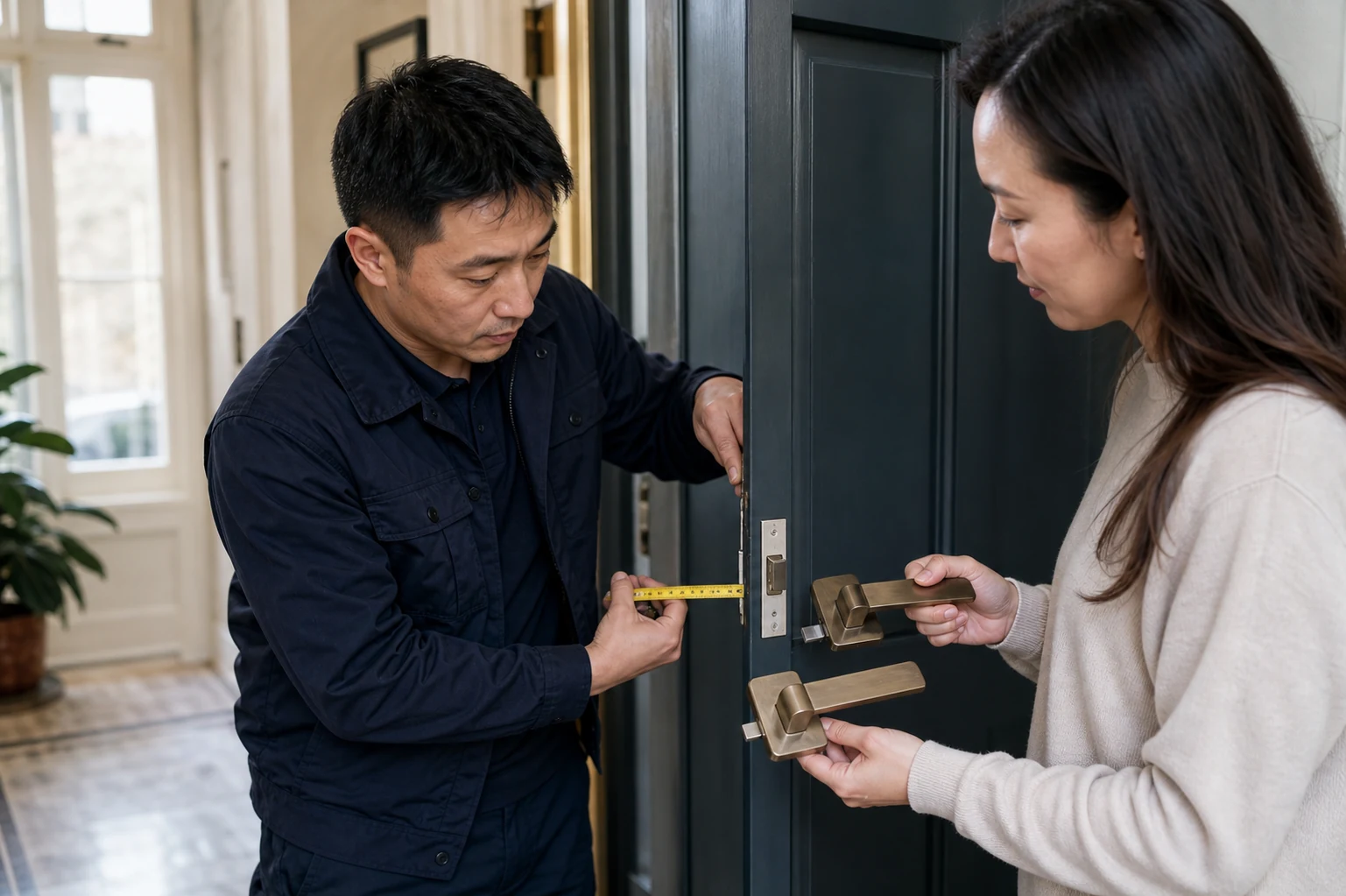
Intervention ladder
A planned improvement does not always begin with full replacement. Operation, key control, sound preparation and the desired outcome can support a smaller or larger intervention. The final route follows inspection, not the apparent age of the entrance.
| Possible route | When it may be explored | Question before approval |
|---|---|---|
| Operational adjustment | Hardware is serviceable but latch or keep relationship needs attention | Is timber and fixing condition sound enough for the adjustment? |
| Component repair | A maintainable element can be restored without compromising the outcome | What remains worn and how will operation be verified? |
| Compatible same-position replacement | Existing preparation can safely receive a measured alternative | Do case, backset, centres, key operation and keeps match? |
| New lock position | The intended outcome cannot use existing preparation appropriately | Where is sound material and what old cut-out needs repair? |
| Door and frame repair first | Splits, looseness or damaged preparation prevent dependable fitting | Which trade owns structural repair and final decoration? |
| Staged entrance plan | Several exterior doors need prioritised improvement | Which threshold and key-control risk is addressed first? |
What the upgrade brief can cover
Key, latch, bolt, handles, door position and frame contact establish the starting condition.
Visible and measured cut-outs show where compatible work may be possible.
Lost, outstanding and legitimate keys inform quantities and recipient records.
Options are compared against confirmed dimensions, functions and supplied requirements.
Weak timber, redundant holes and significant frame repairs receive an accountable trade.
Installed items, keys, tests, retained parts and remaining care needs are handed over.
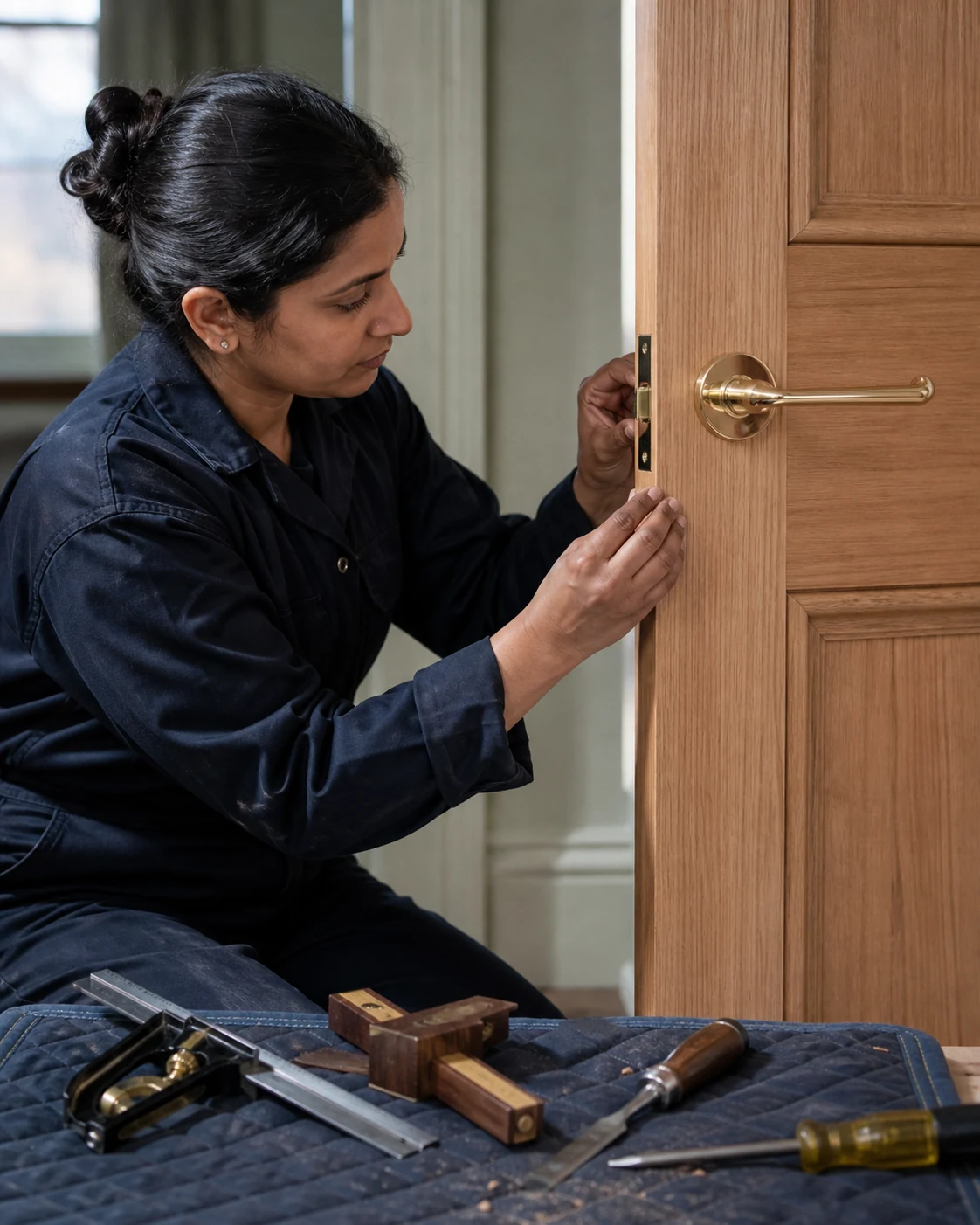
Barnes property context
Barnes enquiries can involve period houses, cottages, converted flats and timber-door hardware. These descriptions help prompt an audit, but they do not establish age, listing status, conservation controls, timber condition or the correct lock for a specific property.
For a house or cottage, include front, rear and side entrances in the desired key outcome even if only one door is being altered now. For a conversion, identify the freeholder or manager for the common front door and the owner or occupier for the private flat entrance. Do not combine their hardware or key decisions.
If planning, heritage or lease consent might apply, the property owner should obtain the actual advice or permission. The locksmith can provide measurements and a proposed mechanical scope; they should not invent a legal status from the style of the building.
Paint build-up, previous edge repairs and moved keeps can affect operation. Record these observations openly so that locksmith work is not expected to conceal joinery or decorative needs.
| Setting | Useful evidence | Decision boundary |
|---|---|---|
| Period house | Whole entrance photographs, current locks, keys and known alteration records | Mechanical proposal versus any required property consent |
| Timber cottage door | Leaf thickness, panels, edge condition and limited fixing zones | Compatible hardware versus joinery intervention |
| Converted flat | Freeholder contact, common-door schedule and private-door authority | Shared entrance versus flat upgrade |
| Previously patched entrance | Visible plates, filled holes, splits and invoices where held | Re-use of preparation versus repair to sound timber |
| Rear garden door | Access route, exposure actually observed and household key plan | Lock change versus leaf, threshold or frame maintenance |
Quote the complete intervention
Cost depends on investigation, access, labour, selected hardware, preparation, repair and making good. Barnes alone provides none of those measurements. Ask the quotation to state the retained fabric, proposed alteration and responsible person for every excluded finish.
Door condition, hardware and current operation are recorded.
Security, access, keys and appearance are prioritised.
Measurements and sound preparation support the selected option.
New cutting, old holes and making good are visible before work.
Operation, keys, care and remaining fabric work are documented.
Where removal is needed to confirm a hidden cut-out, the proposal should explain the changed-finding approval. Do not allow an uncertain finish to disappear inside a simple hardware line item.
Barnes locksmith FAQ
Age alone does not decide. Existing operation, sound preparation, desired outcome and any current requirements should be assessed together.
Possibly, if their dimensions, position and surrounding timber are suitable for a compatible product. Measurement is required.
Agree this in the quotation. Locksmith fitting, structural joinery and decorative finishing may be separate responsibilities.
No. Photograph it and leave the assembled entrance available for controlled inspection within the agreed scope.
That depends on compatible hardware, the desired key system and control needs. Audit each entrance rather than promising a universal arrangement.
The owner should obtain the actual planning or heritage advice. Supply it with the locksmith brief rather than relying on appearance.
Sometimes, but dimensions, spindle operation, clearances and the intended function must be checked across the assembled door.
List legitimate occupants and authorised holders, retain a controlled spare if desired, and name every recipient at handover.
Keep the product, door location, keys, preparation changes, operating tests, retained parts and any remaining joinery or decoration.
Nearby coverage
Use the related-service pages for the task and current nearby pages for different property contexts.
Start with the existing door
Send the complete entrance audit, desired outcome, key users, known requirements and finish expectations for a compatible proposal.
