
Cylinder work
Key outcome, dimensions and transmission are checked against the existing system.
Entrance fabric · controls · closing geometry
Composite and UPVC doors depend on more than a replaceable cylinder. The leaf, hinges, handle set, internal mechanism and frame keeps must complete one movement. Record where that movement changes before requesting a part.
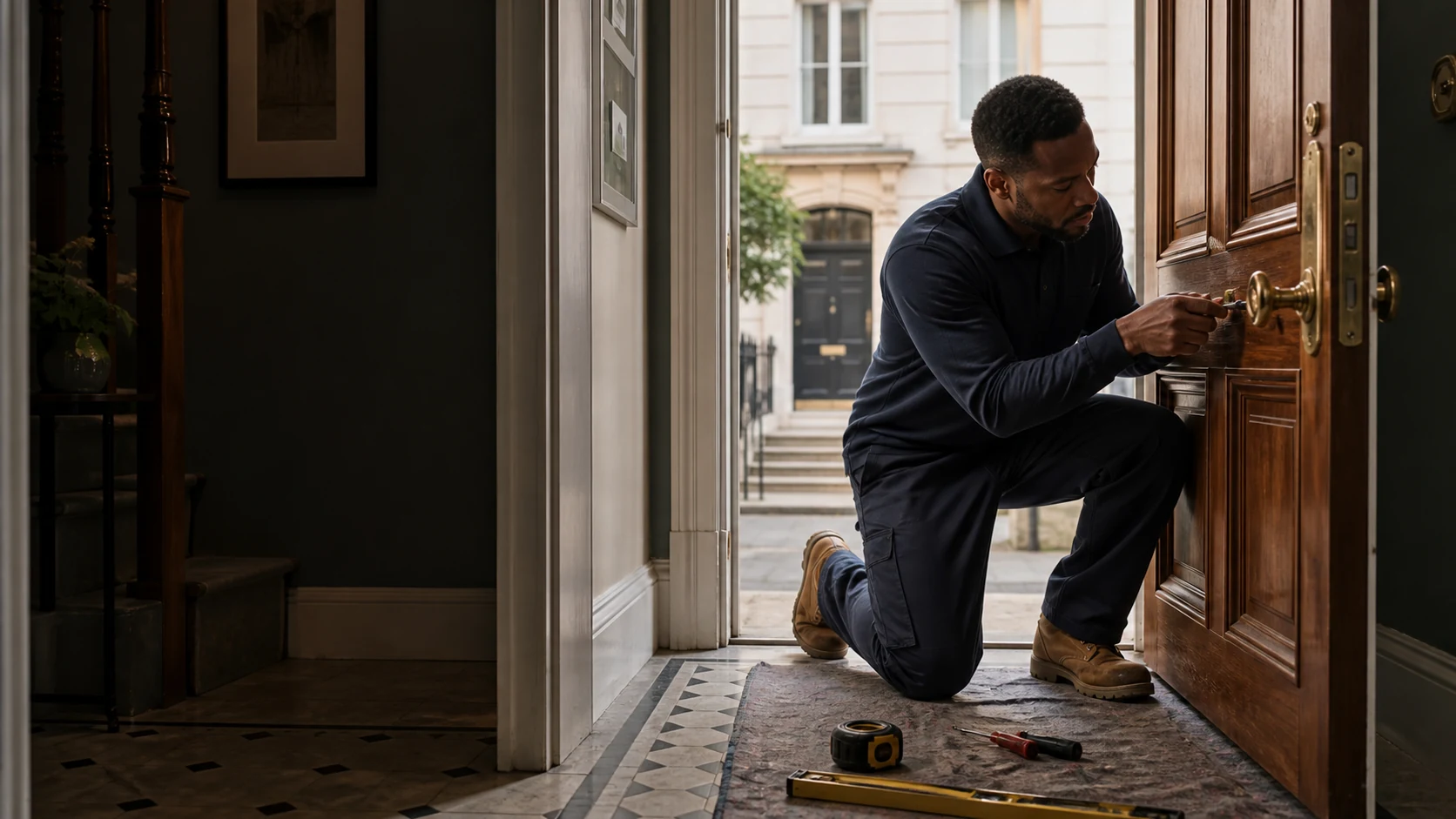
Whole-entrance reading
Start with a full view of the entrance, then show the handles, keyway, complete door edge and frame. Note the door material only when known; appearance alone can mislead. Record whether the leaf closes freely, where it first touches and whether lifting or pulling gently changes operation. Do not lean heavily on the handle or slam the door to make the lock engage.
The cylinder, handle set, spindle, gearbox and locking strip transmit a sequence. Hinges position the leaf while keeps receive the hooks, bolts or rollers. Seals and the threshold can also add resistance. A symptom at the key can therefore begin elsewhere in the assembled entrance.
| Element | Observation to provide | Boundary of the observation |
|---|---|---|
| Door leaf | Confirmed material, visible damage, bowing or edge contact | Condition requires inspection rather than a photograph-only verdict |
| Hinges and frame | Visible looseness, gaps and the first contact point | Adjustment method and repair responsibility remain unconfirmed |
| Handles and spindle | Lift, downward travel, return, looseness and asymmetry | Internal breakage cannot be selected remotely |
| Cylinder and key | Keys affected, insertion, rotation, resistance and withdrawal | A stiff key does not prove a cylinder-only fault |
| Multipoint movement | Locking points moving when the open door is safe to observe | Hidden gearbox and strip condition need assessment |
| Keeps and threshold | Marks, misalignment, seal pressure and obstruction | Door work and lock work may form separate scopes |
Extension and patio doors
A rear extension door may be the household’s most frequently used route, even when the street entrance holds the main postal address. When it becomes unreliable, state whether another lawful door provides internal access and whether the affected entrance is currently open or closed. Keep it open if closing it risks a lockout or loss of security.
Do not reach the garden through a neighbour’s land, climb a boundary or attempt entry through glazing. Explain any safe side access and who controls the gate. If a contractor must carry equipment through the house, include the customer who will meet them and protect the route.
Extensions can join newer door systems to older frames or building fabric, but this must not be assumed to cause the fault. Record visible junction movement, seal contact or threshold obstruction and allow inspection to allocate lock, door or building work.
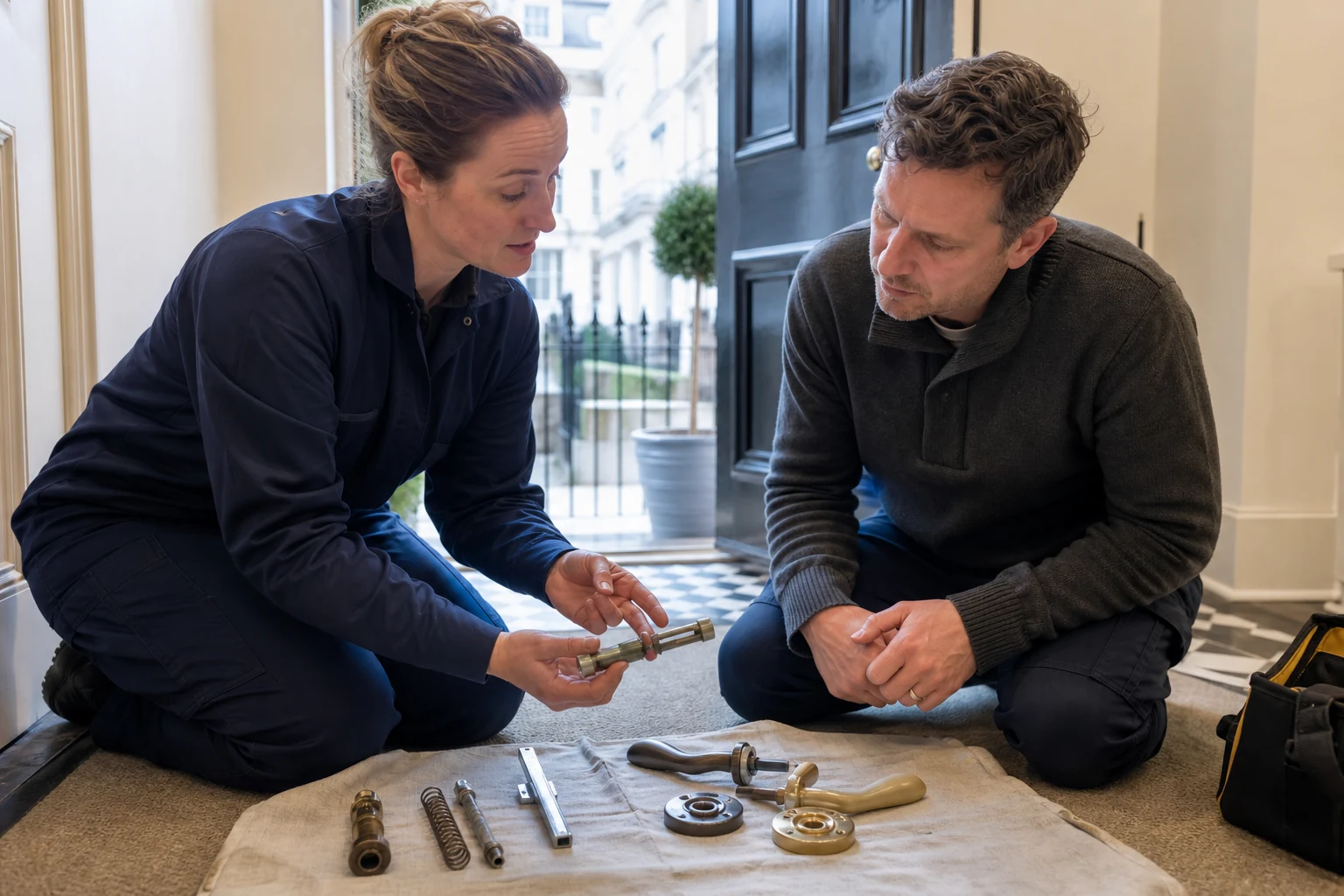
Fault-separation table
The comparison can help distinguish free mechanism travel from resistance created as the door meets the frame. Only test an open door when it can remain supervised and secure. Stop if controls bind or the mechanism fails to return.
| Reported symptom | Useful safe distinction | Professional question |
|---|---|---|
| Handle lifts open but not closed | Note where the door contacts frame or seal | Are hinges, keeps or leaf position restricting travel? |
| Handle drops or feels disconnected | Leave screws assembled and record both sides | Do handles, spindle or mechanism require repair? |
| Key will not complete its turn | State handle position and open/closed difference | Is resistance at cylinder, gearbox, locking point or frame? |
| Key turns freely without locking | Stop repeated cycles and note transmitted movement | Which link between cylinder and mechanism has failed? |
| Door must be lifted to lock | Describe the gentle lift without continuing the habit | What alignment and hardware effects need correction? |
| One hook or bolt remains visible | Do not push it with tools | Can the strip be restored or identified for replacement? |
| Cylinder is loose in the door | Avoid further use and keep hardware intact | Are fixings, dimensions, preparation or connected parts damaged? |
Repair boundary
Key outcome, dimensions and transmission are checked against the existing system.
Fixings, travel, return and internal connection determine the appropriate action.
The gearbox and strip are identified from the installation before compatible parts are promised.
Locking points and frame receivers are aligned without masking wider leaf movement.
Hinges, damaged profiles, glazing, thresholds or structural frames can require another trade.
Opening method, post-entry security, keys and every normal operating step are recorded.
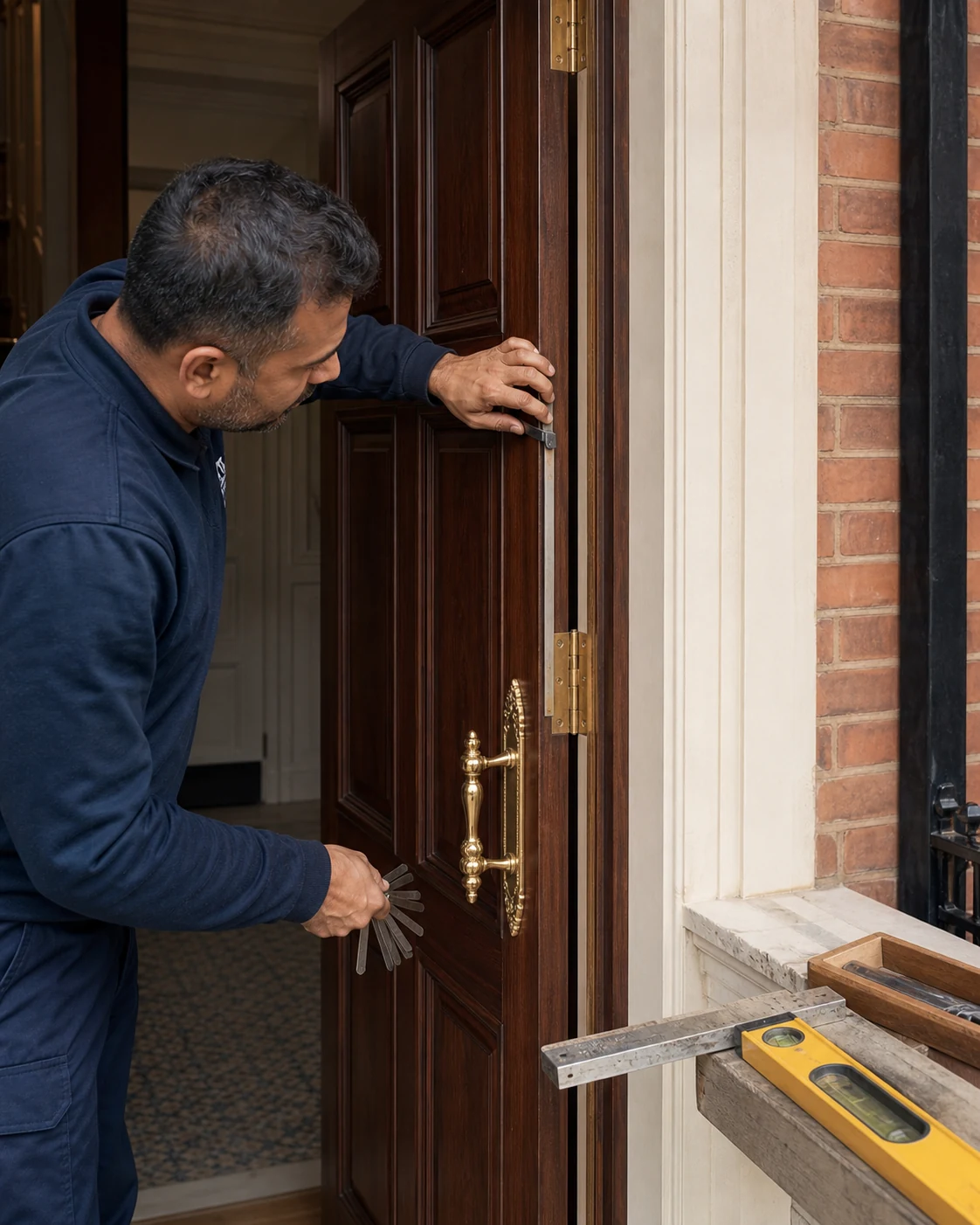
Bromley property context
Bromley enquiries can involve family houses, flats, extensions and composite or UPVC entrance systems. These categories help prepare access and photographs. They do not establish material, mechanism type, installation quality or the reason a door has changed.
For a family house, list exterior entrances and household key holders if the desired outcome extends beyond the faulty door. For a flat, distinguish the managed front entrance from the private dwelling. A common electronic release remains within the building’s authorised service route.
For an extension, describe the junction and actual symptom without assuming building movement. If installer documents, maintenance records or a current warranty exist, supply them to the responsible owner. The locksmith can then avoid conflicting work and make measurements within the confirmed scope.
Composite and UPVC are broad door descriptions, not part numbers. Edge markings, dimensions, operation and controlled inspection support identification. Do not buy a mechanism from a visual resemblance before compatibility is verified.
| Setting | Information to assemble | Scope distinction |
|---|---|---|
| Family house | Front, rear and side entrances, users, keys and current door state | Fault repair versus whole-home key planning |
| Rear extension | Safe approach, door and frame views, threshold contact and records | Lock mechanism versus door or building junction |
| Private flat entrance | Occupier authority, landlord approval where required and exact door | Private hardware versus common lobby |
| Managed common door | Agent, credential, release, closer, latch and users affected | Mechanical locksmith work versus electronic access |
| Composite entrance | Confirmed markings, dimensions, handles, edge strip and keeps | Door category versus compatible component |
| UPVC patio door | Open/closed state, internal route, frame contact and locking travel | Hardware repair versus profile, hinge or glazing work |
System quotation
Cost depends on access, door state, investigation, labour, component identification, adjustment and any repair outside the mechanism. Bromley itself does not determine these variables. Ask what the proposed item restores and which connected elements remain excluded.
The open or closed condition and authorised route are established.
Handle, key, mechanism and frame interaction are recorded.
Measurements and installed preparation support compatibility.
Repair, adjustment, replacement and separate door work are priced visibly.
The entrance closes, locks, unlocks and reopens under normal operation.
If controlled dismantling reveals a different mechanism or damaged preparation, pause for revised approval. Ask whether subsequent door adjustment or making good is included rather than assuming it follows a hardware change.
Bromley locksmith FAQ
Only if the cylinder is the confirmed problem and it matches the system. Handles, gearbox, strip, alignment and frame contact also require consideration.
That behaviour can indicate alignment or loading, but the hinges, keeps, mechanism and leaf need inspection before a cause is assigned.
No. If it is safely open and closing may create a lockout, leave it supervised and explain the current state when booking.
Photographs help preparation, but measurements, markings and controlled inspection of the installed system are needed for compatibility.
Do not apply an unknown product. Confirm the affected material and manufacturer guidance before adding anything to the system.
The locksmith scope may cover mechanical hardware, while profile, hinge, glazing or structural frame repair can need a door specialist.
Check the tenancy, lease or owner instruction. Common building entrances remain under the responsible manager’s authority.
Look for investigation, identification, labour, compatible part, adjustment, access state, exclusions and the changed-finding approval route.
Use normal handle and key operation through closing, locking, unlocking and reopening, and record any separate door issue.
Nearby coverage
Use related services for the identified work and nearby pages for other household entrance contexts.
Treat the entrance as one operating system
Send the door state, material, handle and key sequence, full edge, frame contact, safe route and authorised customer for an evidence-led scope.
